Urban Street Patterns with Global Examples:
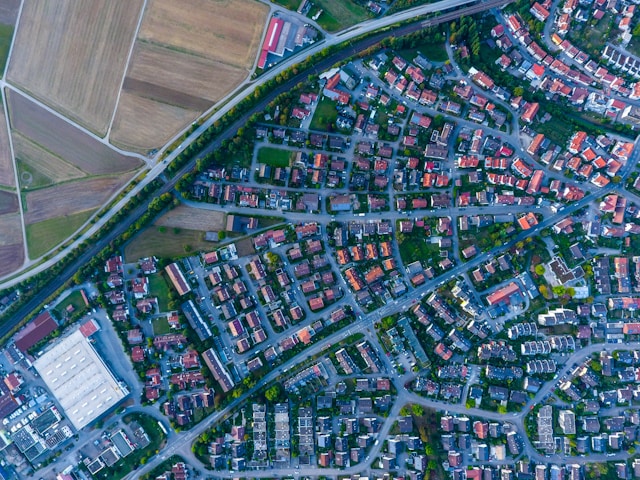
The way streets are laid out defines not only the look of a city but also its function, efficiency, and cultural identity. Urban street patterns are shaped by geography, history, planning philosophies, and modes of transport. They determine how people move, how communities connect, and how a city adapts to growth. From rigid grids to winding organics, each pattern tells a story of how urban life evolved. In this blog, we explore six major street patterns — grid, organic, radial, irregular, loose grid, and suburban — through global examples that highlight their unique impact on urban design.
1. Grid Pattern –
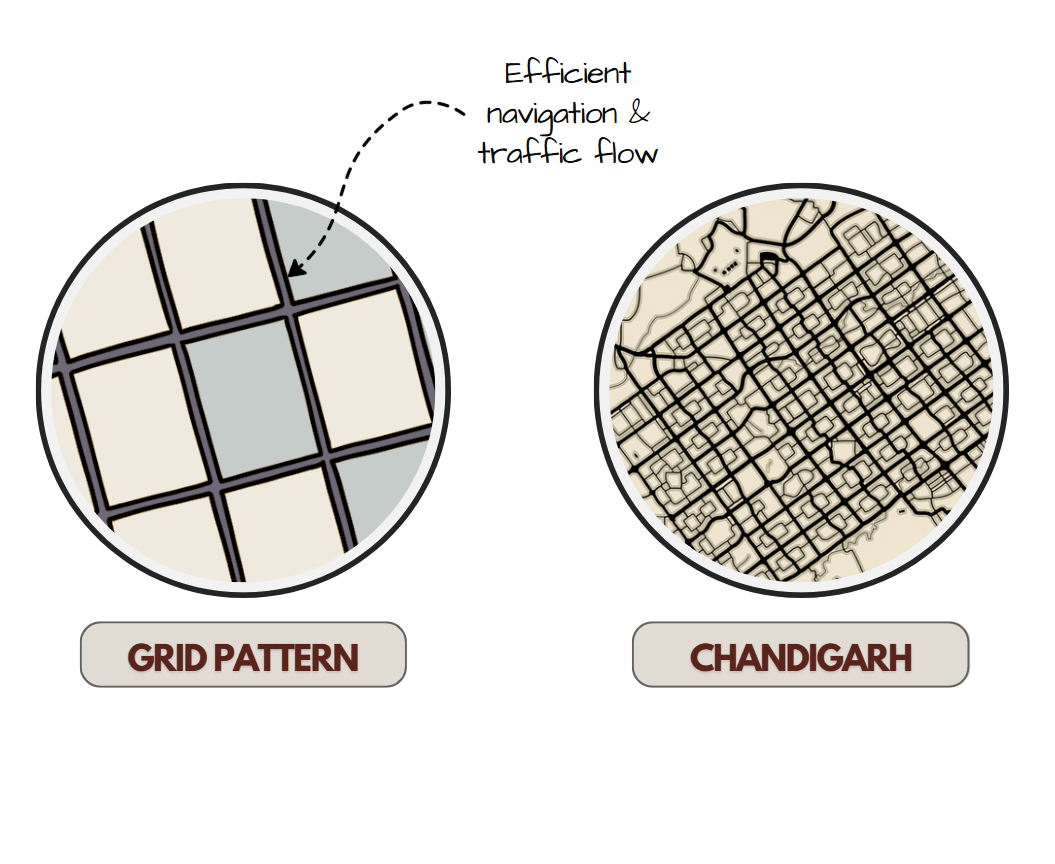
Image Credits: Shivani Chougula @Kaarwan
The grid pattern is one of the most recognizable urban layouts, characterized by streets intersecting at right angles to form uniform blocks. It offers clarity, predictability, and ease of navigation, making it a preferred model for planned cities. Grids also distribute traffic evenly, support efficient land division, and allow for flexible expansion. However, they can sometimes feel monotonous or lack adaptability to natural terrain. Chandigarh is a textbook example of this pattern, designed by Le Corbusier in the mid-20th century as India’s first planned modern city. Its clearly defined sectors, wide boulevards, and rational order embody the grid system’s strengths, offering a sense of modernity, discipline, and accessibility.
2. Organic Pattern –
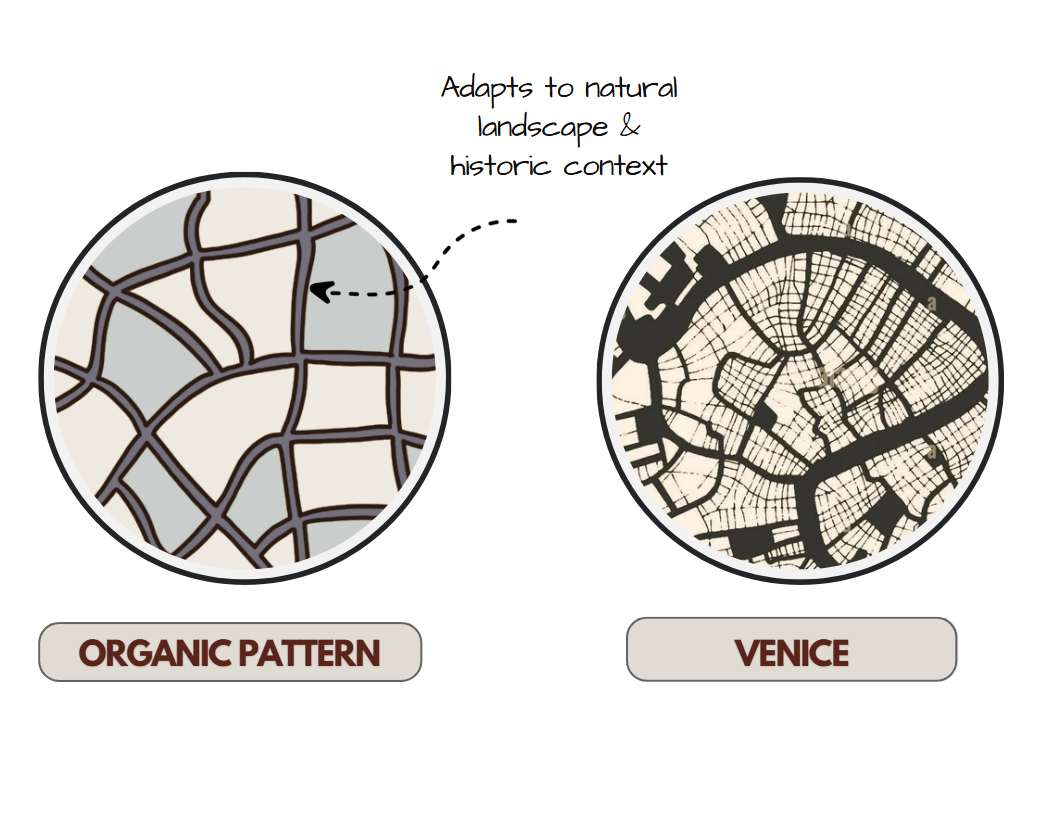
Image Credits: Shivani Chougula @Kaarwan
Organic street patterns evolve naturally over time, shaped by geography, climate, and community needs rather than deliberate planning. They often result in irregular, winding, and maze-like networks that reflect centuries of gradual growth. While they can pose challenges for vehicular traffic, they create intimate pedestrian-oriented spaces that foster character, charm, and cultural identity. Venice is a classic example, where the waterways dictated the organic layout of canals and narrow alleys. This network encourages walking, enriches urban experience, and maintains a human-scale city where movement is less about efficiency and more about discovery.
3. Radial Pattern –
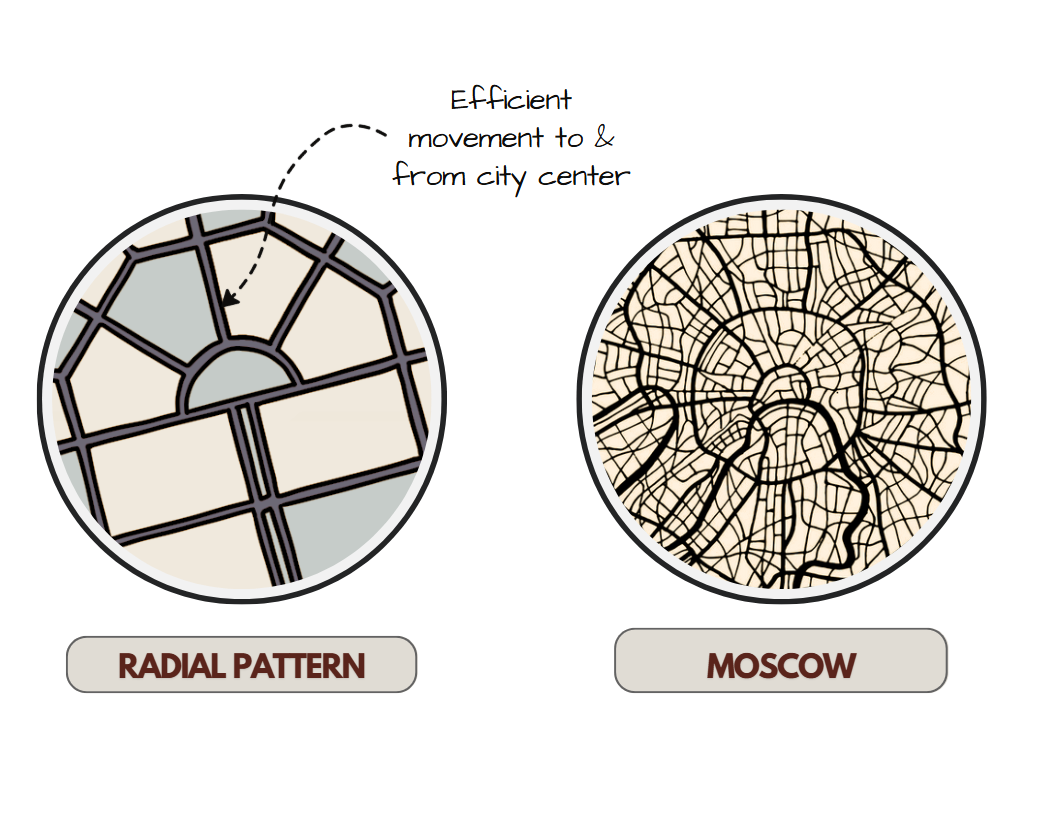
Image Credits: Shivani Chougula @Kaarwan
Radial patterns are structured around a central point, from which streets radiate outward like spokes of a wheel, often connected by concentric ring roads. This layout emphasizes hierarchy, focusing attention on civic, religious, or political centers. It creates dramatic vistas, aids in defense (historically), and allows for symbolic representation of power. However, radial systems can complicate traffic flow by channeling vehicles toward congested cores. Moscow exemplifies this pattern, where the Kremlin forms the hub, and major avenues radiate outward, intersected by ring roads like the Garden Ring and the MKAD. This structure reinforces the city’s monumental character while managing connectivity across vast distances.
4. Irregular Pattern –
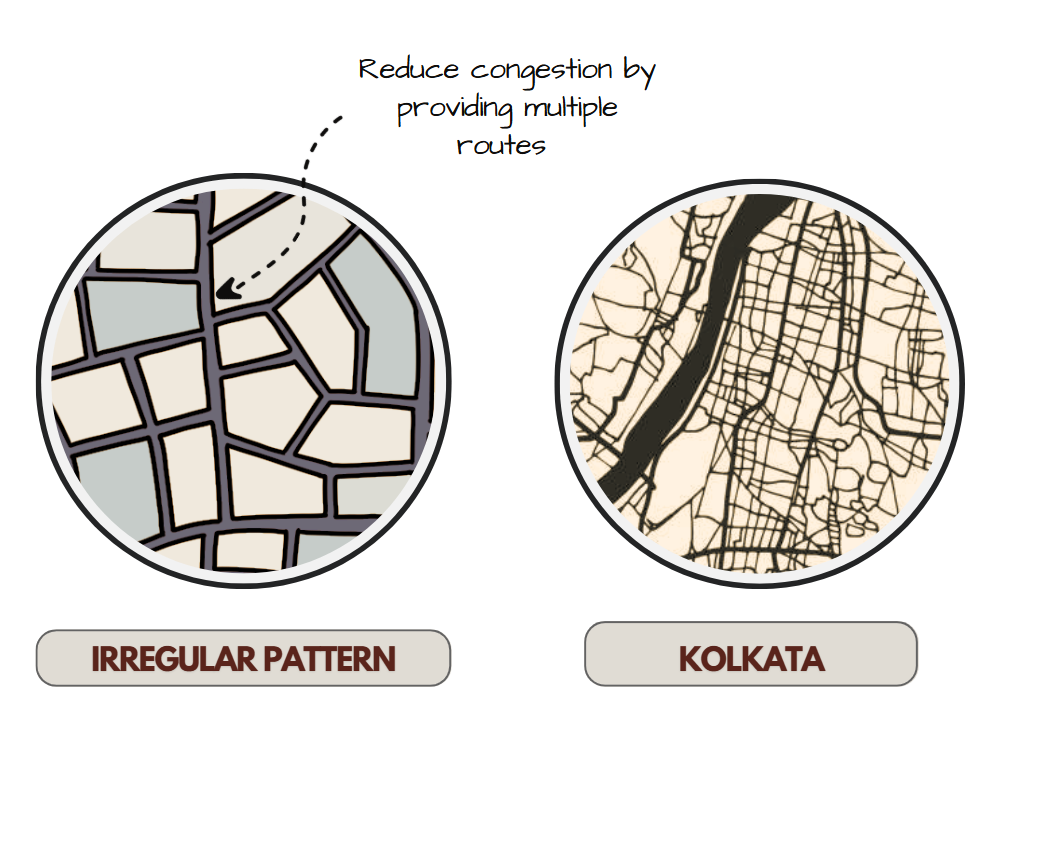
Image Credits: Shivani Chougula @Kaarwan
The irregular pattern emerges without predefined order, often in cities that expanded organically due to trade, migration, or colonial influence. These layouts resist uniformity, instead reflecting the complexities of social, economic, and topographic conditions. Irregular streets may appear chaotic but often accommodate local needs, creating adaptable and culturally rich environments. Traffic circulation can be challenging, but the irregular fabric enhances place identity. Kolkata illustrates this pattern, particularly in its older neighborhoods where narrow winding lanes contrast with colonial-era avenues. The result is a layered urban character where the irregular street network mirrors the city’s historic diversity and vibrancy.
5. Loose Grid Pattern –
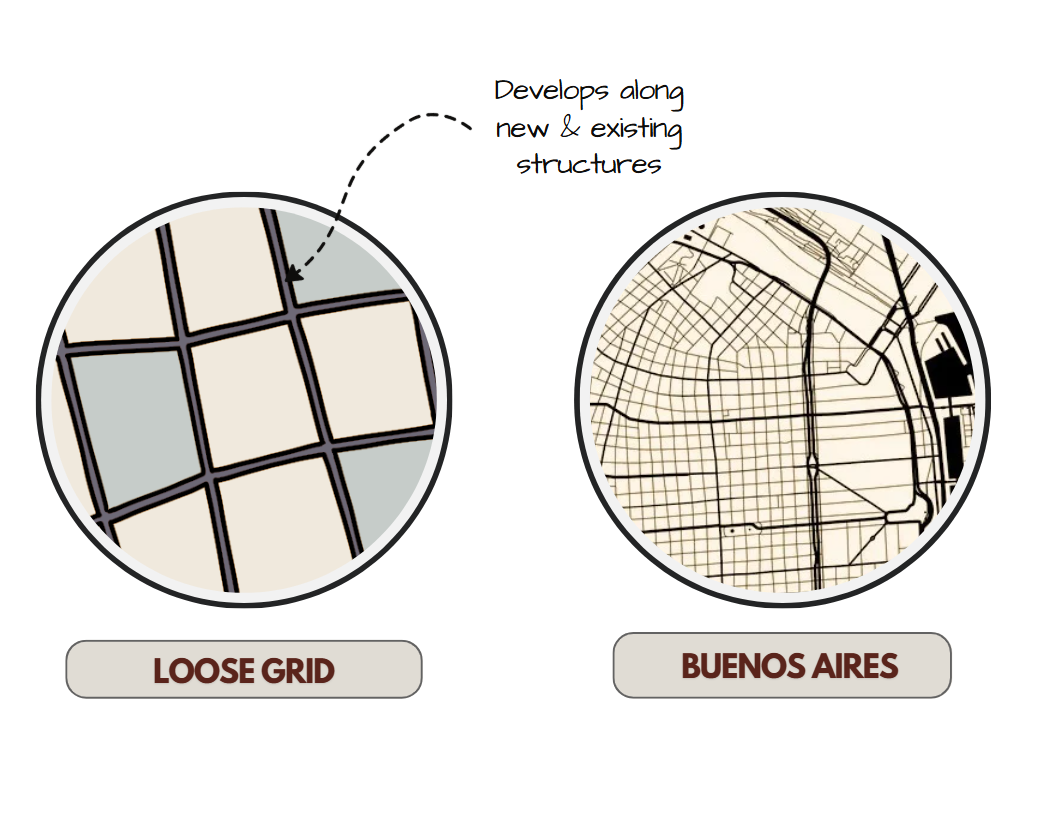
Image Credits: Shivani Chougula @Kaarwan
The loose grid is a hybrid pattern that combines the rational clarity of a grid with modifications to adapt to geography, traffic needs, or aesthetic goals. Unlike rigid grids, loose grids feature variations in block size, orientation, or spacing, making them more flexible. This pattern balances order with adaptability, providing efficient circulation while avoiding monotony. Buenos Aires demonstrates this through its broad avenues intersecting with a more relaxed block structure. The wide boulevards cut across the finer grain of neighborhood streets, creating a hierarchy that supports both pedestrian-friendly spaces and large-scale movement.
6. Suburban Pattern –
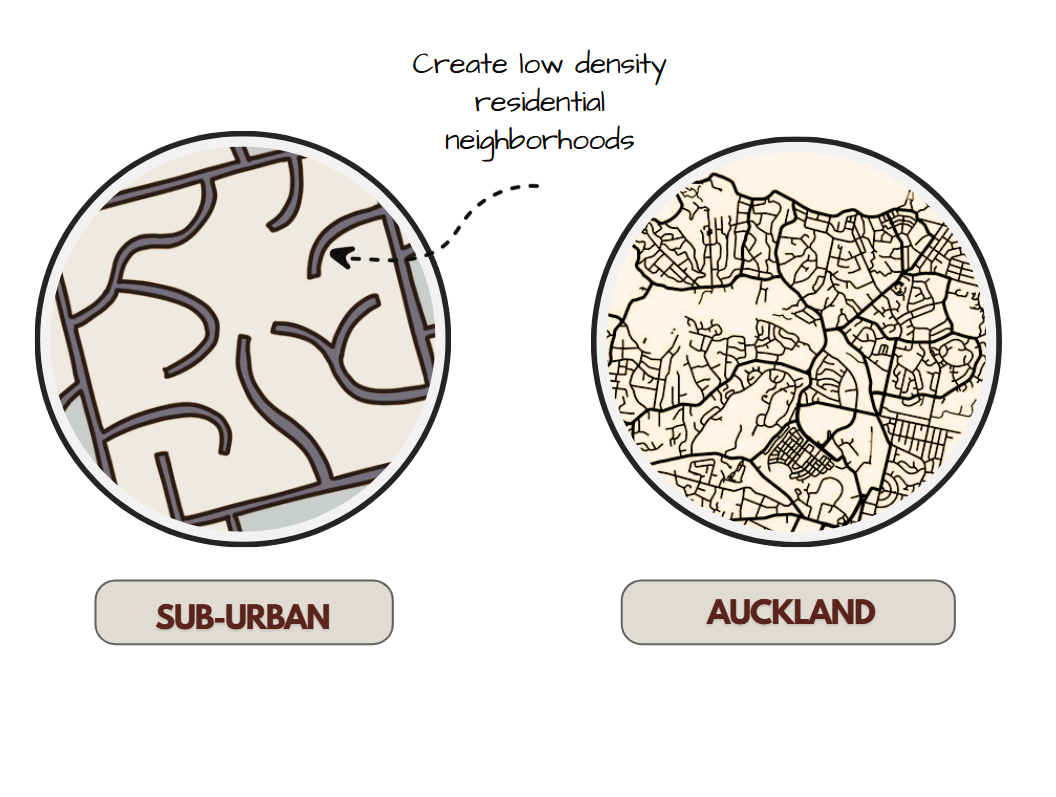
Image Credits: Shivani Chougula @Kaarwan
Suburban patterns are typically characterized by cul-de-sacs, curvilinear streets, and branching layouts designed for low-density housing and automobile dependency. They prioritize privacy, green buffers, and quieter environments, often at the cost of walkability and public transport efficiency. These patterns reflect post-industrial planning models focused on suburban living ideals. Auckland showcases this suburban model, where residential neighborhoods feature winding cul-de-sacs and disconnected street networks. While this design reduces through-traffic and enhances residential calm, it creates challenges for connectivity and sustainable urban mobility.
Final Thoughts:
Street patterns are more than geometric layouts; they are frameworks that shape urban identity, mobility, and quality of life. From the disciplined clarity of Chandigarh’s grid to the intimate irregularity of Kolkata, each pattern reflects how cities adapt to context, history, and aspirations. Understanding these patterns not only helps architects and planners design more efficient and livable environments but also allows us to appreciate the diverse ways in which human settlements evolve. As cities continue to expand and adapt to climate and mobility challenges, these fundamental patterns remain vital references for building resilient and meaningful urban spaces.