Introduction:
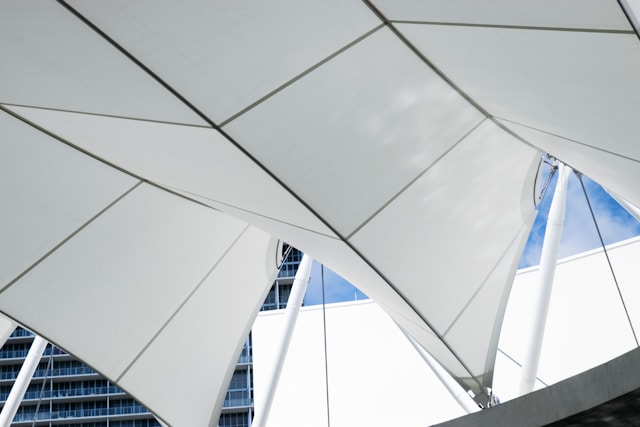
Tensile structures represent one of the most elegant expressions of engineering and architecture working as one. Unlike conventional compression-based systems that rely on bulk and mass, tensile structures derive their strength through tension — using flexible materials such as membranes or fabrics stretched between supporting elements. This lightweight approach allows architects to create large, column-free spaces defined by sweeping, sculptural forms that feel as if they’re floating in air. From pavilions and walkways to stadium roofs and amphitheatres, tensile structures combine aesthetic fluidity with structural efficiency, making them an enduring choice for both temporary and permanent architectural applications.
Understanding the Components and Assembly
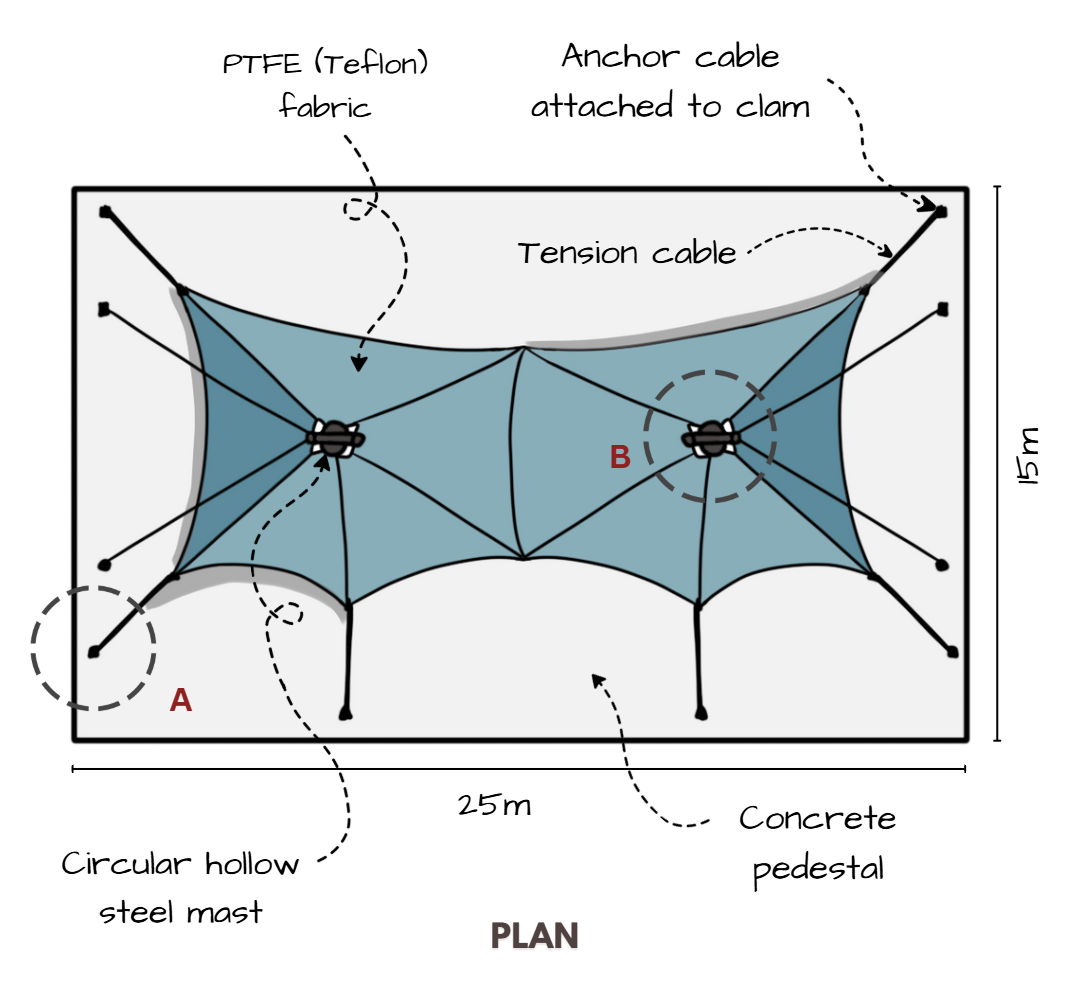
Image Credits: Shivani Chougula @Kaarwan
At the heart of every tensile structure lies a precise balance between tension and compression. The main components typically include the steel mast or compression member, tensile cables or stays, and the fabric membrane that spans across the structural system. The steel mast acts as the primary vertical element, anchored firmly to the foundation, while the membrane and cable network pull against it to maintain the structure’s equilibrium.
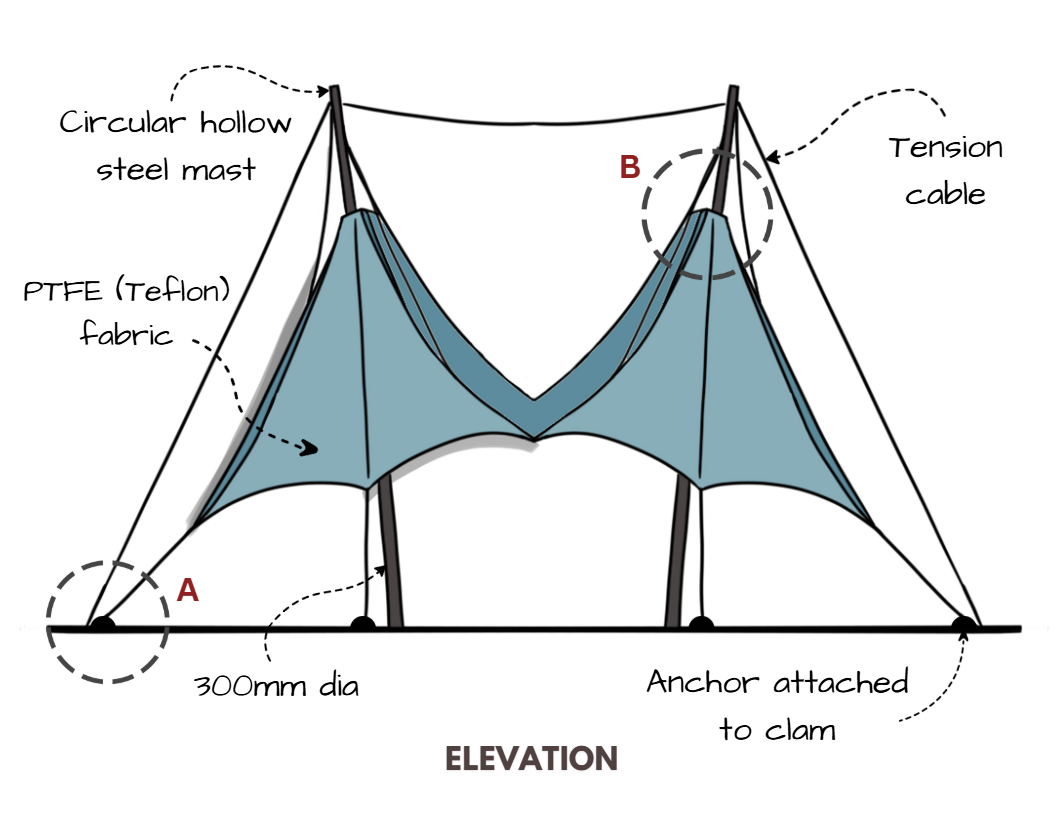
Image Credits: Shivani Chougula @Kaarwan
The assembly process begins with securing the mast base using ground anchors — usually a combination of concrete foundations and steel base plates connected by high-strength bolts or pin joints. This connection detail ensures that compressive forces from the mast are safely transferred to the ground while allowing a controlled degree of flexibility against lateral forces such as wind. At the mast’s top, cable connection plates and tension rings form the critical junction where the membrane is clamped using tensioning devices. These connection details — often visible in architectural illustrations — are vital in distributing stress evenly across the fabric and preventing tearing or overstretching. The overall system behaves like a network of forces in equilibrium, with every cable and membrane edge working together to hold the entire form taut.
Detailing and Joinery Logic
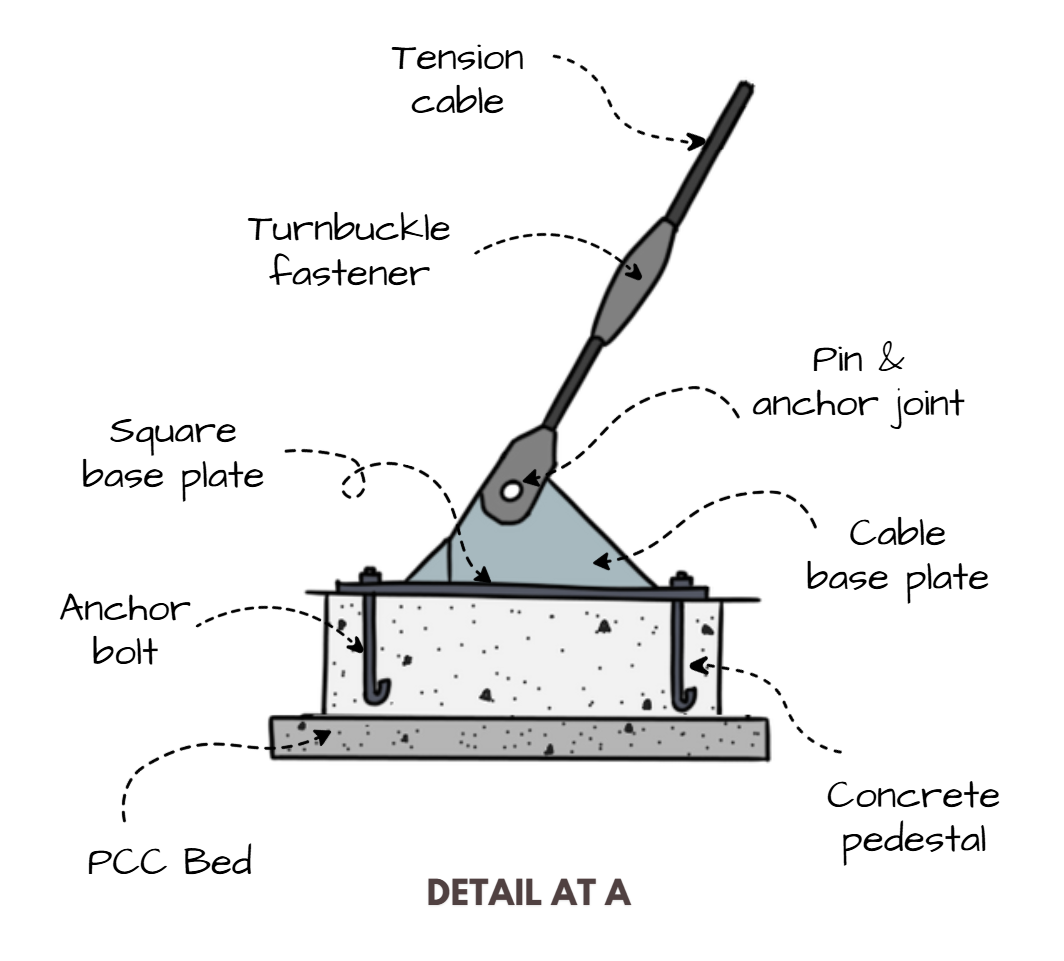
Image Credits: Shivani Chougula @Kaarwan
A tensile structure’s detailing demands both precision and aesthetic sensitivity. In the steel mast-to-ground anchor detail, the mast base typically features a heavy circular base plate welded to the mast, connected via anchor bolts embedded deep into reinforced concrete. To handle uplift or pullout forces, tension rods or holding-down bolts are designed to resist the upward component generated by the tensile membrane’s pull. The detail must also allow for drainage, corrosion protection, and inspection access.
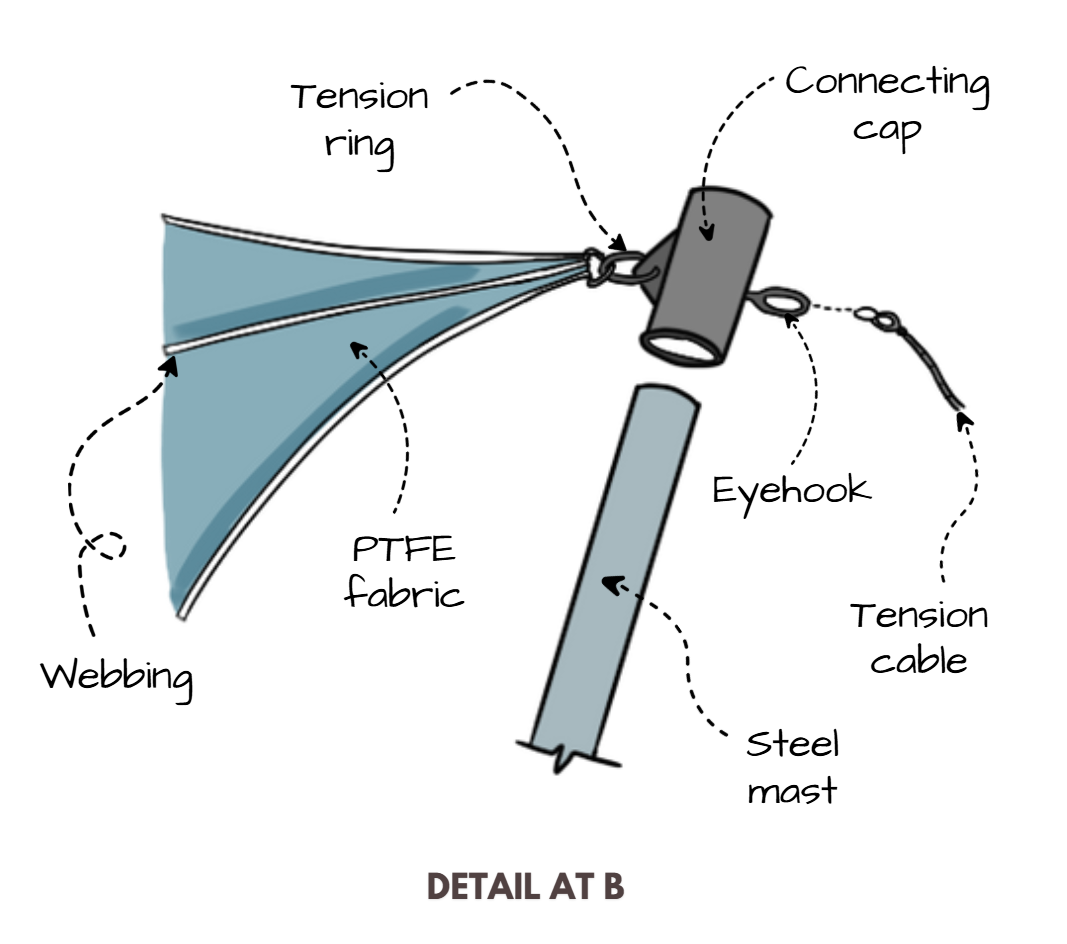
Image Credits: Shivani Chougula @Kaarwan
At the mast-to-fabric connection, the joinery often includes stainless steel pins, clevis connectors, or adjustable turnbuckles that hold the high-tensile cables. The fabric, typically PTFE-coated fiberglass or PVC-coated polyester, is fitted with reinforced edge pockets containing steel cables. These are then attached to ring plates or edge clamps at the mast’s head. The tensioning process is carefully calibrated — ensuring the membrane remains uniformly stretched, avoiding wrinkles, while accommodating temperature variations and wind loads. Such details are not only structural necessities but also define the visual clarity and craftsmanship of tensile architecture.
Uses and Architectural Applications
Tensile structures have found wide application across public and commercial spaces due to their ability to cover large spans with minimal material use. They’re commonly used in stadium roofs, airport terminals, exhibition halls, canopies, pavilions, and walkways, where visual lightness and functional shade are equally desired. Their modularity allows architects to experiment with organic forms, dynamic curvatures, and light-filtering surfaces. The translucency of fabric membranes also enhances daylight diffusion, creating pleasant, glare-free environments ideal for public interaction and circulation zones.
Final Thoughts:
Tensile structures stand as a testament to how engineering precision can yield architectural elegance. Each cable, joint, and curve contributes to a system defined not by mass, but by balance and tension. When detailed thoughtfully — from the mast anchor to the membrane connection — these structures achieve both functional integrity and visual grace. As architectural design moves increasingly toward sustainable, lightweight, and adaptable systems, tensile structures continue to embody the ideal synthesis of form, efficiency, and modern construction technology.