

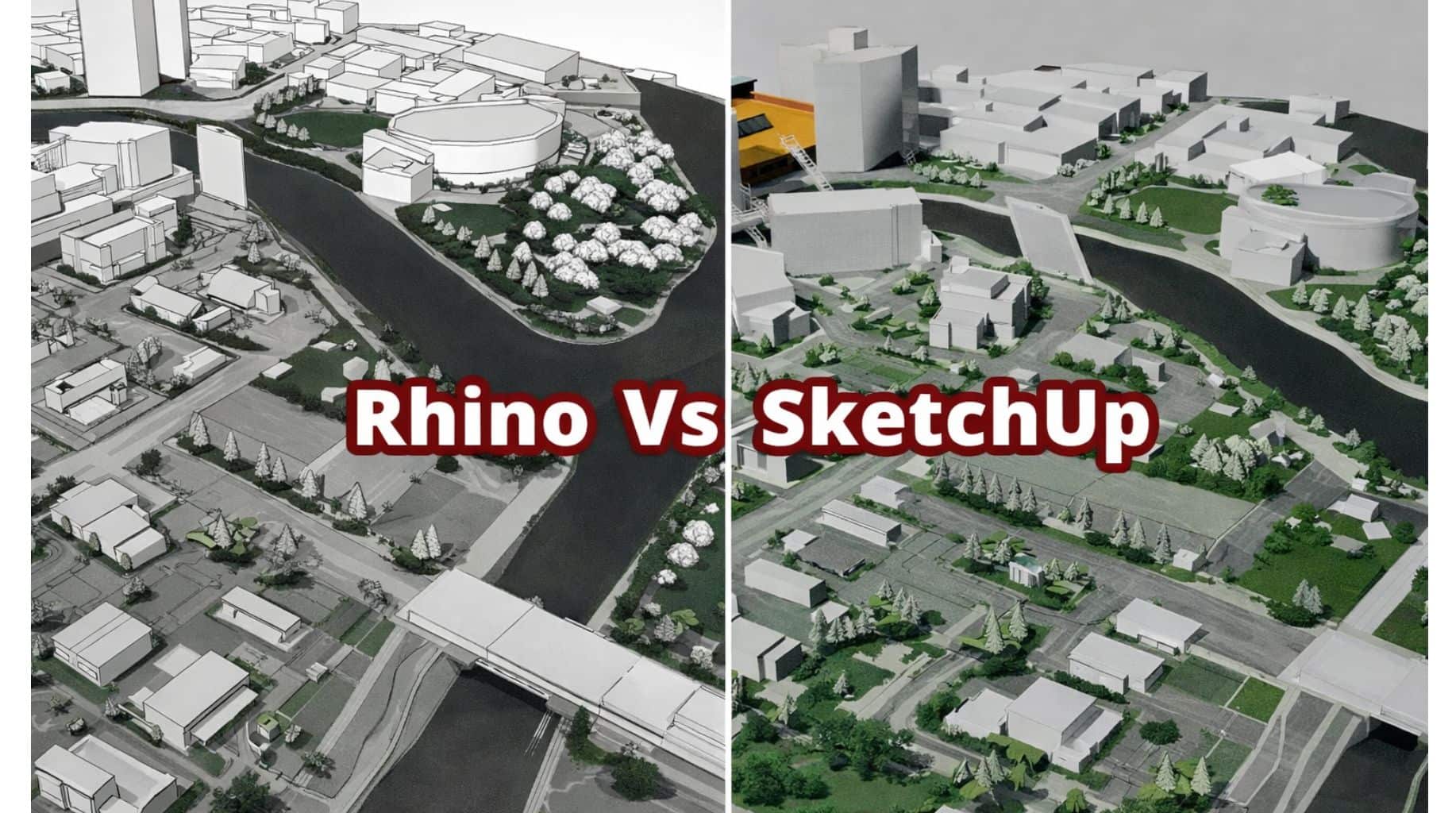
If you’re studying architecture in the year 2026, you’ve probably heard differentiating opinions about which software to learn first. With multiple software options available, understanding these tools and deciding which to upskill in is pivotal. Some seniors or mentors in your career might ask you to start with SketchUp because it’s quite easy to use. Others might insist you choose Rhino because it’s quite impactful to keep this tool in your kitty.
Then comes Grasshopper, which might feel intimidating, but keeps popping up in many advanced projects.
So, what’s the best choice?
The answer depends on what you are looking for in your career. This guide will simplify the Rhino vs. SketchUp debate in 2026 and explore Grasshopper vs. SketchUp in architectural workflows in a way that will actually help you make a decision, not just compare basic features.
Why This Decision Matters More Than Ever
Architecture tools are no longer just about creating faster; they shape how you think and design. Today, firms are also expecting more than just clean models; they also expect students who can:
- Work with developing design systems
- Adapt to computational workflows
- Handle complex geometry
However, you still need to clearly and quickly showcase your ideas. This is also why the Rhino vs. SketchUp debate in 2026 is about direction. This is really about what you want and aiming for depth, speed or future-ready skills?
Understanding the Three Tools First
Before outlining the pros and cons, it is helpful to clarify how they differ fundamentally. SketchUp, Rhino, and Grasshopper don’t just vary based on difficulty. They represent three different ways of approaching the design process:
- Rhino adds more precision and control
- SketchUp enhances direct, hands-on modelling
- Grasshopper introduces rule-based, parametric concept-building
Once you see this, the Grasshopper vs. SketchUp architecture comparison becomes clearer. It’s not just a plain tool vs tool situation; it’s about mindset.
Where SketchUp Fits In
SketchUp is often the first tool students pick up, and it’s clear why. SketchUp is not only user-friendly, but it also lets you translate ideas into 3D models within seconds. You can draw, push, pull and there you have it—your perfect model to visualise your design. There’s very little friction in the process, which makes it ideal when you’re still learning how to ideate design spatially.
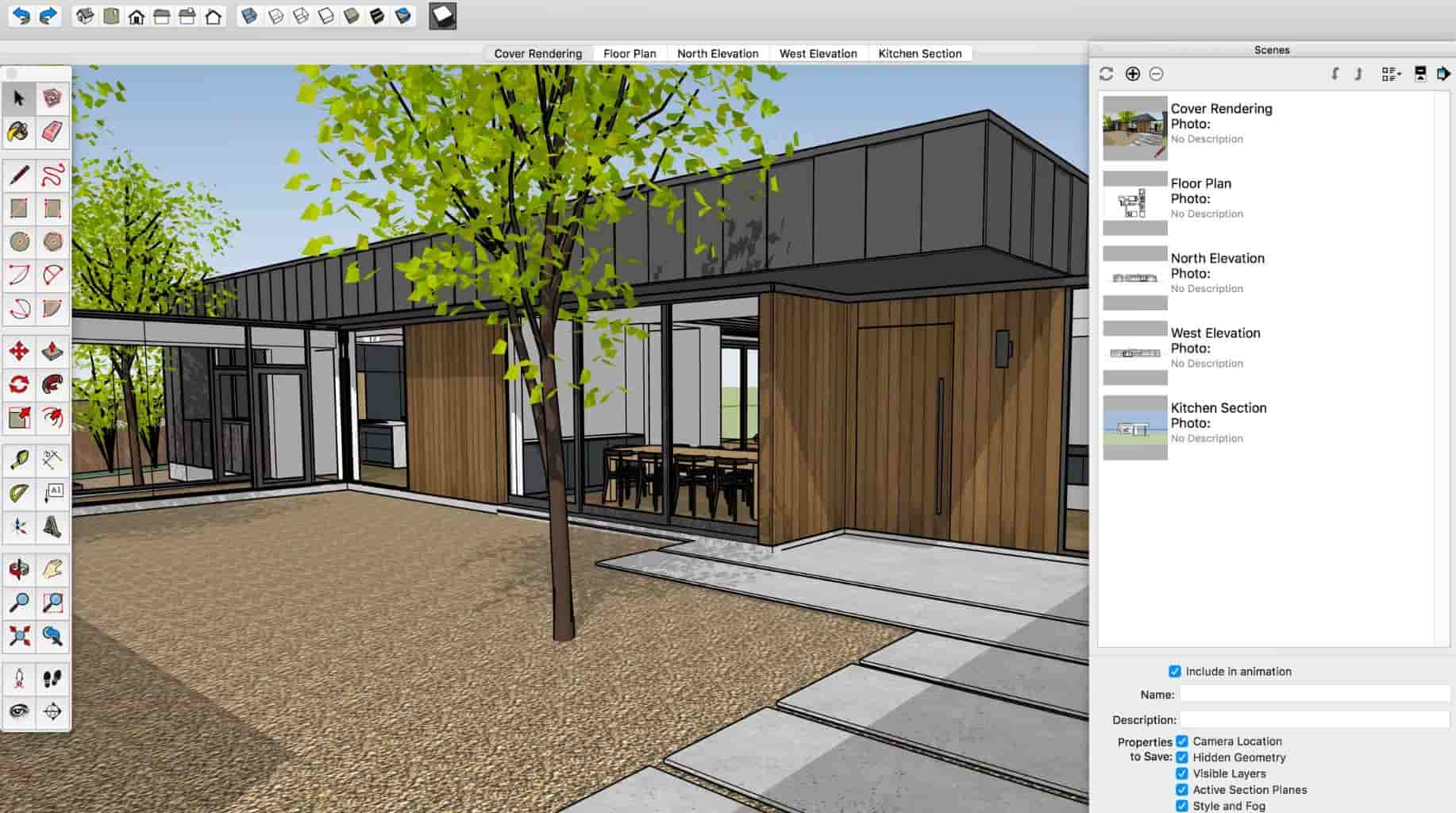
Because of that, SketchUp works wonders in the early stages of your design journey. It helps you:
- Iterate without overthinking too many technical details
- Build quick concept models
- Prepare clean visuals for organised presentations
However, as projects grow more complex, their limitations start to resurface. Creating organic forms to manage complex geometries becomes even more challenging.
This is where most Grasshopper vs SketchUp Architecture discussions highlight the much visible gap. SketchUp is excellent for speed, but it doesn't perform well when it comes to advanced design workflows.
How Rhino Changes the Game
Once you move beyond standard modelling, Rhino becomes much more intuitive.
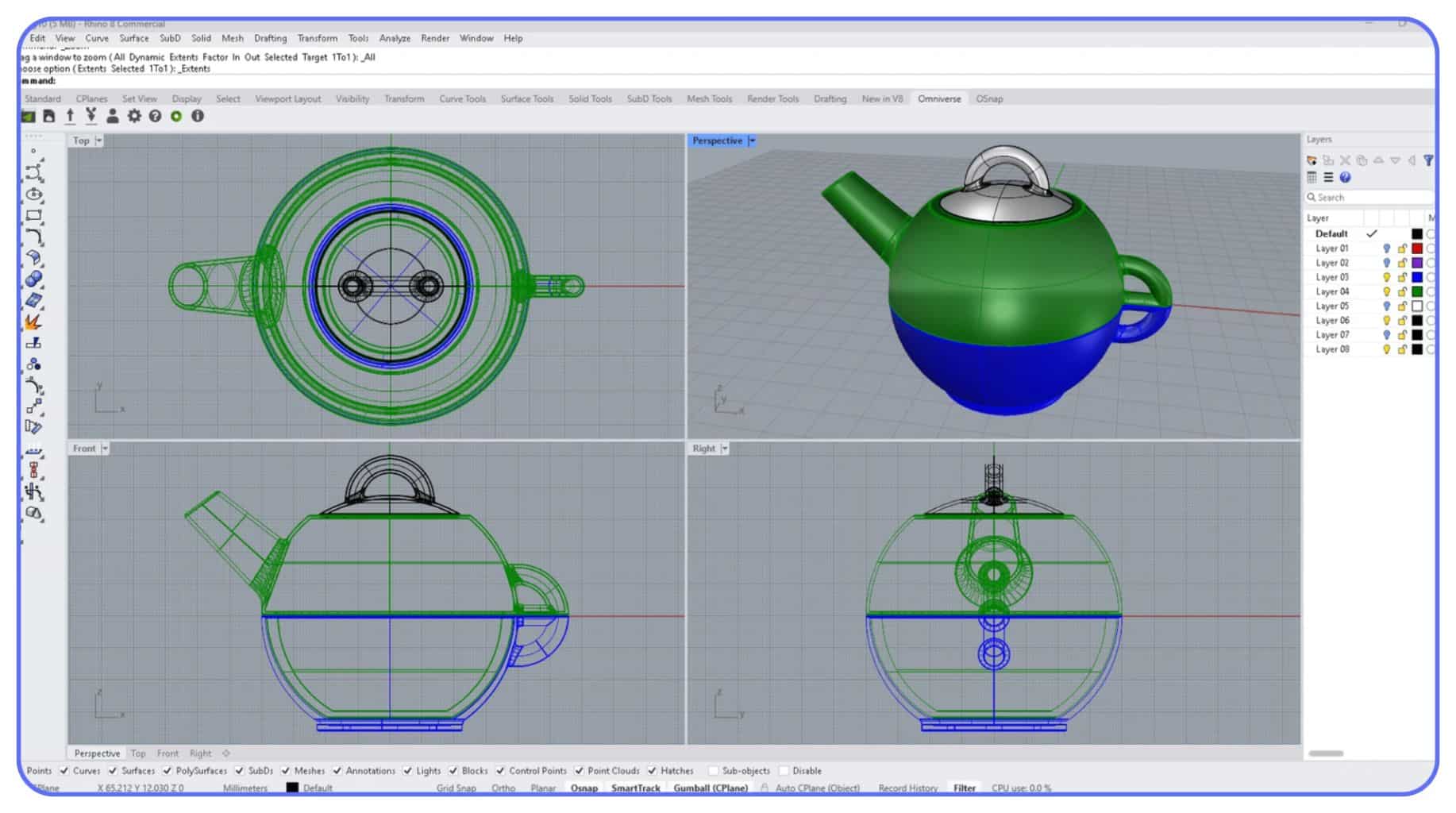
Unlike SketchUp, Rhino is designed to achieve precision. It uses Non-Uniform Rational Basis Splines (NURBS) geometry, allowing you to create smooth, controlled complex forms without sacrificing accuracy. At first, this just feels slower. This interface is less forgiving, and you must be more mindful of your modelling techniques.
But over time, that control transitions into an advantage.
- Work on intricate architectural forms
- Maintain accuracy across a large-scale project
- Integrate with professional tools
This is why, in most Rhino vs. SketchUp 2026 comparisons, Rhino is seen as the next step rather than a replacement. You don’t just model efficiently, you model better.
Grasshopper: Where Design Becomes a System
If Rhino gives you control, Grasshopper changes how you operate or think about a design. Rhino enables you to define systems and work them through, rather than manually building geometry. You can create a system, and the design updates automatically operate on inputs.
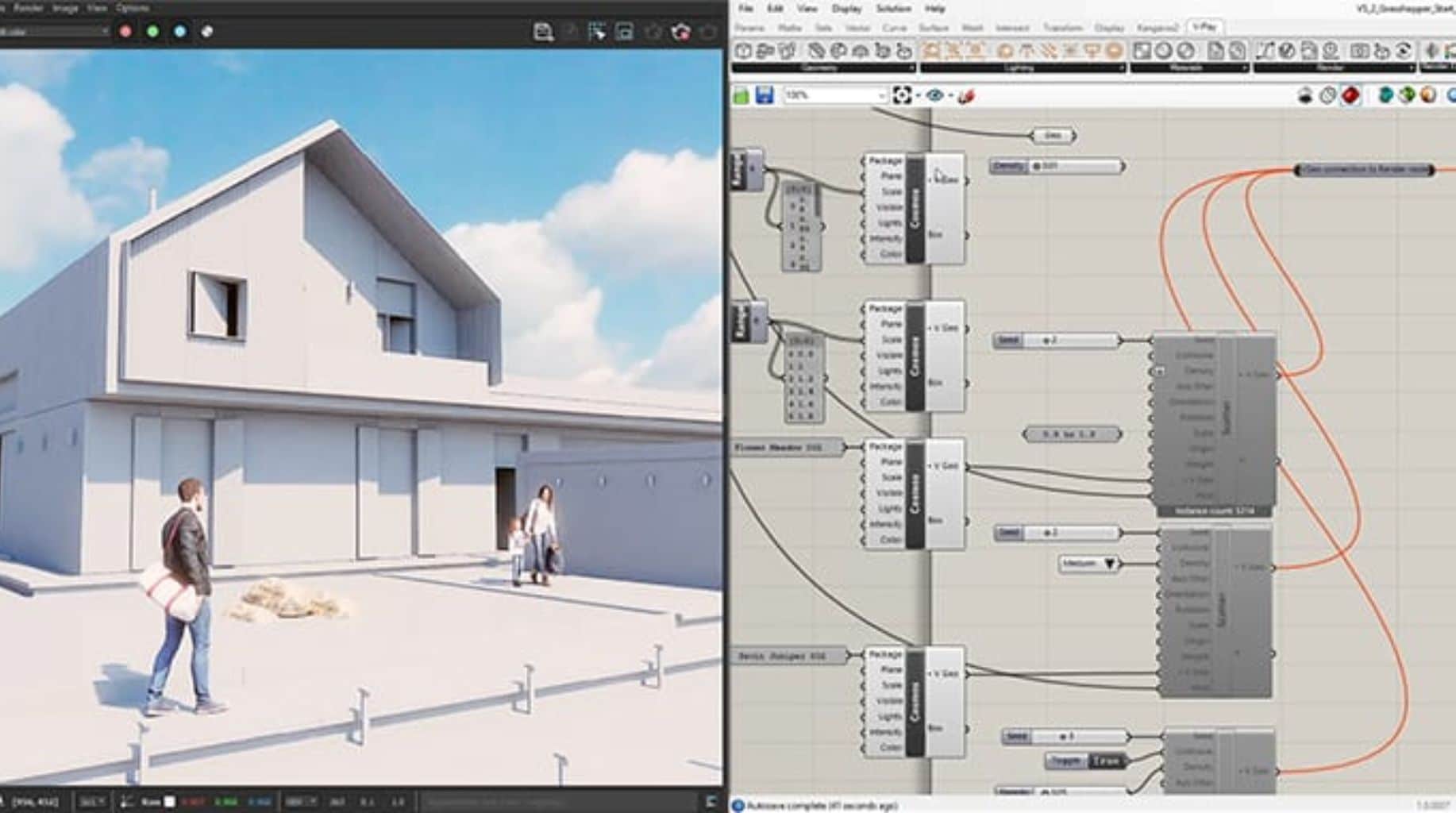
At first, this can make you feel a little lost and perhaps a bit abstract. You’re not drawing in any traditional method; you’re simply laying out the rules. But that’s exactly what makes it out of the ordinary.
- Automate repetitive modelling tasks
- Develop multiple design variations instantly
- Explore forms that would be unreal to model manually
This is where the Grasshopper vs SketchUp architecture competition becomes one-sided. SketchUp helps you model what you already have in mind. Grasshopper helps you uncover possibilities you never thought you’d have.
Rhino vs SketchUp 2026: A Practical Comparison
With software tied to specific functions and roles, professionals can now assess tools against their needs and requirements. Now that the roles are clearer, it’s easier to keep them in parallel and compare them in real-time situations.
However, if your goal is to have your client click with the concept, SketchUp remains the more efficient option. You can build and visualise ideas without getting bogged down by technical details.
But once your design starts to develop, SketchUp remains the fastest option. You can visualise and develop ideas without getting bogged down in technical details. But the moment your design starts to incorporate complex surfaces or intricate geometry, Rhino becomes much more reliable.
When your project requires adaptability, such as generating multiple variations or adjusting parameters, Grasshopper becomes pivotal. So, the endgame of Rhino vs SketchUp in 2026, the comparison isn’t about which tool wins the game; it’s more about which tool fits a specific stage of your workflow.
Grasshopper vs SketchUp Architecture: What Should You Prioritise?
This is where many students face confusion. They weigh their options and try to choose between SketchUp and Grasshopper, assuming they serve the same purpose. They don’t. However, if you’re just starting, SketchUp makes sense, builds your confidence, and helps you get a sense of the space and form.
But if you stop there, you can limit yourself.
Grasshopper, especially when combined with Rhino, opens a channel to a completely different stage of the design workflow and capabilities. In most Grasshopper vs. SketchUp architecture scenarios, the better question is not “which one looks better” but “when do I transition?”
The Right Learning Path in 2026
Instead of choosing one tool, think in terms of progress. One can start with SketchUp to get acquainted with modelling and then use those skills to develop speed and clarity in your ideas. Then move to Rhino once your projects demand more control. This is where you begin to manage complexity in your ideas with greater confidence.
Finally, add Grasshopper when you’re all set to think beyond simple manual modelling. This is where your work begins to be highlighted. This step-by-step approach makes the Rhino vs. SketchUp comparison in 2026 straightforward. You’re not replacing one tool with another; also, you’re building a skill tower.
Final Verdict: Rhino vs SketchUp 2026
If we simplify everything, the conclusion is crystal clear.
| SketchUp | Rhino | Grasshopper |
| Best starting for quick visualisation and early learning. | Takes you further by giving you precision and flexibility. | Pushes you to the advanced stage and a future-ready design. |
So, to think of it, the real answer to the question: Rhino vs SketchUp in 2026 is not choosing one over the other. It’s actually knowing when to use each. When it comes to Grasshopper vs. SketchUp architecture, the difference is even more pronounced. One helps you model faster, while the other helps you design smarter.
A Smarter Move for Architecture Students
One common mistake that students make is staying in their comfort zone for too long. They start with SketchUp and keep using it for everything, even when their projects outgrow it.
A better approach is to make the transition early—while you are adapting to new skills and figuring out the armour of tools you’d like to take with you.
Learning Rhino and Grasshopper while you’re still in college provides you with a significant advantage. This is not just an advantage. In fact, you’re building skills that align with where the industry is heading
Learn Rhino + Grasshopper the Right Way
If you’re planning to move beyond simple and basic tools, structured and systematic learning can save you a lot of time.
Kaarwan’s Rhino + Grasshopper 50-hour course is designed for architecture students who want to develop practical, real-world skills. It all focuses on:
- Real architectural applications
- Strong Rhino basics
- Parametric workflows using Grasshopper
- Portfolio-ready outputs
So, instead of hopping between tutorials, you follow a clear path that brings everything together.
Conclusion
At the end of the day, this isn’t a software decision. The Rhino vs. SketchUp debate in 2026 reflects two opposing approaches to architecture. One prioritises speed, and the other puts depth and adaptability at the forefront.
Truth is, when you compare Grasshopper and SketchUp in architecture, the gap becomes clearer. The students who stand out in 2026 won't be the ones who choose a single tool; they’ll be the ones who understand how these tools fit together and use them at the right time.
And like we said in the beginning, it’s all about the timing.
Don’t waste another minute, sign up now.
FAQs
1. Is Rhino better than SketchUp for architecture students in 2026?
In the Rhino vs SketchUp 2026 comparison, Rhino is better for complex design, while SketchUp is easier for quick modelling and presentations.
2. Should I learn SketchUp or Rhino first?
Start with SketchUp for basics, then move to Rhino as your projects become more complex.
3. What is the difference between Grasshopper and SketchUp?
In Grasshopper vs SketchUp architecture, SketchUp is for direct modelling, while Grasshopper uses parametric rules to generate designs.
4. Is Grasshopper necessary for architecture students?
Not required, but very useful for advanced and future-focused design workflows.
5. Can Rhino replace SketchUp?
Not completely. SketchUp is faster for concepts, while Rhino is better for precision work.
6. Is Grasshopper harder than SketchUp?
Yes. Grasshopper has a steeper learning curve but offers more design flexibility.
7. Which software is best for architecture students in 2026?
SketchUp for beginners, Rhino for advanced modelling, and Grasshopper for parametric design.
8. Do firms prefer Rhino or SketchUp?
SketchUp is common for quick work, while Rhino and Grasshopper are preferred for complex projects.
9. How long does it take to learn Rhino and Grasshopper?
SketchUp takes days, Rhino weeks, and Grasshopper takes longer depending on depth.
10. Is Rhino + Grasshopper good for future careers?
Yes. In rhino vs sketchup 2026, Rhino + Grasshopper is more future-ready for architecture careers.



.png)