

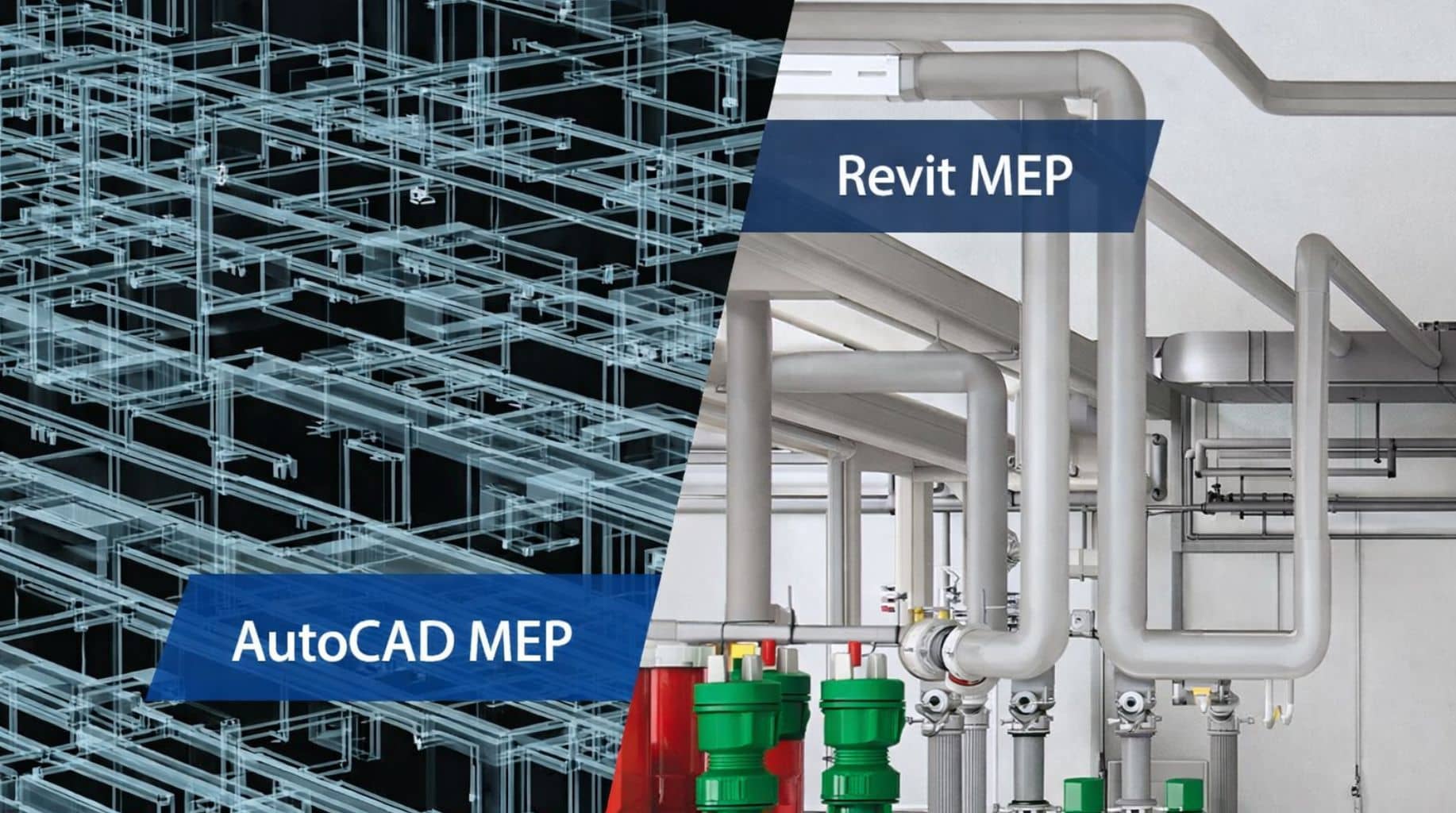
If you’re an MEP engineer in India in this day and age, you’ve probably heard the shift in tech advancement recently. The conversation around Revit MEP vs AutoCAD MEP in India is no longer a basic comparison to make; it’s surfacing in job descriptions, salary offers, and even the kind of projects engineers get to work on.
This is a clear indication of how not only is the technology advancing on the outer surface, but it’s also penetrating the resume of a professional and the office space of a firm owner. So if you’re an MEP engineer in India today, maybe you’ve already felt the time evolve and the skillset shift. The conversation around the MEP engineer in India today is not just a technical comparison anymore; it’s showing up in job descriptions, salary offers and even the kind of projects engineers get to work on.
Right now, the numbers are indicative of another story. There are over 2,000 active job openings in India looking for Revit MEP or BIM skills, but hardly 200 of them are focused on AutoCAD MEP alone. However, the cherry on top is that engineers with BIM expertise are earning 40-60% more than those who wholly rely on CAD. This isn’t a trend that might happen; it’s already happening, and the switch is taking over the industry.
Why the Revit MEP vs AutoCAD MEP India Debate Matters in 2026
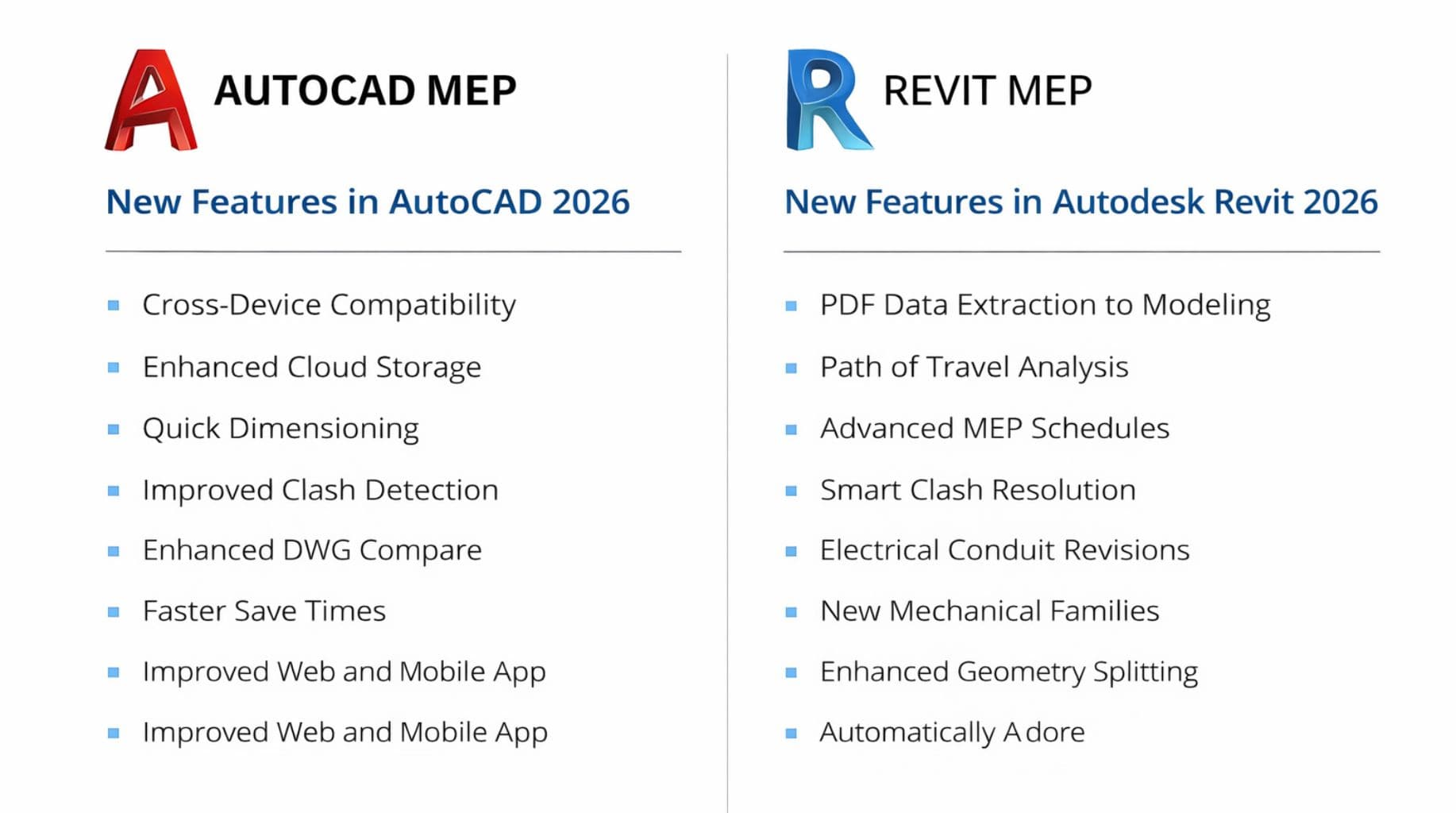
To get this shift, you need to look at how projects themselves are constantly changing.
It’s a fact that modern buildings are no longer basic structures. They involve tightly integrated systems, from electrical layouts to HVAC to plumbing networks that must work in sync without any clashes. Clients expect faster delivery, fewer errors and better coordination. This is exactly where Revit MEP in 2026 stands out. Unlike traditional drafting tools, it’s created around BIM, which indicates that every element in the model is a carrier of information and not just geometry.
As a result, the role of an MEP engineer is progressing. Instead of just producing drawings, engineers are now expected to think in systems, anticipate issues and collaborate across disciplines. This shift alone is encouraging many professionals towards BIM-based tools.
Core Difference: Drafting vs Intelligent Modelling
At the core of Revit MEP vs AutoCAD MEP in India differentiation is simple but important to note. AutoCAD MEP works mainly as a drafting tool and allows you to create detailed 2D drawings and a couple of 3D representations. However, the most important of them all has to be done manually. If a change happens in one segment of the drawing, you often need to revisit multiple sheets yourself.
Revit MEP, on the other hand, is designed for intelligent modelling. In Revit MEP in 2026, every component is interlinked. A single change automatically changes across plans, sections and schedules. This, in turn, reduces mundane work systems and significantly reduces the chance of errors.
So instead of working with disconnected drawings, you’re working with a live model that interacts with the entire project.
What Indian Employers Are Actually Hiring For
The simplest way to understand where the industry is directing at is to look at a couple of hiring patterns.
Today, most employers aren’t just looking for drafting skills; they’re looking for engineers who get BIM workflows. This also includes things like clash detection, coordination between disciplines and working with shared models.
And this is the reason why in the Revit MEP vs AutoCAD MEP in India discussion, AutoCAD alone is not enough. It’s often treated as a fundamental requirement, while Revit and BIM skills are what will make the candidates stand out.
In practical terms, this means that the probability of an engineer with Revit experience getting shortlisted is higher, even if both candidates have similar years of experience.
Salary Gap: Why BIM Skills Pay More
The salary gap between CAD-based and BIM-based roles is hard to not notice. Engineers who rely on AutoCAD typically start at ₹2.5-5 LPA. The growth is steady, but often limited. However, in contrast, engineers who are trained in Revit MEP in 2026 and BIM workflows usually start higher, mostly between ₹4 and 8 LPA. With a few years of experience, this can shortly and surely soar and reach around ₹8 to 15 LPA or more.
The reason is quite simple. BIM manages and reduces errors, improves coordination and saves project time. For firms, this translates directly into cost savings. Committing a higher salary for a skilled BIM engineer becomes a logical investment that firms are willing to pay.
Learning Curve: Short-Term Effort, Long-Term Gain
One of the most common concerns engineers cross paths with is having to switch between tools and the effort that might be required in the process.
It’s a fact that AutoCAD is relatively easier to pick up, and one can learn the basics quite quickly and start producing drawings. On the other hand, Revit takes more time because it changes how you think about design. You’re not just drawing lines anymore; you’re building systems that interact with each other and are in simulation.
However, once you can make ends meet with Revit in MEP in 2026, the benefits are quite substantial. Tasks that took hours and consumed days, like updating multiple drawings or generating simple schedules, can be done in minutes (or even seconds). Over time, this results in efficiency.
So, if you think about this long-term, you’d notice how this is like a one-time investment. You invest some time in skills or tools like these, and you’re sorted for years to come.
Real Project Impact: Where Revit Makes a Difference
The original value of this shift becomes crystal clear when you take a quick look at the project impact. Where in AutoCAD, clashes between systems are often discovered late, or sometimes not even found, Revit MEP is quite the opposite. It allows you to detect and solve the clashes before they reach on-site and lead to delayed fixing, which further leads to spending extra time and money.
With Revit, clashes can be observed early on in the design phase. This also allows teams to resolve these issues before they become actual problems. Similarly, collaboration also makes life easier and much smoother. Instead of working on isolated files, multiple teams can contribute to the same model. Changes can be noticed almost instantly, which again leads to better coordination and communication across teams and stakeholders.
These are af few practical advantages that are spearheading the inclination of the industry towards Revit MEP from AutoCAD MEP in India.
Why Engineers in India Are Making the Switch
When you connect all these data points, the transition starts making more sense.
India is witnessing an unprecedented growth in infrastructure, smart cities and large-scale developments. Many of these projects need BIM as a standard deliverable, especially when collaborating with international clients.
At the same time, global demand for BIM services is increasing, and India is coming out to be a major hot spot for outsourcing these projects.
In this context, tools like AutoCAD still have their place, but they are no longer at the centre of modern workflows. Engineers who are willing to stay relevant are stepping towards BIM, and that mostly means learning Revit.
The shift towards BIM isn’t happening in random fashion. It’s being steered by clear, measurable alterations across the industry. To start with, the hiring data already shows where the demand is going. As of 2026, India has 2000+ active job openings for Revit MEP and BIM roles, compared to fewer than 200 roles focused primarily on AutoCAD in MEP. And that’s not really a small gap; it’s a tenfold increase, and it reflects what kind of employees companies are looking for to work on their projects.
The salary gap also justifies this shift. Engineers with BIM and Revit in MEP in 2026 skills are earning 40-60% more than CAD-only professionals with similar experience. In many mid-sized firms, BIM engineers are now being fast-tracked into coordination and leadership roles within the next 2-3 years, something that used to take much more time than usually anticipated.
Beyond hiring, project requirements are also evolving. A growing number of large-scale developments in India, especially in metropolitan areas, have now mandated BIM workflows for smoother coordination and execution. This is particularly common in:
- Commercial high-rises
- Hospitals and healthcare industries
- Data centres and smart buildings
As a matter of fact, the industry estimates also suggest that over 60-70% of Tier 1 construction projects in India now involve BIM at a certain point in project development. Be it for design coordination, clash detection or facility management planning.
There’s also a global factor to consider. India has become a major hub for BIM outsourcing, with international firms relying on Indian teams for modelling and coordination work. These projects almost require Revit-based workflows and not traditional CAD drafting.
When you integrate all these factors, the fog clears, and the path is quite obvious. The conversation around Revit in MEP vs AutoCAD in MEP in India is no longer about which tool is better in theory. It’s about which one aligns with where the industry is already moving.
Engineers aren’t switching because of trends or some kind of hype. They’re switching because the work itself demands it, needs it.
Should You Still Learn AutoCAD MEP?
Well, AutoCAD isn’t obsolete. It still plays a role, especially when you’re learning early and getting acquainted with the industry and a couple of legacy projects. But it’s also true that relying on it alone can limit your career growth.
A more practical approach would be to treat AutoCAD as the foundation and then build on it as you progress in your career with skills like Revit in MEP. These two put together give you the flexibility to prepare you for the future and face head-on any advancements that will make way in the future.
The Skills That Matter Going Forward
If you’re planning your next step, keep an eye out for skills that align with the current industry demand. This also includes Revit in MEP modelling, BIM coordination, clash detection using tools like Navisworks and a strong understanding of intricate building systems.
These are not just software skills; they reflect a shift in how engineers can approach projects, moving from basic drafting to problem-solving within complex integrated systems.
Final Verdict: What Should You Choose?
When you look at a job opening—the demand, the salary growth and the project demands together, the conclusion is pretty simple:
AutoCAD in MEP is useful, yes, but only as a starting point. It’s also true that it has plenty of limitations, and the scope is quite limited.
Revit in MEP offers a stronger career growth, better pay and alignment, lying in sync with where the industry is heading. That’s why the Revit in MEP vs AutoCAD in MEP in India debate is mainly biased.
However, if you’re planning to move into BIM, how you learn matters as much as what you learn. Structured programs from platforms like Kaarwan focus on real project workflows, helping you apply these skills in practical use cases.
And that’s exactly what employers are looking for. Not just simple software knowledge, but the ability to contribute to live BIM projects from day one.
You can begin your journey today.
FAQs
1. Which is better: Revit MEP or AutoCAD MEP in India?
Revit MEP is better for 2026 due to higher demand, better salaries, and BIM-based workflows.
2. Is Revit MEP 2026 worth learning?
Yes. It’s one of the most in-demand skills for MEP engineers in India right now.
3. Can I switch from AutoCAD MEP to Revit MEP?
Yes. Most engineers can transition within 2–4 months with consistent practice.
4. What is the salary after learning Revit MEP?
BIM-skilled engineers earn 40–60% more than CAD-only professionals.
5. Is AutoCAD MEP still used in India?
Yes, but mostly for basic or legacy projects. BIM is preferred for new work.
6. How long does it take to learn Revit MEP 2026?
Around 2–4 months to reach a working level.
7. What skills should MEP engineers learn in 2026?
Revit MEP, BIM coordination, and clash detection.
8. Is BIM mandatory for MEP engineers?
Not everywhere, but it’s becoming standard for major projects.
9. What’s the main difference between Revit and AutoCAD MEP?
AutoCAD is for drafting. Revit is for BIM and system-based modelling.
10. Which course is best for learning BIM in India?
Choose a practical MEP BIM course India focused on real projects and workflows.




.png)