


These top infrastructure projects of 2025 aren't just feats of construction, they represent the future of civil engineering, where BIM (Building Information Modelling) is rapidly becoming the industry standard for planning, designing, coordinating, and maintaining complex infrastructure at scale.
Each of these projects solves real-world challenges: urban congestion, outdated healthcare infrastructure, climate resilience, cross-border connectivity, and smart urban living, all while embracing digital workflows that make civil engineering faster, greener, safer, and more collaborative.
1. Najafgarh Drain Roadway Redevelopment, Delhi
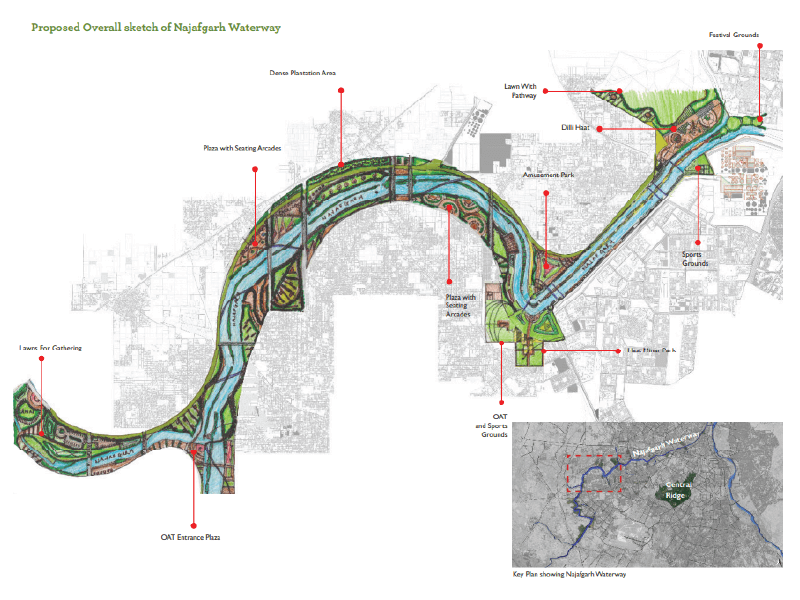
Source: Proposal for Najafgarh Waterway from Vision for Delhi (West Zone)
A new 60.77 km long road with a green mobility corridor is being planned alongside a city drain. This drain is not only a crucial part of flood management today, but once this Najafgarh drain was part of the Sahibi River, originating from Rajasthan. Over the course of time, with several human interventions to manage floods, the ecosystem of the stream, lakes, and wetlands around Najafgarh Jheel was disturbed. While pollution and wastewater have shrunk crucial biodiversity around the waterway.
This project encompasses measures for flood management, pathways for walking and cycling, water taxi services, DEWATS systems, and public spaces like Dilli Haat and parks. Key sites, such as the Hast Minar and Adhyapak Greens, are being revitalised to serve as vibrant cultural and recreational hubs, promoting a strong and eco-conscious urban environment. Cleaning operations started in 2022, and the project budget was announced in May 2025 and is estimated to finish by 2027.
For engineers, it's an opportunity to learn to manage large linear projects with comprehensive coordination via Building Information Modelling (BIM) workflow, which keeps the costings transparent and stakeholders updated about project progress.
2. Goregaon-Mulund Link Road (GMLR), Mumbai
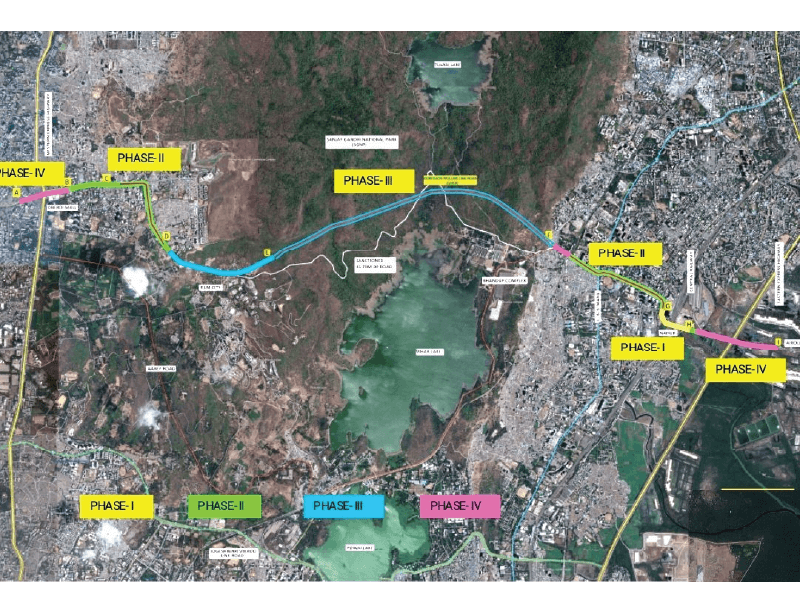
Source: The Metro Rail Guy
It will be a 12.20 km long road infrastructure, 6.3km twin tunnels built under Sanjay Gandhi National Park, the fourth corridor in Mumbai, connecting the western express highway at Goregaon to the eastern express highway in Mulund. Brihanmumbai Municipal Corporation awarded the project for construction to NCC - J Kumar Infraprojects JV. The project is estimated to be completed by 2028, which will help reduce commute time and distance.
3. Delhi, IGIA Terminal 1 Expansion and Airside Modernisation
_11zon_1747990308114.jpg)
Source : The Metro Rail
Delhi's Indira Gandhi International Airport (IGIA) is up for a series of major infrastructure projects. From terminal upgrades to critical runway enhancements, these developments aim to boost capacity and improve efficiency. Building Information Modelling (BIM) was previously used in IGI’s Terminal 3 construction and is advocated by the Airport Authority of India (AAI) for large-scale airport projects
The expansion of Terminal 1, will increase its capacity to handle 4 crore passengers annually. After the security clearances, the upgraded terminal will be fully operational by April. This will allow the closure of Terminal 2 for essential repairs, including apron strengthening, new flooring, modernised washrooms, and upgraded boarding bridges.
4. Deonar Waste-to-Energy and Bio-CNG Projects, Mumbai
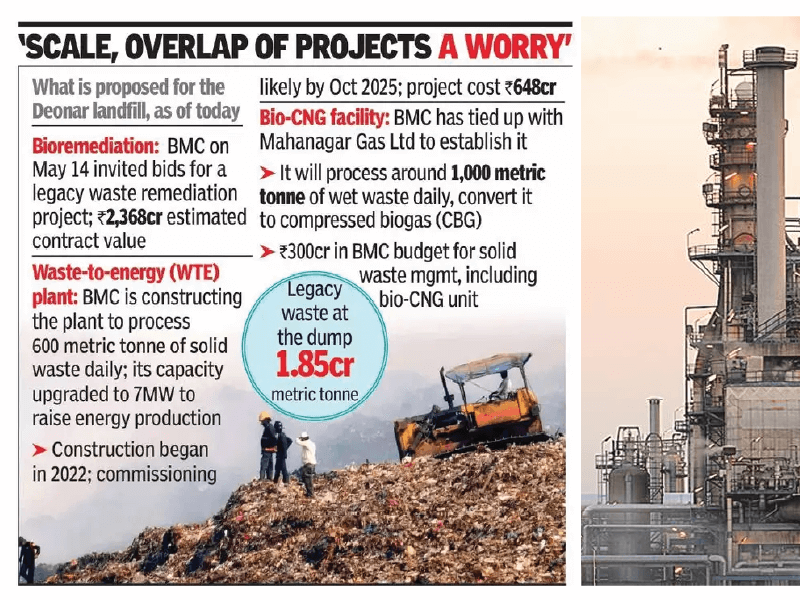
Source : Times of India & The Indian Express
Brihanmumbai Municipal Corporation (BMC), along with the clearance of 185 lakh metric tonne of waste the government has passed out tenders for 2 more projects on the same site, which is about 311 acres. One of them is to set a WTE, waste-to-energy plant, that will process over 600 tons per day to generate 7 megawatts of electricity. Another project is to introduce a bio-CNG (Compressed Natural Gas) plant that will process 1,000 tonnes of garbage daily. The goal is to clean up the legacy of waste and turn it into electricity and fuel, while ensuring the health of the community in an eco-friendly manner.
5. Gokhale Bridge Reconstruction, Mumbai
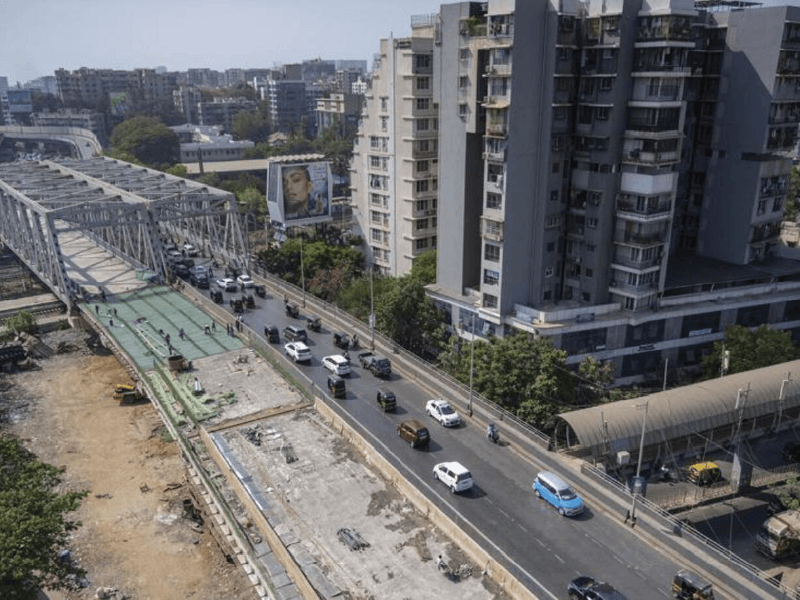
Source : Curly Tales
The iconic Gokhale Bridge in Andheri is getting a new lease of life. After the Brihanmumbai Municipal Corporation demolished the Gokhale Bridge in Andheri in late 2022 due to structural concerns, it has ordered reconstruction to begin again. One half of the bridge was already open to the public in early 2024. The remaining work is expected to wrap up by mid-2025, improving traffic and restoring critical east-west connectivity.
6. Yerawada-Katraj Twin Tunnel Project, Pune
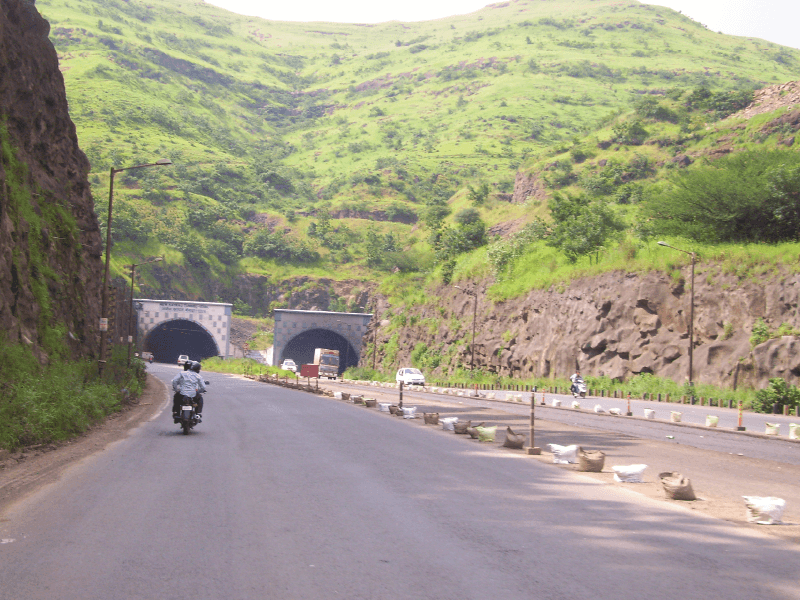
Source : Wikipedia
Pune Metropolitan Region Development Authority (PMRDA) has initiated the pre-feasibility stage for the construction of two underground tunnels, connecting Yerawada and Katraj, the northern and southern parts of the city. Each tunnel will have three lanes, along a 20-kilometre stretch, aiming to reduce traffic congestion on existing arterial roads.
7. Rail Infrastructure Upgrades, Coimbatore
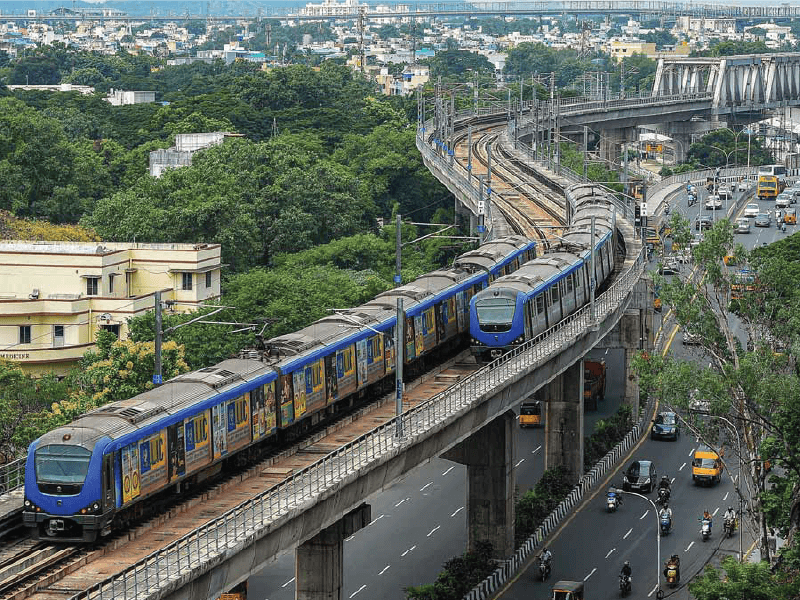
Source : Native Planet
Southern Railway is making significant investments to improve Coimbatore’s railway network, all focused on improving the experience for passengers and facilitating freight movement. The railway department is to increase the platform height at Irugur and Somanur stations, to upgrade the LHB coach maintenance facility at Coimbatore Junction, and develop a coach maintenance facility at Podanur. While also focusing on the modernisation of goods sheds at Irugur and Coimbatore North stations.
A review of a 72km railway line to link industrial areas, which will help boost freight transport and reduce traffic congestion. The Coimbatore Metro Rail project has also commenced land acquisition and survey activities, a step towards better public transport in the city. In the first phase, the metro will connect Ukkadam Bus Stand to Neelambur, passing through the airport, and also link Coimbatore Railway Junction to Valiyampalayam Pirivu. While essential underground utilities like drainage lines, water pipes, electric cables, and telecom networks are being mapped out to ensure smooth running once construction kicks off.
8. Assam Infrastructure Development Projects
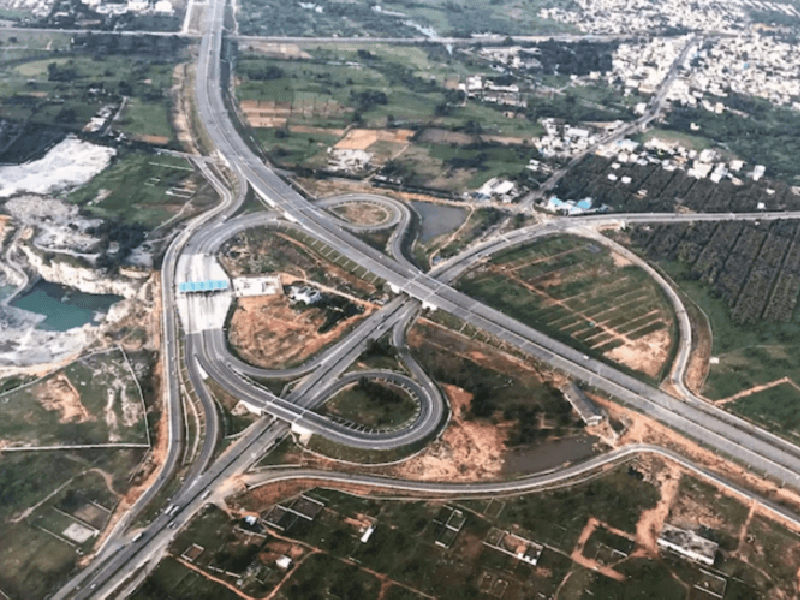
Source: Urban Acres
The Assam government has signed MoUs for 20 infrastructure projects, to cover sectors like waste management, renewable energy, and high-speed highways such as the Guwahati Ring Road. The National Highways Authority of India (NHAI) has awarded Infracon Pvt Ltd with the 121 km long Guwahati Ring Road project.
This will help reduce traffic disparities and improve regional connectivity across Assam and the Northeast. BIM workflows help maintain accuracy throughout the project length, allowing stakeholders to keep a close eye on any clashes, thus helping the limited budget and waste of resources and time for the government, which can then be focused on important decisions and project improvements.
9. Government Medical College and Hospital (GMCH) Modernisation, Nagpur
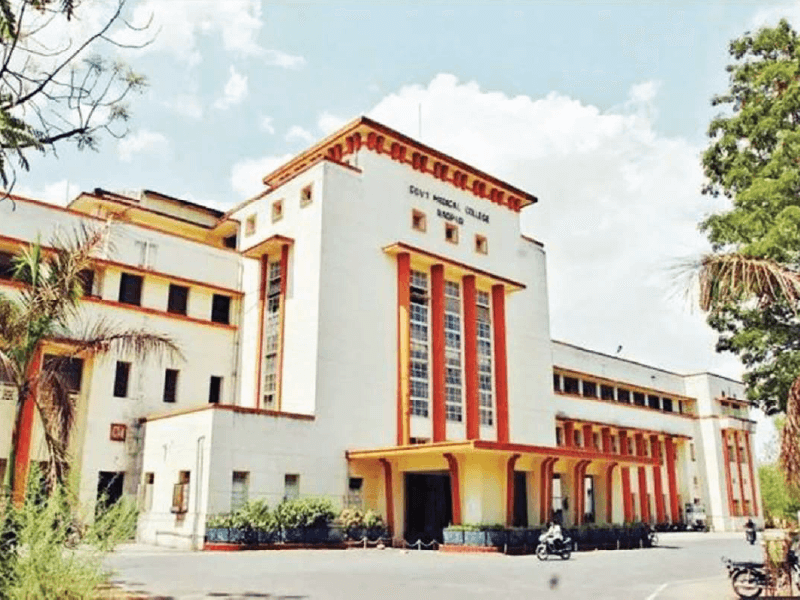
Source : The Live Nagpur
The present Mayo Hospital came into existence in 1862 and was known as the "City Hospital". A medical school was started in 1914 in that hospital and was under the Nagpur Education Board. The CM has recognised that the hospital serves patients from all sections of society, thus public medical education and high-quality treatment facilities must be provided.This will need modernised and upgraded infrastructure so that government hospitals remain a source of hope for society, and function even better than private standards. Various medical blocks, OPD units, advanced surgical wings utilising robotics, smart classrooms and student wings are being developed at GMCH and IGGMCH (Mayo Hospital).
10. Mumbai Trans Harbour Link (Atal Setu)
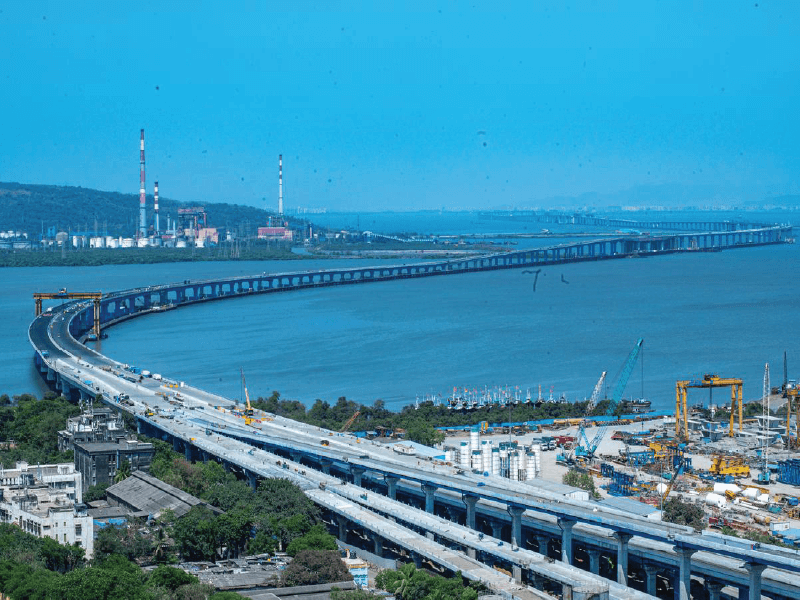
Source : The Hindu, Photo credit Emmanual Yogini
The Mumbai Trans Harbour Link, also known as Atal Setu, is India's longest sea bridge, connecting Sewri in Mumbai to Nhava Sheva in Navi Mumbai, spanning over 21.8 km, with a six-lane bridge. The project was inaugurated in January 2024, while finishing touches of the project are still ongoing.
Expecting to ease traffic, boost economic activities, and enhance the overall quality of life for daily commuters, the concept of the project was contemplated since the 1970s. The bridge is sleek yet functional in design, adding to the aesthetic appeal with appropriate lighting, pedestrian walkways, and viewing decks. While ensuring safety with anti-skid road surfaces to prevent vehicle slippage, emergency lanes for quick access by rescue vehicles, robust barriers to prevent accidents, and state-of-the-art surveillance systems for continuous monitoring.
Technologies like CAD, GIS(Geographic Information Systems), drones, and 3D laser scanning were used for precise planning and surveying. Building Information Modelling (BIM) played a major role in helping teams manage timelines, collaborate across disciplines, and address environmental and site risks in real time.
Dip into BIM in just one day, at a nominal price. Get a guided sneak peek into future career paths and make confident, informed choices.
International Project
11. Addis Ababa City Corridor Project, Ethiopia
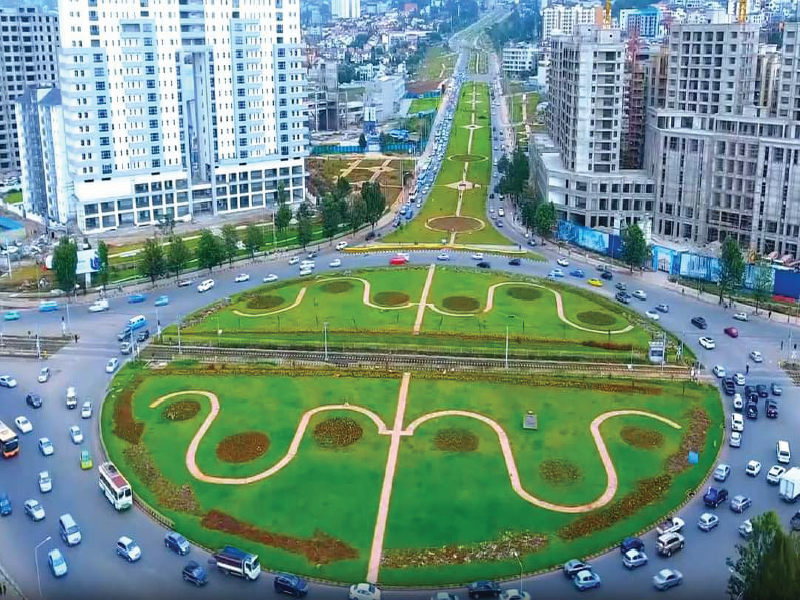
Source: EBS English News
Addis Ababa is undergoing a major urban transformation through its City Corridor Project. Launched in late 2022, the initiative focuses on creating greener, more walkable streets with dedicated bicycle lanes and landscaped public spaces. The project aligns with the city's broader vision of sustainable urban growth and is expected to be completed in 2025.
12. Via Carpathia, Europe
_1747814156167.png)
Source: 3 Seas Europe
Via Carpathia is a trans-European highway stretching from Lithuania to Greece. Designed to improve economic integration across Central and Eastern Europe, it cuts through the Carpathian Mountains and connects several countries. While it's been in development for years, key segments are scheduled to open by 2025, advancing cross-border trade and mobility.
13. Vienna Smart City Project, Austria
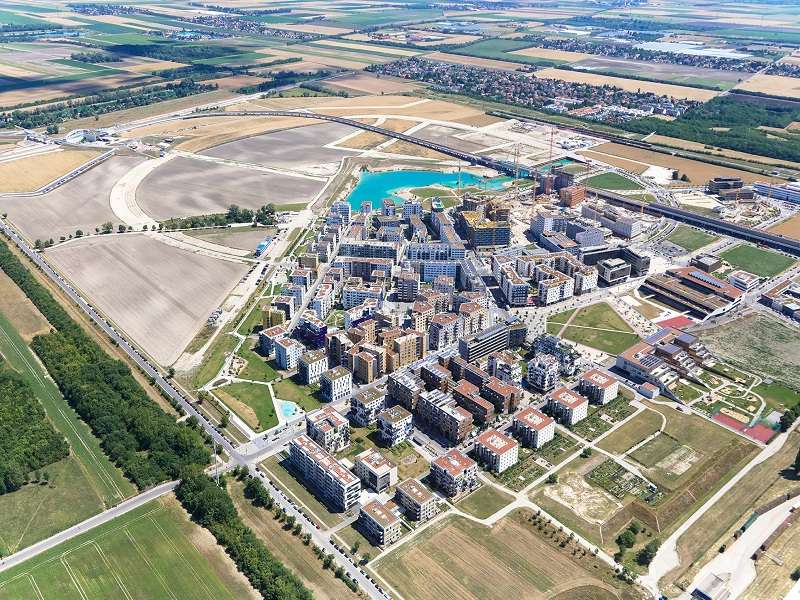
Source: Automatismos Mundo
The Vienna Smart City project is a long-term urban strategy that blends technology, sustainability, and livability. The city is aiming for climate neutrality by 2040, but several key projects — including smart mobility systems and energy-efficient housing — are expected to hit major milestones in 2025. Vienna continues to lead by example in eco-conscious urban planning.
14. Copenhagen Metro Extension, Denmark
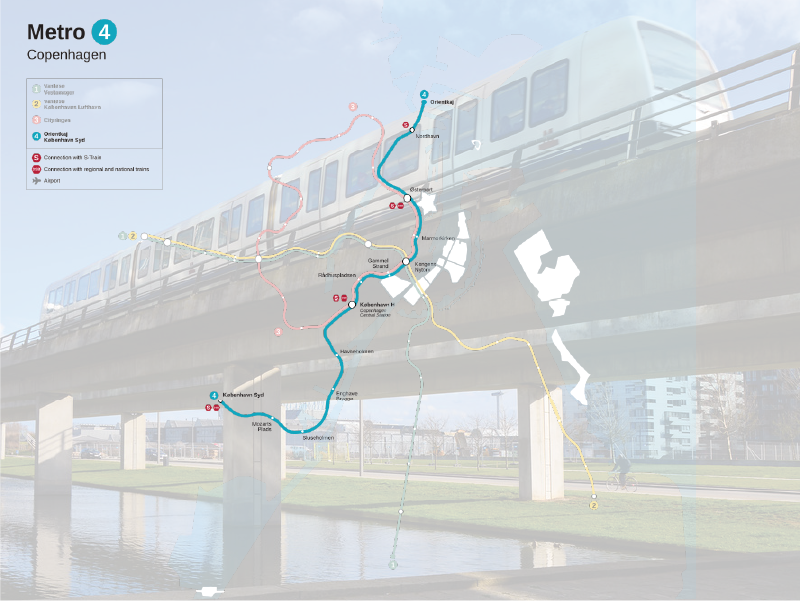
Source: Wikipedia Map & Flickr Image, editing_Pragya@Kaarwan
Copenhagen’s 15 km metro extension is more than just a transport upgrade — it’s a move toward a fully sustainable urban future. The project will connect underserved areas while being entirely powered by renewable energy. Once completed in 2025, it’s expected to ease congestion and further boost Copenhagen’s reputation as a green capital. Interstate 69 Ohio River Crossing, USA
15. Interstate 69 Ohio River Crossing, USA
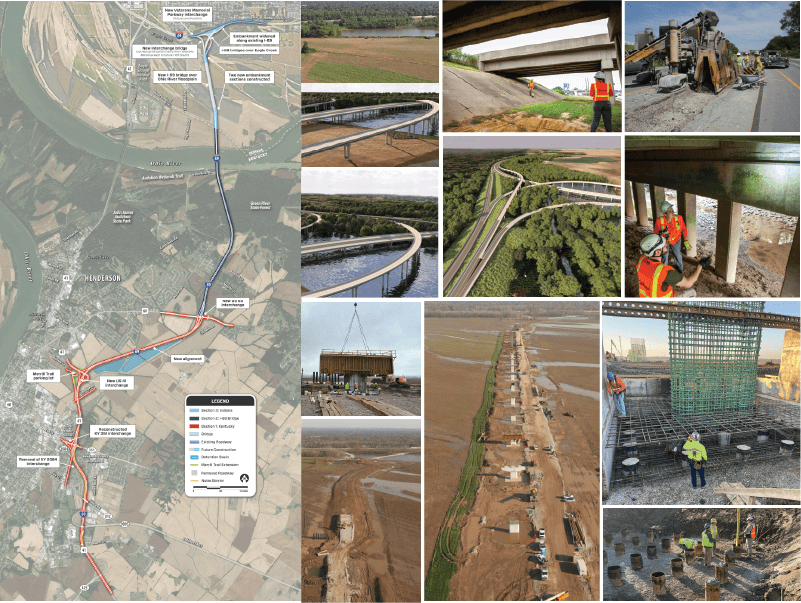
Source: Wikipedia Map & Flickr Image, editing_Pragya@Kaarwan
A highway bridge between Kentucky and Indiana, which is aimed at improving interstate connectivity, improving trade, commerce and healthcare amenities.
Authorities overseeing: Kentucky Transportation Cabinet (KYTC) & Indiana Department of Transportation (INDOT)
Interstate 69 is meant to connect these states: Texas, Mississippi, Tennessee, Kentucky, Indiana, and Michigan. The project is developing in 3 sections.
Section 1, approach road work started in Kentucky in 2022 and is expected to finish by late 2025.
Section 2 is a bridge over the Ohio River that connects the Indiana-Kentucky border between Evansville, Indiana, and Henderson, Kentucky. Construction of this four-lane river crossing is supposed to begin in 2027 and end in 2031.
Section 3. is the approach road in Indiana with design development continuing from 2024 and is expected to end by late 2026.
Civil Engineering Projects That Actually Make Sense for Where You Are Right Now
Let's be honest — most "project ideas for civil engineering students" lists are written by people who have no idea what it's actually like to be a second or third year diploma student with two months, a shared lab, and a professor who will not accept "the software crashed" as a reason for delay.
The internet hands you a list of earthquake-resistant building models, highway interchange designs, and smart city infrastructure projects — and then you're supposed to figure out how to do that with four lab sessions and a budget that barely covers cement cubes.
This guide is different. It's split into what you actually need: real diploma-level projects with achievable scope, mini project topics for shorter timelines, and a few genuinely creative directions if you want your work to stand out. Plus — how to write the report so it doesn't undermine everything you built.
Diploma-Level Projects: Sized for Real Constraints
These are for students with roughly 2–3 months and limited but functional lab access. Each one builds something you can talk about in a viva or interview without having to explain away half the work.
1. Low-Cost Housing Construction Model
Build a scaled model of an affordable housing unit using locally sourced materials — brick, mortar, lightweight concrete. The point isn't just to make something that looks like a house. It's to document the tradeoffs: where you saved cost, where you had to hold structural adequacy, and why you made those calls.
Firms working on affordable urban housing deal with exactly this balance every day. If you can explain your reasoning, you already sound like someone who's been on site.
2. Small Bridge Design Using Available Materials
Design a pedestrian or rural road bridge using basic structural principles and locally available materials. Load calculations, beam design, foundation requirements — the full package.
What makes this worth doing: you produce actual technical drawings and design calculations. Not a sketch. Not a concept diagram. Something that looks like an engineer made it.
3. Rainwater Harvesting System for a Residential Building
This one has obvious real-world relevance, especially across Indian states where rainwater harvesting is now mandatory for new construction. The design work here — collection area calculation, first-flush diverter sizing, storage tank volume, overflow routing — is directly applicable to practice.
It also photographs well for your report. A well-drawn system diagram with annotated components is worth three pages of dense text.
4. Road Alignment Design Using Basic Surveying
Go out, collect field data, come back, and propose an alignment for a short stretch of local road. Horizontal and vertical alignment, gradient analysis, cross-section design.
This is one of those projects that forces you to actually leave the classroom and engage with a real site. That experience shows — in how you write about it and how you talk about it later.
5. Soil Testing and Foundation Recommendation
Carry out a basic geotechnical investigation: moisture content, Atterberg limits, Proctor compaction, CBR. Then write a report with a foundation recommendation for the site.
Junior geotechnical engineers do exactly this at the start of every construction project. If you've done it once in college, you understand the workflow before you've set foot on a professional site.
6. Septic Tank and Soak Pit System Design
Design a functional septic tank and soak pit for a small residential application. Capacity, retention time, inlet and outlet configuration, soak pit sizing, separation distances.
Environmental sanitation is genuinely under-addressed in Indian construction practice. A well-executed project here tells any interviewer that you care about problems that aren't glamorous but actually matter.
7. Concrete Mix Design and Compressive Strength Testing
Design a mix for M20 or M25 grade concrete, prepare test cubes, cure them, and test at 7 and 28 days. Compare against IS 456 targets.
You will do this from your first week on site. Knowing how it works before you get there — and understanding why the 28-day strength matters — is exactly the kind of thing that makes a new engineer useful faster.
8. Quantity Estimation for a Residential Building
Prepare a complete BOQ for a G+1 or G+2 residential building using IS 1200 measurement rules. Earthwork, PCC, RCC, brickwork, plaster, flooring, openings — the whole thing.
Estimation is not glamorous. But employers expect junior engineers to be able to read drawings and produce quantity estimates. This project builds that skill directly.
9. Retaining Wall Design for a Sloped Site
Design a gravity or cantilever retaining wall for a given slope condition and loading. Run your stability checks — sliding, overturning, bearing — and produce the calculations and a structural drawing.
Retaining walls appear on almost every site with any change in ground level. This is more immediately practical than most students expect.
10. Water Supply Distribution Network Design
Design a simple pipe network for a small residential layout. Hardy-Cross method, head loss calculations, pressure requirements, valve placement.
This builds hydraulics and water supply skills that are directly relevant for municipal and infrastructure roles — a genuinely large part of the civil engineering job market in India.
Read more: Jobs after civil engineering
Mini Project Topics: 1–4 Weeks, Honest Results
Mini projects get done in second or third year. Shorter scope, often model-based or comparative study. The trap most students fall into is treating a mini project like a scaled-down diploma project — which usually means a half-finished version of something too big.
The better approach: pick a focused question, execute cleanly, and present results with clear methodology. Even if the results are inconclusive, honest analysis of why is valuable.
Comparative Study of Construction Materials
Compare compressive strength, cost, and environmental impact of standard brick, AAC blocks, and fly ash bricks. Use lab testing where available; published data where not. End with a recommendation matrix by application type. This works because it's bounded. Three materials, three parameters, one clear output.
Traffic Flow Analysis at a Local Junction
Manual or camera-based traffic count at a busy local junction over 3–4 days, peak hours only. Analyse volume, direction, and delay. Identify one specific bottleneck and suggest one engineering or signal timing improvement. One. Not five. Scope control is part of the skill here.
Water Quality Testing at a Local Source
Collect samples from a local borewell or river. Test pH, turbidity, hardness, bacterial contamination. Compare against BIS 10500 standards. This one has real community relevance in many parts of India. If your results reveal something worth knowing — that's a genuine contribution, even at mini project scale.
Rainwater Harvesting Scale Model
Build a physical model — collection surface, first flush mechanism, storage, overflow — and test it under simulated rainfall. Visual, demonstrable, and easy to explain to a panel that has seen too many PowerPoint-only presentations.
Crack Survey and Remediation Study
Survey nearby buildings for visible cracking. Classify crack types using IS 13935 — structural, thermal, settlement, shrinkage — and propose appropriate remediation for each type. Good photography genuinely elevates this project. A clear remediation chart with photographic evidence is more compelling than any paragraph.
Proctor Compaction Test on Local Soil
One test. Clear results. Solid conclusion. Run a Proctor compaction test on locally sourced soil, plot the curve, determine OMC and MDD, and relate the findings to a specific construction application — road sub-grade or embankment fill. Geotechnical fundamentals done properly.
Want to build real-world civil engineering projects using BIM tools? Kaarwan's BIM Civil Program includes hands-on capstone projects on live construction workflows
Creative Projects: For When You Want Your Work to Actually Get Noticed
Standard project lists are fine. But if you've watched six presentations about earthquake-resistant building models in the same semester, you know that "fine" isn't memorable. These ideas go further. Some need more initiative. All of them generate genuine questions — and questions mean engagement.
Self-Healing Concrete Prototype
Mix bacterial spores into a concrete sample and test whether cracks self-repair under wet conditions over a curing period. Compare crack width measurements before and after. You won't replicate commercial bio-concrete in a college lab. But you will understand the mechanism, demonstrate the concept, and have something to present that almost no one in your department has tried. The first building to use bio-concrete for actual repair — the Basilica in the Netherlands — is a strong case study to open with.
Green Roof Model for Urban Buildings
Build a scaled green roof system — drainage layer, growing medium, vegetation layer — on a model building. Measure temperature difference between the standard roof and the green roof under the same heat source. Urban heat island effect is measurable and increasingly relevant in Indian cities. This project produces a result you can demonstrate physically, which is worth a lot in a viva.
Bamboo as Structural Material
Test bamboo samples in tension and compression. Compare against published steel and RCC values. Assess feasibility for use in low-cost rural housing reinforcement. Bamboo has tensile strength comparable to mild steel. That single finding generates questions. And when you can explain it — with your own test data — you sound like someone who actually investigated something rather than read about it.
Compressed Earth Block Study
Manufacture compressed earth blocks using locally available soil and a manual block press. Test compressive strength. Compare cost and carbon footprint with conventional burnt brick. Strong sustainability argument, minimal expensive materials, and you produce something tangible and testable.
Digital Twin Concept for a Campus Building
Create a BIM model of an existing campus building. Overlay hypothetical sensor data points for energy, occupancy, and structural monitoring. Demonstrate how a digital twin supports maintenance decision-making. This demonstrates BIM skills and genuine technology awareness. Any employer who sees it knows you're not just learning to draw lines.
Paper Crete — Paper Waste as Partial Aggregate
Replace a portion of fine aggregate with shredded paper waste in a concrete mix. Test compressive strength at 7 and 28 days, measure workability, assess weight reduction. Waste management plus materials engineering in one project. Low cost, honest results, and easy to explain to anyone.
Read more: Latest trends in civil engineering.
Writing the Report: Don't Let Weak Documentation Undermine Strong Work
You can have genuinely good project work and still get a mediocre grade because the report is poorly put together. The report is how your work gets evaluated by people who weren't there. It has to stand on its own.
Here's the structure, and what each section actually needs:
Title Page — Project title, your name, roll number, department, institution, supervisor name, submission date. One page. Clean. Don't overthink it.
Abstract — 150–200 words. What you did, why, how, and what you found. Write this last. It's a summary of the completed work, not a preview.
Table of Contents — Generated after the report is finished. Check that page numbers are accurate before you submit.
Introduction — 300–500 words. What problem are you addressing? Why does it matter? What is the scope? End with a clear statement of what the project set out to achieve.
Literature Review — 500–800 words for most undergraduate and diploma projects. Summarise existing research and published work. Cite properly. This shows your evaluator that you read beyond your own lab results.
Methodology — Be specific. What tests did you run? What equipment? What standards did you follow? Specific enough that someone else could replicate your work. If you leave equipment names vague, it reads like you don't actually know what you used.
Results and Discussion — Tables, graphs, photographs. Then: what do the results mean? What do they confirm? What surprised you? Where do they diverge from published data? Results without discussion are just numbers.
Conclusion — 200–300 words. What did you find? Was the objective achieved? What are the limitations? What would you recommend for further work?
References — Consistent format throughout. IS/IEEE/APA depending on your institution's preference. Cite codes, standards, papers, and textbooks — everything you actually referenced.
A few things that consistently hurt reports: copy-pasted text is caught immediately by any experienced evaluator — reference sources, write in your own words. Vague methodology sections tell the reader nothing — name the equipment, state the standard, give the conditions. Results without discussion mean nothing on their own. And inconsistent formatting across sections signals the report wasn't checked before submission. Check it.
If there's one thing worth remembering from all of this: a well-executed project on a modest topic will always outperform a poorly executed project on an ambitious one. Pick something you can actually finish. Do it rigorously. Write it clearly. That's the combination that gets noticed — in vivas, in interviews, and when someone is looking at your portfolio six months from now.
Final Thoughts
These projects collectively signify a transformative phase in global and Indian infrastructure development, emphasising sustainability, technological integration, and socio-economic growth. It seems professionals who adapt, innovate, and add value to their skillset can carve out their space in the AEC industry and contribute to development.



.png)