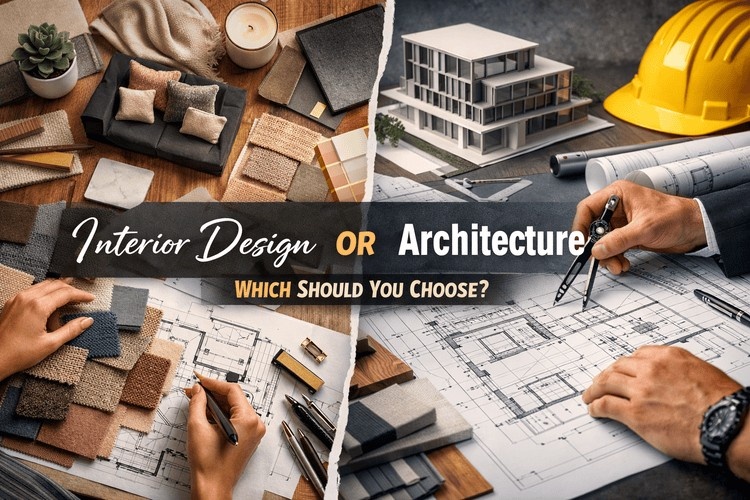
If you have a passion for spaces, aesthetics, and creating environments that people actually love living or working in, chances are you have already asked yourself, Should I pursue interior design vs architecture? Both fields are creative, in-demand, and deeply rewarding — but they are not the same. Understanding the difference is the first step towards making a confident career decision.
Whether you are a student fresh out of Class 12 or a working professional thinking about a design specialisation, this blog is designed to help you break down the two paths clearly, so you can choose the one that truly aligns with your strengths, interests, and goals.
Understanding the Two Fields: What Do They Really Mean?
Before comparing, it helps to understand what each discipline actually involves.
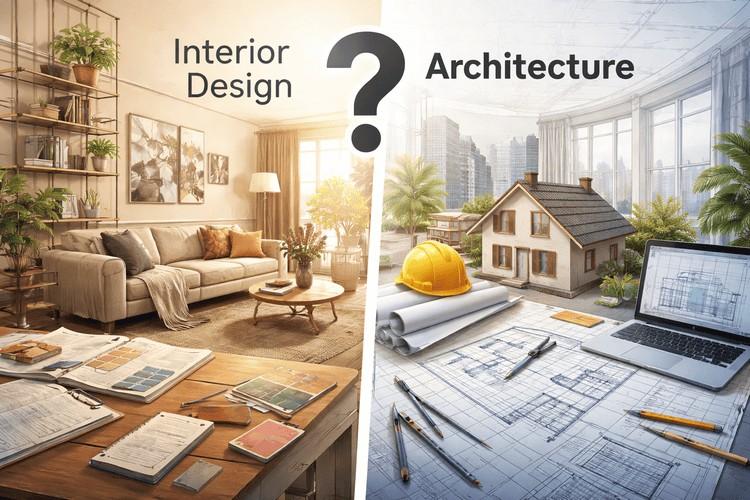
Architecture focuses on designing and constructing entire buildings — covering structural planning, safety compliance, and building codes. It is a highly technical profession requiring a degree and mandatory registration with the Council of Architecture. Curious about specialisations? Exploring the types of architects shows just how diverse this field is.
Interior design focuses on how spaces look, feel, and function. While architects build the canvas, interior designers bring it to life — working with colour, furniture, lighting, and spatial planning. Understanding the key design elements is a great starting point for anyone exploring this path.
"One builds the canvas; the other paints the masterpiece." — A widely held view in the design community that captures the complementary nature of these two fields perfectly.
Key Differences Between Interior Design and Architecture
Here is a clear side-by-side look at what separates the two:
Scope of Work
- Architecture career path: Covers site analysis, structural design, building layout, compliance with zoning and building regulations, and overseeing construction.
- Career in interior design: Focuses on spatial planning, furniture arrangement, colour palettes, material selection, lighting design, and creating cohesive aesthetics for a space.
Education & Duration
- Architecture: 5-year B.Arch degree (mandatory in India), often followed by an internship period before registration.
- Interior Design: 3–4 year B.Des or B.Sc in interior design courses, with options to specialise further through certification or postgraduate programmes.
Licensing
- Architects must register with the Council of Architecture in India — it is a legal requirement.
- Interior designers in India do not require mandatory licensing, though professional certifications greatly boost credibility and career growth.
Tools & Techniques
- Both use CAD software, BIM (Building Information Modelling), and 3D visualisation tools. However, architects lean more into structural drawings and blueprints, while interior designers work with mood boards, material libraries, and rendering tools like SketchUp or Lumion. Beginners should also be aware of common rendering mistakes to avoid early in their learning journey.
Career Paths, Scope, and Salary Insights
One of the most practical questions for any student is, 'What is the actual scope, and how much will I earn?'
In Interior Design
The scope of interior design in India is growing rapidly. According to Mordor Intelligence, India's interior design market was estimated at USD 34–35 billion in 2024 and is projected to reach USD 71–73 billion by 2030 — driven by urban expansion, rising lifestyle aspirations, and growing demand for sustainable design solutions.
Career roles available:
- Residential Interior Designer
- Commercial Interior Designer
- Retail and Hospitality Designer
- Sustainable Design Consultant
- 3D Visualizer and Space Planner
When it comes to where you work, your choice of setting matters too — understanding the difference between freelance vs studio career paths can help you plan your professional journey more strategically.
Salary range in India (2024–25):
- Freshers: ₹15,000–₹25,000/month
- Mid-level: ₹5–8 lakh per annum
- Senior/Creative Director: ₹20 lakh+ per annum
In Architecture
The architecture degree opens doors far beyond just buildings — covering residential complexes, public infrastructure, urban planning, and large-scale commercial projects. It carries slightly more technical authority, especially on projects requiring structural oversight and regulatory compliance.
Career roles available:
- Residential & Commercial Architect
- Urban Planner
- Landscape Architect
- Conservation & Heritage Architect
- BIM Specialist
Salary range in India:
- Mid-level architects: ₹4–12 lakh per annum
- Senior architects in metro cities: ₹14–22 lakh per annum
Both professions offer freelance and consultancy opportunities, which can significantly raise earning potential. Interior designers have an added advantage, quicker project turnaround means more work and more income.
Real-World Case Study: When Both Work Together

A great real-world example of interior design vs architecture working in harmony is Bengaluru's thriving co-working culture. Take spaces like WeWork or IndiQube, an architect first designs the structural shell, handling ceiling height, floor plates, entry points, ventilation systems, and safety compliance. Once the bones are in place, an interior designer steps in to plan functional zones, select furniture, define the colour language, and craft an atmosphere that genuinely encourages productivity and collaboration.
Neither professional could have delivered that result alone. This kind of collaboration is incredibly common across India's real estate, hospitality, and commercial sectors, as seen in many leading interior design firms operating across the country today. Understanding both disciplines, therefore, makes you a far more versatile and valuable professional, regardless of which path you ultimately choose.
How to Choose the Right Path for You
Choosing between a career in interior design and an architecture career path ultimately comes down to a few personal factors. Ask yourself:
Structure or style?
If you enjoy how buildings are planned and engineered, go for architecture. If colours, furniture, and transforming spaces excite you more, interior design is your fit.
How long can you study?
An architecture degree takes a minimum of 5 years. Interior design courses are 3–4 years, so you enter the workforce sooner.
Do you want early creative freedom?
Interior designers get hands-on project work much earlier. Architects in large firms often spend their initial years on technical work before leading projects. Either way, it helps to see how art meets architecture — the two fields overlap more than you think.
Interested in sustainability?
Both fields are going greener. The Indian Green Building Council (IGBC) sets sustainable design benchmarks across both disciplines, and professionals with this expertise earn noticeably more.
Thinking long-term?
Architects can shift into interior design more easily than the reverse, so if you want both, architecture keeps more doors open. Whichever path you choose, start building your design portfolio early. It often matters more than your degree when landing your first opportunity.
Ready to Turn Your Passion for Design into a Professional Career?
Explore the Advanced Interior Design Certification Course — a comprehensive program covering spatial planning, material studies, colour theory, lighting design, and hands-on projects that prepare you for the real world of interior design.
Conclusion
Both interior design vs architecture are respected, future-forward, and creatively fulfilling careers. The right choice depends on where your passion sits — in the bones of a building or the soul of a space. There is no hierarchy; a well-designed structure needs both an architect's vision and a designer's touch to truly come alive.
Still exploring? Kaarwan offers focused, industry-relevant learning paths in interior design courses and spatial planning — giving you a real-world feel of the field before you commit to a full degree. For a quick but impactful start, the Learn & Build a Career in Interior Design one-day masterclass is the perfect first step.
FAQs
1. What is the main difference between interior design and architecture?
Architecture deals with building structure and construction, while interior design focuses on aesthetics and functionality of interior spaces.
2. Is interior design easier than architecture?
Interior design has a shorter study duration; architecture is more technical, requiring a 5-year degree and licensing.
3. Can an interior designer work as an architect in India?
No. In India, only registered architects licensed by the Council of Architecture can legally practice architecture.
4. Which career has more scope in India — interior design or architecture?
Both have strong scope; India's interior design market is projected to double by 2030, offering vast career opportunities.
5. What is the starting salary for an interior designer in India?
Freshers in interior design typically earn between ₹15,000 and ₹25,000 per month depending on location and firm size.
6. Do interior designers need a degree to practice in India?
A degree improves career prospects significantly, though it is not mandatory. Professional certifications also add strong credibility.
7. Can architects do interior design work?
Yes. Architects can take up interior design projects; the reverse requires additional qualifications to handle structural work.
8. What skills are most important for a career in interior design?
Spatial planning, colour theory, AutoCAD, 3D rendering, client communication, and knowledge of sustainable design materials.
9. Is sustainable design a growing area in interior design and architecture?
Yes. Designers and architects with expertise in sustainable design command premium salaries and see higher project demand.
10. How can Kaarwan help me choose between interior design and architecture?
Kaarwan offers industry-focused courses that give you practical exposure to design concepts, helping you make a confident career choice.