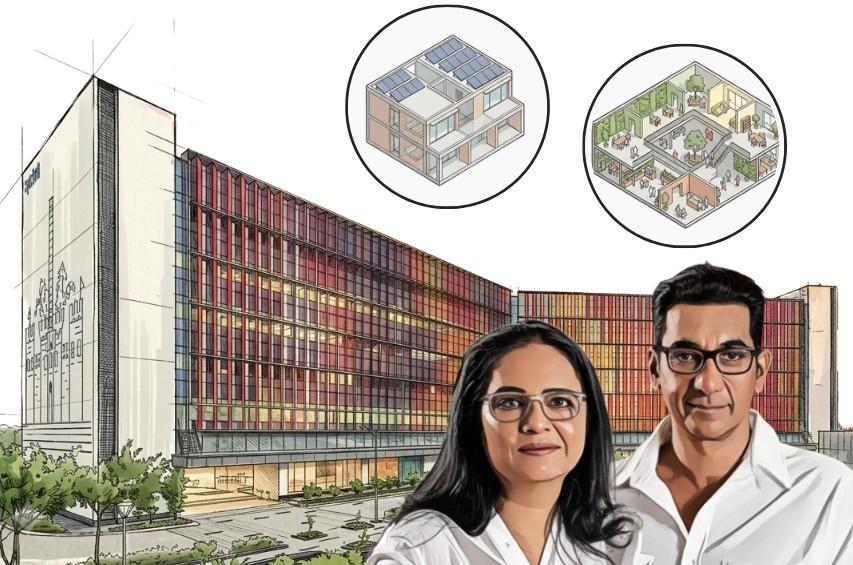
Architectural Design Principles by Morphogenesis
In contemporary Indian architecture, few practices have shaped climate-responsive and research-driven design as consistently as Morphogenesis, led by Manit Rastogi and Sonali Rastogi.
Their work moves beyond aesthetics to address performance, sustainability, and human experience, especially within the context of rapidly urbanizing environments. At the core of their design philosophy lies the SOUL framework—a set of four interrelated principles that guide how buildings respond to climate, resources, culture, and people.
This blog breaks down these four principles—Sustainability, Optimisation, Uniqueness, and Livability—and explores how they shape architectural outcomes in real-world projects.
Sustainability
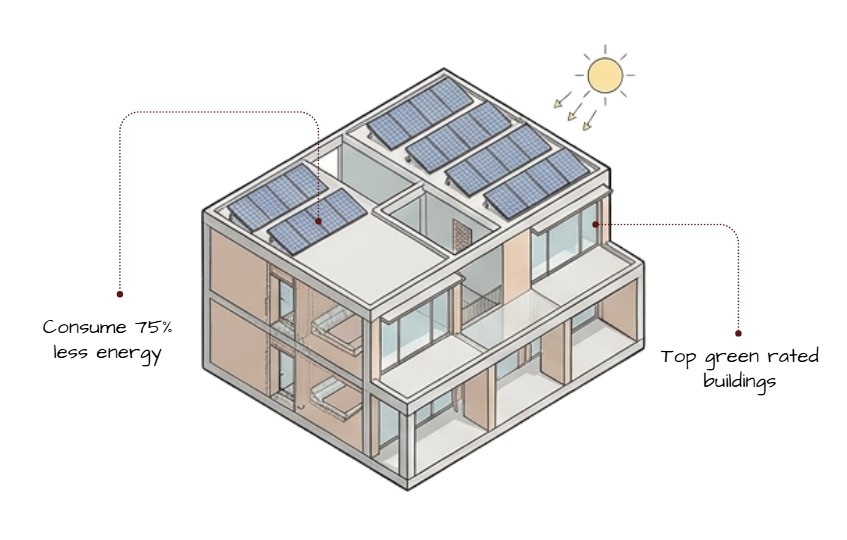
Sustainability at Morphogenesis is about reducing environmental impact through passive design strategies, ensuring buildings consume less energy, water, and resources over their lifecycle.
The firm prioritizes climate-responsive planning—orienting buildings to reduce heat gain, integrating courtyards and shaded zones, and designing façades that minimize solar exposure. These strategies reduce dependence on mechanical cooling and enhance thermal comfort naturally.
Project Example
Infosys Campus Nagpur
Designed as a high-performance campus, it incorporates passive cooling, optimized building orientation, and microclimate design, significantly reducing energy demand while maintaining comfort.
Optimisation
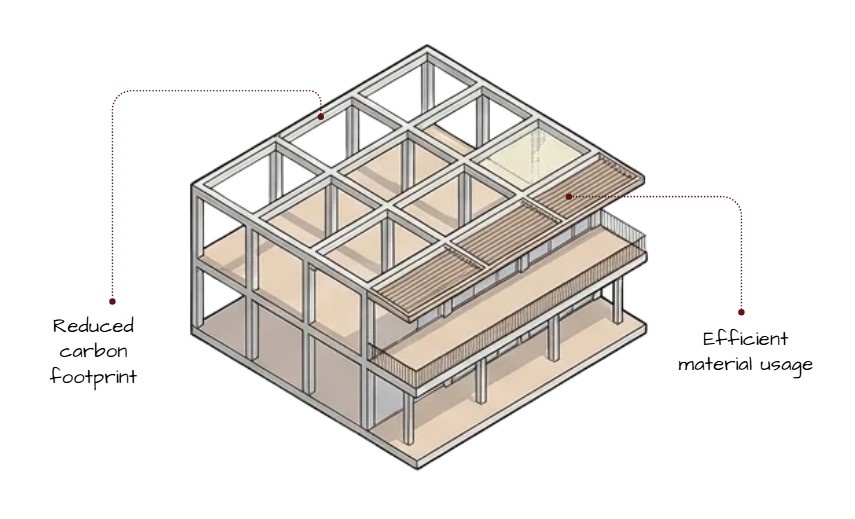
Optimisation focuses on achieving maximum efficiency with minimum resource use, balancing structural performance, material consumption, and cost-effectiveness.
Morphogenesis uses envelope design, parametric studies, and material efficiency strategies to reduce redundancy—ensuring that every element performs multiple roles (structure, shading, insulation).
Project Example
Zydus Corporate Park Ahmedabad
The project uses a climate-responsive façade system that optimizes daylight while reducing heat gain, lowering both operational energy and material inefficiency.
Uniqueness
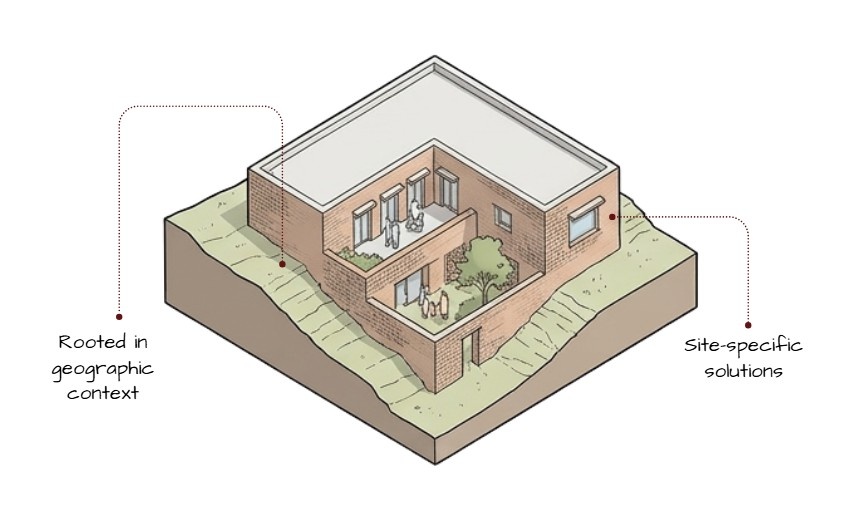
Uniqueness is about creating site-specific architecture—where each design emerges from its local climate, cultural context, and available resources, rather than a fixed stylistic approach.
The firm reinterprets vernacular systems like jaalis, courtyards, and water structures, integrating local craftsmanship and materials into contemporary design solutions.
Project Example
Pearl Academy Jaipur
Inspired by traditional desert architecture, the campus integrates stepwell-inspired cooling systems, perforated façades, and shaded courtyards, creating a strong contextual identity.
Livability
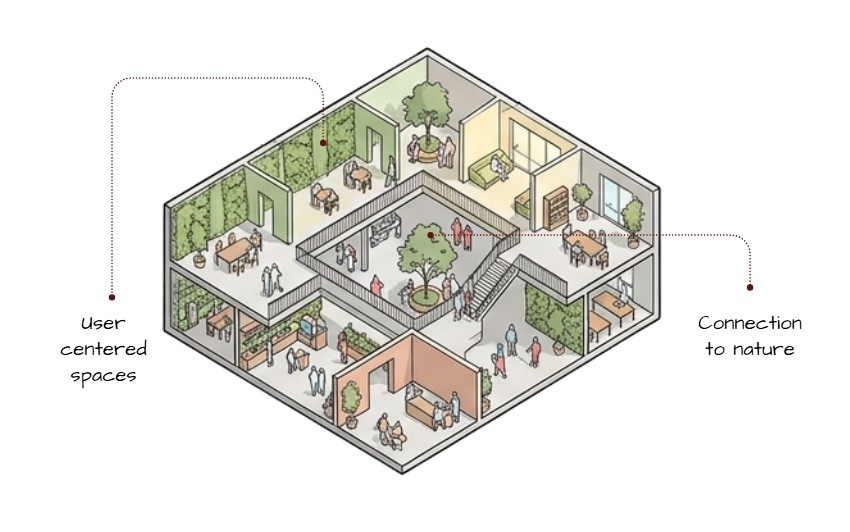
Livability prioritizes human comfort, well-being, and social interaction, ensuring that spaces are not just efficient—but enjoyable and meaningful to inhabit.
Design strategies include daylight optimization, natural ventilation, integration of landscape, and creation of interactive communal spaces, enhancing both physical and psychological comfort.
Project Example
Lodsi Community Project Rishikesh
The project focuses on community-centric planning and climate-sensitive spaces, integrating nature and built form to improve user experience and well-being.
The SOUL framework by Morphogenesis demonstrates that architecture can be efficient, contextual, and deeply human at the same time.
Conclusion
By integrating sustainability, resource optimisation, contextual uniqueness, and livability, their work offers a holistic approach to design—one that responds not just to buildings, but to the environment and the people who inhabit them. For architects and designers, these principles serve as a reminder that good design is not just about form—it’s about performance, responsibility, and experience working together seamlessly.
These were some insights on Design Principles by Morphogenesis. Stay tuned for more information on other significant topics in the AEC industry and follow Kaarwan for such detailed guides!
FAQs
1. What is the SOUL framework in architecture?
It is a design philosophy by Morphogenesis that stands for Sustainability, Optimisation, Uniqueness, and Livability.
2. Why is Morphogenesis known for sustainable architecture?
Because their projects integrate passive design strategies, climate responsiveness, and resource efficiency at the core of planning.
3. How does optimisation influence architectural design?
It helps reduce material waste, construction cost, and energy consumption while maintaining performance.
4. What makes Morphogenesis projects unique?
Each project is context-driven, using local materials, cultural references, and climate-specific solutions.
5. What is livability in architecture?
Livability focuses on user comfort, well-being, and social interaction, ensuring spaces are functional and enjoyable.