
Outdoor Steps in Architecture
Outdoor steps are more than just connectors between levels—they are critical architectural elements that negotiate terrain, manage movement, and shape the experience of a landscape. Whether navigating a gentle garden slope or a steep site contour, the choice of material directly impacts durability, safety, visual character, and long-term maintenance. Unlike indoor stairs, outdoor steps are constantly exposed to weather, moisture, soil interaction, and varying foot traffic, making material selection a design decision rooted in both performance and context. From warm, tactile timber to monolithic concrete and regionally rooted laterite, each material brings a distinct response to slope, climate, and usage patterns.
Understanding these nuances allows architects to create outdoor steps that are not only functional but deeply integrated with the landscape.
Timber Steps
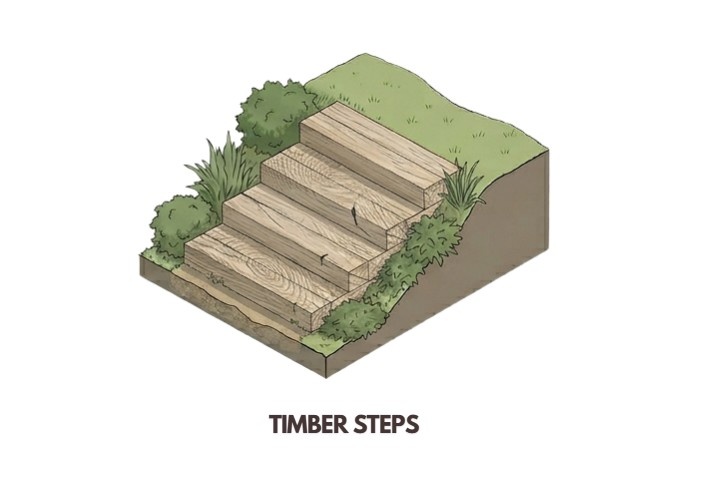
Timber steps introduce warmth and a natural softness into outdoor environments, making them especially suitable for gardens, forest trails, and low-impact residential landscapes. Typically constructed using treated hardwood or engineered outdoor timber, these steps are often anchored with minimal intervention into the terrain, allowing them to “sit lightly” on sloped sites. From a performance standpoint, timber works best in well-drained conditions, as prolonged exposure to moisture can lead to decay, warping, or fungal growth if not properly treated. They are ideal for low to moderate foot traffic, where the experiential quality of walking—slightly flexible underfoot, visually warm—is prioritized over heavy-duty durability. On steeper slopes, timber risers combined with compacted earth or gravel infill can create stable, incremental stepping systems. However, maintenance becomes a key consideration, requiring periodic sealing, anti-slip treatments, and replacement over time. Architecturally, timber steps excel in blending built form with nature, often appearing as extensions of decks or pathways rather than rigid interventions.
Stone Steps
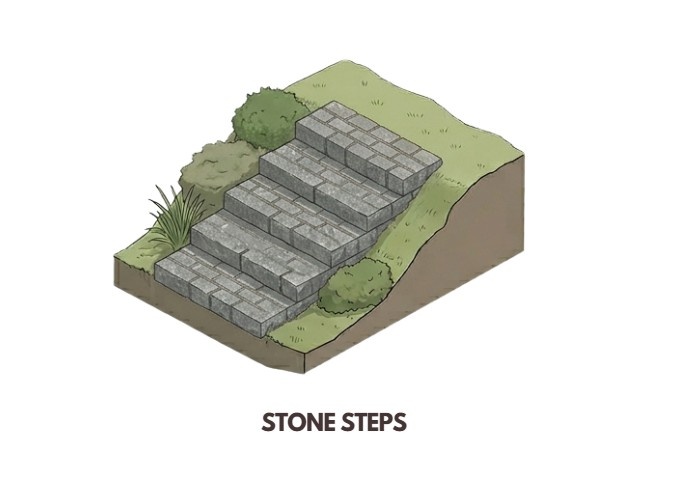
Stone steps are among the most durable and contextually rich solutions for outdoor hardscapes, offering both structural stability and timeless aesthetic value. Whether using granite, sandstone, or slate, stone inherently responds well to high traffic conditions and harsh weather exposure, making it ideal for public landscapes, institutional campuses, and heritage settings. The mass and weight of stone allow it to anchor firmly into sloped terrain, reducing the need for extensive substructure in many cases. From a design perspective, stone can be either precisely cut for formal settings or left rough and irregular for more organic landscapes. Its natural texture also provides excellent slip resistance, especially in wet conditions. Stone steps are particularly effective on steep or uneven sites, where large slabs can create bold, grounded interventions that visually tie the architecture to the earth. However, they require skilled installation and can be cost-intensive, especially when sourcing high-quality or locally specific stone. Over time, they age gracefully, often gaining character rather than deteriorating.
Tiled Steps
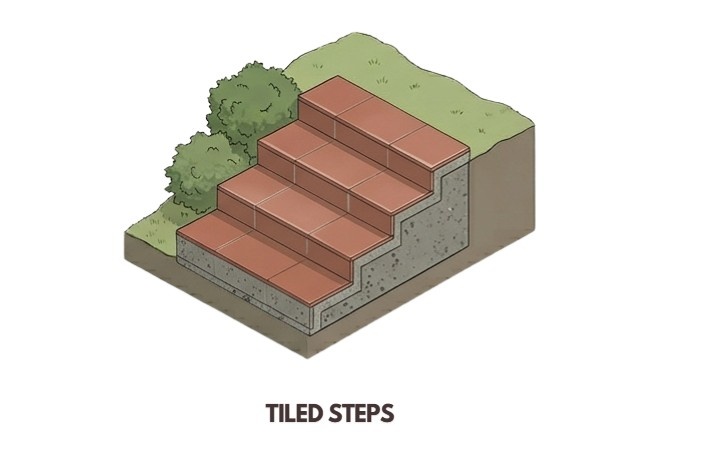
Tiled steps represent a layered construction approach where a structural base—typically reinforced concrete or brick masonry—is finished with tiles for aesthetic refinement. This system is commonly used in semi-outdoor or landscaped residential and commercial settings where visual continuity with flooring materials is desired. The performance of tiled steps is highly dependent on the quality of substrate preparation, waterproofing, and tile selection. Anti-skid tiles are essential, especially in exposed outdoor conditions, as smooth finishes can become hazardous when wet. These steps are best suited for moderate traffic zones and relatively controlled environments such as courtyards, terraces, and entryways. On sloped sites, tiled steps require precise leveling and proper drainage detailing to prevent water accumulation and tile failure. While they offer design flexibility in terms of color, pattern, and finish, they are more prone to wear, cracking, or detachment compared to monolithic materials. Architecturally, tiled steps work well when the intent is to visually integrate horizontal and vertical surfaces into a cohesive design language.
Concrete Steps
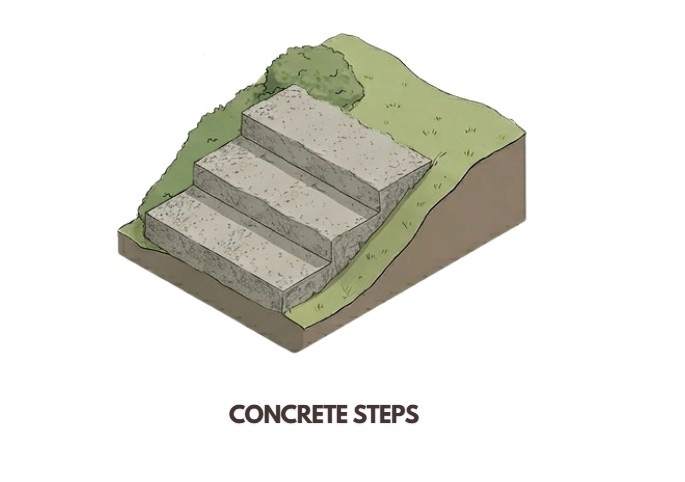
Concrete steps are one of the most versatile and widely used solutions in outdoor architecture due to their structural strength, adaptability, and relatively low maintenance. Cast-in-situ or precast, concrete can be shaped to respond to a variety of site conditions, from gentle landscape transitions to steep, heavily used stairways. Its monolithic nature makes it particularly suitable for high traffic areas and public infrastructure, where durability and load-bearing capacity are critical. On sloped sites, concrete steps can be integrated with retaining walls, creating a cohesive structural system that stabilizes the terrain while facilitating movement. Surface treatments—such as broom finish, exposed aggregate, or textured formwork—are essential to enhance slip resistance and visual quality. While concrete may initially appear stark, it can be softened through landscaping, edge detailing, or integration with other materials like timber or stone. Its longevity and resilience make it a practical choice, though thermal expansion, cracking, and proper drainage detailing must be carefully addressed during design and execution.
Composite Steps (Timber + Gravel)
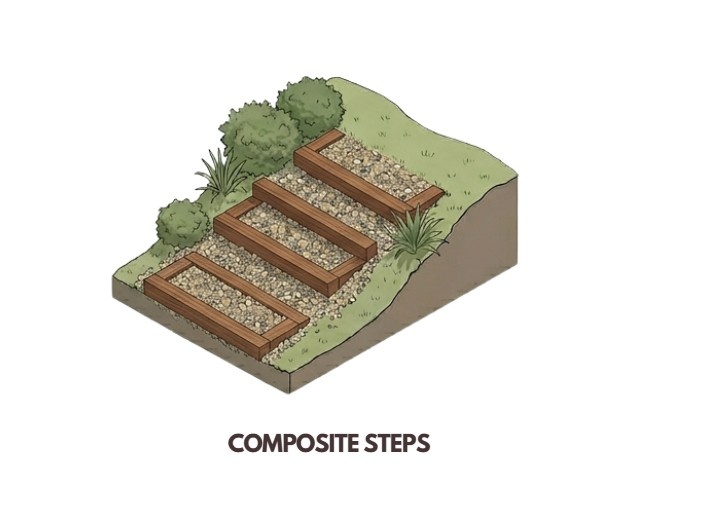
Composite steps combining timber and gravel offer a hybrid approach that balances structure with permeability, making them particularly effective in natural landscapes and informal garden settings. Typically, timber elements act as risers or edge retainers, while gravel fills the tread surface, creating a stable yet flexible stepping system. This configuration works exceptionally well on gentle to moderate slopes, where full structural intervention may not be necessary. The gravel layer allows for natural drainage, reducing water stagnation and minimizing erosion when properly compacted. These steps are best suited for low to moderate traffic, such as private gardens, trails, or eco-sensitive sites. One of the key advantages is adaptability—components can be easily repaired or adjusted over time. However, maintenance involves periodic re-leveling of gravel and ensuring that timber elements remain structurally sound. Architecturally, composite steps achieve a soft, landscape-integrated appearance, blurring the boundary between built and natural elements while maintaining functional clarity.
Laterite Steps
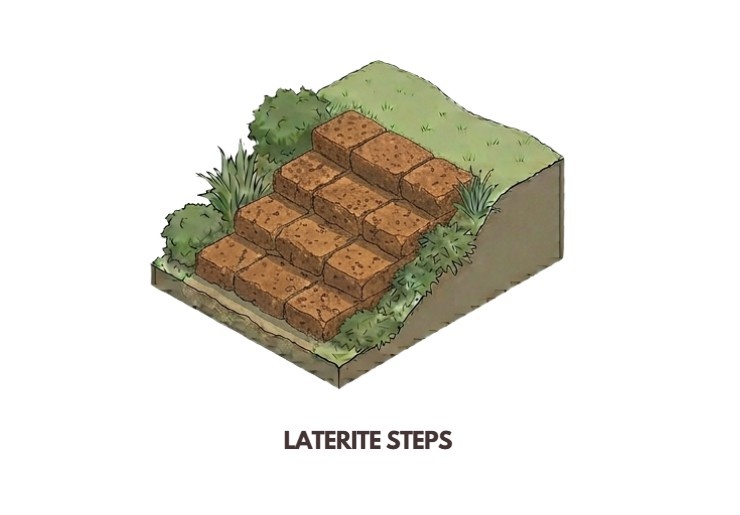
Laterite, a regionally abundant material in parts of India, offers a unique combination of workability, texture, and climatic responsiveness for outdoor steps. Characterized by its porous structure and earthy reddish tone, laterite is relatively easy to cut and shape, making it suitable for custom step formations on varied terrains. It performs well in tropical climates, where its breathability allows it to handle moisture without significant structural damage, provided it is properly detailed and protected. Laterite steps are typically used in low to moderate traffic environments, such as residential landscapes, heritage contexts, and vernacular-inspired designs. On sloped sites, they can be integrated seamlessly with retaining edges and natural contours, creating a grounded and regionally expressive solution. However, due to its relatively softer nature compared to granite or concrete, laterite may require surface treatments or periodic maintenance to prevent erosion over time. Architecturally, it brings a strong sense of place, connecting built interventions with local material culture and landscape identity.
Selecting the right material for outdoor steps is not merely a stylistic choice but a strategic decision shaped by site conditions, climate, usage, and long-term performance.
Conclusion
Timber and composite systems offer a softer, landscape-integrated approach suited to low-impact environments, stone and concrete provide durability and structural reliability for high-traffic and demanding conditions. Tiled steps bridge aesthetics and functionality in controlled settings, whereas laterite introduces a regionally rooted, context-sensitive solution. Ultimately, well-designed outdoor steps negotiate terrain gracefully, enhance user experience, and reinforce the architectural language of the site—proving that even the most functional elements can be deeply expressive when approached with intent.
FAQs
1. Which material is best for outdoor steps in high-traffic areas?
Stone and concrete are the most suitable due to their durability, load-bearing capacity, and resistance to weathering.
2. Are timber steps suitable for all climates?
Timber works best in well-drained environments and requires treatment in humid or high-rainfall regions to prevent decay.
3. How can outdoor steps be made slip-resistant?
Using textured finishes, anti-skid tiles, rough stone surfaces, or adding grooves can significantly improve safety.
4. What is the most low-maintenance option?
Concrete and stone generally require the least maintenance compared to timber or tiled finishes.
5. Are composite (timber + gravel) steps structurally strong?
They are suitable for low to moderate use but not recommended for heavy traffic or steep, high-load conditions.