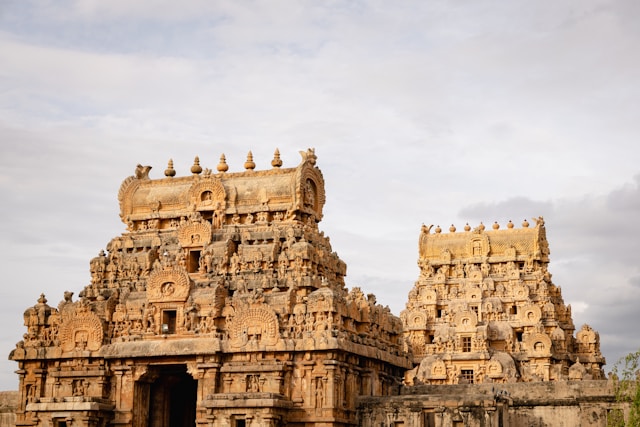
Dravidian Temple Architecture
Dravidian temple architecture, primarily seen in South India, is one of the most refined and symbolically rich architectural traditions in the world. Known for its towering gateways, layered pyramidal forms, and deeply ritualistic spatial planning, every element in a Dravidian temple serves both a functional and spiritual purpose.
Understanding the terminology of this architectural style is essential not just for architects and students, but also for anyone trying to decode how movement, hierarchy, and symbolism are embedded into sacred spaces. From the towering gopuram to the innermost garbhagriha, each term represents a carefully designed component that contributes to the overall experience of the temple.
This guide breaks down key Dravidian temple architecture terms in alphabetical order, explaining their meaning, placement, and role within the temple layout.
Terminology in Dravidian Temples
Adhisthana
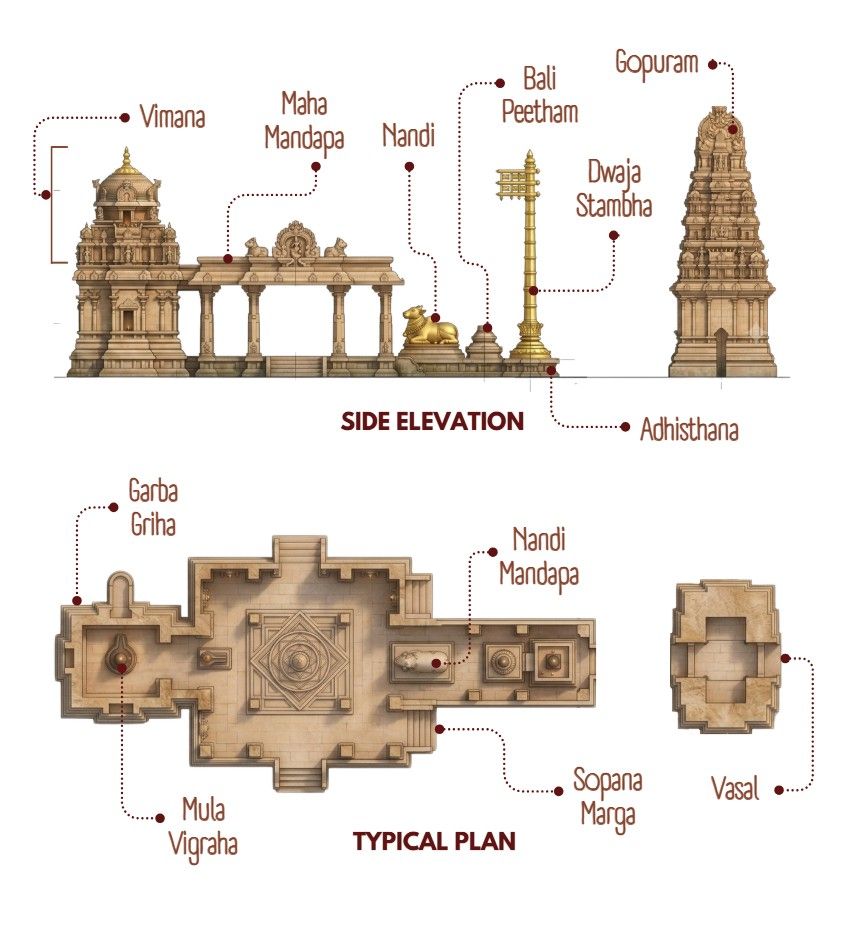
The adhisthana is the base or plinth of the temple structure, acting as the foundational platform on which the entire temple stands. It is not merely structural but also decorative, often articulated with moldings, carvings, and symbolic motifs. The proportions and detailing of the adhisthana establish the visual grounding of the temple and transition the structure from earth to the sacred built form.
Bali Peetham
Located along the main axial path, the bali peetham is a sacrificial altar where offerings are made to attendant deities or spiritual entities before approaching the main shrine. It acts as a ritual pause point, reinforcing the idea of purification and preparation before entering deeper sacred zones.
Dwaja Stambha
The dwaja stambha or flagstaff is typically positioned in alignment with the main shrine, often between the bali peetham and the mandapa. Usually made of metal-clad wood or stone, it symbolizes the presence of the deity and acts as a marker of the temple’s ritual axis. During festivals, flags are hoisted here to signify important events.
Garbhagriha
The garbhagriha, meaning “womb chamber,” is the innermost sanctum of the temple where the primary deity resides. It is a small, enclosed, and often dimly lit space designed to create a sense of intimacy and spiritual focus. Architecturally, it is the most sacred and geometrically precise part of the temple, forming the core around which all other spaces are organized.
Gopuram
The gopuram is the monumental entrance tower that defines the skyline of Dravidian temples. These gateways are often taller than the central shrine and are richly ornamented with sculptures depicting mythological narratives. Beyond acting as an entry point, the gopuram establishes the temple’s visual identity and acts as a threshold between the secular and sacred realms.
Maha Mandapa
The maha mandapa is a large pillared hall used for congregational activities, rituals, and gatherings. Positioned before the inner sanctum, it accommodates devotees and serves as a transition space from the exterior to the more sacred inner zones. Its scale and ornamentation often reflect the importance of the temple.
Mula Vigraha
The mula vigraha refers to the primary idol or main deity installed within the garbhagriha. It is considered the permanent and most sacred representation of the deity, unlike processional idols which are movable. The entire temple is conceptually oriented around the presence of this central figure.
Nandi
In Shiva temples, Nandi is the sacred bull and the vahana (vehicle) of Lord Shiva. The Nandi statue is always placed facing the garbhagriha, symbolizing devotion and direct connection to the deity. It plays both a symbolic and spatial role in reinforcing the temple’s axial alignment.
Nandi Mandapa
The Nandi mandapa is a dedicated pavilion that houses the Nandi statue. Positioned along the central axis, it acts as an intermediate space between the entrance and the sanctum. Architecturally, it often mirrors the style of the main mandapas but on a smaller scale.
Sopana Marga
The sopana marga refers to the ceremonial steps or pathway leading towards the temple or specific sacred areas within it. These steps are not just functional but symbolic, representing the gradual transition from the earthly realm to the divine.
Vasal
The term vasal refers to entrances or doorways within the temple complex. These can range from grand gateways to smaller transitional thresholds. Each vasal marks a shift in spatial hierarchy, guiding movement through increasingly sacred zones.
Vimana
The vimana is the tower that rises directly above the garbhagriha. Unlike the gopuram, which marks the entrance, the vimana signifies the location of the deity. It is typically pyramidal in form with multiple tiers and is proportioned according to strict architectural principles, symbolizing the cosmic axis.
By understanding these terms, one can begin to read temples not just as structures, but as carefully orchestrated experiences that merge architecture, culture, and spirituality.
Conclusion
Dravidian temple architecture is a highly organized and symbolic system where every element, from the base to the highest tower, contributes to a layered spiritual journey. These architectural terms are not isolated components but interconnected parts of a larger narrative that guides movement, frames rituals, and defines sacred hierarchy.
These were some insights on Dravidian Temple Elements. Stay tuned for more information on other significant topics in the AEC industry and follow Kaarwan for such detailed guides!
FAQs
1. What is the most important part of a Dravidian temple?
The garbhagriha is considered the most important part as it houses the main deity and forms the spiritual core of the temple.
2. What is the difference between a gopuram and a vimana?
A gopuram is the entrance tower of the temple, while the vimana is the tower directly above the sanctum.
3. Why is Nandi always placed facing the sanctum?
Nandi symbolizes devotion and is positioned to maintain a direct visual and spiritual connection with Lord Shiva.
4. What is the purpose of the mandapa?
Mandapas serve as gathering spaces for devotees and are used for rituals, ceremonies, and transitional movement within the temple.
5. Are these elements present in all South Indian temples?
While most Dravidian temples include these elements, their scale, detailing, and arrangement can vary based on region, period, and patronage.