Wooden Flooring in Interiors
Wooden flooring remains one of the most widely specified surface finishes in residential and hospitality architecture due to its warmth, tactile quality, and long-term adaptability. Beyond aesthetics, wooden flooring involves a layered construction system that affects durability, moisture resistance, acoustic performance, and structural behavior. From traditional nailed hardwood installations to contemporary laminate and vinyl systems, understanding wooden flooring details allows architects and designers to make informed decisions about performance, longevity, and context suitability. This guide explores hardwood flooring construction detailing followed by a breakdown of major wooden flooring types used in modern interiors.
Hardwood Flooring Details
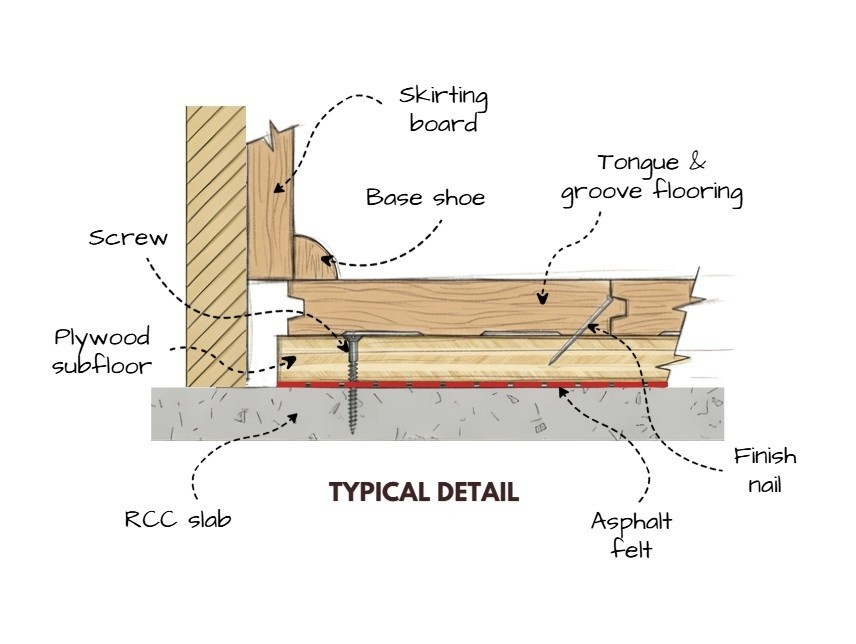
Image credits: Shivani Chougula @Kaarwan
Solid hardwood flooring is a traditional system composed of multiple coordinated layers that function together structurally and environmentally. At the base lies the structural slab, over which a plywood subfloor is typically installed to provide a level, stable nailing surface. The plywood subfloor distributes loads evenly and acts as a buffer between the concrete slab and the wooden finish layer. Above this layer, asphalt felt or building paper is often laid as a moisture barrier and slip sheet. The asphalt felt helps prevent minor moisture migration from below and reduces friction between the hardwood planks and the subfloor, minimizing squeaks caused by expansion and contraction.
The hardwood planks themselves are manufactured with tongue and groove joints along their edges. This interlocking system ensures tight alignment between boards, maintains continuity across the floor surface, and prevents vertical displacement between adjacent planks. The tongue of one plank fits precisely into the groove of the next, creating a mechanically stable and visually seamless floor plane. In traditional installations, the hardwood flooring is nailed through the tongue into the plywood subfloor at an angle, securing each board while concealing the fasteners. This nailed type installation allows the wood to respond naturally to seasonal expansion and contraction while maintaining structural stability. Together, the plywood subfloor, asphalt felt layer, tongue-and-groove hardwood planks, and nailed fixing system create a cohesive flooring assembly designed for durability and refinishing over decades.
Types of Wooden Flooring
1. Hardwood Flooring
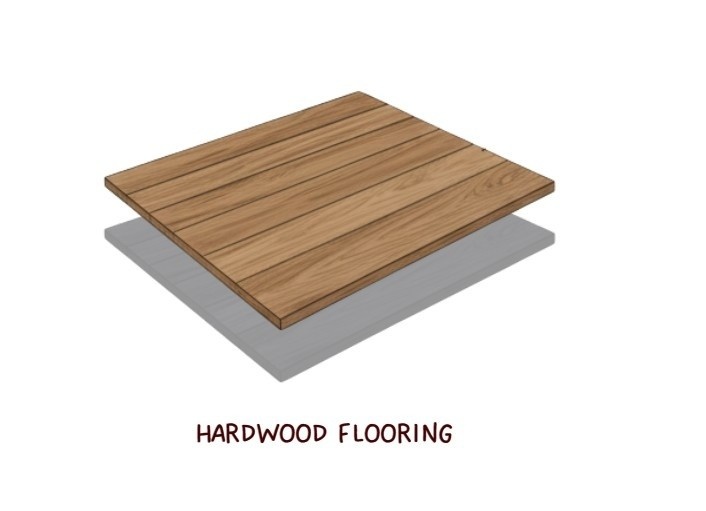
Image credits: Shivani Chougula @Kaarwan
Hardwood flooring consists of solid timber planks milled from a single piece of wood. It is valued for its longevity, natural grain variation, and ability to be sanded and refinished multiple times over its lifespan. Because it is a natural material, hardwood responds to environmental humidity and temperature changes, making proper subfloor preparation and acclimatization essential. It is commonly specified in living rooms, bedrooms, and formal spaces where long-term value and authentic material character are priorities.
2. Laminate Flooring
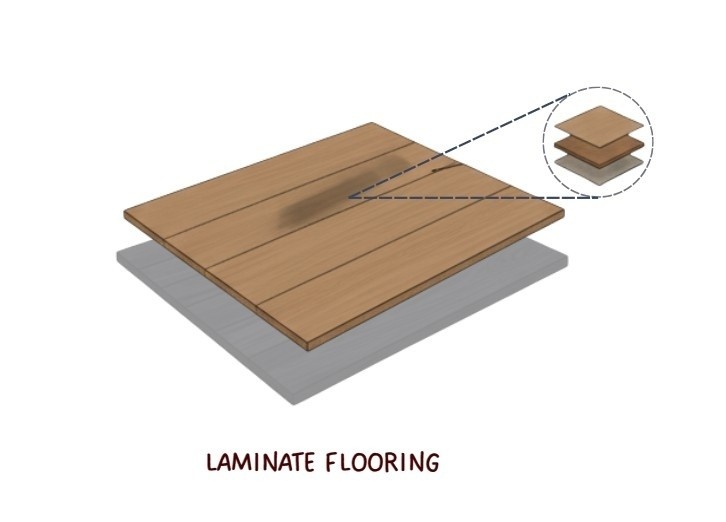
Image credits: Shivani Chougula @Kaarwan
Laminate flooring is a composite flooring product composed of a high-density fiberboard core topped with a printed decorative layer that mimics wood grain and protected by a transparent wear layer. Unlike hardwood, laminate does not contain solid timber in its structural layer, but instead relies on engineered boards designed for dimensional stability. It is typically installed using a click-lock floating system rather than nails or adhesives. Laminate flooring is widely used in residential projects due to its scratch resistance, affordability, and ease of installation, making it suitable for rental units, budget-conscious interiors, and moderate-traffic spaces.
3. Vinyl Flooring
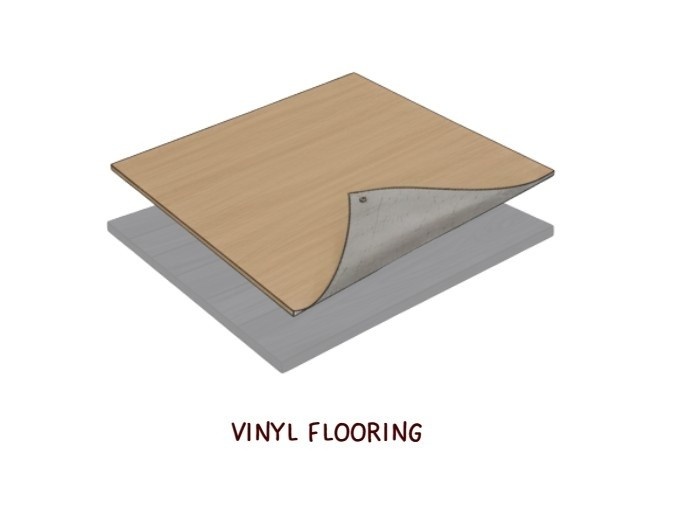
Image credits: Shivani Chougula @Kaarwan
Vinyl flooring designed to resemble wood consists of multiple synthetic layers, often including a wear layer, printed design layer, vinyl core, and adhesive backing in peel-and-stick formats. Unlike hardwood or laminate, vinyl is highly moisture-resistant and flexible, allowing it to perform well in areas exposed to water and humidity. It can be installed as sheets, planks, or tiles, depending on the system. Because of its durability and water resistance, vinyl flooring is commonly specified in kitchens, utility spaces, bathrooms, and high-traffic residential zones where maintenance ease is a primary consideration.
4. Parquet Flooring
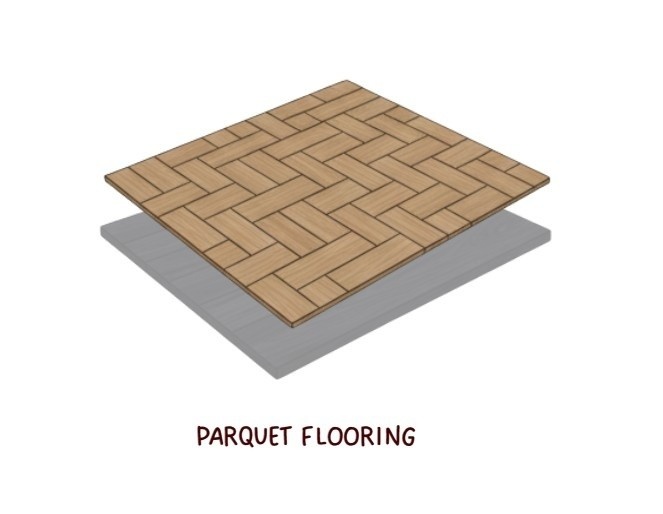
Image credits: Shivani Chougula @Kaarwan
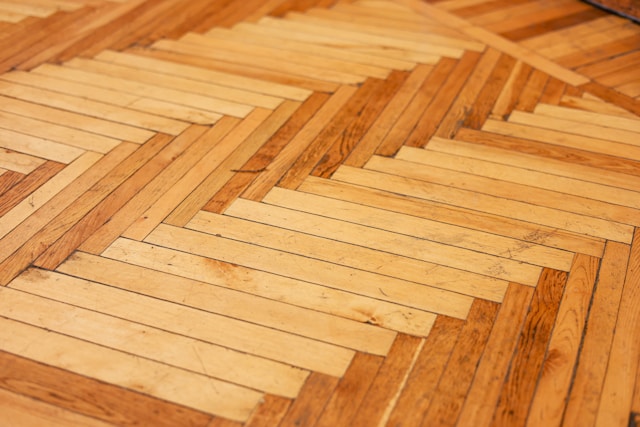
Parquet flooring is composed of small wooden blocks arranged in geometric patterns such as herringbone, chevron, or basketweave. Unlike standard linear plank installations, parquet emphasizes pattern and directional grain variation, creating a decorative floor surface that becomes a visual focal point within the space. Traditionally crafted from solid wood pieces, parquet flooring requires precise installation to maintain pattern continuity. It is commonly used in formal living areas, heritage interiors, and design-focused projects where craftsmanship and aesthetic impact are key design drivers.
Final Thoughts
Wooden flooring is not merely a surface finish but a layered architectural system involving structural support, moisture control, joint detailing, and installation methodology. From the traditional nailed hardwood assembly with asphalt felt and plywood subfloor to contemporary laminate and vinyl alternatives, each type offers distinct performance characteristics and spatial implications. Selecting the appropriate wooden flooring system requires balancing durability, climate conditions, budget, and design intent. When detailed correctly, wooden flooring contributes warmth, longevity, and architectural character to interior spaces.