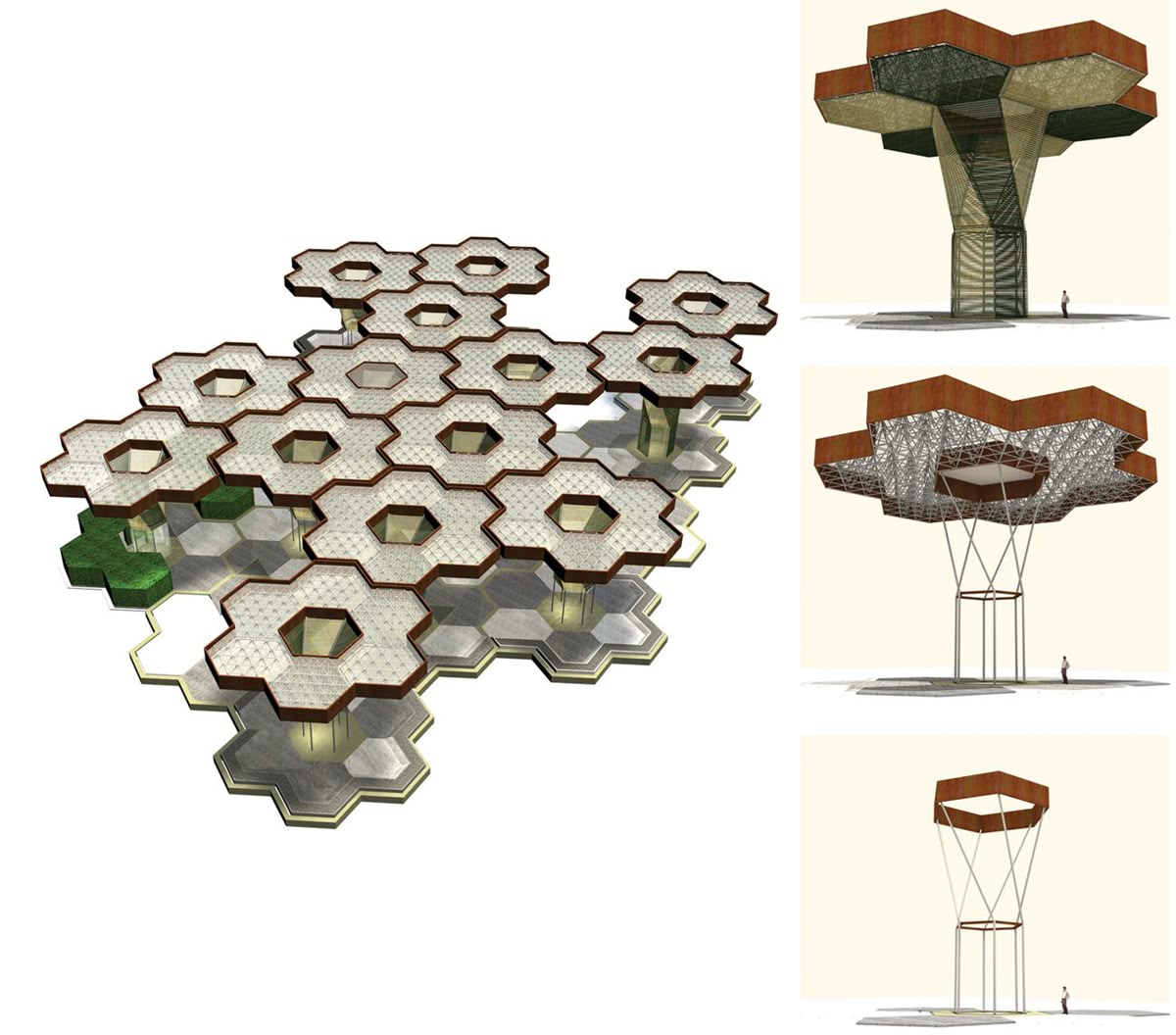
Shape Psychology in Architecture: Hexagon
Efficiency meets harmony in six precise sides
Some shapes whisper. The hexagon hums.
Balanced yet dynamic, structured yet organic, the hexagon occupies a fascinating middle ground in architecture. It carries the efficiency of geometry and the rhythm of nature in one elegant form.
From honeycombs to futuristic façades, the hexagon suggests intelligence, connection, and system-based design.
What the Hexagon Symbolizes
Psychologically, the hexagon represents:
- Efficiency and optimization
- Interconnection and community
- Structural intelligence
- Natural harmony
- Modular thinking
Unlike a circle, which feels soft and infinite, or a square, which feels stable and grounded, the hexagon feels engineered by nature itself.
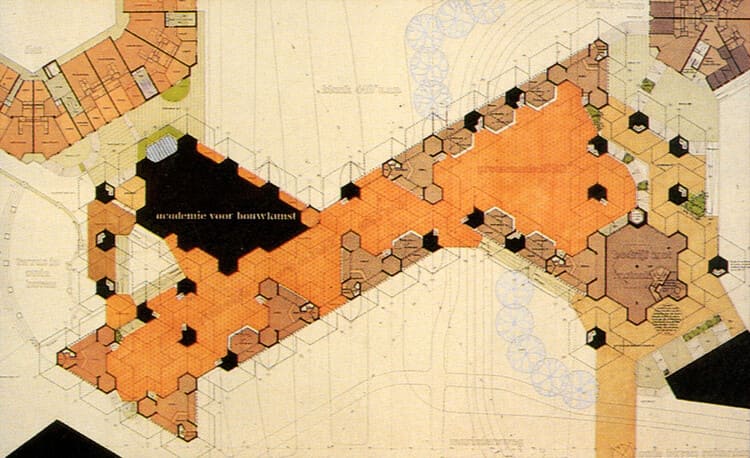
Why the Hexagon Feels So Efficient
The hexagon is the most space-efficient shape for tessellation with minimal material waste. It fills space without gaps while maintaining structural stability.
That is why it appears in:
- Honeycomb structures
- Molecular diagrams
- Structural grids
- Parametric façades
In architecture, this efficiency translates into psychological clarity. The space feels ordered but not rigid.
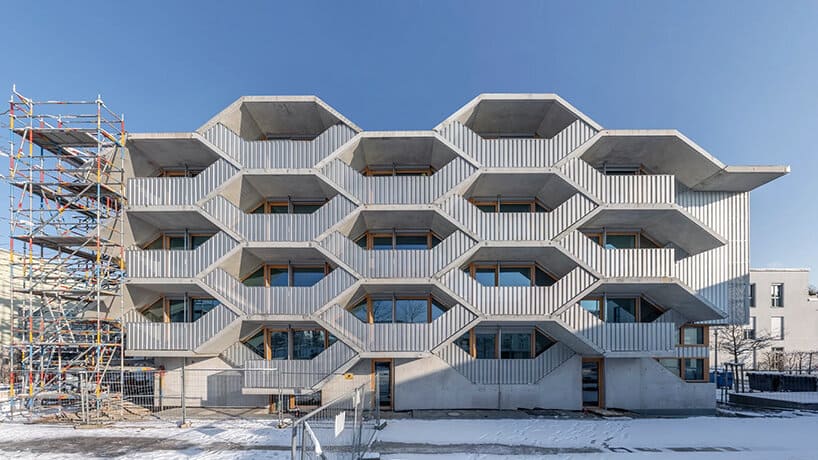
Emotional Impact of Hexagonal Spaces
Hexagonal geometry subtly influences user perception:
- Feels collaborative rather than hierarchical
- Suggests connectivity and systems
- Encourages movement across multiple directions
- Balances symmetry with dynamism
A square directs. A circle gathers. A hexagon connects.
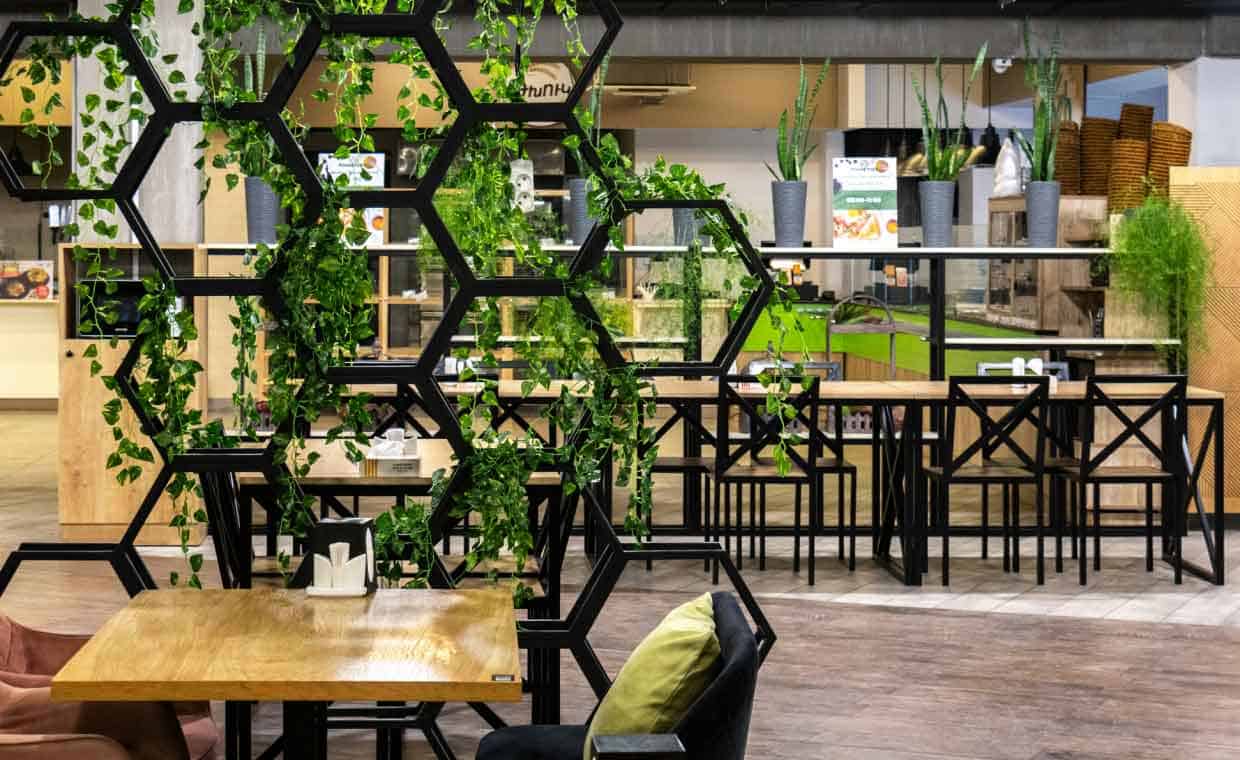
Where Architects Use Hexagons
1. Facade Systems
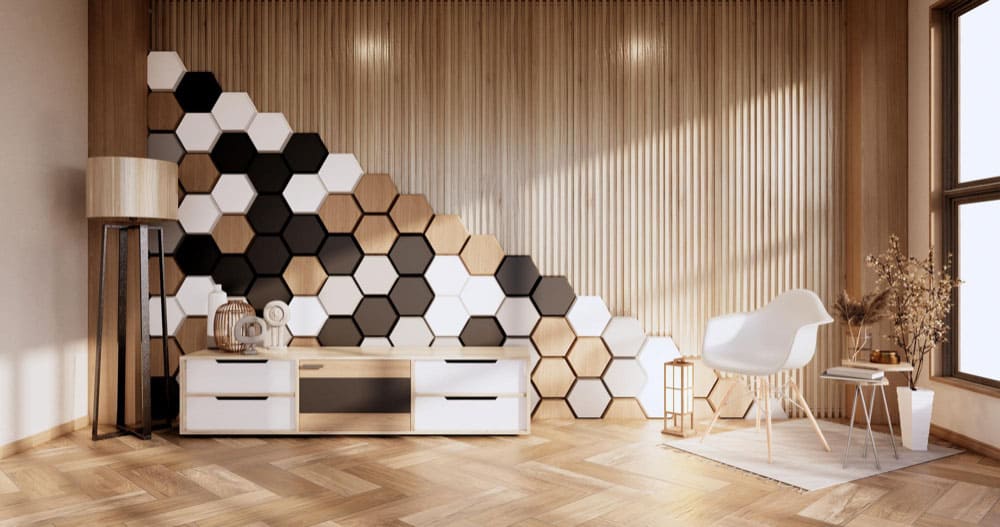
Hexagonal panels create dynamic light and shadow play while allowing modular fabrication.
2. Structural Grids
Used in experimental roofs and lightweight structures.
3. Floor and Ceiling Patterns
Adds rhythm and pattern without visual monotony.
4. Urban Planning Concepts
Hexagonal planning creates equal adjacency and distributed networks.
Design Advantages
- Efficient material usage
- Strong modular adaptability
- Visually engaging without chaos
- Works well in parametric and computational design
Hexagons thrive in digitally driven architecture because they translate beautifully into algorithmic systems.
Design Challenges
- Furniture placement can be complex
- Structural detailing requires precision
- Not suitable for every program
- Risk of visual overuse
Like any strong geometry, it works best when used with intent.
Famous Architectural Examples
🏟 Beijing National Aquatics Center (Water Cube) – Beijing
The facade’s cellular structure echoes natural hexagonal logic through advanced engineering.
🏢 The Hive by Nanyang Technological University – Singapore
Clusters of hexagon-inspired volumes create collaborative learning spaces.
🏗 Al Bahr Towers – Abu Dhabi
Dynamic shading system inspired by geometric tessellations, incorporating hexagonal logic.
When Should You Use Hexagonal Geometry?
Use hexagons when your design intent involves:
- Modular systems
- Parametric modeling
- Collaborative environments
- Nature-inspired architecture
- Climate-responsive facades
Avoid it if the project demands strict orthogonal efficiency or conventional planning.
Why Shape Psychology Matters
Understanding shapes helps architects design spaces that communicate silently.
The hexagon speaks of intelligence. Of systems. Of interconnectedness. Of design that is not accidental but optimized.
In a world moving toward sustainable and data-driven design, the hexagon feels like geometry with purpose.
Learn Form Intelligence with Kaarwan
At Kaarwan, we explore how geometry, spatial psychology, sustainability, and technology intersect in real architectural practice. Our programs help students move beyond aesthetics into strategic design thinking.
Explore our courses in:
- Parametric design
- Sustainable architecture
- Urban systems
- Advanced visualization
Because great architecture is not just drawn. It is decoded.