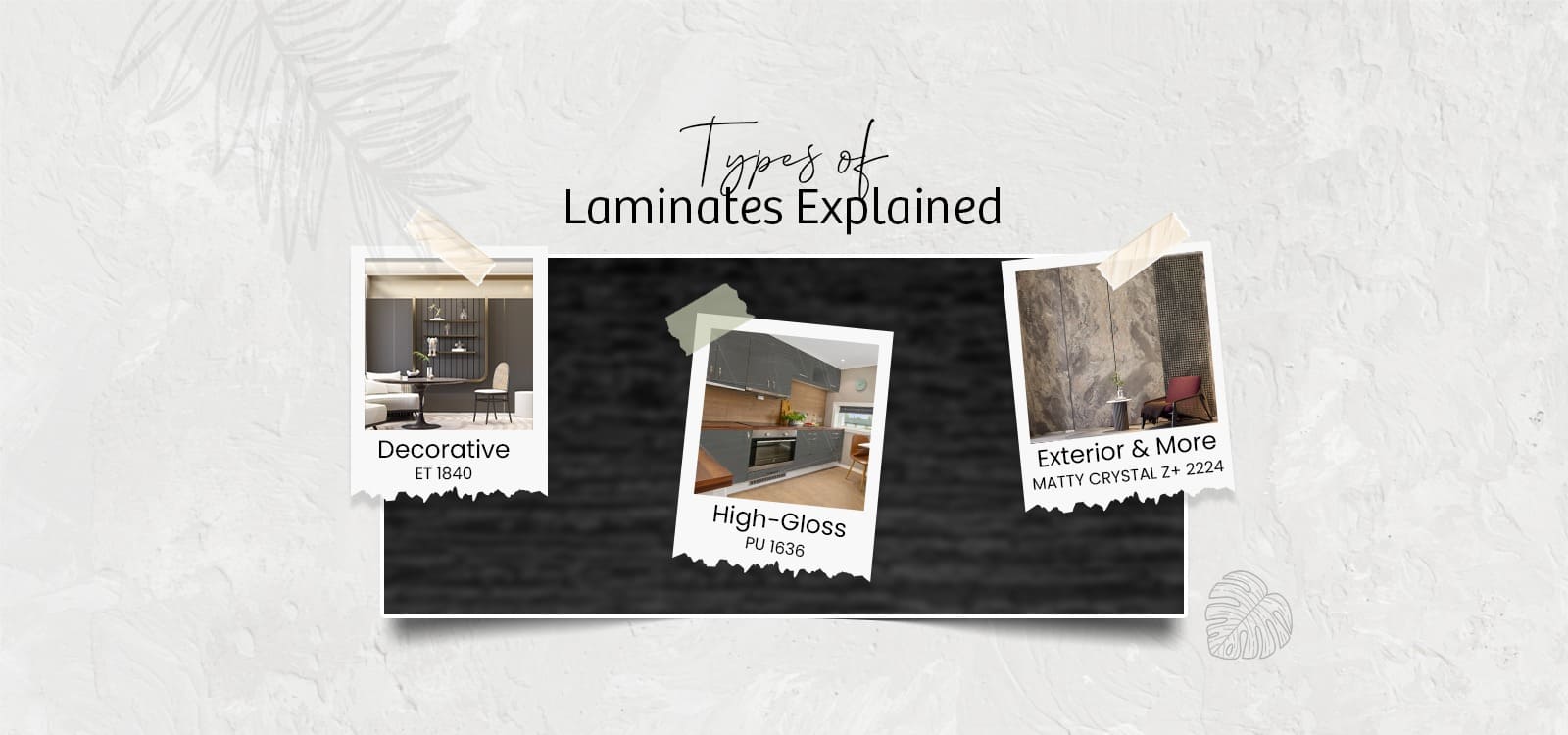
Types of Laminates: A Practical Guide for Architects & Interior Designers
Because surface decisions shape spatial experience.
In interior architecture, laminates are everywhere. Kitchens, wardrobes, office partitions, retail counters, wall panels. They are often treated as a “finish selection,” but in reality, laminates impact durability, maintenance, cost, and perception of quality.
Understanding laminate types helps architects specify materials confidently rather than relying only on vendor catalogs.
Let’s decode them.
What Are Laminates?
Laminates are synthetic finishing materials made by pressing layers of kraft paper and decorative sheets with resins under high pressure. They are bonded to substrates like plywood, MDF, or particle board.
They are valued for:
- Cost-effectiveness
- Variety of finishes
- Durability
- Easy maintenance
Types of Laminates Based on Manufacturing
1️⃣ High-Pressure Laminates (HPL)
Manufactured under high heat and pressure, HPL is strong, impact-resistant, and durable.
Best for:
- Kitchen shutters
- Wardrobes
- Commercial interiors
- High-use surfaces
Why architects prefer it:
- Long-lasting
- Scratch-resistant
- Wide finish options
Alt text: High-pressure laminate used on modern kitchen cabinets.*
2️⃣ Low-Pressure Laminates (LPL)
Pressed under lower pressure, typically used for less demanding applications.
Best for:
- Furniture backs
- Low-traffic areas
- Budget interiors
Limitation:Less durable compared to HPL.
Alt text: Low-pressure laminate finish on interior furniture panel.*
Types of Laminates Based on Finish
3️⃣ Matte Finish Laminates
Soft, non-reflective surface that feels subtle and modern.
Ideal for:
- Minimalist interiors
- Bedrooms
- Office spaces
Advantage:Hides fingerprints and smudges better than glossy finishes.
Alt text: Matte laminate wardrobe finish in contemporary bedroom.*
4️⃣ Glossy Laminates
High-shine, reflective surface that enhances brightness.
Ideal for:
- Modular kitchens
- Compact apartments
- Contemporary retail interiors
Limitation:Shows fingerprints easily.
Alt text: High-gloss laminate kitchen cabinet reflecting ambient light.*
5️⃣ Textured Laminates
Mimic wood grain, stone, fabric, or abstract patterns.
Ideal for:
- Feature walls
- Luxury wardrobes
- Reception counters
Adds tactile depth and realism.
Alt text: Wood-textured laminate surface showing natural grain pattern.*
Quick Comparison Table
| Type | Durability | Best Use | Cost Level |
|---|---|---|---|
| HPL | High | Kitchens, wardrobes | Medium |
| LPL | Moderate | Budget furniture | Low |
| Matte | Moderate | Bedrooms, offices | Medium |
| Glossy | Moderate | Kitchens, retail | Medium |
| Textured | Moderate | Feature surfaces | Medium-High |
How to Choose the Right Laminate
When specifying laminates, consider:
- Project budget
- Traffic intensity
- Maintenance expectations
- Moisture exposure
- Fire safety norms
- Overall design language
Remember, laminates are not just aesthetic choices. They affect performance and lifecycle cost.
Common Mistakes Young Architects Make
- Selecting finish without checking substrate compatibility
- Ignoring edge banding quality
- Not verifying thickness (0.8mm vs 1mm vs 1.5mm)
- Overusing glossy finishes in high-touch areas
Material knowledge separates design students from industry-ready architects.
Why Material Understanding Matters
Clients may see color. Contractors see cost.Architects must see performance.
Knowing laminates in depth helps you:
- Write better specifications
- Avoid site conflicts
- Deliver durable interiors
- Build professional credibility
Build Material Intelligence with Kaarwan
At Kaarwan, we focus on practical knowledge that studios expect, from material selection and detailing to working drawings and site coordination.
Explore our courses in:
- Interior detailing
- Material specification
- BIM-based documentation
- Professional practice
Also read our blogs on:
- Types of Hinges
- Types of Doors
- Material Palette Guide
- Kitchen Boards and Finishes
Because great design is not only about ideas. It is about informed decisions.