
Window Grill Design Types
Window grills sit at a very interesting intersection in architecture—they are simultaneously a safety layer, a design statement, and a subtle mediator between interior life and exterior environment. While often treated as a purely functional element, grills actually shape how a building “feels” from both inside and outside.
From minimalist aluminium profiles in contemporary apartments to ornate wrought iron patterns in heritage-inspired homes, window grills evolve with material, culture, and construction logic. In modern design discourse, they are no longer just “bars for safety,” but carefully designed components that respond to window operation systems like fixed glazing, casement openings, sliding systems, and even large curtain wall integrations in hybrid residential towers.
Aluminium Window Grill
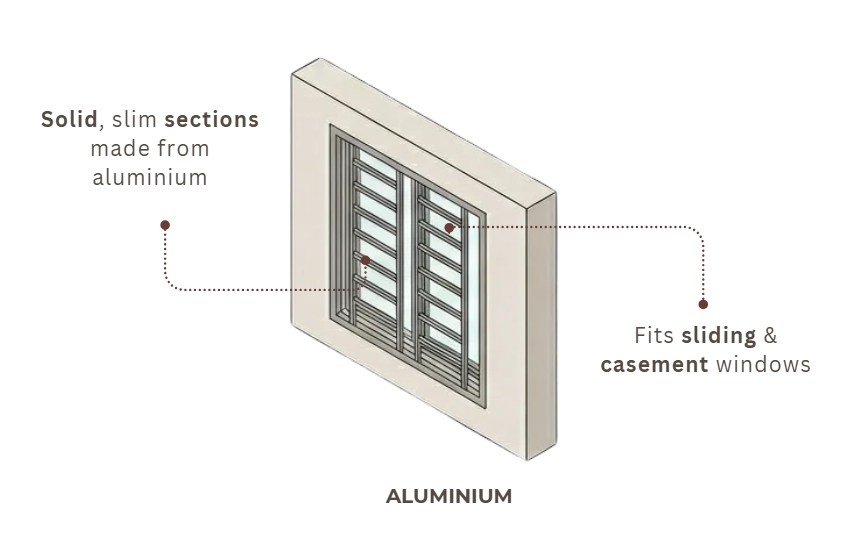
Aluminium window grills represent the contemporary, lightweight, and highly adaptable category of grill design. Architecturally, aluminium works well because it balances strength with minimal visual weight, making it ideal for modern façades where clean lines and low maintenance are priority. These grills are often powder-coated, anodised, or finished in matte tones to align with façade palettes, allowing them to visually merge rather than dominate.
From a functional standpoint, aluminium grills are highly corrosion-resistant, making them suitable for humid and coastal climates. They integrate seamlessly with sliding and casement windows due to their prefabricated modular nature. In residential apartments, especially mid to high-rise buildings, aluminium grills are widely used because they maintain safety without adding excessive structural load. Their slim profiles also allow better daylight penetration and visual openness compared to heavier materials.
Aesthetically, aluminium grills lean toward minimal geometry—vertical bars, horizontal grids, or CNC-cut perforated panels. They suit modern residential buildings, office spaces, institutional campuses, and rental housing where maintenance efficiency and uniformity matter. However, their design flexibility also allows subtle customisation through patterning, which can elevate them beyond basic utilitarian use into façade detailing elements.
Wooden Window Grill
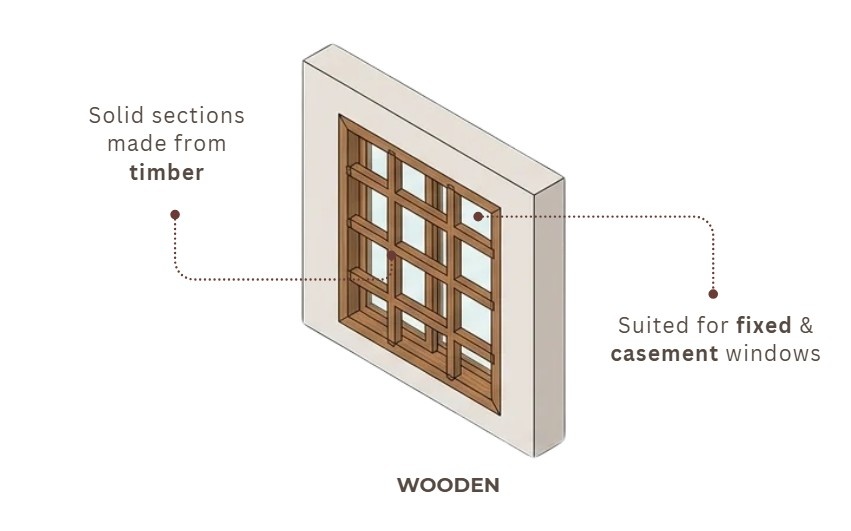
Wooden window grills bring warmth, tactility, and a softer architectural language compared to metal-based systems. Traditionally used in heritage homes, tropical architecture, and vernacular design systems, wood introduces a human-scale texture that feels integrated with interiors rather than imposed externally.
Functionally, wooden grills are more suited for low-rise buildings and controlled environments due to their sensitivity to moisture, termites, and weather exposure. They are often used in fixed or casement window systems where ventilation is prioritised and external security pressure is moderate. In modern architecture, wooden grills are frequently used as interior secondary layers rather than primary security barriers.
Aesthetically, wood allows carving, lattice patterns, and rhythmic spacing that can reflect cultural identity or craft traditions. This makes them particularly relevant in boutique residential projects, cultural institutions, resorts, and heritage restorations. The visual feel is organic and calming—wood softens harsh light and creates dynamic shadow play throughout the day. In architectural terms, wooden grills often act as transitional elements between built space and nature, reinforcing biophilic design principles.
Wrought Iron Window Grill
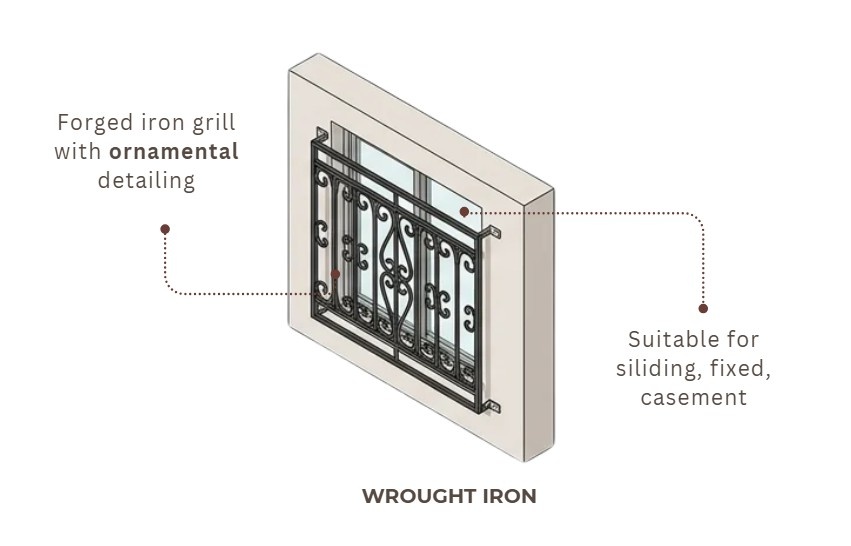
Wrought iron grills are the most expressive and historically rich category in window grill design. Known for their strength and malleability, wrought iron allows intricate detailing—from classical floral motifs to geometric Art Deco patterns and contemporary abstract compositions. This makes them highly versatile across architectural styles, especially in buildings that aim for a strong identity or ornamental façade language.
Structurally, wrought iron provides high tensile strength, making it ideal for security-focused applications in ground-floor windows, villas, heritage-style homes, and institutional buildings. It works well with casement and fixed window systems, often mounted externally or sandwiched between glazing layers in modern interpretations.
Visually, wrought iron grills can either be highly decorative or extremely minimal depending on design intent. In colonial-style architecture, they often carry elaborate scrollwork and symmetry, while in modern architecture they are reduced to linear grids or parametric patterns. They contribute significantly to façade depth by casting intricate shadows, especially in direct sunlight. However, they require periodic maintenance like anti-rust coating and repainting, particularly in humid climates.
From a design perspective, wrought iron grills act almost like “architectural jewellery”—they can either dominate a façade or subtly enhance it depending on detailing intensity.
Sandstone Window Grill
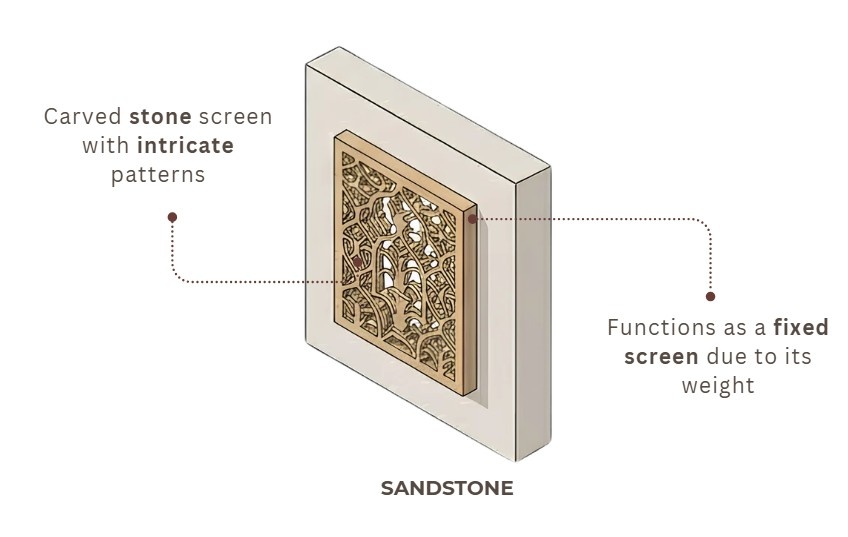
Sandstone grills are a deeply architectural and culturally rooted form of window screening, primarily found in traditional Indian, Islamic, and heritage architecture. These are not grills in the modern metallic sense but carved stone jalis that function as both security and environmental control systems.
Functionally, sandstone grills excel in passive cooling strategies. Their perforated patterns allow controlled airflow while reducing heat gain and filtering harsh sunlight. This makes them highly relevant in hot and dry climates, especially in palaces, havelis, temples, and courtyards. They are typically used in fixed window systems and integrated directly into thick masonry walls rather than applied as secondary elements.
Aesthetically, sandstone grills are highly ornamental and symbolic. The patterns often carry geometric precision or floral abstraction, creating dynamic shadow compositions that shift throughout the day. Their tactile mass gives buildings a sense of permanence and monumentality. Unlike metal or wood, sandstone becomes part of the wall itself, blurring the boundary between structure and ornament.
In contemporary architecture, sandstone grills are sometimes reinterpreted using CNC-cut stone panels, bringing traditional aesthetics into modern construction workflows. They are most suitable for heritage-inspired architecture, luxury resorts, cultural institutions, and buildings that aim to express regional identity.
Grills influence daylight patterns, ventilation openness, visual permeability, and even the architectural identity of a façade.
Conclusion
Window grills are no longer just protective layers—they are architectural tools that shape light, security, identity, and environmental performance. Whether it’s the sleek efficiency of aluminium, the warmth of wood, the expressive strength of wrought iron, or the cultural depth of sandstone carvings, each material carries a distinct architectural narrative. The right grill choice depends on climate, building typology, window system, and design intent, making it a small but powerful decision in façade design strategy.
These were some insights on Types of Window Grills. Stay tuned for more information on other significant topics in the AEC industry and follow Kaarwan for such detailed guides!
FAQs
1. What is the most durable material for window grills?
Aluminium and wrought iron are generally the most durable, with aluminium offering corrosion resistance and wrought iron offering high strength with proper maintenance.
2. Which window grill type is best for modern apartments?
Aluminium grills are most commonly used in modern apartments due to their lightweight nature, low maintenance, and clean aesthetic.
3. Are wooden window grills safe for exterior use?
They are better suited for semi-covered or interior applications as they are vulnerable to weathering and pests if exposed externally.
4. What is the purpose of sandstone window grills?
They provide natural ventilation, shade control, and cultural aesthetic value, especially in traditional and heritage architecture.
5. Can window grills affect ventilation and lighting?
Yes, grill spacing, material thickness, and pattern design directly influence airflow, daylight penetration, and shadow quality inside spaces.