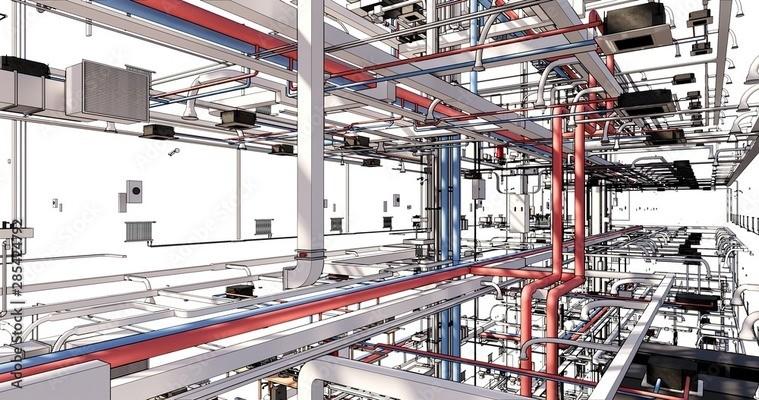
Imagine a construction team arriving on-site to install HVAC ducts, only to find they clash with electrical conduits and plumbing pipes. What happens then?? Work stops, schedules are delayed, and costs also increase. This situation is very common on poorly coordinated projects.
This is what is called MEP clashes (Mechanical, Electrical, and Plumbing conflicts), which is one of the most expensive yet preventable issues in modern construction. According to industry research, construction rework accounts for approximately 5-20% of total project costs, with MEP coordination failures being a leading contributor. By enabling early detection and coordination of services in a digital environment, BIM is transforming how teams identify, resolve, and prevent clashes long before construction begins.
Understanding MEP Clashes: The Silent Budget Killer
Understanding MEP clashes is the first step to avoiding costly rework and delays. By identifying these issues early in the design stage, project teams can protect budgets, timelines, and on-site efficiency.
_1770642197923.jpeg)
Image Credit: HitechBIMServices
What Are MEP Clashes?
MEP clashes occur when mechanical, electrical, and plumbing systems occupy the same physical space in a building design. These conflicts go unnoticed in traditional 2D drawings but become painfully obvious during installation. Without clash detection, teams realise the issue only when pipes, ducts, or cables don’t fit as planned.
Types of MEP Clashes
There are three primary types of clashes that BIM helps identify:
Hard clashes: Occur when two building elements physically intersect, such as an HVAC duct passing through a structural beam.
Soft clashes: Happen when required clearances are not maintained, for example, insufficient space for equipment access or maintenance.
Workflow clashes: Arise from poor installation sequencing, like planning plumbing work after walls or drywall are already completed.
The True Cost of MEP Clashes in Construction
MEP clashes impact construction projects far beyond technical inconveniences, directly affecting budgets, timelines, and productivity. These costs can be broadly divided into direct financial losses and indirect operational inefficiencies that compound over time.
Direct Costs: Rework and Material Waste
- Removal, modification, or replacement of already installed MEP components
- Wastage of materials due to on-site design conflicts
- Increased spending on rework and corrective labour
- Budget overruns caused by fixing preventable coordination errors
Indirect Costs: Delays and Labor Inefficiencies
- Work stoppages while clashes are reviewed and redesigned
- Idle labour across multiple trades waiting for resolutions
- Extended project timelines and schedule slippages
- Higher labour costs, penalties, and overall project overheads
How BIM Technology Transforms MEP Coordination
BIM technology has completely changed how MEP systems are planned, coordinated, and executed. By shifting coordination to a digital environment, teams can detect issues early, collaborate better, and avoid costly on-site surprises.
_1770640859593.jpeg)
3D Modelling and Visualisation
BIM creates a comprehensive digital replica of a building where all MEP systems exist in three-dimensional space. Unlike flat drawings, this clash-free model allows engineers to literally walk through the building before construction begins.
Software like Revit MEP and Navisworks enables teams to visualise exactly how ductwork, piping, and cable trays interact with structural elements and architectural features.
Automated Clash Detection Tools
The real power of BIM lies in automated clash detection. The software runs continuous checks, flagging thousands of potential conflicts in minutes, work that would take weeks manually. These tools categorise clashes by severity, helping teams prioritise critical fixes.
A report from Dodge Data & Analytics found that 75% of contractors using BIM for clash detection experienced reduced rework, with some reporting up to 30% reduction in site rework costs.
Real-World Benefits: BIM's ROI in Preventing Site Rework
Cost Savings and Time Efficiency
The numbers speak volumes. A 2024 Stanford University study analysing 32 major projects found that those implementing BIM for MEP coordination saw average cost savings of 18% compared to traditional methods. The Guggenheim Museum in Abu Dhabi eliminated 98% of potential MEP conflicts during design, avoiding millions in potential rework.
Enhanced Collaboration and Safety
BIM creates a common data environment where architects, engineers, and contractors collaborate in real-time. This transparency reduces miscommunication and improves safety, fewer on-site modifications mean fewer improvised solutions and hazardous conditions.
"BIM doesn't just save money; it saves lives by ensuring systems are installed right the first time," explains Michael Torres, a senior MEP engineer with 20 years of experience.
Best Practices for Implementing BIM Clash Detection
Successfully implementing BIM for MEP coordination demands strategic planning, consistent workflows, and proper tools to minimise clashes and ensure smooth project execution.
Here are a few essential practices to ensure successful implementation:
Early Integration and Regular Coordination
Success requires starting BIM coordination early, ideally during schematic design. Weekly clash detection reviews allow teams to catch conflicts when changes are still inexpensive, establishing clear protocols for who resolves which clashes prevents bottlenecks and finger-pointing.
Choosing the Right BIM Tools
Different projects need different solutions. Autodesk Navisworks excels at large-scale coordination, while Solibri offers rule-based checking ideal for compliance verification. The key is selecting tools that integrate seamlessly with your design software and match your team's expertise level.
Ready to Master BIM for MEP Coordination? Elevate your engineering career with Professional BIM Certification for MEP Engineers a comprehensive program covering advanced clash detection, MEP coordination strategies, 3D modelling workflows, and real-world project applications to make you industry-ready.
Conclusion
Hidden MEP clashes derail projects through wasted materials, delays, safety risks, and budget overruns. BIM addresses this with automated clash detection, ensuring early coordination, smoother workflows, and consistently cost-efficient project outcomes.
For students and professionals alike, mastering BIM is essential. Kaarwan’s one-day BIM Masterclass delivers hands-on MEP coordination skills, helping learners stay competitive and confidently solve complex construction challenges ahead.
FAQ's
1. What are MEP clashes in construction?
MEP clashes occur when mechanical, electrical, and plumbing systems physically conflict or occupy the same space in building designs.
2. How much does construction rework cost due to MEP clashes?
Construction rework from MEP clashes typically costs 5-20% of total project budgets, often reaching millions on large projects.
3. What is BIM clash detection?
BIM clash detection uses 3D modeling software to automatically identify conflicts between building systems before construction begins on-site.
4. Can BIM completely eliminate MEP clashes?
While BIM can detect 95-98% of clashes during design, proper coordination and regular reviews are essential for maximum effectiveness.
5. What software is used for MEP clash detection?
Popular software includes Autodesk Navisworks, Revit MEP, Solibri, and BIM 360 for automated clash detection and coordination workflows.
6. When should clash detection start in a project?
Clash detection should begin during schematic design phase and continue weekly throughout design development for best results.
7. What are hard clashes vs soft clashes?
Hard clashes involve direct physical interference; soft clashes are clearance violations like insufficient maintenance space around equipment.
8. How does BIM save money on construction projects?
BIM reduces rework costs by 18-30%, minimizes material waste, prevents project delays, and improves coordination among all trades.
9. Who is responsible for resolving MEP clashes?
MEP engineers, BIM coordinators, and contractors collaborate to resolve clashes, with priority given based on project requirements.
10. Is BIM training necessary for MEP engineers?
Yes, BIM proficiency is increasingly mandatory for MEP engineers as industry standards shift toward digital coordination and clash-free modeling.