Sustainable architecture is becoming a core component of modern design, with architects seeking innovative ways to reduce environmental impact. Two groundbreaking technologies, Building Information Modeling (BIM) and 3D Printing, are revolutionizing how architects create eco-friendly buildings.
These tools not only enhance efficiency but also minimize waste, optimize material use, and support environmentally responsible practices. This article will help you learn about the transformative impact of BIM and 3D printing in fostering sustainable architectural practices.
How BIM Promotes Sustainable Architecture
The Role of BIM in Green Building Design
BIM architecture is a digital tool that enables architects to create intelligent 3D models of buildings. These models are packed with data that aids in decision-making throughout a building's lifecycle. But how does this support sustainability?
- Energy Efficiency: BIM enables simulations to optimize energy usage, from daylighting to HVAC systems. For instance, architects can analyze solar radiation patterns to design energy-efficient façades.
- Material Optimization: By using BIM, construction teams can calculate precise material quantities, reducing waste significantly.
- Lifecycle Analysis: BIM integrates lifecycle assessments to evaluate a building's environmental impact over time, helping teams adopt sustainable solutions.
A study by Dodge Data & Analytics revealed that 60% of architects using BIM report significant improvements in sustainability metrics, including energy savings and waste reduction.
Example: The Edge in Amsterdam
The Edge, one of the world’s greenest buildings, uses BIM extensively. This office building achieves net-zero energy consumption through features like solar panels and energy-efficient design elements—all planned and monitored using BIM.
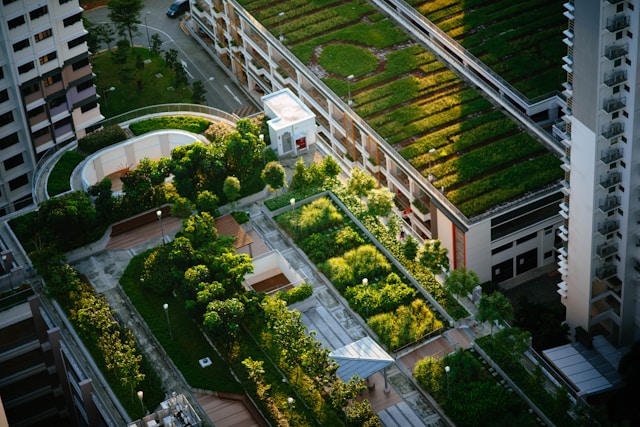
3D Printing: The Future of Sustainable Construction
How 3D Printing Reduces Environmental Impact
3D Printing in architecture streamlines construction, minimizes waste, and utilizes sustainable materials. It’s a perfect complement to BIM, as it brings digital designs into the real world.
- Material Efficiency: 3D printing uses only the necessary material, reducing construction waste by up to 30%.
- Recycled Materials: Many 3D printers now use recycled plastics and concrete, promoting circular economy principles.
- Energy Savings: On-site 3D printing eliminates transportation energy, further reducing the carbon footprint.
According to a report by Allied Market Research, the 3D printing construction market is expected to grow by 22.3% annually, reflecting its growing adoption for sustainable projects.
Example: TECLA Houses by WASP
In Italy, the TECLA houses demonstrate the synergy of 3D printing and sustainability. Made entirely of local raw materials, these homes highlight how technology can align with eco-conscious goals to provide affordable housing.
Combining BIM and 3D Printing for Maximum Sustainability
How BIM and 3D Printing Work Together
When architects integrate BIM architecture with 3D printing, the results are revolutionary:
- Seamless Design-to-Build Process: BIM models provide precise instructions for 3D printers, reducing errors and rework.
- Enhanced Collaboration: BIM facilitates better communication among stakeholders, ensuring that sustainability goals are met.
- Faster Construction Timelines: 3D printing executes BIM-driven designs swiftly, cutting construction time by up to 70%.
Application: Dubai Municipality Office
Dubai’s 3D-printed office building exemplifies this synergy. Designed using BIM and constructed with 3D printing, it reduced material waste by 60% and construction costs by 50%.
Benefits of BIM and 3D Printing for Sustainable Architecture
Why Architects Should Embrace These Technologies
Both BIM architecture and 3D printing empower architects to innovate while adhering to sustainable practices.
- Cost Savings: Accurate material estimation in BIM and efficient material use in 3D printing reduce project costs.
- Global Impact: These technologies align with UN’s Sustainable Development Goals (SDGs), particularly SDG 9 (Industry, Innovation, and Infrastructure).
- Scalability: From small homes to massive skyscrapers, these tools are adaptable to projects of all scales.
Architects who invest in a BIM certification course online gain a competitive edge, as they master these tools and contribute to greener construction practices globally.
How to Begin Your Journey Towards Sustainable Design
Enroll in a BIM Certification Course
A BIM certification course online equips architects with the skills to design smarter and greener. These courses cover energy modeling, material optimization, and integration with 3D printing.
- Gain hands-on experience with the latest BIM tools.
- Learn how to conduct lifecycle assessments and energy simulations.
- Position yourself as a leader in sustainable architecture.
Adopt 3D Printing in Your Practice
Start small by exploring how 3D printing can transform your prototyping and model-building processes. As you become familiar, scale it up for construction projects.
Challenges and Solutions
Addressing Initial Costs
The upfront investment in BIM and 3D printing technology can be high. However, long-term savings in materials, energy, and time offset these costs. Governments and organizations also offer subsidies to encourage sustainable construction practices.
Learning Curve
Architects may find it challenging to master BIM and 3D printing. By enrolling in an online BIM certification course, you can overcome these challenges effectively.
Conclusion
BIM and 3D printing are transforming sustainable architecture. These technologies help architects reduce waste, save energy, and create eco-friendly designs without compromising on creativity or efficiency. From reducing carbon footprints to enabling net-zero buildings, their potential is vast.
For architects aiming to lead in sustainability, learning and adopting these tools is not just an option—it’s a necessity. By exploring BIM architecture, 3D printing, and related BIM certification courses online, you can contribute to a greener, smarter future in the construction industry.
Learn BIM architecture and sustainable design in our Professional Revit & BIM Certification Course! Build greener and smarter while advancing your career. Enroll today!
Visit the Kaarwan website for more insights!
FAQs
Q1: How does BIM architecture support sustainable design?
A1: BIM architecture enables energy simulations, material optimization, and lifecycle assessments. These features help architects create eco-friendly designs by minimizing waste and improving energy efficiency.
Q2: What are the environmental benefits of 3D printing in construction?
A2: 3D printing reduces construction waste by up to 30%, uses sustainable and recycled materials, and lowers carbon footprints by eliminating transportation needs through on-site manufacturing.
Q3: How do BIM and 3D printing complement each other in sustainable architecture?
A3: BIM provides precise models for 3D printing, enabling seamless design-to-build processes, reducing errors, and speeding up construction timelines by up to 70%.
Q4: Why should architects consider a BIM certification course online?
A4: A BIM certification course online equips architects with skills in energy modeling, material optimization, and integration with 3D printing, making them leaders in sustainable design practices.
Q5: What are examples of projects that showcase the use of BIM and 3D printing?
A5: The Edge in Amsterdam uses BIM for energy-efficient design, and TECLA houses in Italy employ 3D printing with local materials to promote sustainability. Both demonstrate the technologies' potential for green construction.