AI in Architecture: When Algorithms Meet Imagination
Imagine a world where your architectural dreams take shape before your eyes, not through tedious sketches, but through intelligent conversations with a digital design partner. Welcome to architecture's AI revolution—a landscape where creativity meets computational magic, where every line, curve, and space tells a story of human ingenuity amplified by artificial intelligence.
The Technological Metamorphosis of Design
Architecture has always been a story of innovation. From hand-drawn blueprints etched on tracing paper to computer-aided design that transformed drafting rooms, each technological wave has reshaped how we create spaces. Artificial Intelligence represents the most profound transformation yet—not just a tool, but an intelligent collaborator that understands, interprets, and generates design solutions with unprecedented sophistication.
This isn't just another technological upgrade. It's a fundamental reimagining of the design process. Historically, architects relied solely on human intuition, manual calculations, and years of accumulated experience. Today, AI introduces a new dimension of possibility—one where complex design challenges can be solved with remarkable speed, creativity, and precision that were unimaginable just a decade ago.
Generative Design: Unleashing Computational Creativity
Generative design is where imagination truly takes flight. Picture this transformative scenario: You input your project's core constraints—budget limitations, material requirements, environmental conditions, cultural context—and watch as an AI system generates hundreds of design possibilities in mere minutes. What once took months of iterative design now happens in the blink of an eye.
"We're no longer just designers," says Maria Rodriguez from Stanford's Architectural Innovation Lab. "We've become design curators, selecting and refining the most promising computational insights."
The implications are nothing short of revolutionary. Traditional design processes might take weeks or months to explore multiple iterations, requiring teams of architects to manually draft and evaluate each concept. AI condenses this timeline, presenting architects with a spectrum of solutions that challenge conventional thinking and push the boundaries of what's possible.
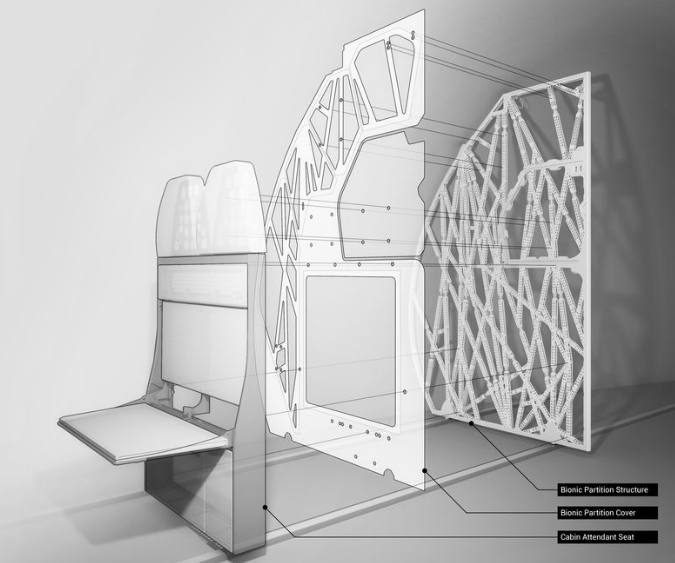
Autodesk project for Airbus (Img Src: Airbus)
A compelling real-world example comes from the Autodesk project for Airbus. Engineers used AI to redesign an aircraft partition, resulting in a structure 45% lighter than the original while maintaining perfect structural integrity. This isn't mere optimization—it's a radical reimagining of design potential that demonstrates how AI can solve complex engineering challenges.
Virtual Reality: Walking Through Unbuilt Worlds
Virtual Reality powered by AI transforms how we experience architectural spaces. Clients no longer squint at flat, lifeless blueprints. Instead, they walk through photorealistic, interactive 3D environments before a single brick is laid, experiencing spaces with unprecedented sensory depth.
Modern VR tools simulate complex environmental factors with astonishing precision:
- Acoustic properties that predict sound movement and interaction
- Natural light penetration through intricate window designs
- Thermal comfort zones for optimal human experience
- Human movement patterns that optimize spatial flow and functionality
An MIT research study revealed remarkable insights: VR-enabled design processes reduce iteration time by 67% and eliminate client misunderstandings by 85%. These aren't just statistics—they represent a fundamental shift in architectural communication, breaking down the barriers between conceptual design and lived experience.
Sustainability: AI as an Environmental Superhero
Climate change demands innovative design solutions that go beyond traditional approaches. AI algorithms now provide unprecedented environmental insights by:
- Optimizing building orientation for maximum solar efficiency
- Predicting precise thermal performance with micro-level accuracy
- Recommending sustainable material combinations
- Simulating long-term ecological impacts across decades
- Calculating carbon footprints with unprecedented detail
Consider "The Edge" in Amsterdam—arguably the world's most sustainable office building. Its design integrates computational algorithms that generate more energy than the structure consumes, showcasing AI's potential in creating eco-friendly spaces that harmonize with their environment.
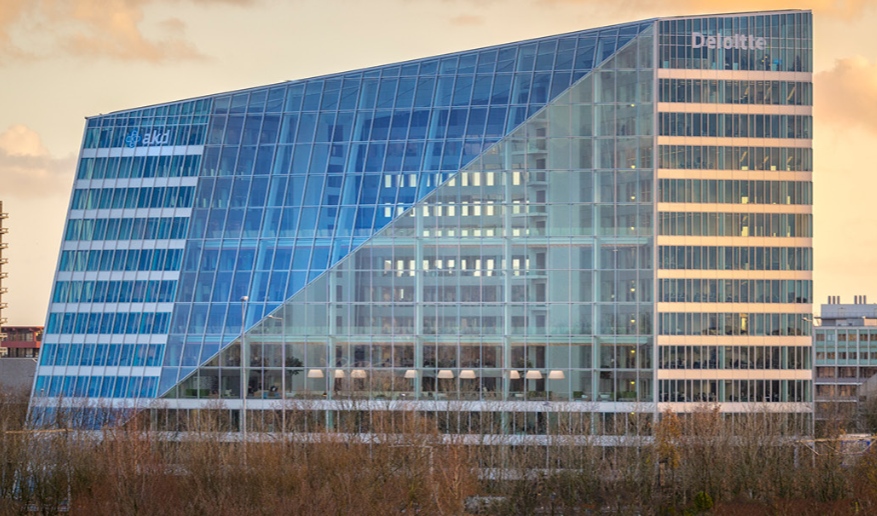
"The Edge" in Amsterdam (Img Src: The Edge)
These aren't theoretical concepts. They're practical solutions addressing urgent global challenges. AI helps architects design buildings that are not just aesthetically pleasing, but environmentally responsible and future-proof.
The Human-AI Design Partnership
Despite technological advances, architecture remains fundamentally human. Algorithms generate options, but they cannot capture the emotional essence of a space—that inexplicable feeling when design transcends mere functionality and becomes poetry.
"Technology provides the brush," says renowned architect Carlos Mendes, "but human emotion remains the painter."
The most successful designs will emerge from a collaborative dance between human creativity and computational intelligence. AI provides options; human architects provide soul, context, cultural understanding, and that ineffable spark of innovation.
Learning the New Design Language
For emerging architects and seasoned professionals alike, the path forward is clear: Embrace AI as a collaborative partner. The most successful designers will:
- Develop a deep understanding of AI's sophisticated capabilities
- Maintain creative leadership and human-centric design principles
- Treat algorithms as intelligent collaborators, not replacements
- Continuously expand their technological and computational literacy
Architecture schools are rapidly transforming their curricula. Institutions like MIT, UCL, and TU Delft now offer specialized courses bridging traditional design principles with cutting-edge computational approaches, preparing the next generation of architects for this technological frontier.
The Philosophical Frontier
We stand at an extraordinary intersection of human creativity and machine intelligence. Artificial Intelligence won't just change how we design—it will challenge our fundamental understanding of design's purpose and potential.
Yet, amidst all this innovation, one thing remains constant: the human element. Technology can enhance our abilities, but it can’t replicate our intuition, our empathy, or our vision. As we move forward, the most exciting projects will be those where AI and human creativity come together, not as competitors, but as collaborators.
This isn't about replacement. It's about expansion. About creating spaces that are more intelligent, more responsive, more human. About pushing the boundaries of what architecture can be.
For the curious, the passionate, the innovators: Your architectural journey is just beginning.
Disclaimer: This exploration captures a moment in an ongoing technological revolution. The most exciting chapters remain unwritten.
The future of architecture is bright, but are your skills keeping pace? Kaarwan's architecture-specific courses provide you with the knowledge and tools to confidently navigate the AEC industry. Gain valuable insights, master in-demand software, and stand out with designs that impress!
FAQs
1. What is generative design?
Answer: It’s an AI-driven process where architects input constraints, and the system generates multiple design options quickly, saving time and sparking creativity.
2. How does AI help with sustainability?
Answer: AI optimizes building designs for energy efficiency, material use, and environmental impact, creating eco-friendly and future-proof structures.
3. Will AI replace architects?
Answer: No, AI assists architects by generating ideas and solving problems, but human creativity and intuition remain essential for meaningful design.
4. What’s the role of VR in architecture?
Answer: VR lets clients and architects explore realistic 3D models of unbuilt spaces, improving communication and reducing design errors.
5. What skills do architects need for AI?
Answer: Architects need to understand AI tools, balance technology with creativity, and learn to collaborate with AI as a design partner.