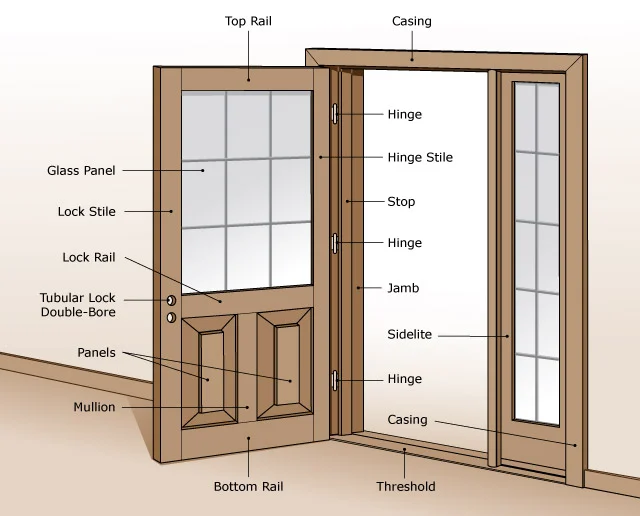
Anatomy of a Door & Its Frame: A Quick Guide for Architecture Students
Understanding doors isn’t just about choosing styles — it’s about knowing each component that controls strength, security, insulation, accessibility, and aesthetics. Here’s a simple breakdown that will help you decode construction drawings like a pro.
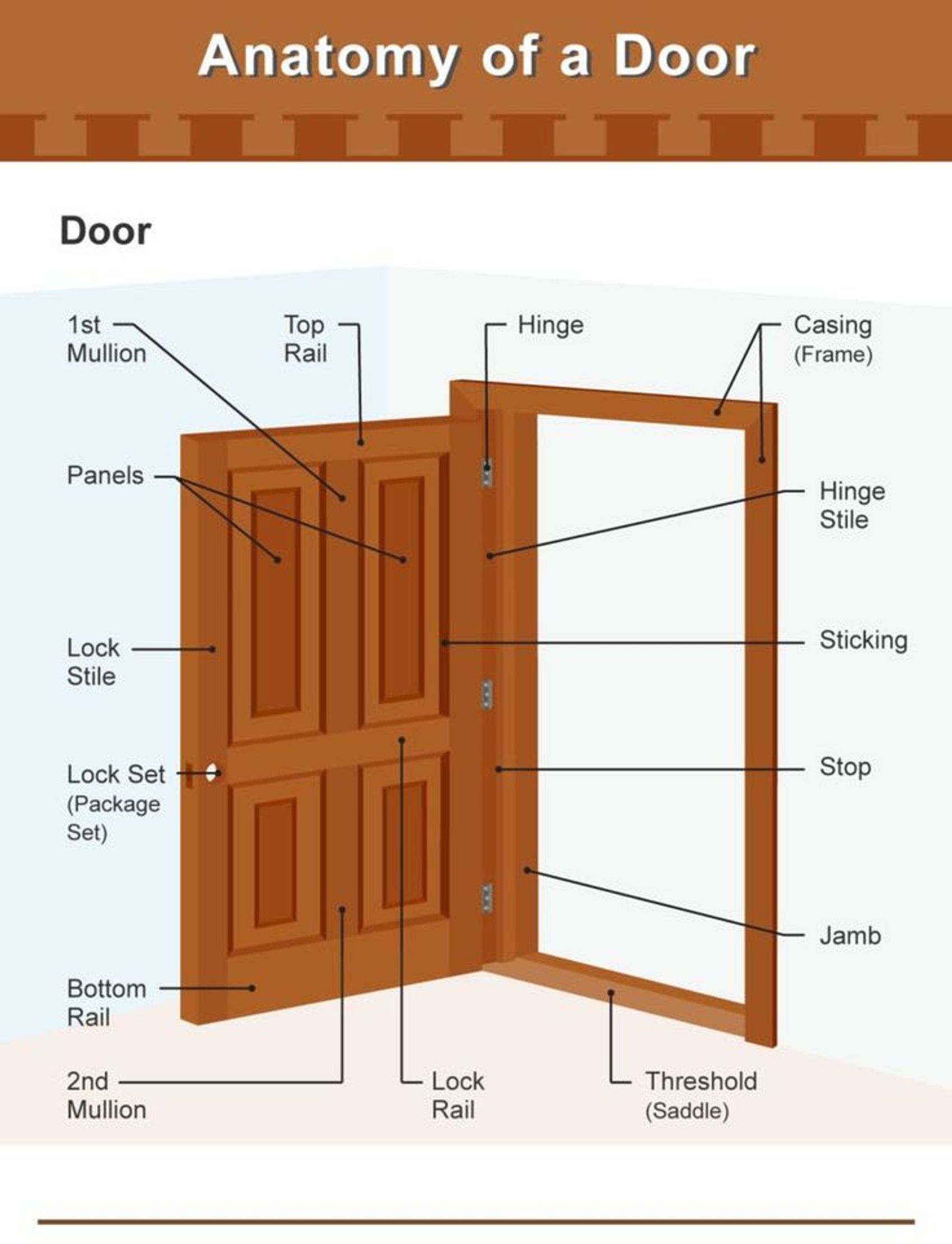
1️⃣ Door Leaf
This is the main moving part of the door — the panel you push or pull.It can be flush, paneled, glazed, frameless, or fire-rated depending on use.
Why it matters: Affects acoustics, fire protection, and the overall look of the door.
2️⃣ Door Frame (Jamb)
The fixed structure that holds the door in place. It is fixed to the wall and supports hardware.
Parts of Door Frame:
- Side Jambs: Vertical supports on either side
- Head Jamb: Horizontal member at the top
- Sill (optional): Bottom plate seen in exterior or wet-area doors
Why it matters: Ensures alignment, durability, and smooth operation.
3️⃣ Architrave / Casing
Trim that covers the gap between the wall and frame.
Why it matters: Aesthetic finish + hides installation joints.
4️⃣ Hinges
Hardware that allows the door to swing open or close.
Types include: butt hinge, concealed hinge, pivot, continuous hinge.
Why it matters: Affects swing direction, durability, and maintenance.
5️⃣ Door Hardware
Includes:
- Lockset / Latch – security and privacy
- Handle / Knob – operation
- Strike Plate – metal plate where latch locks
- Door Closer / Stoppers – control motion
Why it matters: Determines security, ease of use, and safety.
6️⃣ Threshold / Sill
The bottom transition piece between two floor levels or spaces.
Why it matters:
- Protects from water ingress (external doors)
- Prevents dust entry
- Ensures accessibility
Alt text: Threshold between interior and exterior floor levels
7️⃣ Weatherstripping
Seals gaps around the door to improve insulation.
Why it matters:
- Prevents drafts and dust
- Improves acoustic performance
- Enhances energy efficiency
8️⃣ Stops
Small projections inside the frame that stop the door from swinging beyond closed position.
Why it matters: Protects frame + ensures tight closure.
9️⃣ Swing Direction Indicators
Shown in drawings using an arc. Helps define:
- LH (Left-Hand) or RH (Right-Hand)
- Inward or Outward opening
Why it matters: Critical for accessibility, fire safety, and circulation flow.
Quick Recap
| Component | Role |
|---|---|
| Door Leaf | Main moving panel |
| Frame/Jamb | Holds door in place |
| Hinges | Enables movement |
| Lockset/Hardware | Security & function |
| Threshold & Stops | Closure & sealing |
| Architrave | Finishing detail |
| Weatherstripping | Performance enhancement |
Why This Knowledge Is Important
- Helps avoid design-site coordination issues
- Improves detailing accuracy in drawings
- Ensures safety, durability & user comfort
- Essential for juries and professional practice