"To be watched at all times is... a subtle form of oppression."
This sentiment, echoed in George Orwell’s 1984, feels increasingly relevant as public spaces become saturated with surveillance systems. Cameras, sensors, and facial recognition technologies have transformed our streets and squares into hubs of constant monitoring. While the intent is often noble—to ensure safety—there’s no denying the tension between security and personal privacy. And let’s not forget: in the hands of architects and designers, even surveillance has an aesthetic story to tell.
Modern urban spaces demand solutions that balance functionality with beauty, and surveillance systems are no exception. But how can we ensure these tools enhance safety without eroding privacy or disrupting the visual harmony of our cities? The answer lies in thoughtful design, ethical considerations, robust security measures, and community trust.
The Necessity of Surveillance in Public Spaces
The Role of Silent Sentinels
Surveillance systems, when implemented responsibly, are indispensable in today’s world. They serve as silent sentinels, deterring crime and enabling faster responses during emergencies. Take, for instance, London’s vast CCTV network. With over 600,000 cameras, it has become an integral part of the city’s safety fabric, helping authorities solve crimes and manage large-scale events like the annual Notting Hill Carnival.

Notting Hill Carnival, Image Source: Imperialride.com
Enhancing Urban Flow
Beyond crime prevention, surveillance plays a critical role in managing urban flows. Smart systems monitor traffic congestion, guide emergency vehicles during crises, and even optimize public transportation schedules. Public transit hubs, for example, benefit immensely from surveillance, as seen in New York City’s subway system, where strategically placed cameras have significantly reduced vandalism and improved passenger safety.
Integrating Data-Driven Solutions
Additionally, surveillance technology enhances security measures through the integration of data-driven solutions. By automating data collection and analysis, cities can streamline their responses to emergencies. Frameworks for robust security measures, like access control and encryption, ensure data security, protect data at rest and in transit, and safeguard sensitive information from breaches and vulnerabilities.
The Challenges of Privacy and Trust
Who Watches the Watchers?
While surveillance enhances safety, its omnipresence raises unsettling questions. Who watches the watchers? And what happens to the data collected? These concerns are far from hypothetical. In San Francisco, the city’s ban on facial recognition technology highlighted public discomfort with invasive surveillance methods. Residents feared misuse of sensitive data, racial profiling, and a loss of anonymity.
Avoiding Misuse and Breaches
Such fears are not unfounded. In the wrong hands, surveillance tools can morph into instruments of control. Consider the global debates surrounding data breaches and unauthorized access—a stark reminder of the thin line between protection and intrusion. To ensure the confidentiality of collected data, systems must adhere to strong security principles and policies and procedures that prevent unauthorized access.
Building Public Trust
Building trust, therefore, is paramount. Transparency about surveillance practices—who collects data, how it’s used, and for how long—is essential. Regulatory compliance, such as GDPR, and ethical data governance frameworks help cities maintain data privacy and enhance security. Amsterdam has set a benchmark by involving citizens in discussions about urban surveillance. Ethical guidelines, coupled with public awareness campaigns, can help bridge the gap between security measures and community acceptance.
Aesthetic Integration of Surveillance
When we think of surveillance, the image of a bulky, conspicuous camera often comes to mind. But what if these systems could blend seamlessly into the environment or even enhance it? This is the challenge—and opportunity—faced by architects and designers today.
Lessons from Barcelona and Singapore
Barcelona’s smart city initiatives offer a masterclass in integrating technology with urban aesthetics. Here, surveillance cameras are discreetly incorporated into streetlights, blending with the city’s historic charm. Similarly, in Singapore, cutting-edge surveillance systems prioritize minimal visual impact, using compact designs and neutral colors that harmonize with public spaces.
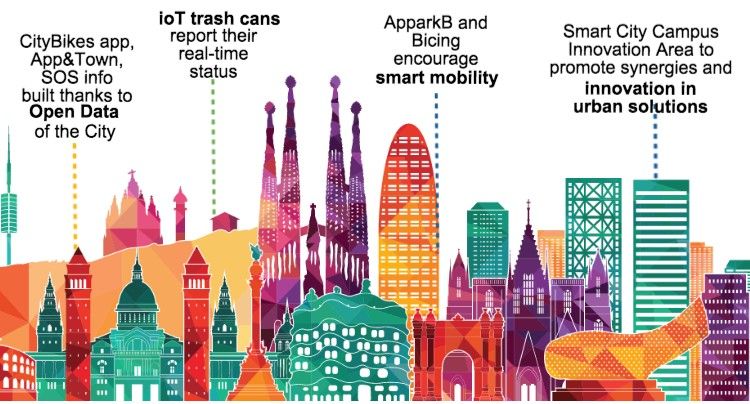
Barcelona’s Smart City Initiative, Image Source: Barcinno.com
Surveillance as Art
The approach goes beyond mere concealment. Surveillance systems can become part of the art. Imagine cameras encased in sculptural installations or incorporated into vibrant murals. These creative solutions not only reduce visual clutter but also make technology feel less intrusive. Public spaces thrive on aesthetics, and thoughtful integration ensures surveillance tools complement rather than clash with their surroundings.
Strategic Architectural Design
Architectural design strategies also play a role. Using natural materials, embedding systems into existing structures, and prioritizing strategic placement are effective techniques. For example, placing cameras at higher elevations not only improves coverage but also keeps devices out of immediate sightlines, preserving the visual appeal of pedestrian areas.
Advanced Security Architecture
Security architecture must also incorporate advanced security controls, such as multi-factor authentication and encryption, to protect data within surveillance systems. Automation in data processing ensures that sensitive data remains secure, while robust security measures mitigate potential vulnerabilities.
The Balance Between Privacy and Security
Striking the balance between privacy and security is a nuanced challenge. While surveillance technology must meet security requirements, it should also align with the right to privacy and the aesthetic integrity of urban spaces. By adopting security best practices, cities can achieve a harmonious blend of functionality and design.
To balance security with privacy protections, urban planners and engineers must consider frameworks that prioritize data protection and access control. Ensuring that only authorized users have access to sensitive information minimizes security risks, while designing systems to prevent unauthorized access helps maintain trust.
Proactive Measures
Data-driven AI innovation can further enhance security features by identifying and fixing potential breaches before they occur. This proactive approach, combined with clear privacy policies and robust information security protocols, ensures data integrity and confidentiality. Collaborations with experts in data architecture and cloud security, such as Microsoft Azure, offer scalable solutions tailored to the current state of urban demands.
Conclusion: Finding Balance
The aesthetics of surveillance demand a delicate balance. Security is a necessity, but it shouldn’t come at the cost of privacy or urban beauty. Thoughtful design, informed by security principles, ethical guidelines, and community engagement, can help create public spaces where technology supports—rather than stifles—human experience.
As architects, engineers, and urban planners, the challenge is clear: innovate with empathy. Build systems that protect without oppressing, and design cities where safety and privacy coexist in harmony. After all, a truly modern city is one that respects its citizens as much as it watches over them.
The future of architecture is bright, but are your skills keeping pace? Kaarwan's architecture-specific courses provide you with the knowledge and tools to confidently navigate the AEC industry. Gain valuable insights, master in-demand software, and stand out with designs that impress!
FAQs
1. What is the role of aesthetics in urban surveillance?
Aesthetics help surveillance systems blend seamlessly with urban spaces, preserving their beauty while ensuring safety and functionality..
2. How can cities balance security and privacy?
Cities can achieve balance through ethical guidelines, robust security measures, and transparent practices that ensure citizen trust and data protection..
3. What are examples of aesthetically integrated surveillance?
Barcelona’s streetlight cameras and Singapore’s compact, discreet surveillance designs showcase how technology and aesthetics can coexist harmoniously..
4. Why is public trust important in surveillance?
Public trust ensures acceptance of surveillance systems by addressing concerns like data misuse, privacy loss, and racial profiling.
5. What innovative surveillance designs exist today?
Surveillance systems integrated into murals, sculptures, and historic architecture show innovation, ensuring technology complements urban design.