Sacred geometry has shaped architecture across civilizations, linking form, spirituality, and functionality. The Vastu Purusha Mandala, a core principle in Vastu Shastra, exemplifies how geometry influences spatial harmony. This article will help you learn about this fascinating geometry’s role in Vastu architecture and its connections to other sacred forms such as the golden ratio, mandalas, and Greek geometry. We’ll explore their similarities, unique traits, and impacts on modern architecture.
What is Vastu Purusha Mandala?
Vastu Purusha Mandala is the foundational grid in Vastu Shastra, a traditional Indian architectural science. Based on ancient principles, this geometric diagram defines spatial harmony and aligns structures with cosmic energy.
Principles and Purpose of Vastu Purusha Mandala
The Vastu Purusha Mandala is a square grid that symbolizes the Earth’s connection with cosmic forces. It represents a harmonious layout with designated areas for different energies.
- Basic Layout: The square grid includes 64 or 81 smaller squares, each assigned to a deity or energy type, creating a sacred spatial layout.
- Purpose: Each direction represents a particular element or energy. By aligning rooms with these energies, Vastu architecture aims to achieve balance and positivity within a space.
This geometry’s core idea is similar to feng shui’s energy flow concepts, but it is based on ancient Indian traditions and symbols.
Historical Significance and Application
The Vastu Purusha Mandala dates back thousands of years. This grid has influenced various architectural structures in India, from ancient temples to palaces. Its influence is visible in notable landmarks, such as the Brihadeeswara Temple, where it ensures the structure’s harmony with natural forces.
.jpg)
Hindu temple architecture_©Wikipedia
Sacred Geometry in Other Cultures
Beyond Vastu Shastra, sacred geometry appears in other cultures, symbolizing a universal quest for spatial harmony. Here are a few comparable sacred geometries from different traditions:
1. The Golden Ratio in Greek Architecture
The golden ratio, known as Phi (1.618), is a mathematical concept linked to harmony. Ancient Greek architecture, notably the Parthenon, used this ratio to create structures with aesthetic balance.
- Application in Architecture: Greek architects designed buildings with this ratio for symmetry, which they believed reflected universal beauty. The golden ratio has influenced not only Greek temples but also Renaissance art and modern design.
- Connection to Vastu: Like Vastu Purusha Mandala, the golden ratio aims for balance and harmony but emphasizes mathematical proportions rather than energy fields.
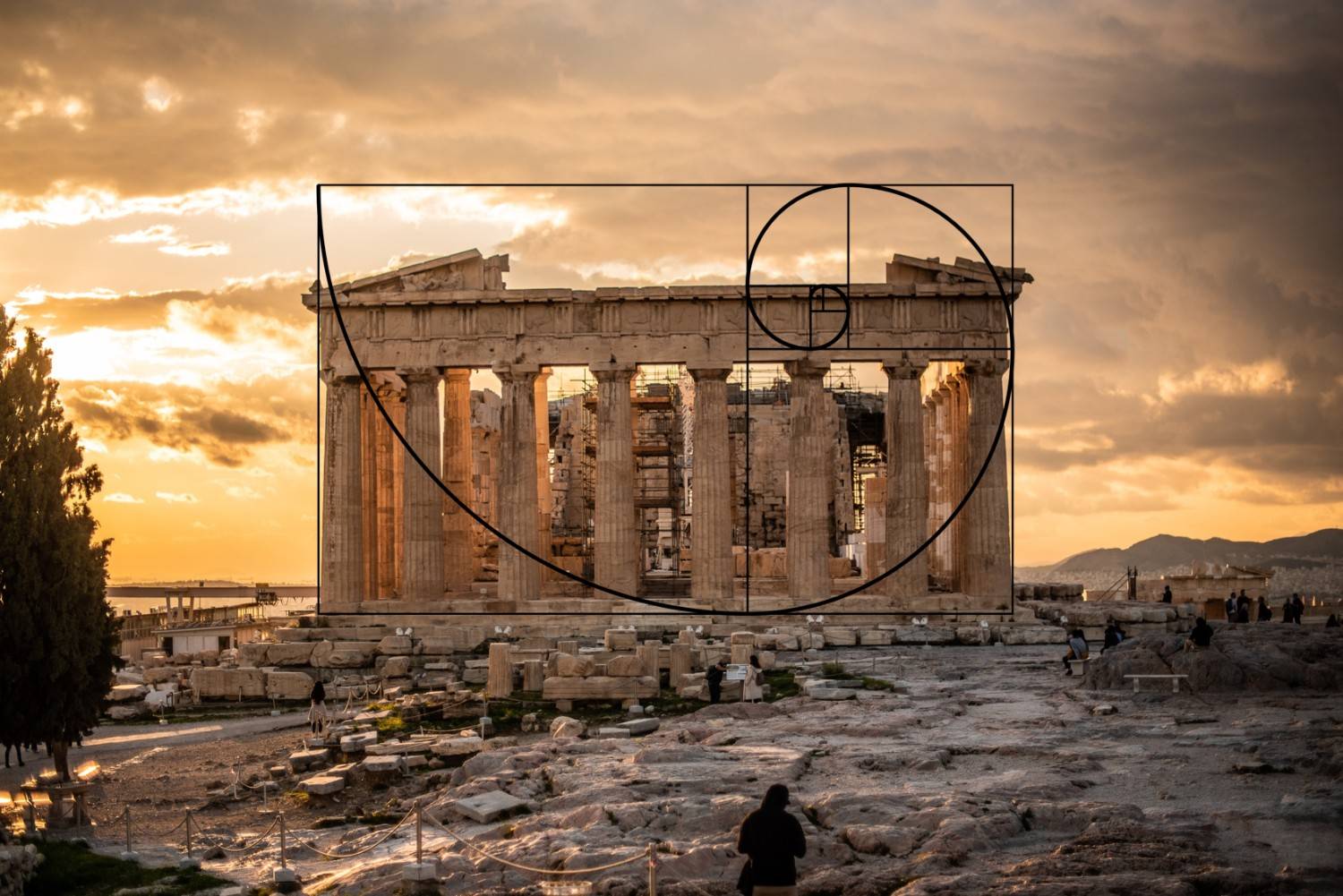
Parthenon of Athens, Greece showing Golden Ratio_©thearchinsider.com
2. Mandalas in Tibetan and Buddhist Architecture
Mandalas are intricate circular designs symbolizing the universe in Buddhist and Tibetan cultures. They embody sacred geometry principles by representing cosmic order through symmetry.
- Purpose: In Buddhist architecture, mandalas provide a meditative focal point, encouraging introspection and peace. For example, stupas and temples often integrate mandala structures.
- Comparison with Vastu: While Vastu Purusha Mandala uses a square layout, mandalas use circles, yet both designs seek cosmic alignment and balance.
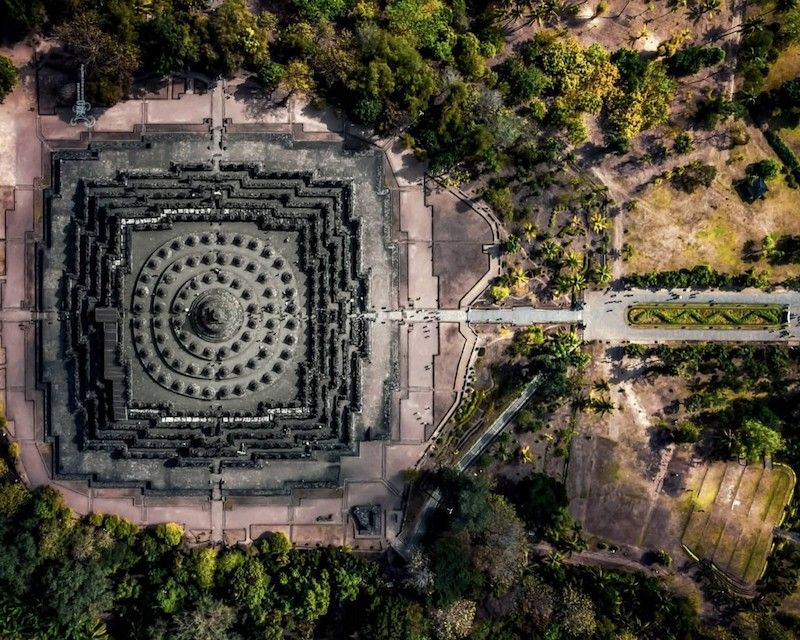
The Sacred Geometry Of Borobudur_©theartofprocess.art
3. Islamic Geometry in Mosques
Islamic architecture is renowned for intricate geometric patterns. These designs, which avoid depicting living beings, reflect Islamic values of infinity and unity.
- Architectural Elements: Key structures, such as the Alhambra and the Great Mosque of Córdoba, feature tessellations and star patterns. These patterns, though purely decorative, symbolize the universe’s order.
- Contrast with Vastu: Unlike Vastu Purusha Mandala, Islamic patterns are used more for visual beauty than spatial alignment with cosmic energies.
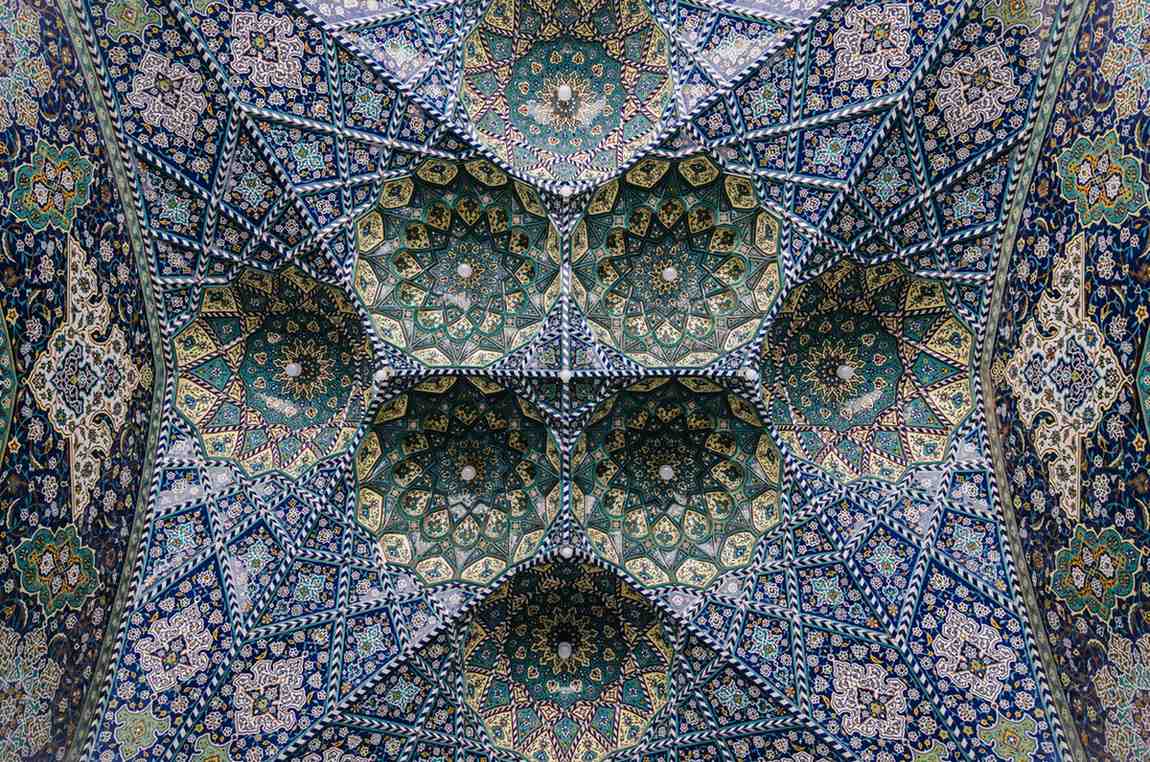
Ceiling details showing Islamic Geometry at the Shrine of Fatima Masumeh, Qom_©wilton-photography.com
Vastu Purusha Mandala vs. Other Sacred Geometries: A Comparative Analysis
While each sacred geometry serves unique cultural or religious functions, their similarities reveal universal principles. Here’s a closer look at how they align and differ:
Aligning with Cosmic Order
Most sacred geometries focus on aligning structures with larger cosmic principles. Whether through Vastu Shastra’s grid or Greek architecture’s golden ratio, these designs connect human-made structures with nature and the cosmos.
- Vastu architecture emphasizes energy alignment within structures, allowing spaces to harness positive cosmic energies.
- The golden ratio and mandalas focus more on creating visual harmony, whereas Vastu Purusha Mandala seeks spiritual energy flow.
Shapes and Structures
While the square and circle are dominant shapes in these geometries, their usage reflects cultural priorities.
- Square (Vastu and Islamic): The Vastu Purusha Mandala grid focuses on squares to establish a grounded connection with energy.
- Circle (Mandalas and Golden Ratio): Circles in mandalas and spirals in the golden ratio signify continuity, unity, and expansion, qualities that invite introspection and universal understanding.
Spiritual Functionality vs. Aesthetic Harmony
Most sacred geometries aim to balance both function and aesthetics. However, the balance between spiritual energy and visual harmony varies:
- Vastu Purusha Mandala: Prioritizes energy fields for residential and commercial spaces to maintain balance and prosperity.
- Greek Architecture: The golden ratio purely addresses beauty and visual symmetry.
- Islamic and Buddhist Geometries: Emphasize repetitive patterns for meditative purposes rather than cosmic energy alignment.
Influence of Sacred Geometries on Modern Architecture
Today, architects are rediscovering sacred geometries for sustainable and mindful architecture. The ancient principles of sacred geometry bring ecological harmony and aesthetic sophistication to modern structures.
Case Studies: Integrating Sacred Geometry in Modern Architecture
- The Lotus Temple, New Delhi, India: Inspired by the lotus flower and integrating both Vastu Shastra principles and sacred symmetry, this building offers a peaceful retreat amidst urban surroundings. The petal-like structure is geometrically sound, creating an atmosphere of tranquility.
- The Chapel of the Holy Cross, Arizona, USA: This chapel’s geometric lines merge with the rocky landscape, embodying the golden ratio’s principles. Its architecture aligns naturally with the environment, offering a serene experience to visitors.
Benefits of Sacred Geometry in Modern Spaces
Sacred geometry offers multiple advantages in modern architecture:
- Harmony with Nature: Structures designed with these principles blend seamlessly with their surroundings.
- Enhanced Mental Well-being: Environments based on sacred geometries are believed to reduce stress and foster mindfulness.
- Aesthetic Appeal: Balanced proportions create spaces that feel pleasing to the eye and comforting to the mind.
Why Learn Vastu Shastra?
For those intrigued by sacred geometries, exploring Vastu Shastra courses can provide a profound understanding of cosmic alignment in architecture. A course in Vastu Shastra covers topics from foundational Vastu Purusha Mandala principles to modern applications in both urban and rural settings.
- Practical Application: A vastu shastra course allows architects and designers to incorporate energy-balancing principles into projects.
- Career Opportunities: With an increasing interest in sustainable and holistic architecture, knowledge in Vastu can differentiate a professional’s skill set.
- Cultural Relevance: Vastu Shastra connects practitioners with rich Indian architectural heritage, enhancing both personal and professional perspectives.
Key Topics in a Vastu Shastra Course
A comprehensive vastu shastra course typically covers:
- Principles of Vastu Purusha Mandala
- Orientation and Spatial Planning
- Balancing Elements in Architecture
- Modern Applications of Vastu Shastra
Conclusion
Sacred geometry, from the Vastu Purusha Mandala to Islamic patterns, represents humanity’s quest to blend spirituality, harmony, and beauty in architecture. As modern architects explore sustainable, nature-aligned designs, the principles of vastu architecture and sacred geometries continue to inspire. Integrating these ancient ideas fosters not only eco-friendly spaces but also a sense of peace, well-being, and beauty for those who dwell within.
Learn the Vastu Shastra architecture and bring cosmic harmony to your designs. Enroll in our Advance Vastu Design & Compliance Course today!
Visit the Kaarwan website for more insights!
FAQs
Q1: What is Vastu Purusha Mandala?
A1: Vastu Purusha Mandala is a geometric grid foundational to Vastu Shastra, aligning structures with cosmic energy to promote spatial harmony.
Q2: How does Vastu Purusha Mandala influence architectural layout?
A2: This grid organizes space using 64 or 81 squares, each linked to specific energies or deities, creating a balanced and positive environment within a structure.
Q3: What is the main purpose of sacred geometry in architecture?
A3: Sacred geometry aligns buildings with cosmic forces, fostering harmony, spiritual energy, and aesthetic beauty in various architectural forms.
Q4: How does Vastu Purusha Mandala compare with other sacred geometries?
A4: Unlike the golden ratio or mandalas, which focus on visual harmony, Vastu Purusha Mandala centers on cosmic energy flow, supporting balance and prosperity in a space.
Q5: Why is Vastu Shastra knowledge valuable for modern architects?
A5: Learning Vastu Shastra equips architects to integrate spiritual and energy-balancing principles, enhancing the ecological and emotional harmony of modern structures.