The study of environmental psychology and user analysis is essential to creating architectural designs that prioritize user well-being, functionality, and satisfaction. This field explores how physical spaces influence emotions, behaviors, and overall mental health, while user analysis provides insights into specific needs, habits, and expectations.
Environmental Psychology and User Analysis
Environmental psychology is a field that studies how physical spaces and environments influence people’s emotions, behavior, and overall well-being. Architects are increasingly adopting these psychological insights to create spaces that not only look appealing but are optimized for comfort, productivity, and user satisfaction. User analysis in architecture involves understanding the specific needs and behaviors of people who will use a space, ensuring the environment aligns with their requirements.
Environmental psychology in architecture contributes directly to user-focused design, leading to spaces that feel more welcoming, functional, and harmonious. The relationship between environmental psychology and user analysis is essential, as it enables architects to create spaces that resonate emotionally with users, improving their daily experiences.
Environmental psychology examines the impact of physical surroundings on human emotions and behaviors, emphasizing the need for spaces that support well-being. Understanding these dynamics is crucial for architects to create spaces that align with human needs.
Environmental psychology Via thedesigngesture.com
Understanding User Analysis in Architecture
User analysis is the process of gathering data on potential users to inform design decisions. Through surveys, interviews, and observations, architects can create spaces tailored to user needs, improving functionality and satisfaction.
The Intersection of Environmental Psychology and User Analysis
By combining environmental psychology and user analysis, architects can better anticipate user needs and design spaces that promote comfort and well-being. This interdisciplinary approach is central to user-centered design, ensuring both functional and psychological needs are met.
Influence on User Experience and Satisfaction
The ambiance of a space, from its lighting to acoustics, directly affects user experience. Environmental psychology helps designers choose elements that foster a positive experience, leading to higher satisfaction.
Importance of Psychological Comfort in Design
Spaces must cater to psychological comfort, not just aesthetics. Key factors like privacy, safety, and control over the environment contribute to a user’s comfort and willingness to engage with a space.
Environmental Factors Affecting User Experience
Elements like lighting, spatial layout, and color significantly influence user experience. For example, natural lighting has been shown to improve mood and productivity, underscoring the role of environmental psychology in design.
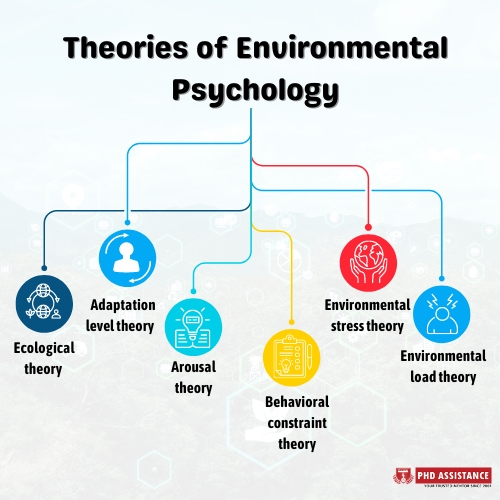
Theories of Environmental psychology Via phdassistance.com
Role of Natural Elements in Architectural Design
Incorporating nature through biophilic design principles promotes relaxation and reduces stress. By using plants, natural materials, and daylight, architects can create spaces that enhance mental well-being.
Case Studies in Environmental Psychology and User Analysis
Case studies, such as the WELL Building Standard or biophilic design implementations, offer insight into the effective application of environmental psychology in real-world settings. These examples demonstrate the benefits of integrating user-centered approaches.
Methods and Tools for Conducting User Analysis
User analysis relies on methods like behavioral mapping and technology-based surveys to capture user preferences and movement patterns. Such tools ensure designs are informed by accurate data.
Role of Behavioral Mapping in Architecture
Behavioral mapping tracks user movement within a space, providing valuable information for layout optimization. By understanding how users navigate a space, architects can design more intuitive environments.
Designing for Diverse User Needs
Architects must consider diverse user needs to create inclusive, adaptive designs. This approach ensures accessibility for all, fostering a welcoming environment for different user demographics.
Impact of Environmental Psychology on Sustainability
Designing with environmental psychology principles can enhance sustainability. By creating eco-friendly spaces that users enjoy, architects can encourage long-term user satisfaction while minimizing environmental impact.
Role of Sustainability in User Satisfaction
Sustainable designs contribute to user satisfaction by providing healthier environments. Eco-friendly materials, natural ventilation, and energy-efficient lighting are features that resonate with environmentally conscious users.
Future Trends in Environmental Psychology and User Analysis
Future trends in this field include the integration of advanced technology for data collection and analysis, allowing for more precise, user-centered designs. Virtual reality (VR) and artificial intelligence (AI) are poised to further transform the practice.
Conclusion
The integration of environmental psychology and user analysis is essential for designing spaces that fulfill both practical and psychological needs. By prioritizing user-centered design, architects can create environments that foster well-being, satisfaction, and sustainability.
The future of architecture is bright, but are your skills keeping pace? Kaarwan's architecture-specific courses provide you with the knowledge and tools to confidently navigate the AEC industry. Gain valuable insights, master in-demand software, and stand out with designs that impress!
FAQs
1. What is environmental psychology in architecture?
Environmental psychology studies the relationship between people and their surroundings, guiding architects to design spaces that foster positive emotions and behaviors.
2. How does user analysis improve architectural design?
User analysis collects data on user preferences, needs, and behaviors, enabling architects to tailor spaces to enhance functionality and user satisfaction.
3. Why is psychological comfort important in architectural design?
Psychological comfort ensures that spaces are not only functional but also mentally supportive, meeting users' emotional needs for privacy, safety, and control.
4. What role do natural elements play in design?
Incorporating nature, through biophilic design, promotes mental well-being by reducing stress and fostering relaxation.
5. How does sustainability relate to environmental psychology?
Sustainable design, aligned with environmental psychology, focuses on eco-friendly materials and natural elements, creating spaces that enhance user well-being and environmental health.
6. What are future trends in environmental psychology and user analysis?
Trends include AI and VR for enhanced data collection, allowing architects to design more responsive and user-centered environments.