


Why Solve Previous Year Question Papers for the NATA exam 2025?
Whether you are revising for an exam or just starting your preparation, it is crucial to begin early by solving previous year's question papers for the National Aptitude Test for Architects (NATA).
This practice builds students’ confidence and familiarises them with the exam format. The NATA exam challenges their creative and reasoning skills, reflecting the dynamic nature of the Architecture, Engineering, and Construction (AEC) industry.
Each year’s paper presents a distinctive viewpoint, providing participants with valuable insights into how to approach and solve the NATA examination. For more information, you can visit the official NATA website here. Whether studying at home or elsewhere, aspirants should prioritise reviewing exam question papers to understand potential content and prepare for unexpected questions.
Why Is It Crucial to Solve Previous Year Papers While Appearing for NATA 2025?
Here’s why solving previous year question papers for NATA 2025 should be your top priority:
1. Understanding Exam Structure:
One of the first advantages is that a student can quickly become familiar with the NATA exam format. There are a lot of books, courses, and classes available in the industry, but all can seem overwhelming and confusing for aspirants. While juggling their academic curriculum, whether studying at home or in coaching institutes, aspirants should prioritise reviewing exam question papers to understand potential content and prepare for unexpected questions.
NATA typically includes a mix of multiple-choice questions, drawing tasks, and other formats that assess your visual perception, analytical ability, and problem-solving skills. Practising with previous year’s question papers can help reduce exam-day anxiety and improve time management.
2. Identifying Key Topics:
Solving previous years' question papers, highlighting recurring themes for students and helping them focus on question weightage and frequency. Once you understand what shows up often, you can prioritise what to study, decide where to take coaching or clear doubts, and distribute your study time wisely. This focused preparation also improves speed and efficiency during the exam.
3. Assessing the field they are getting into:
Practising past papers is an effective way for students to prepare for tests and determine if a particular field aligns with their interests and strengths. This method not only helps students familiarise themselves with the exam format but also fosters a blend of creative thinking and proactive problem-solving skills. As a result, students become more equipped to tackle unexpected or challenging questions, enhancing their overall performance.
NATA assesses your cognitive skills, visual perception, design sensitivity, aesthetic judgement, logical reasoning, critical thinking ability, etc. Solving past questions through past questions helps candidates strengthen their conceptual thinking, strategic approach and problem-solving skills in design.
4. Building Confidence:
Regularly working through the previous year's question papers will allow candidates to gauge their progress and identify areas for improvement. It gives the student a measurement criterion for their areas of improvement and highlights what needs practice. Students should not shy away from asking for help in areas that are not their expertise. The industry understands every individual has their forte of technical or perceptive skills, and the field allows room for growth for both. The only thing is that students need to stay open to learning and be flexible in their approach!
Also, simulating exam conditions and timing helps candidates feel confident to face the exam day, regardless of the resources they choose to prepare from. Be it self-study, courses for a few subjects, or typical crash course classes.
5. Discussion with Peers:
Solving previous year's question papers gives students a common ground to start building a network among themselves, as the key skill of the profession is to get out of one’s comfort zone and be initiative from the get-go.
Group studies help students feel supported and confident, as each individual brings a different problem-solving approach. Peers can learn from one another through shared insights, a wealth of resources, and tips. Tackling challenging questions together provides a valuable opportunity to work in teams.
Download Previous Year Question Papers for NATA exam 2025
Here are the NATA previous year question papers for your NATA 2024 Exam preparation:
NATA Previous Year Question Paper (Mathematics) 2013
NATA Previous Year Question Paper 2017
NATA Previous Year Question Paper 2018
NATA Previous Year Question Paper (Aptitude) 2019
NATA Previous Year Question Paper (Drawing) 2019
NATA Previous Year Question Paper (Aptitude) 2021
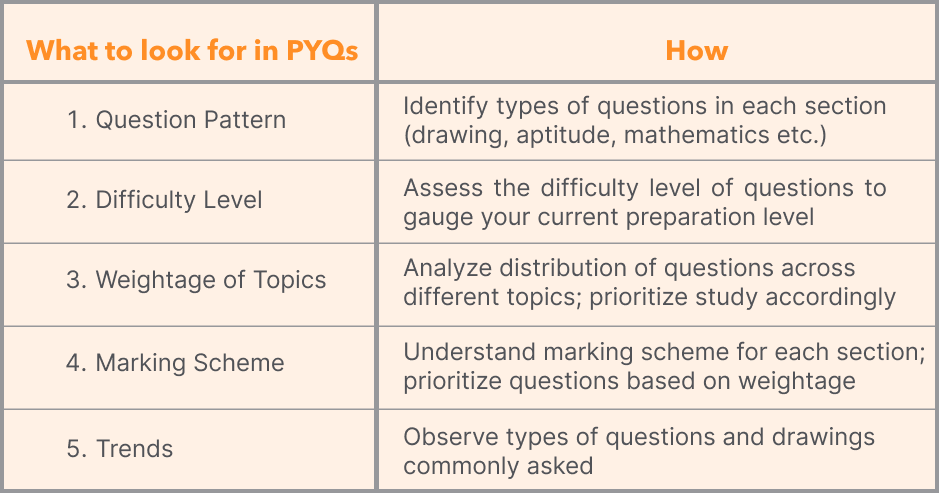
Your Previous Year Question Paper Checklist - for NATA 2025 Preparation
From identifying question patterns to spotting trends, reviewing old papers gives you a clear roadmap for focused study. It saves time and boosts results.
The table below shows what to look for in the Previous Year NATA Question Papers and how each insight can boost your preparation:
Source_Kaarwan
Analysing previous NATA papers is vital for efficient exam preparation. By reviewing past question papers, candidates can understand the exam structure, identify key topics, assess question difficulty, refine study strategies, and spot common question patterns while practising under timed conditions.
What does architecture look like in college?
Get a sneak peek into the field with Kaarwan's 1-Day Masterclasses, or begin learning key software on a student budget to stay ahead of your peers in the competitive world of architecture.
Final Thoughts
The key to excelling in the NATA exam lies in a well-rounded preparation strategy, one that balances creativity, logic, and persistence. The process for preparing for exams fosters confidence in students while also shining a light on areas where they can improve, helping them as they transition into their professional lives. Practising with previous year question papers is not just about guessing what might appear; it’s about understanding how architects think, how problems are framed, and how you can evolve your approach.
Incorporating previous year question papers into your routine will:
- Provide clarity about the exam format
- Highlight areas needing improvement
- Enhance your ability to solve design problems
- Boost your confidence and performance on exam day
Make time to practice with mock tests, sketching tasks, and timed quizzes as per the official NATA brochure. Choose your exam date based on your readiness, not peer pressure. Remember, NATA allows up to three attempts, so pace your preparation wisely.
At Kaarwan, we believe that early and confident preparation opens doors, not just for exams, but for your journey ahead in architecture.
All the Best, Future Architects, for Your Nata 2025!
If you’re looking for structured guidance, tips from industry mentors, and dedicated preparation resources, join our community on Instagram or visit our website for more free resources.




.png)