Sri Lankan temple architecture is an exceptional reflection of the country's cultural, spiritual, and artistic heritage. Rooted in centuries-old traditions, these structures combine aesthetic brilliance with deep symbolic meaning.
Their designs are shaped by Buddhist philosophy, Hindu influences, and indigenous creativity. This article will help you learn about the intricate design principles, symbolic elements, and real-life examples that define Sri Lankan architecture, making it a subject of admiration for students and professionals globally.
Origins of Sri Lankan Temple Architecture
Historical Foundations of Design Principles
Sri Lankan temple architecture dates back to the 3rd century BCE when Buddhism was introduced by Mahinda Thera, an emissary from India. The early temples were simple stupas (dagobas), embodying minimalistic styles inspired by the Indian Mauryan empire. Over time, these designs evolved to reflect a unique Sri Lankan identity.
Anuradhapura, the first kingdom of Sri Lanka, witnessed a golden age of temple construction. The Ruwanwelisaya Stupa, built in 140 BCE, is a prime example of early Sri Lankan craftsmanship. It was designed to symbolize the Buddha’s enlightenment and the cosmic order of the universe. The stupa’s hemispherical shape represents the cycle of life and death, emphasizing spiritual transcendence.
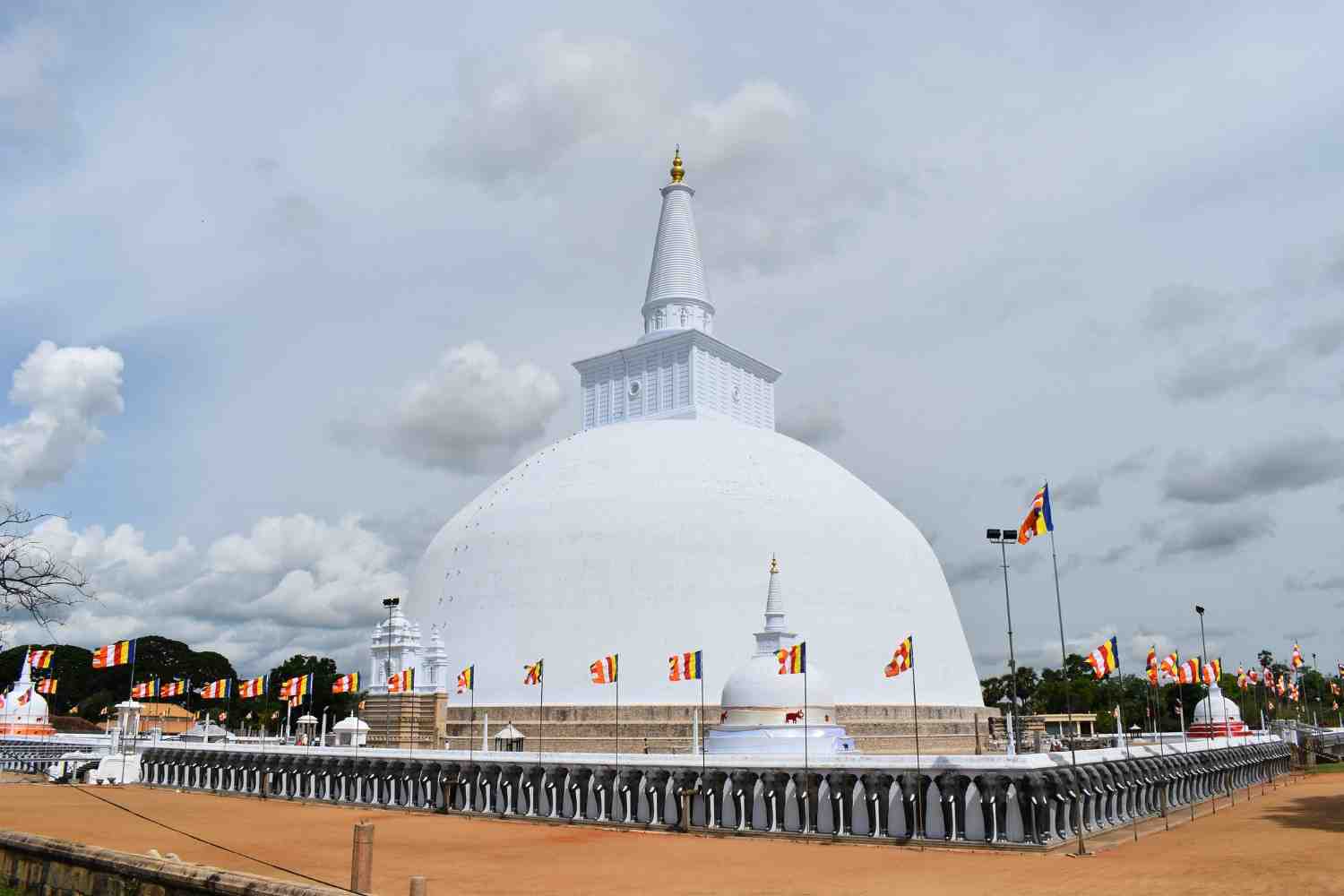
Ruwanwelisaya Stupa_©worldhistory.org
Influence of Hindu and Regional Styles
Sri Lanka’s temple designs were also shaped by interactions with South India. Hindu influences can be seen in the Dravidian-style temple gopurams (ornate gateways) and carvings. The Nallur Kandaswamy Kovil, a famous Hindu temple in Jaffna, displays intricate sculptures of Hindu deities while incorporating local materials and styles.
By blending Buddhist and Hindu symbolism, Sri Lankan architects demonstrated a profound understanding of spiritual and cultural harmony. These influences remain visible today, inspiring contemporary temple construction.
Symbolism in Sri Lankan Temple Architecture
Representation of the Cosmos
Sri Lankan temple architecture often symbolizes the cosmos. The central stupa or dagoba represents Mount Meru, a sacred mountain in Buddhist cosmology believed to be the axis of the universe. The surrounding structures mirror the realms of existence, from the earthly to the divine.
For instance, the Jetavanaramaya Stupa in Anuradhapura, once the tallest stupa globally, encapsulates these principles. Its massive dome reflects celestial harmony, while its base represents earthly foundations.
Spiritual Pathways and Layouts
The layout of temples reflects a journey toward enlightenment. The entrance often symbolizes the worldly realm, transitioning into sacred spaces as one moves inward. Pathways lined with moonstones, guardstones, and carvings guide devotees, emphasizing the steps to spiritual awakening.
An excellent example is the Abhayagiri Monastery, where carved moonstones at entrances depict cycles of samsara (rebirth) and stages of spiritual purification.
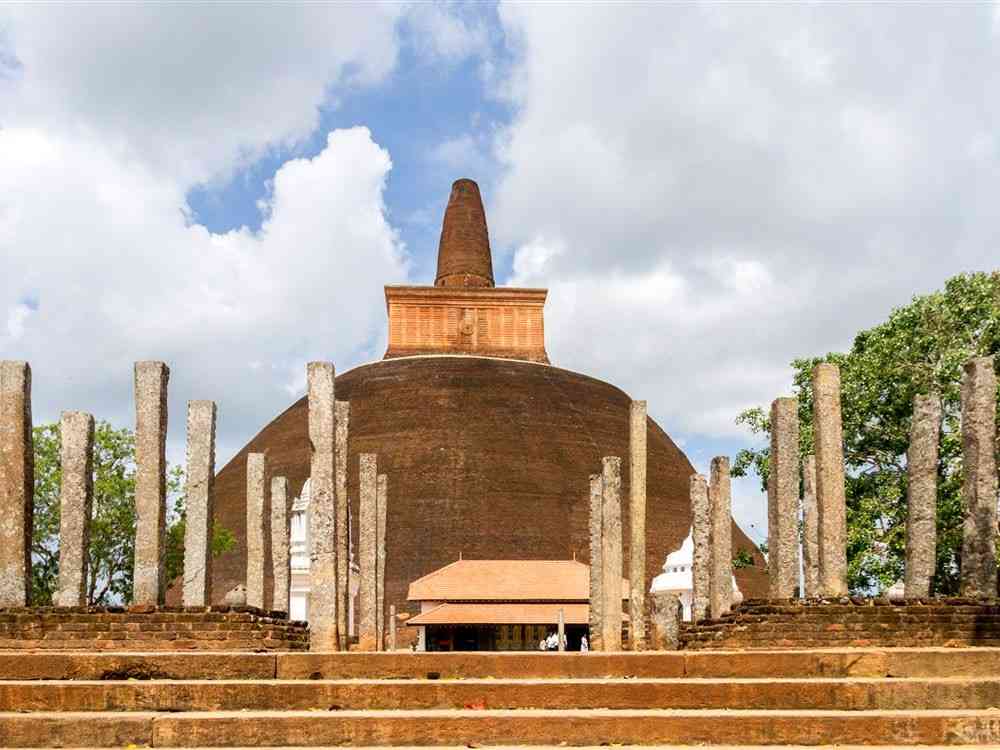
Abhayagiri Monastery_©srilankanexpeditions.com
Key Features of Sri Lankan Temple Architecture
Structural Elements of Temples
Several defining features set Sri Lankan architecture apart:
- Stupas/Dagobas: Domed structures housing relics of the Buddha.
- Image Houses (Buduge): Sanctuaries for statues of the Buddha.
- Vatadage: Circular relic houses with intricate stone carvings, such as the Polonnaruwa Vatadage.
- Bodhi Tree Shrines: Enclosures for the sacred Bodhi tree, grown from a sapling of the original Bodhi tree in India.
These structures demonstrate remarkable engineering, particularly the use of precision stonework and advanced irrigation systems to sustain temple gardens and water reservoirs.
Materials and Techniques
Sri Lankan temples were often constructed using stone, clay, and brick, chosen for their durability in tropical climates. Frescoes, such as those in the Dambulla Cave Temple, illustrate exquisite craftsmanship. These paintings depict Jataka tales and Buddhist teachings, using natural pigments that have endured for centuries.
Advanced techniques like corbelled arches and vaulted roofs ensured stability. The Sigiriya Rock Fortress, though primarily a royal palace, showcases these innovations and demonstrates how secular and religious architecture intersected.
Modern Relevance and Examples
Preservation Efforts
Preserving ancient temples has become a priority for Sri Lanka. UNESCO World Heritage Sites such as Anuradhapura and Polonnaruwa showcase restored architectural marvels. Efforts focus on maintaining authenticity while allowing global audiences to appreciate their cultural significance.
Contemporary Interpretations
Modern architects draw inspiration from Sri Lankan architecture for sustainable design. The Seema Malaka Temple in Colombo, designed by Geoffrey Bawa, combines traditional motifs with contemporary aesthetics. Floating on the Beira Lake, it blends Buddhist principles with minimalist designs, serving as a meditation retreat for urban dwellers.
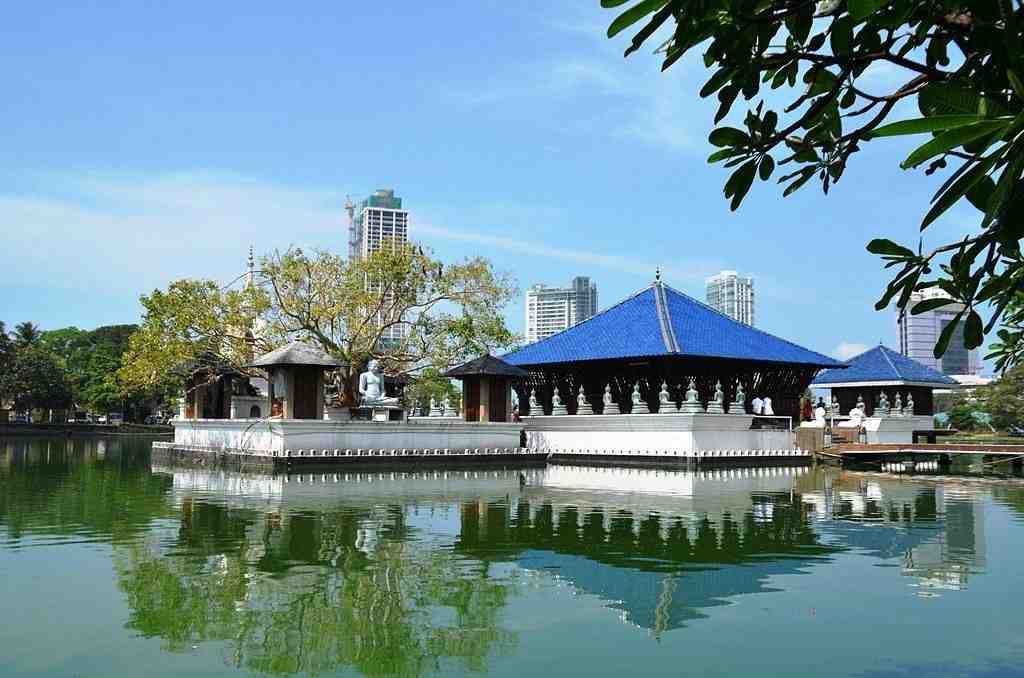
Seema Malaka Temple_©tripadvisor.com
Why Study Sri Lankan Temple Architecture?
Studying Sri Lankan temple architecture offers valuable insights into ancient design principles and their relevance today. Architecture students and professionals can learn:
- The integration of symbolism and functionality.
- Sustainable use of materials and resources.
- Techniques to blend diverse cultural influences into cohesive designs.
The global appeal of Sri Lankan temples lies in their ability to balance artistry with spiritual significance, offering timeless lessons for the modern AEC industry.
Conclusion
Sri Lankan temple architecture is a testament to the island’s rich cultural and spiritual heritage. Its intricate designs, rooted in cosmic symbolism and Buddhist philosophy, continue to inspire and educate. From the grandeur of Anuradhapura to the innovation of modern temples, these architectural marvels reflect a harmonious blend of art, science, and spirituality.
For architecture students and professionals, exploring this subject can deepen their understanding of historical techniques and inspire innovative practices. By preserving and studying these timeless structures, we ensure their legacy endures for generations.
The future of architecture is bright, but are your skills keeping pace? Kaarwan's architecture-specific courses provide you with the knowledge and tools to confidently navigate the AEC industry. Gain valuable insights, master in-demand software, and stand out with designs that impress!
FAQs
Q1. What is the historical origin of Sri Lankan temple architecture?
A1. Sri Lankan temple architecture originated in the 3rd century BCE with the introduction of Buddhism by Mahinda Thera. Early temples like the stupas in Anuradhapura drew inspiration from the Indian Mauryan Empire but gradually evolved into unique Sri Lankan designs.
Q2. How does Sri Lankan temple architecture symbolize the cosmos?
A2. Central stupas, like the Jetavanaramaya Stupa, represent Mount Meru, the cosmic axis in Buddhist cosmology. Surrounding structures symbolize the progression from earthly realms to divine existence, reflecting spiritual harmony.
Q3. What are the key structural elements of Sri Lankan temples?
A3. Key elements include stupas or dagobas for housing relics, image houses (Buduge) for Buddha statues, Vatadages for relics, and Bodhi tree shrines. These elements showcase symbolic and functional designs.
Q4. What materials and techniques are used in Sri Lankan temple architecture?
A4. Temples use durable materials like stone, clay, and brick. Techniques include corbelled arches and vaulted roofs for stability. Frescoes, such as those in the Dambulla Cave Temple, highlight natural pigments and fine artistry.
Q5. How does Sri Lankan temple architecture influence modern design?
A5. Modern designs like the Seema Malaka Temple by Geoffrey Bawa integrate traditional Buddhist motifs with contemporary aesthetics. This approach balances spiritual principles with sustainable, minimalist design.