.jpg)
Sustainable Design for Healthcare Facilities: Building for Health and the Environment
Imagine walking into a hospital where sunlight streams through large windows, plants flourish indoors, and the air feels fresh and invigorating. Now imagine this same hospital consuming 40% less energy and water than traditional facilities. This is not a dream but a glimpse into sustainable healthcare design.
Healthcare facilities are among the most resource-intensive buildings, contributing nearly 4.4% of global carbon emissions. Their energy demands are immense, and the stakes are high—hospitals must operate 24/7, ensuring patient safety and care. Yet, this responsibility doesn’t excuse them from being environmentally mindful. Instead, it highlights why sustainability should be central to their design. Sustainable healthcare facilities balance ecological responsibility with human well-being, offering better health outcomes for patients, lower operational costs for administrators, and a smaller footprint for our planet.
Why Sustainability in Healthcare Matters
Hospitals are vital community anchors, often at the forefront of public health and safety. But behind the scenes, their environmental impact is staggering. Energy-intensive equipment, heating, ventilation, sterilization processes, and continuous operations make them some of the largest consumers of resources.
Consider Boston’s Spaulding Rehabilitation Hospital, which prioritized sustainable practices in its design. By incorporating solar panels, a high-performance envelope, and water-saving technologies, the hospital reduced energy consumption by 35% compared to similar buildings. Such facilities not only lead by example but also inspire other sectors to rethink their environmental responsibilities.
Moreover, the stakes are not just environmental. Unsustainable practices in healthcare can have ripple effects on community health. Pollution, resource depletion, and urban heat islands can compromise the very populations hospitals are meant to serve. A sustainable approach acknowledges this interconnectedness, paving the way for facilities that heal not just individuals but the communities and ecosystems around them.
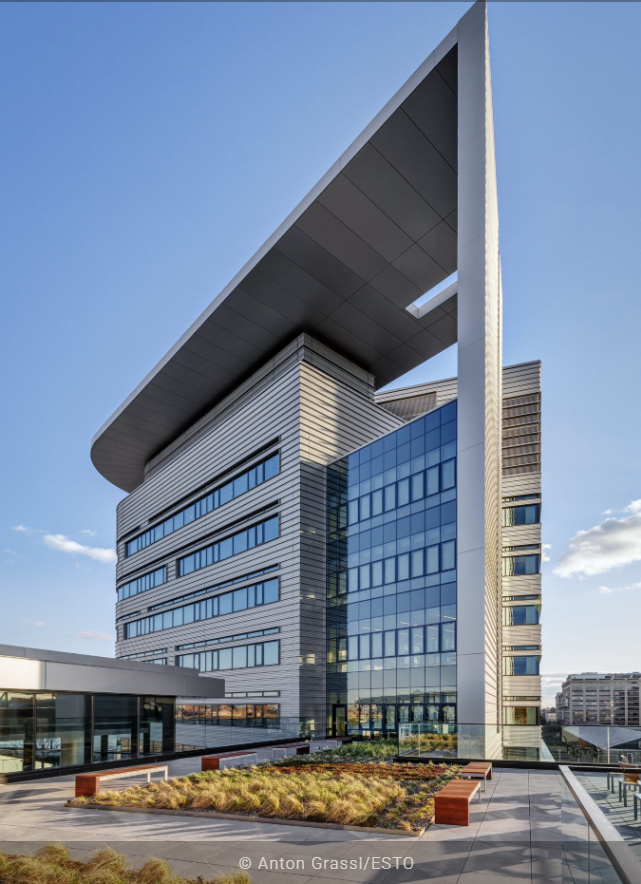
Boston’s Spaulding Rehabilitation Hospital (Img Src: Anton Grassl)
Principles of Sustainable Healthcare Design
Sustainable healthcare facilities are a symphony of thoughtful planning, innovative technologies, and eco-conscious materials. Here’s how they achieve their goals:
- Energy Efficiency: Hospitals like Gundersen Health System in Wisconsin have harnessed renewable energy and implemented smart HVAC systems, achieving net-zero energy consumption. Using smart lighting systems that adapt to natural light reduces energy use while enhancing the patient experience.
- Water Conservation: With rainwater harvesting, low-flow fixtures, and wastewater recycling, facilities can cut water usage dramatically. The Dell Children’s Medical Center in Texas captures rainwater for irrigation, reducing reliance on municipal water systems.
- Indoor Environmental Quality: Patients and staff thrive in spaces with good air quality, natural light, and biophilic design. Incorporating greenery and low-VOC materials reduces toxins and stress levels, contributing to faster recovery rates.
- Material Selection: The use of recycled, locally sourced, and durable materials lowers environmental costs and supports regional economies. Dell Children’s Medical Center, for example, used over 80% of its construction materials from within 500 miles of the site.
Each of these principles is a building block in creating facilities that are both functional and future-ready.
Design Strategies for Sustainable Healthcare Facilities
Beyond principles, it’s the strategies that bring these concepts to life. Passive design is a game-changer in healthcare architecture. Thoughtful building orientation, for instance, maximizes daylight, reducing the need for artificial lighting. Enhanced insulation and cross-ventilation lower energy demands while ensuring comfort.
Another innovative approach is modular construction. Prefabricated modules reduce waste and construction time, offering flexibility to expand or modify spaces as healthcare needs evolve. Adaptive reuse is equally transformative. Old industrial buildings, for example, can be repurposed into state-of-the-art hospitals, saving resources and preserving architectural heritage.
Certification systems like LEED and WELL provide frameworks to guide and validate these efforts. Gundersen Health System’s LEED Gold-certified facilities stand as a testament to what’s possible when design aligns with sustainability goals.
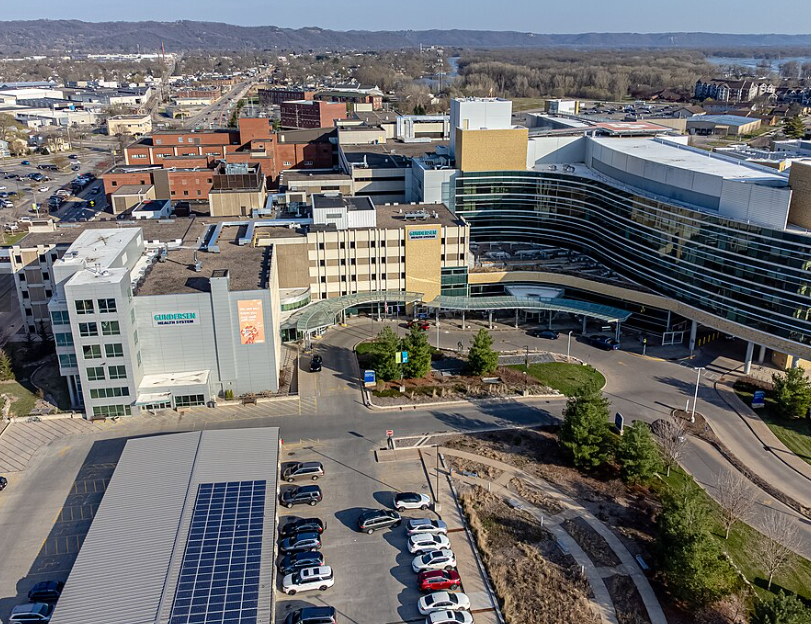
Gundersen Health Systems
Benefits of Sustainable Healthcare Design
The advantages of sustainable healthcare design ripple across environmental, economic, and social dimensions:
- Environmental: Lower carbon emissions, reduced energy and water consumption, and less waste.
- Economic: Operational savings over the building’s lifecycle often offset higher initial costs.
- Social: Improved indoor environments promote faster recovery, enhance staff well-being, and build trust with the surrounding community.
These benefits aren’t abstract—they’re measurable, impactful, and enduring.
Challenges and Solutions
Despite its promise, sustainable healthcare design faces hurdles. High upfront costs, limited awareness, and regulatory constraints often deter stakeholders. But solutions exist:
- Governments and non-profits can offer tax incentives and grants to offset initial costs.
- Training programs can equip architects and healthcare administrators with the knowledge to implement sustainable practices.
- Integrated design processes ensure that sustainability is considered from the very first blueprint.
By addressing these challenges proactively, the transition to sustainable healthcare can accelerate.
Case Study: Khoo Teck Puat Hospital, Singapore
One of the best examples of sustainable healthcare design is Khoo Teck Puat Hospital in Singapore. Surrounded by lush greenery, the hospital is a model of biophilic design. Features like rainwater harvesting, extensive natural ventilation, and solar energy integration result in 25% energy savings. More importantly, patients report feeling calmer and happier in the space, highlighting the profound impact of sustainability on human health.
Conclusion
As the demand for healthcare facilities grows, so does the urgency to make them sustainable. Designing for both health and the environment is no longer optional—it’s an imperative. Architects, urban planners, and healthcare leaders must embrace sustainability not just as a trend but as a responsibility.
To quote Jochen Zeitz, “Sustainability is about doing more good, not just less harm.” Let us rise to this challenge and reimagine healthcare facilities that heal holistically—patients, communities, and the planet.
The future of architecture is bright, but are your skills keeping pace? Kaarwan's architecture-specific courses provide you with the knowledge and tools to confidently navigate the AEC industry. Gain valuable insights, master in-demand software, and stand out with designs that impress!
FAQs
1. What are some of the key principles of sustainable healthcare design?
Energy efficiency, water conservation, indoor environmental quality, and responsible material selection.
2. How can healthcare facilities achieve greater energy efficiency?
By using renewable energy sources, implementing smart HVAC and lighting systems, and optimizing building insulation.
3. What are the benefits of incorporating biophilic design into hospitals?
It can reduce stress levels, improve patient recovery rates, and enhance the overall well-being of patients and staff.
4. What are some of the challenges in implementing sustainable healthcare design?
High upfront costs, limited awareness, and regulatory constraints.
5. What is the Khoo Teck Puat Hospital in Singapore known for?
Its biophilic design, integration of sustainable features, and significant energy savings.