.jpeg)
The Future of Urban Farming: How Architecture Can Facilitate Urban Agriculture in Densely Populated Areas
“The ultimate goal of farming is not the growing of crops, but the cultivation and perfection of human beings.” – Masanobu Fukuoka
Urban farming is no longer a futuristic concept—it’s a necessity. Since the world population has been growing each passing year and since cities are increasing, day after day, sustainable food production will have to increasingly be produced from cities or near cities, using urban food systems. In fact, with the rapid trend of urbanization, by the year 2050—according to projections by the United Nations—nearly 70 percent of the entire population of Earth will live in cities. Hence comes an extra challenge in modern times: a challenge of not simply just producing food for billions but also decreasing adverse impact on the climate. The answer lies in the fusion of architecture and urban agriculture.
Today, we look at how innovative architectural design can facilitate urban farming and make the practice quite workable for areas with high population density. Be it vertical farms or rooftop gardens, creative and sustainable architectural solutions are driving the future of urban agriculture.
The Rise of Urban Farming: A Response to Urbanization
Cities are changing how we grow food. Instead of relying on distant farms, more people are growing food right where they live. Urban farming isn't just about planting vegetables – it's changing how our cities work and feed their people. As cities get bigger, food has to travel further to reach us. This leads to more pollution and makes it harder for some people to get fresh food.
Smart building design helps solve these problems. Take Singapore's Sky Greens farm – it's a clever solution for growing food in a crowded city. They use moving trays to give plants equal sunlight, making the most of limited space. Now, builders are adding gardens and water-based growing systems to new buildings. These changes help clean the air, cool down cities, and make life better for everyone.
As urban farming gains traction, architects are rethinking traditional building designs to incorporate green spaces, hydroponic systems, and even aquaponic setups. These innovations not only provide fresh produce but also improve air quality, reduce urban heat islands, and enhance the overall quality of life.
Vertical Farming: The Architectural Marvel of Urban Agriculture
Vertical farming has become the poster child of innovation in urban farming. Want to grow more food in less space? Stack it up! That's the idea behind vertical farming, and it's revolutionizing urban agriculture. These farms use old buildings or new towers to grow food in layers, perfect for busy cities where space is tight. The technology behind these farms is fascinating – they combine traditional farming knowledge with cutting-edge innovation.
Look at AeroFarms in Newark, New Jersey. In a space about the size of a football field, they grow two million pounds of greens yearly. And here's the amazing part – they use 95% less water than regular farms. They do this with special LED lights, air-based growing systems, and careful climate control. The trick is making these farms both beautiful and practical. Good design helps natural light and air flow through the building while saving energy. Workers can easily access the plants, and sophisticated computer systems monitor everything from humidity to nutrient levels. These farms prove that with the right design, we can grow food almost anywhere.
Rooftop Gardens: Transforming Unused Spaces into Green Oases
Empty rooftops are turning into green treasure troves across the world's cities. These gardens don't just grow food – they help keep buildings cooler and provide havens for urban wildlife. The Brooklyn Grange shows what's possible when imagination meets good planning. Spread across two rooftops, they grow 50,000 pounds of vegetables every year. But it's more than a farm – it's where people come together for classes, exercise, and dining events. They even keep bees that help pollinate plants across the neighborhood.
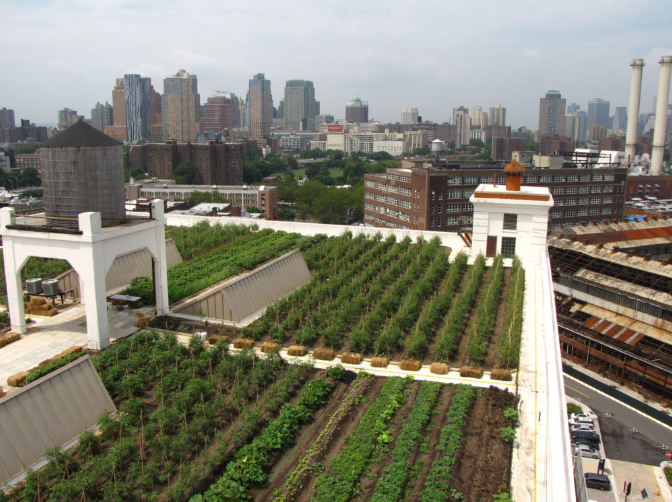
Brooklyn Grange Rooftop Farm (Img Src: GreenRoofs)
Building these gardens takes careful planning and expertise. The roof needs to be strong enough to hold soil, water, and people. It needs good waterproofing and efficient irrigation systems. Most importantly, people need to be able to reach and use these spaces easily. Some rooftop gardens even include greenhouses for year-round growing, extending the growing season well beyond traditional limits.
Smart Architecture: The Role of Technology in Urban Farming
Technology is making urban farming even better and more efficient. Modern buildings can think for themselves, helping plants grow in the best conditions possible. In Chicago, there's a building called The Plant that used to process meat. Now it's a self-sufficient farm that turns food waste into power – a perfect example of circular economy in action. Special sensors watch over the plants, making sure they get exactly what they need to thrive.
These smart systems can fit into existing buildings too, breathing new life into old structures. Many use water instead of soil to grow plants, making them perfect for city spaces. Computer-controlled lighting mimics natural sunlight patterns, and automated feeding systems deliver nutrients with precision. As technology improves, urban farms are becoming more efficient and adaptable to different environments and needs.
The Social and Environmental Impact of Urban Farming
Urban farming isn't just about solving food shortages. It's about improving our communities and the environment. Growing food closer to home means less transportation, which cuts down on harmful emissions.
Urban farms also bring people together. Projects like Lufa Farms in Montreal provide fresh food, jobs, and educational opportunities. These farms become living classrooms where people learn about sustainable farming and building design.
Architects have a unique opportunity to shape the future. They can create spaces that blend farming into our cities, making them more resilient and livable.
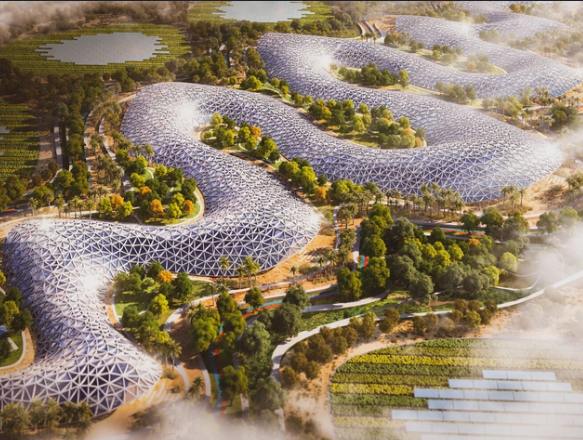
URB Agritourism (Img Src: Arch Daily)
Conclusion: A Greener Future Starts with Architecture
Urban farming isn't going away – it's becoming essential. Smart design is turning cities from concrete jungles into green spaces that feed their people. Whether you're studying how to combine farming with architecture or looking to add growing spaces to your buildings, there's room to try new ideas.
The future of city farming is exciting. With good planning and new technology, we can create cities that not only house people but feed them too. It's time to reimagine what our cities can be – and it starts with how we grow our food.
So, there are a lot of options, whether you're a student interested in how design and farming can work together or a professional who wants to use urban farming in your projects. Now is the time to start farming in cities in the future.
The future of architecture is bright, but are your skills keeping pace? Kaarwan's architecture-specific courses provide you with the knowledge and tools to confidently navigate the AEC industry. Gain valuable insights, master in-demand software, and stand out with designs that impress!
FAQs
- What are the main benefits of integrating urban farming into building design?
Some benefits of integrating urban farming into building design are reduced food miles, improved air quality, enhanced biodiversity, and increased community access to fresh produce. - Are vertical farms economically viable?
Though initial costs can be high, advancements in technology and increased demand are making vertical farms increasingly cost-effective. - What types of crops are best suited for rooftop gardens?
Herbs, leafy greens, and vegetables with shallow root systems thrive in rooftop environments. - How can I get involved in urban farming in my city?
Volunteer at a community garden, join a local urban farming organization, or start your own rooftop garden! - What are some examples of cities successfully implementing urban agriculture?
Singapore, New York City, Paris, and Tokyo are leading the way with innovative urban farming initiatives.