The Influence of Bauhaus on Modern Architecture
"Space is the embodiment of an era's will through architecture." - Ludwig van der Rohe designed the
It is quite unlikely that Walter Gropius, who established the Bauhaus in 1919 as a small art school in Weimar, Germany, imagined that it would one day be the birthplace of modern architecture. The Bauhaus was more than a school; it sparked a cultural revolution. It was an ideology with global aspirations that aimed to unite craft, art, and technology in a new vocabulary of design. We now take its impact, like air we breathe, for granted because it is so pervasive in contemporary building. But in order to grasp its significance, we need to go back to its foundations, its guiding principles, and its lasting impact.
The Bauhaus Principle
During the period of social unrest and industrial revolution that followed World War I, the Bauhaus came into being. A school that would unite practical craftsmanship with great art was Gropius's dream. "Form follows function" was the simple yet profound slogan. However, icy, clinical utilitarianism was never the point of Bauhaus. The focus was on discovering geometric harmony, material significance, and the beauty of simplicity.
For example, Gropius personally oversaw the construction of the famous Bauhaus in Dessau. Its asymmetrical layout, glass curtain walls, and open floor designs were revolutionary for the day. Still, they served a practical purpose and were also lyrical. The glass and steel structure was an assertion that modernity could be uplifting as well as practical.
Modern Design Iconography: The Bauhaus Masters

The Bauhaus Principles (Img Src: Research Gate)
Some of the most innovative thinkers of the twentieth century were drawn to the Bauhaus, and their ideas helped shape its distinctive philosophy. Transparency and light were themes that László Moholy-Nagy explored. The Wassily Chair, an iconic piece of modern furniture, is the result of Marcel Breuer's experiments with tubular steel. Impressionists like Wassily Kandinsky and Paul Klee brought their avant-garde aesthetic sensibilities to the school, demonstrating that everyday items might be transformed into masterpieces.
The school's final director, Ludwig Mies van der Rohe, had a profound and long-lasting impact. His now-famous maxim, "less is more," served as the modern movement's guiding concept in building design. Architects all across the globe continue to look up to Mies's Barcelona Pavilion as an example of minimalist elegance and how to successfully combine interior and outdoor areas.
Origins in Germany and Their Global Impact: The Bauhaus Diaspora
In 1933, the Nazi dictatorship coerced the Bauhaus into closing, but the school's impact was further magnified afterward. The school's students and teachers scattered over the world, taking its teachings and principles with them. U.S. cities like New York and Chicago owe a great deal to the Bauhaus style, which Gropius and Mies van der Rohe introduced to the country. The principles of the Bauhaus gave rise to the International Style, which was the prevailing architectural language of the twentieth century.
Take Mies van der Rohe and Philip Johnson's Seagram Building in New York as an example. The Bauhaus ideals of simplicity, functionality, and beauty are encapsulated by its open plaza and sleek, bronze-clad exterior. Another example is the Californian work of mid-century modernists Richard Neutra and Rudolph Schindler, who used Bauhaus ideas to design houses that emphasised natural light, open floor plans, and spacious rooms.
The Bauhaus in Daily Life: Going Beyond Structures
The impact of the Bauhaus is not limited to the built environment. Its tenets have influenced fields as diverse as typography, furniture, graphic design, and city planning. The ergonomics of your office chair, the streamlined appearance of Apple products, and the spare design of Google's homepage are all Bauhaus influences.
Among my favourite examples are Dieter Rams's 1960s Braun designs. Rams, who famously said, "Good design is as little design as possible," owed a great deal to the Bauhaus school of thought. The legendary SK4 record player is only one example of his work for Braun, which is a model of understated elegance that has stood the test of time.
A Living Legacy: The Bauhaus in Modern Times
The Bauhaus is just as important now as it was a century ago. Its focus on innovation, sustainability, and human-centered design feels remarkably modern in this day of technology disruption and environmental destruction. Modern yet historically grounded, architects such as Shigeru Ban and Jeanne Gang are preserving the Bauhaus ideals and putting them into practice today.
In Christchurch, New Zealand, you may find Ban's Cardboard Cathedral. Constructed in the aftermath of the 2011 earthquake, the building exemplifies the Bauhaus principle of integrating aesthetics with functionality. The clever utilisation of cardboard tubes results in an aesthetically pleasing and economically viable area, serving as a poignant reminder that exceptional design can arise from the most trying of situations.
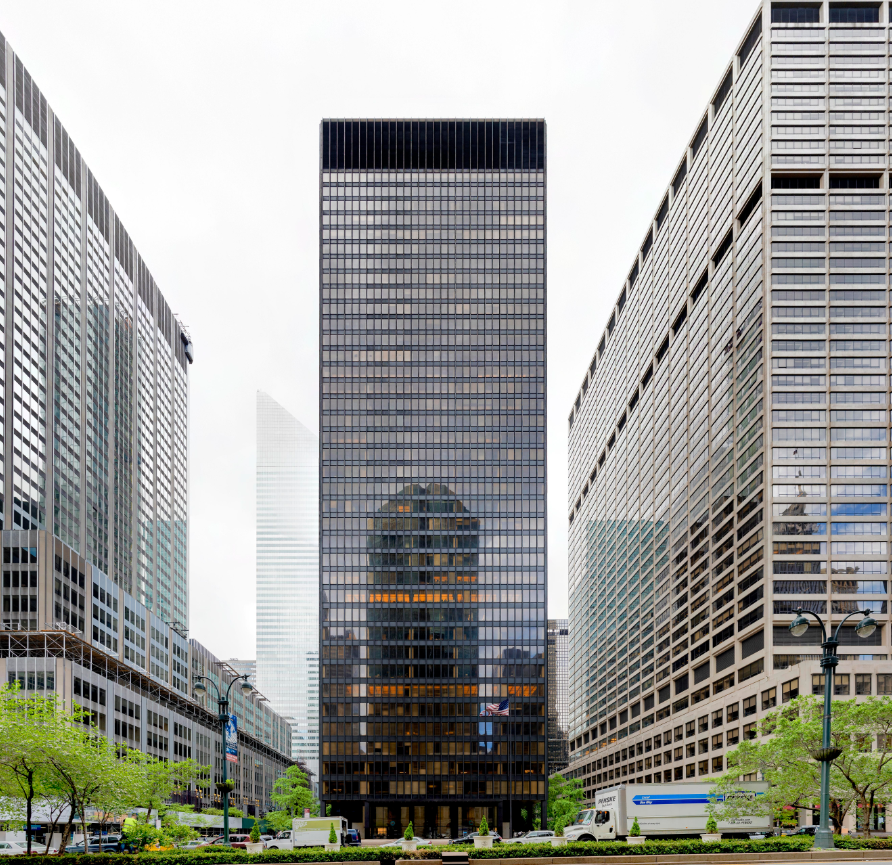
Seagram Building in New York
Advices
The Bauhaus provides enduring teachings for anyone studying architecture and design. It teaches us to be open to new ideas, to work together, and to view design as a means to better people's lives. Working professionals should take heart in the fact that innovation just entails reimagining old practices for the modern day, rather than doing away with them altogether.
Pause and take in your surroundings as you stroll through a contemporary metropolis. As a legacy of the Bauhaus, we have glass towers, open floor plans, and modern furniture. It's a lasting testament to the fact that architecture is about more than simply constructing structures; it influences our daily lives, careers, and aspirations.
"Symbols are inherent in all things. Once you learn to decipher their meaning, every item has a tale to tell. - Gropius, Walter
A tale of bravery, innovation, and foresight is the Bauhaus saga. It's a tale that has the power to change lives, provoke thought, and motivate action. Plus, the Bauhaus ethos will endure so long as there are creative types in the art world who aren't afraid to dream big.
So, the next time you behold an awe-inspiring structure, keep in mind that it may include a hint of Bauhaus.
The future of architecture is bright, but are your skills keeping pace? Kaarwan's architecture-specific courses provide you with the knowledge and tools to confidently navigate the AEC industry. Gain valuable insights, master in-demand software, and stand out with designs that impress!
FAQs
- What was the Bauhaus?
The Bauhaus was a German art school founded by Walter Gropius in 1919. It combined crafts and fine arts, and became hugely influential in the development of modern architecture and design. - What were the main principles of the Bauhaus?
Key principles included "form follows function," a focus on simplicity and geometric forms, the integration of art, craft, and technology, and a belief in design's ability to improve society. - Who were some of the key figures associated with the Bauhaus?
Notable figures included Walter Gropius, Ludwig Mies van der Rohe, Marcel Breuer, László Moholy-Nagy, Wassily Kandinsky, and Paul Klee. - How did the Bauhaus influence modern architecture?
The Bauhaus promoted the use of new materials like steel and glass, open floor plans, and a minimalist aesthetic. Its ideas spread globally, influencing the International Style and countless other architectural movements. - What is the legacy of the Bauhaus today?
The Bauhaus continues to influence architecture, design, and even everyday objects. Its emphasis on functionality, simplicity, and social impact remains relevant, and its principles are still studied and applied by designers and architects worldwide.