Plant Arrangement Types in Landscape Design
In landscape design, plants are not only selected for their species, colour, or seasonal character, but also for how they are arranged within the site. Plant arrangement plays a crucial role in shaping spatial perception, guiding movement, and establishing visual rhythm across outdoor environments. Similar to how architects organize structural elements within a building, landscape designers strategically position plants to achieve harmony, emphasis, and order in a landscape. Different arrangement techniques help create either naturalistic gardens or structured, formal landscapes depending on the design intent. From clustered plant groupings to linear planting rows, each method contributes to the overall character and readability of the space.
Among the commonly used planting arrangements are drifts, focal point compositions, linear plantings, and woven patterns,.
Drifts
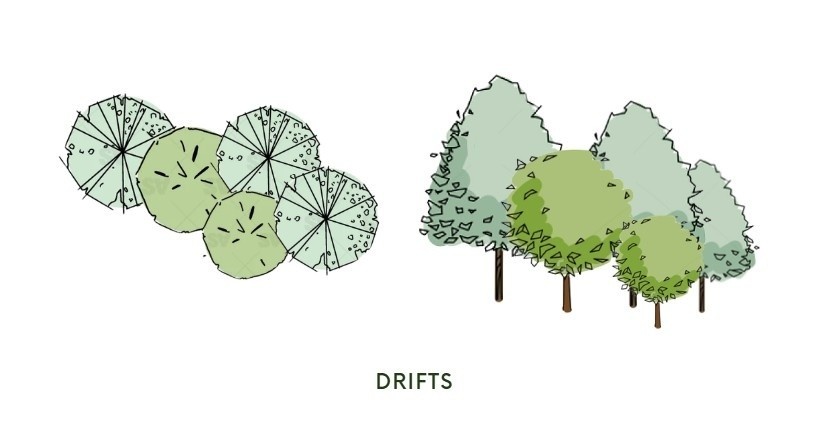
Image Credits: Shivani Chougula @Kaarwan
Drifts refer to the grouping of similar plant species in organic clusters, typically arranged in flowing, irregular shapes rather than strict geometric layouts. This planting technique mimics the way vegetation naturally grows in landscapes such as meadows or forest edges, making it particularly effective for creating relaxed and naturalistic gardens. Designers often repeat the same plant variety in multiple clusters throughout a site to create continuity and visual rhythm while maintaining a soft, informal appearance. Drifts work especially well in large planting beds, parks, and residential landscapes where the goal is to create a sense of movement and cohesion without rigid structure. When used thoughtfully, this technique can guide the viewer’s eye through the landscape while allowing the plants themselves to form a strong visual mass.
Focal Point
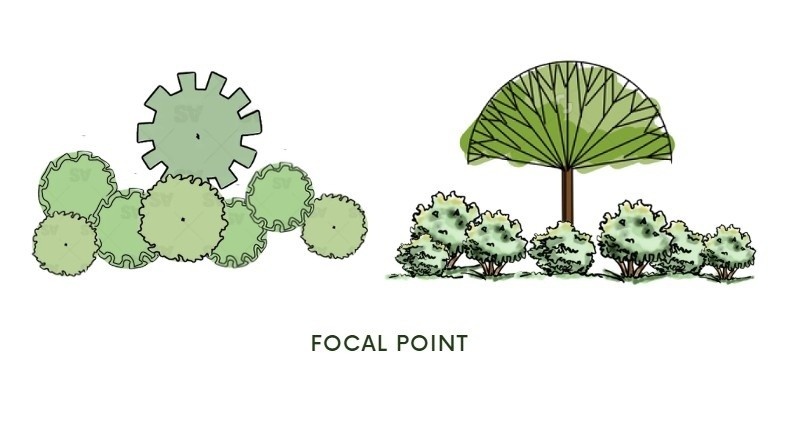
Image Credits: Shivani Chougula @Kaarwan
Focal point planting revolves around arranging plants to highlight a central element within the landscape. This element may be a sculpture, water feature, specimen tree, seating space, or architectural feature. Plants are positioned in a way that subtly directs attention toward this central element while enhancing its visual importance. Designers often use contrast in plant height, colour, or texture to reinforce the focal point. For example, low shrubs or ground covers may frame a tall ornamental tree, creating a layered composition that naturally draws the eye. This technique is widely used in entry gardens, courtyards, plazas, and formal garden layouts where a clear visual hierarchy is desired. By guiding visual attention, focal point planting helps establish spatial clarity and creates memorable moments within a landscape.
Line Up
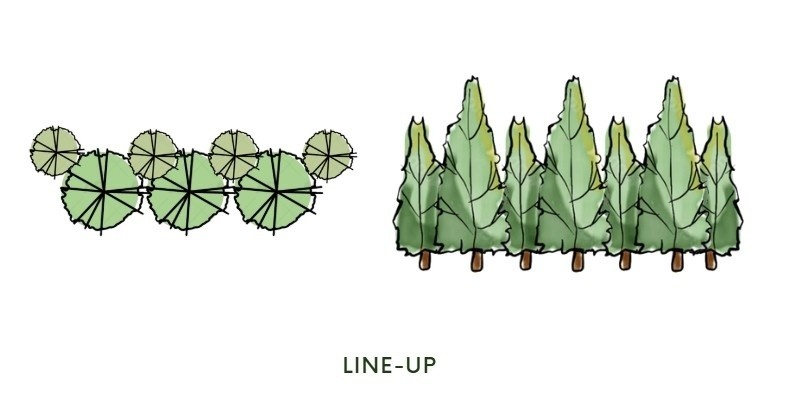
Image Credits: Shivani Chougula @Kaarwan
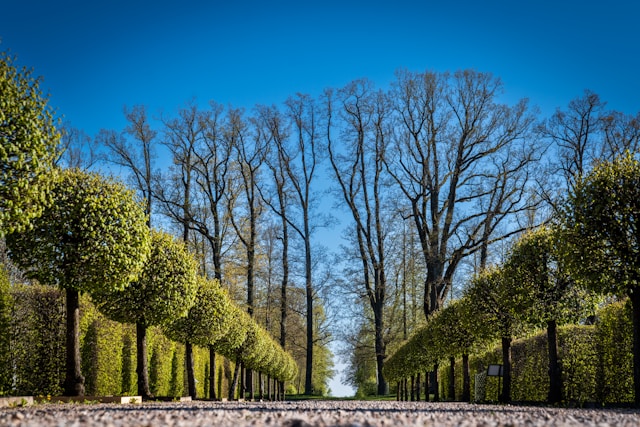
Line up planting refers to the arrangement of plants in straight, evenly spaced rows, creating a highly organized and structured appearance. This technique is commonly associated with formal landscapes where order and symmetry are important design principles. Linear planting is often used along pathways, sidewalks, driveways, and property boundaries to establish clear spatial edges and reinforce circulation routes. Trees planted in rows along boulevards or shrubs aligned along garden paths are typical examples of this arrangement. The success of this method depends on maintaining consistent spacing and selecting plant species with uniform growth patterns. When executed well, linear plantings create strong visual rhythm and a sense of direction within the landscape.
Weave
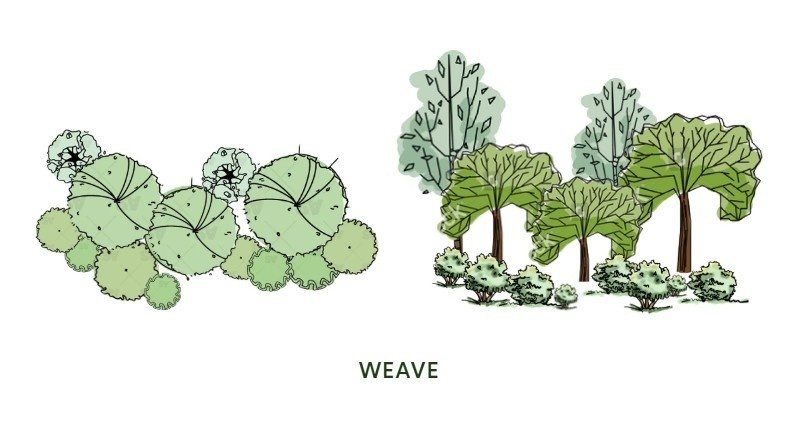
Image Credits: Shivani Chougula @Kaarwan
Weave planting introduces a more dynamic composition by interweaving different plant rows or species in alternating patterns. Instead of strict straight lines, plants shift slightly in position, allowing one row to weave in and out of another. This technique creates a sense of movement and layered texture within planting beds. It is often used in contemporary landscape design where designers aim to blend structure with a naturalistic aesthetic. By alternating plant varieties or heights, the weave arrangement produces subtle visual variation without appearing chaotic. This technique works particularly well in larger planting beds, public parks, and modern gardens where designers seek to create engaging patterns that evolve as the plants grow.
Plant arrangement is a fundamental aspect of landscape design that influences both the visual character and spatial experience of outdoor environments.
Conclusion
Plant selection determines the colour, texture, and seasonal qualities of a landscape, the way plants are arranged defines how these qualities are perceived within the space. Techniques such as drifts, focal point compositions, linear plantings, and woven patterns allow designers to control rhythm, hierarchy, and movement within a landscape. By understanding and applying these planting strategies, landscape architects can create outdoor environments that are not only aesthetically pleasing but also spatially coherent and engaging for users. Thoughtful plant arrangement ultimately transforms individual plants into a cohesive landscape composition.