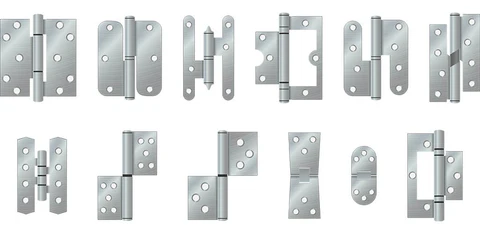
5 Types of Hinges Used in Kitchens (And Where Each Works Best)
In kitchen design, hinges are invisible heroes. They decide how smoothly shutters open, how long cabinets last, and whether a kitchen feels premium or frustrating. In 2026, with modular kitchens dominating Indian homes, hinge selection is no longer a hardware afterthought—it’s a design decision.
Below are the five most important types of hinges used in kitchens, explained with clarity and real-world application.
1. Concealed Hinges (European Hinges)
These are the most commonly used hinges in modern kitchens and modular cabinetry.
Concealed hinges are mounted inside the cabinet and remain invisible when the shutter is closed. They usually allow opening angles between 90° and 110°, with soft-close variants widely preferred today.
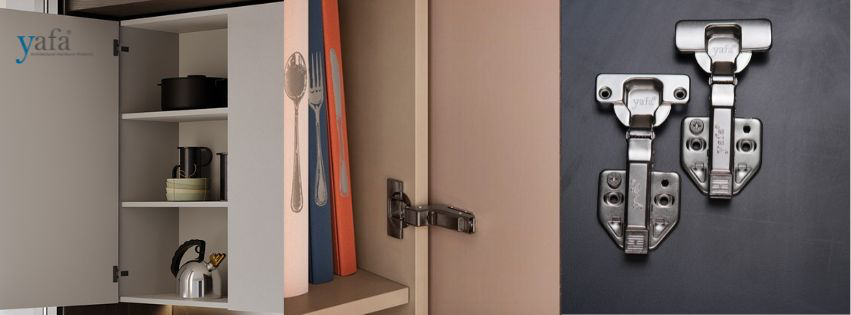
Best used for
- Modular kitchen shutters
- Base and wall cabinets
- Clean, minimal kitchen designs
Why architects choose them: They offer adjustability in three directions, making alignment easy even after installation.
2. Soft-Close Hinges
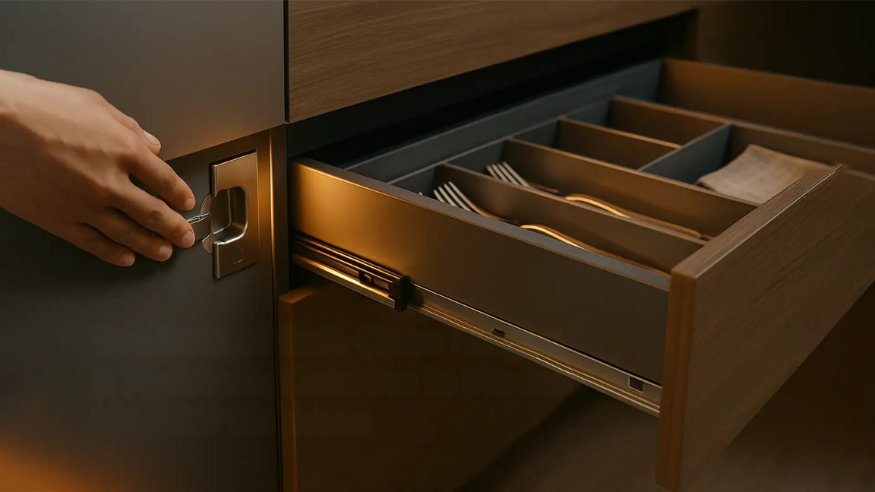
Soft-close hinges are not a different hinge type, but a mechanism integrated into concealed hinges.
They slow down the shutter before it shuts, preventing slamming and reducing wear on cabinet boards.
Best used for
- Premium kitchens
- Homes with children
- High-usage cabinets
Why architects choose them: They enhance user experience, reduce noise, and significantly extend shutter life.
3. Pivot Hinges
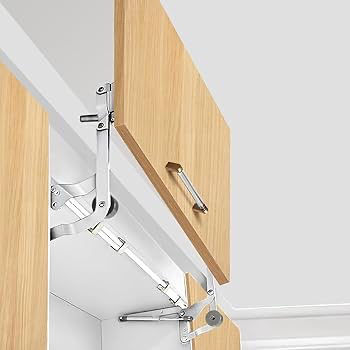
Pivot hinges allow shutters to rotate around a vertical axis rather than swinging from the side.
They are often used for tall pantry units or heavy shutters where conventional hinges would strain over time.
Best used for
- Tall pantry shutters
- Heavy wooden or glass shutters
- Statement kitchen elements
Why architects choose them: They distribute weight evenly and create a smoother opening motion for large panels.
4. Corner Hinges
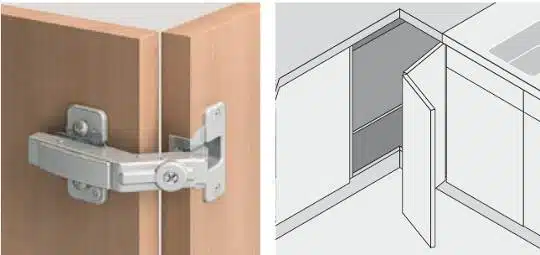
Corner hinges are specially designed for cabinets placed at right angles, such as L-shaped kitchen corners.
They allow shutters to open without clashing with adjacent cabinets, especially in blind corner units.
Best used for
- L-shaped or U-shaped kitchens
- Corner base cabinets
- Tight kitchen layouts
Why architects choose them: They improve accessibility and make awkward corner spaces usable.
5. Glass Door Hinges
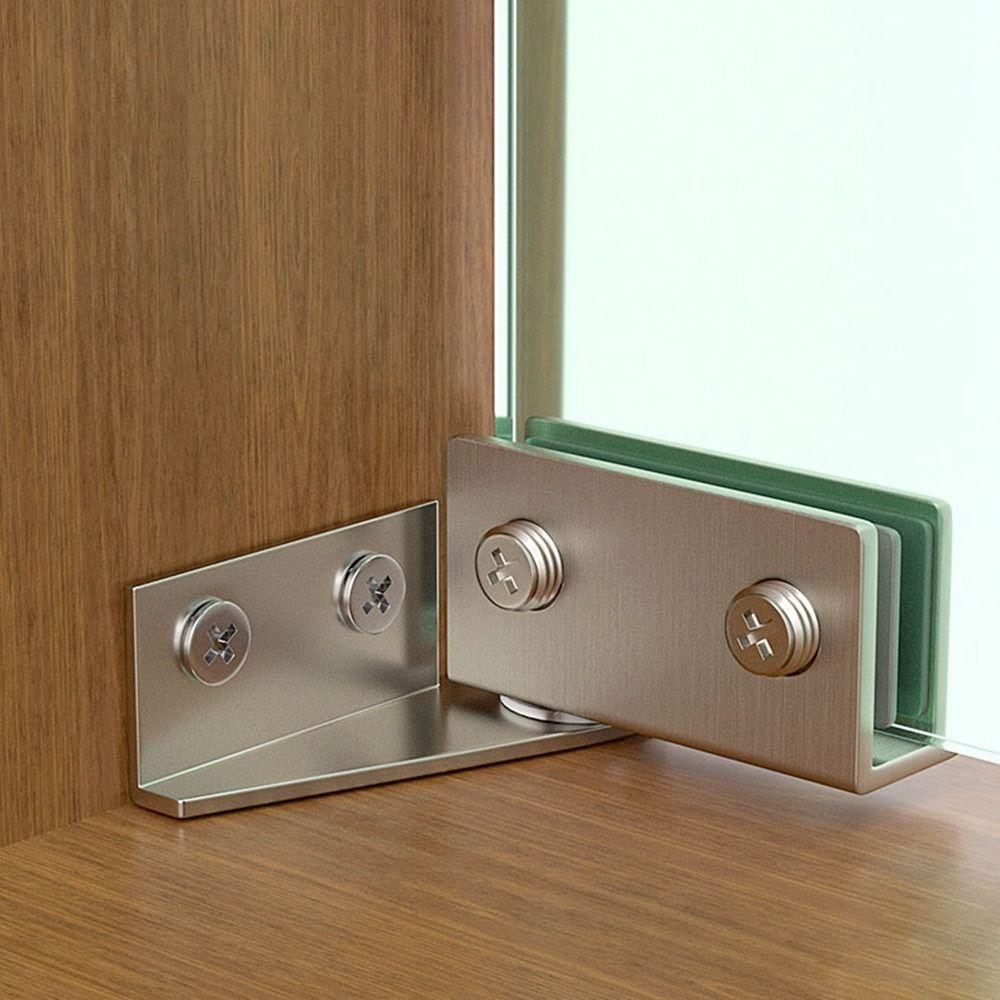
These hinges are designed specifically for glass shutters and do not require drilling into the glass panel.
They are commonly used in overhead cabinets with frosted, tinted, or fluted glass.
Best used for
- Display cabinets
- Overhead kitchen units
- Contemporary and luxury kitchens
Why architects choose them: They provide a clean look while safely supporting fragile glass shutters.
Why Hinge Selection Matters More Than You Think
In kitchens, hinges directly affect:
- Shutter lifespan
- User comfort
- Maintenance costs
- Perceived quality of design
Poor hinge choices often lead to sagging shutters, noise complaints, and unhappy clients.
What Architecture & Interior Firms Expect Today
Firms increasingly expect young architects and designers to:
- Specify correct hardware
- Understand kitchen ergonomics
- Coordinate with carpenters and modular suppliers
This practical knowledge often separates designers who draw kitchens from designers who build them.
Learn Kitchen Detailing the Professional Way with Kaarwan
Kaarwan’s architecture and interior design courses focus on real-world detailing, including kitchens, joinery, materials, and execution drawings—skills firms actively look for.
👉 Explore Kaarwan’s professional detailing and interior design programs