Introduction
Rhythm in architecture refers to the deliberate repetition of elements—whether structural, spatial, or decorative—to create visual coherence, movement, and flow. Much like rhythm in music or dance, architectural rhythm evokes emotional resonance and guides users through a space intuitively. From the spacing of columns to repetitive façade units, rhythm transforms a composition from static to dynamic. In this blog, we explore five impactful ways to achieve rhythm in architecture, each backed by prominent examples and practical design insights.
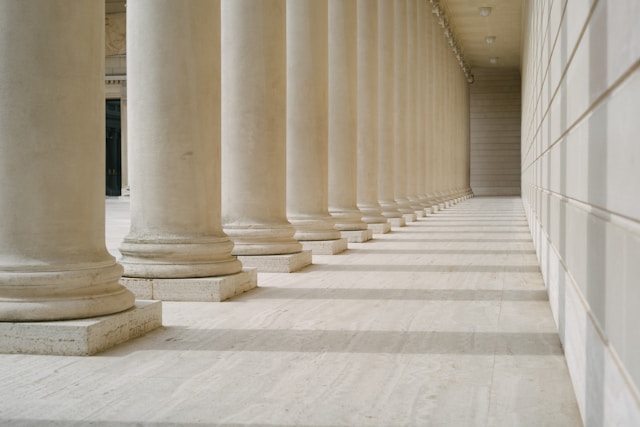
1. Column Spacing:

Image Credits: Pantheon on Rome.info
Columns are one of the most foundational tools for achieving rhythm in a building’s structure. When spaced at regular intervals, they create a steady pulse that defines the architectural grid and movement. This rhythm can be symmetrical and consistent—as in classical architecture—or dynamically varied to emphasise certain spatial moments. The spacing affects not only structural clarity but also circulation patterns, sightlines, and lighting conditions. Properly spaced columns build a sense of order, direction, and scale that enhances the human experience of a space.
2. Façade Repetition:
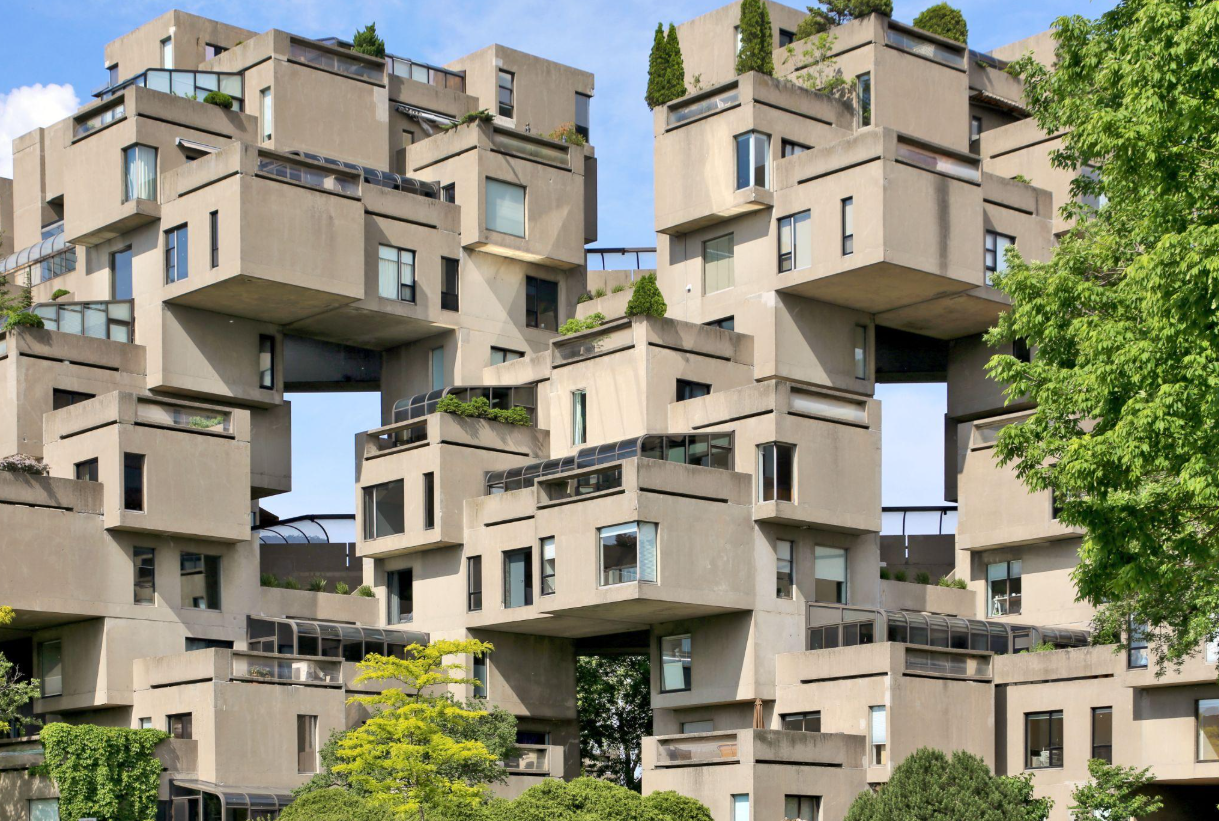
Image Credits: Habitat 67 on Tomorrow.city
Repetition of structural or modular elements on the façade—such as cubes, panels, or units—can create a strong rhythmic identity for a building. Unlike windows, this rhythm focuses on the repetition of entire volumetric components or geometrical expressions. Such rhythm enhances form articulation, adds depth, and introduces contrast through light and shadow. It brings drama to the envelope while maintaining coherence, particularly in large housing or institutional typologies.
3. Flooring Patterns:
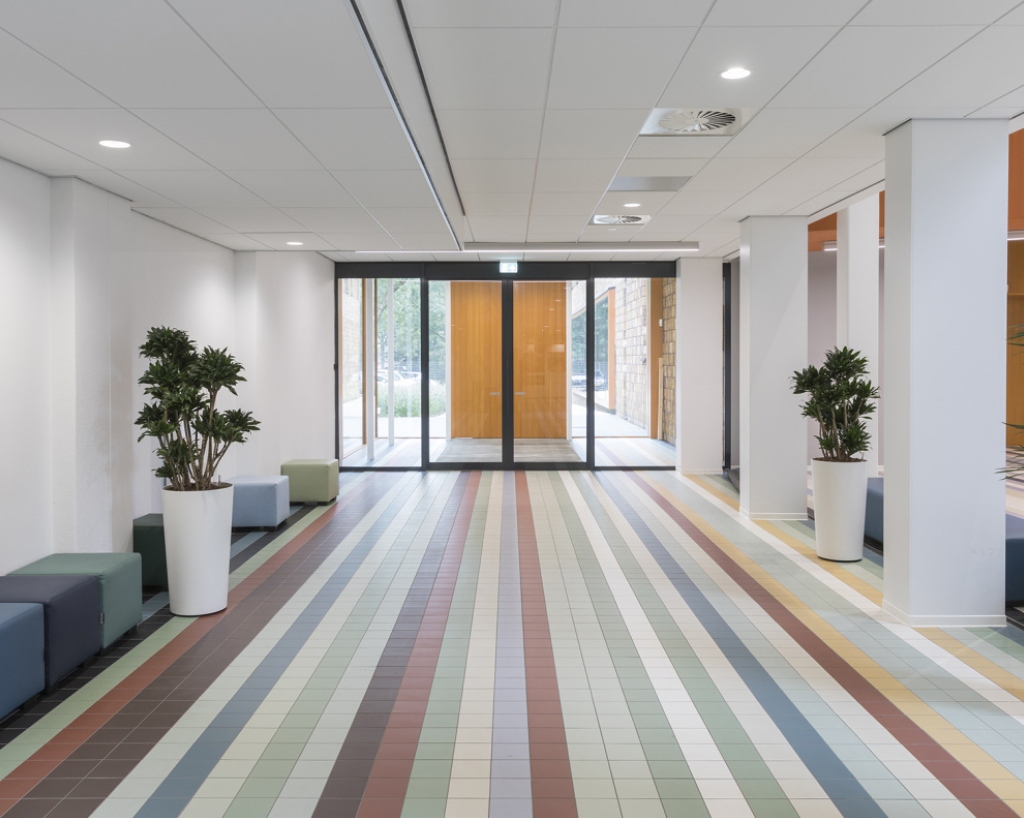
Image Credits: Hoornbeeck College on Mosa.com
Flooring is an often-overlooked yet powerful medium for establishing rhythm. Strips, tiles, herringbone patterns, or even contrasting material bands lead the eye through a space and reinforce circulation paths. These repetitive floor motifs can vary in size or orientation to mark zones, guide movement, or echo other architectural rhythms such as walls or columns. Besides visual rhythm, flooring can also tactically engage users through material transitions underfoot.
4. Window Rhythm:
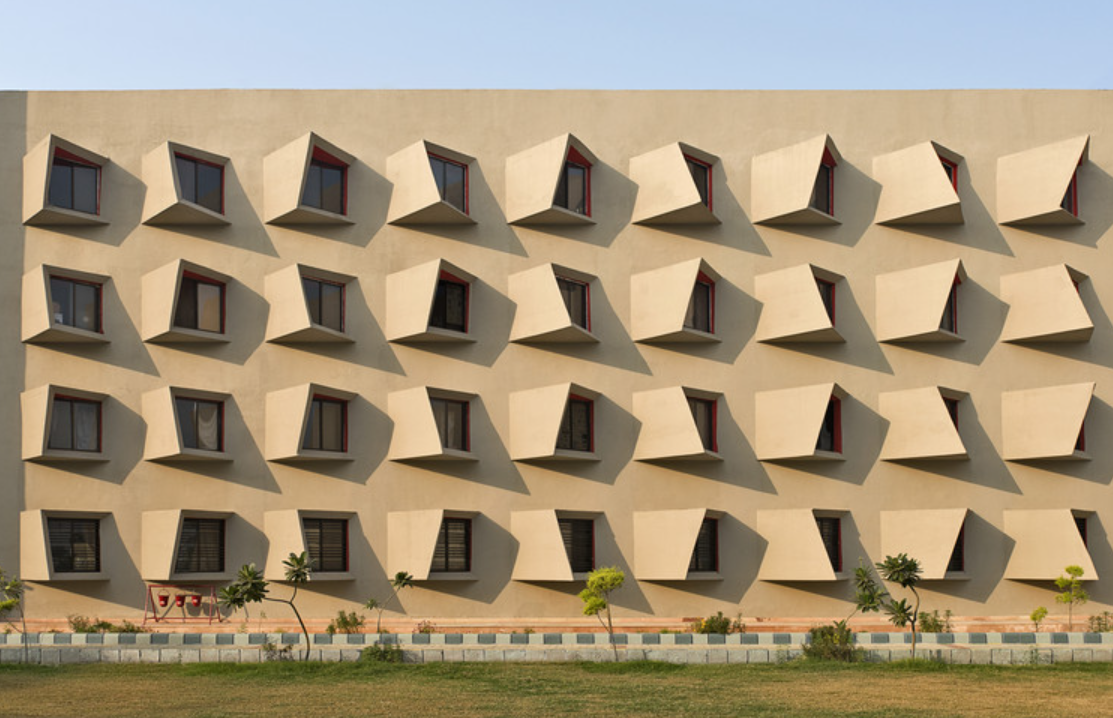
Image Credits: The Street Hostel on Archdaily.com
Rhythm in window design can define the personality of both interiors and exteriors. Uniformly repeated windows build balance and consistency, while rhythmic variation can enhance dramatic or functional effects. Window rhythm influences light entry, views, and spatial perception. On facades, it reinforces the architectural order; internally, it controls light patterning and user experience. This rhythm may be horizontal, vertical, or grid-based depending on design intent.
5. Roofing:
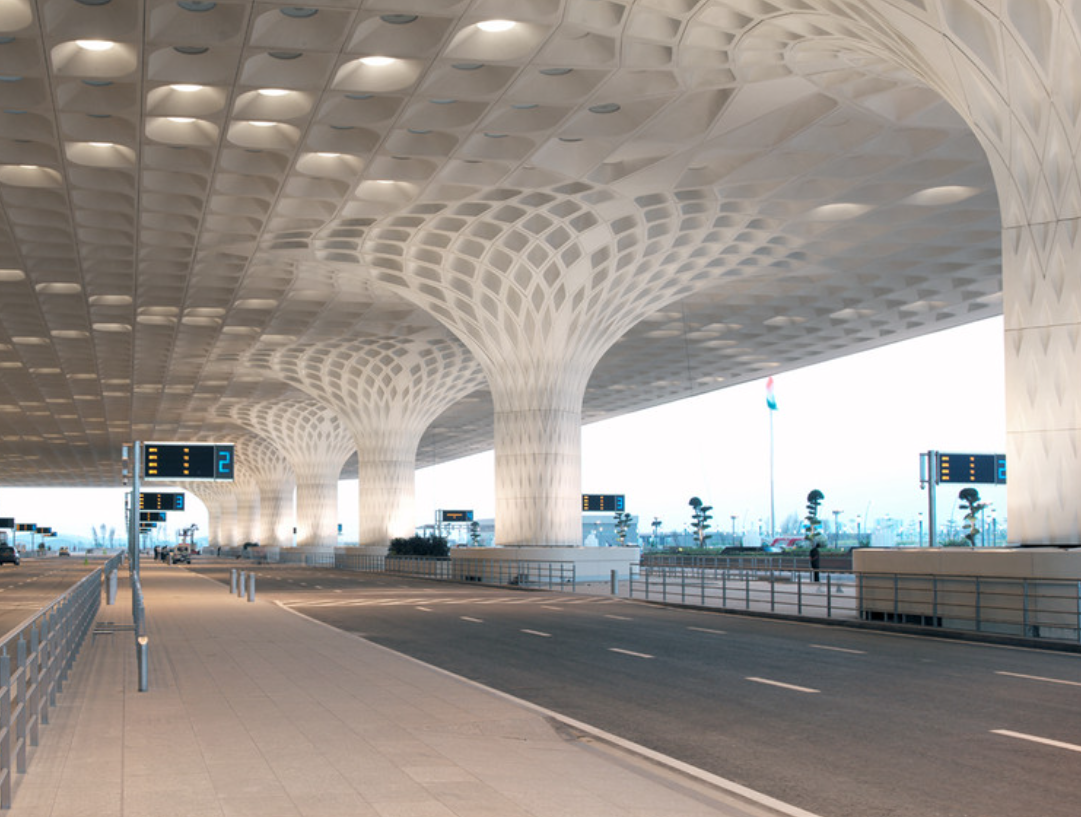
Image Credits: Chhatrapati Shivaji International Airport on Archdaily.com
The geometry and repetition found in exposed roof trusses or space frames bring rhythm into ceilings and roofscapes. This method is especially powerful in large-span spaces like terminals, pavilions, or sports halls. The repeated pattern of triangulated elements or beams not only distributes load efficiently but also creates a striking visual language. The rhythm in these structural systems transforms the overhead experience from purely functional to expressive.
Conclusion:
Rhythm in architecture is more than aesthetic repetition—it's a fundamental design strategy that guides movement, evokes emotion, and defines architectural coherence. Whether through structural elements like columns and trusses, or visual cues like windows and floor patterns, rhythm enables architects to create spatial harmony. By understanding and applying these five rhythmic strategies, designers can craft spaces that are not only visually engaging but deeply resonant and human-centric.