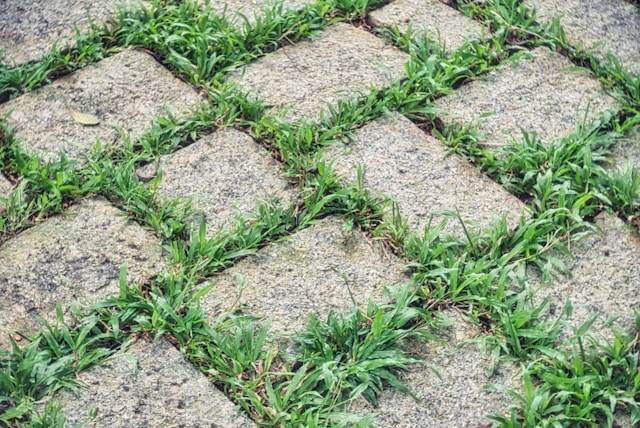
Grass and Paver Pattern Types in Landscaping
Grass and paver combinations have become a defining feature in contemporary landscape and site design, offering a balance between hardscape durability and softscape permeability. By integrating paving units with grass, architects and designers can create surfaces that are visually lighter, environmentally responsive, and functionally versatile. These patterns are not just aesthetic choices—they influence drainage, usability, circulation, and spatial character. From structured grids to organic pathways, each grass–paver pattern brings a unique spatial rhythm and experiential quality, making it essential to choose the right configuration based on context, usage, and design intent.
Linear Stripes Patter
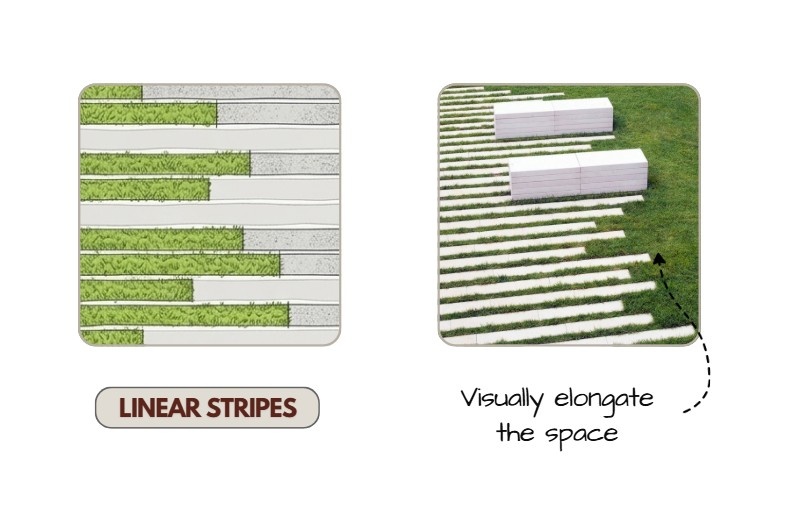
The linear stripes pattern consists of alternating bands of pavers and grass laid in parallel lines, creating a strong sense of direction and movement. Architecturally, this pattern is highly effective in guiding circulation, often used in driveways, walkways, and entry approaches where directional clarity is important. The linear arrangement enhances the perception of length, making spaces appear more elongated and organized. From a functional perspective, the paver bands provide structural support for movement and load, while the grass strips allow for water percolation and reduced heat gain. This pattern works particularly well in modern and minimal design languages, where clean lines and order are emphasized. However, it requires precise alignment and maintenance to ensure the grass bands remain healthy and visually consistent.
Random Grid Pattern
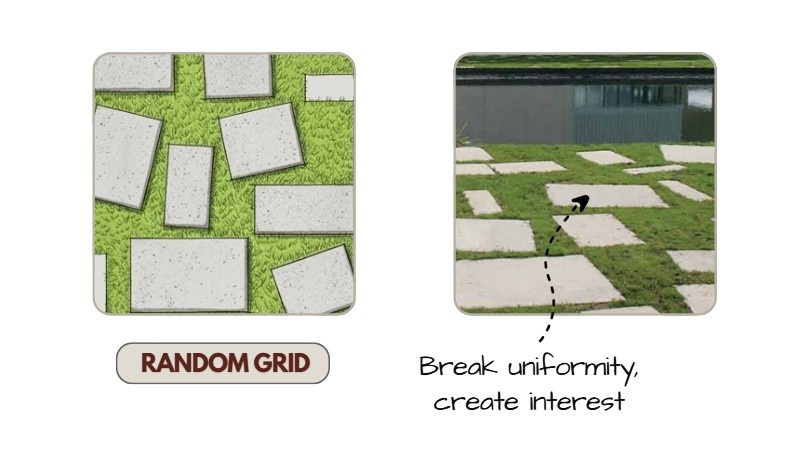
The random grid pattern introduces a more dynamic and less predictable layout, where pavers and grass patches are arranged in varying sizes within a loosely defined grid. Unlike strict geometries, this pattern creates a balanced randomness that feels both structured and organic. Architecturally, it is often used in plazas, courtyards, and semi-public spaces where a more relaxed and informal spatial experience is desired. The variation in module sizes allows for flexibility in design and adaptability to irregular site conditions. Functionally, it maintains permeability while distributing load across paver units. Visually, it breaks monotony and adds texture to the ground plane. However, achieving the right balance between randomness and cohesion requires careful planning to avoid a cluttered appearance.
Checkerboard Pattern
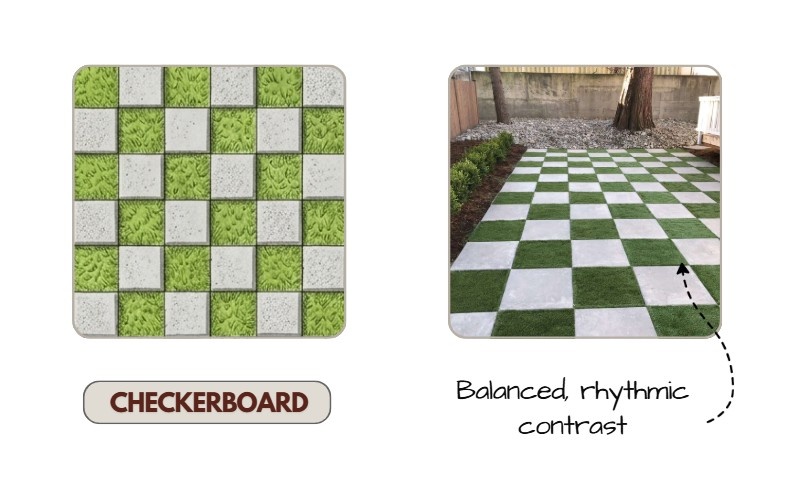
The checkerboard pattern is one of the most recognizable grass–paver arrangements, featuring an alternating grid of equal-sized pavers and grass squares. This pattern creates a highly ordered and rhythmic composition, making it suitable for formal landscapes and symmetrical layouts. Architecturally, it establishes a strong visual identity and works well in courtyards, institutional campuses, and entry plazas. The equal distribution of hard and soft surfaces ensures a balance between load-bearing capacity and permeability, making it both functional and sustainable. The clear geometry also simplifies installation and maintenance. However, its rigid structure may feel too formal or repetitive in more organic or naturalistic settings.
Stepping Stone Pattern
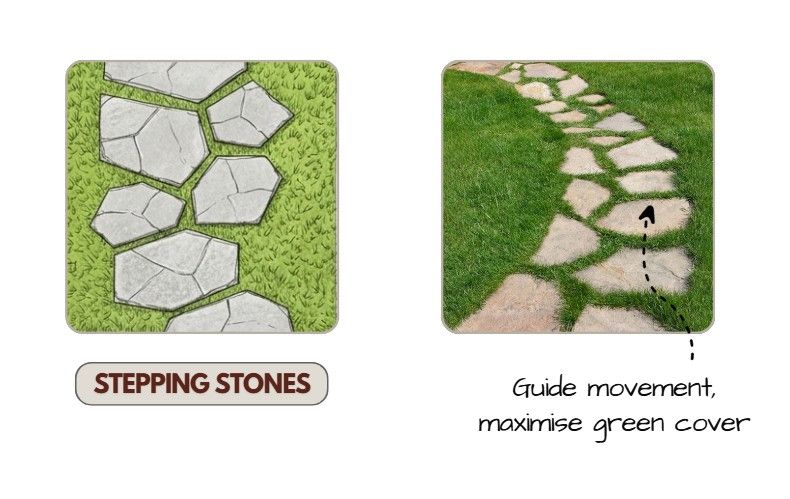
The stepping stone pattern features individual pavers placed at intervals within a continuous grass surface, creating a pathway that appears to “float” within the landscape. Architecturally, this pattern emphasizes movement and interaction, guiding users along a defined route while maintaining the dominance of greenery. It is commonly used in gardens, residential landscapes, and leisure spaces where a softer, more immersive experience is desired. From a functional standpoint, stepping stones provide localized stability for foot traffic while preserving maximum green cover. The spacing and size of the stones must be carefully designed to ensure comfort and usability. Visually, this pattern creates a light, elegant effect that integrates built elements seamlessly with nature.
Irregular Pathway Pattern
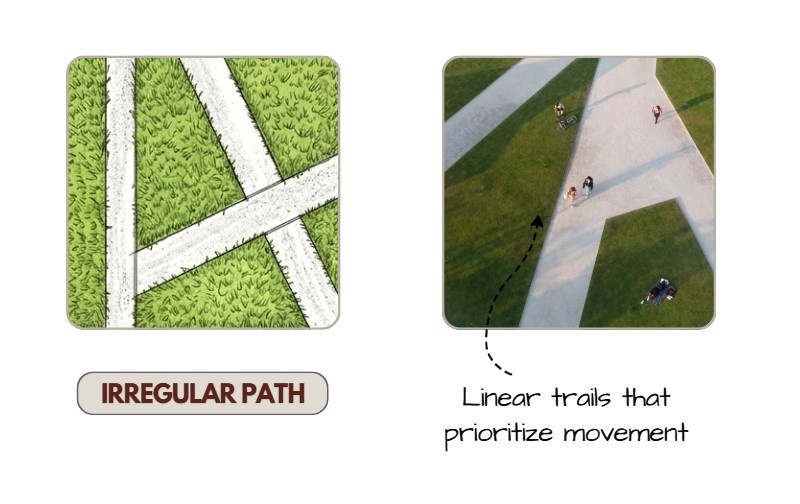
The irregular pathway pattern moves away from geometric constraints, using unevenly shaped pavers arranged in a natural, free-flowing manner within grass. This approach mimics organic ground conditions, making it ideal for landscapes that aim to feel natural, rustic, or informal. Architecturally, it supports a narrative of exploration and discovery, often used in parks, resorts, and nature-inspired designs. Functionally, it allows for flexibility in navigating uneven terrain and adapting to site contours. The grass between pavers enhances permeability and softens the visual impact. However, this pattern requires careful detailing to ensure stability and avoid tripping hazards, especially in high-traffic areas.
Circular Pattern
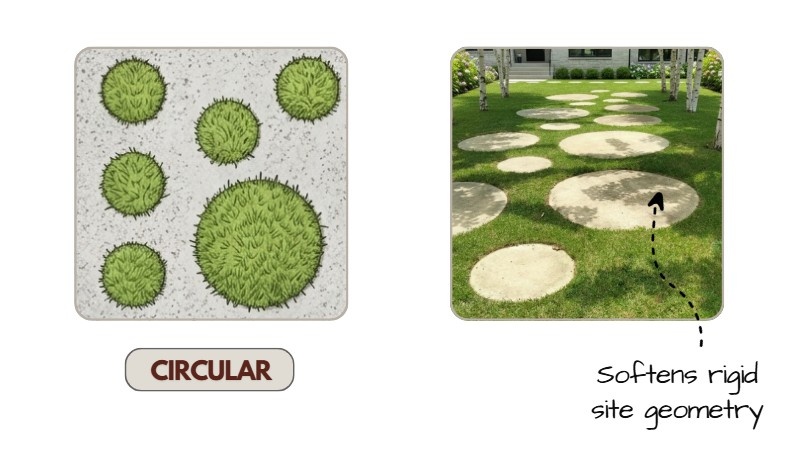
The circular pattern uses pavers arranged in concentric or radial formations, often combined with grass joints or surrounding green areas. Architecturally, this pattern creates a focal point or gathering space, making it suitable for courtyards, plazas, and landscape nodes. The geometry encourages centralized activity and visual emphasis, often anchoring the design composition. Functionally, circular arrangements can accommodate seating, installations, or feature elements, while the integration of grass enhances permeability and reduces heat buildup. This pattern works well in both formal and contemporary settings, depending on material choice and detailing. However, it requires precise execution to maintain symmetry and alignment.
Grass and paver patterns offer a versatile design tool that bridges the gap between hard and soft landscapes, combining functionality with visual richness.
Conclusion
Whether it’s the directional clarity of linear stripes, the structured rhythm of checkerboards, or the organic flow of irregular pathways, each pattern contributes uniquely to the spatial experience. The choice of pattern should be guided by circulation needs, environmental considerations, and design language, ensuring a cohesive and responsive landscape. When thoughtfully designed, these patterns not only enhance aesthetics but also promote sustainability and user comfort.
These were some insights on Types of Grass & Paver Patterns. Stay tuned for more information on other significant topics in the AEC industry and follow Kaarwan for such detailed guides!
FAQs
1. Why use grass and paver combinations instead of full paving?
They improve permeability, reduce heat gain, and create a softer visual impact compared to fully paved surfaces.
2. Which pattern is best for driveways?
Linear stripes and checkerboard patterns are ideal due to their structural stability and load distribution.
3. Are grass paver systems difficult to maintain?
They require regular trimming, watering, and soil care, but proper design can reduce maintenance effort.
4. Can these patterns be used in commercial spaces?
Yes, patterns like random grids and circular layouts work well in plazas, campuses, and public landscapes.
5. Do grass and paver patterns support sustainability?
Yes, they enhance water infiltration, reduce runoff, and lower surface temperatures, contributing to sustainable design.