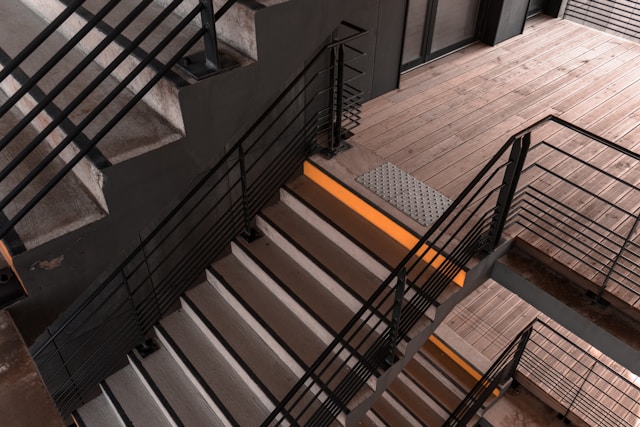
Types of Staircase Treads:
Staircases are more than just functional elements in a building; they are architectural features that significantly influence spatial experience, circulation, and design expression. One of the most defining aspects of a staircase is its tread material. The choice of tread affects not only aesthetics but also durability, safety, acoustics, and cost. From warm wooden steps to sleek glass treads, each material comes with distinct properties, construction techniques, and ideal applications. In urban residences, commercial complexes, or public institutions, selecting the right staircase tread material can transform a staircase from a simple connector into a design statement. Below, we explore six common types of staircase tread materials, their construction methods, advantages, and architectural suitability.
1. Wooden Staircase Treads
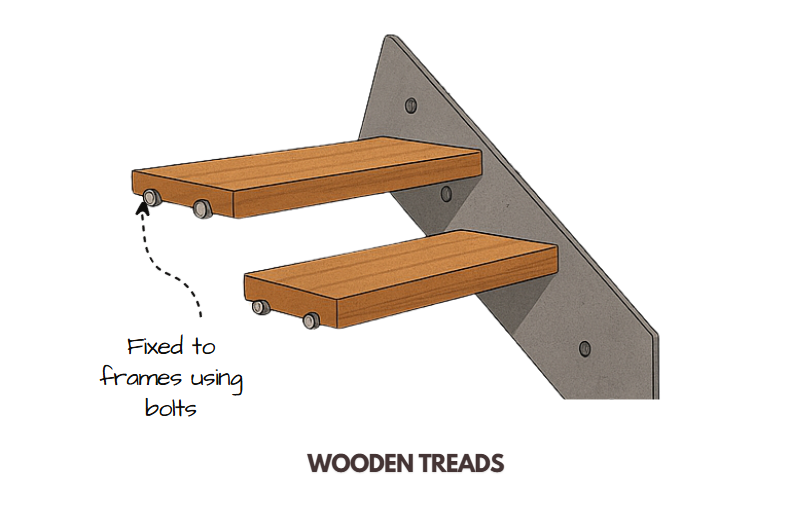
Image Credits: Shivani Chougula @Kaarwan
Wood has been one of the oldest and most popular choices for staircase treads due to its warmth, natural grain, and versatility. Solid hardwoods such as oak, teak, maple, and ash are preferred for their strength and resistance to wear. Wooden treads are typically fixed to stringers or metal frameworks using screws, bolts, and adhesives. In modern interiors, engineered wood or veneer-clad composite panels are also used for cost-effectiveness. Wooden treads are ideal for residential settings, boutique offices, and hospitality spaces where comfort and acoustic dampening are important. Their biggest advantage lies in their ability to add a timeless and cozy aesthetic, though they require regular maintenance and may not be suitable for highly humid areas.
2. Reinforced Cement Concrete Treads
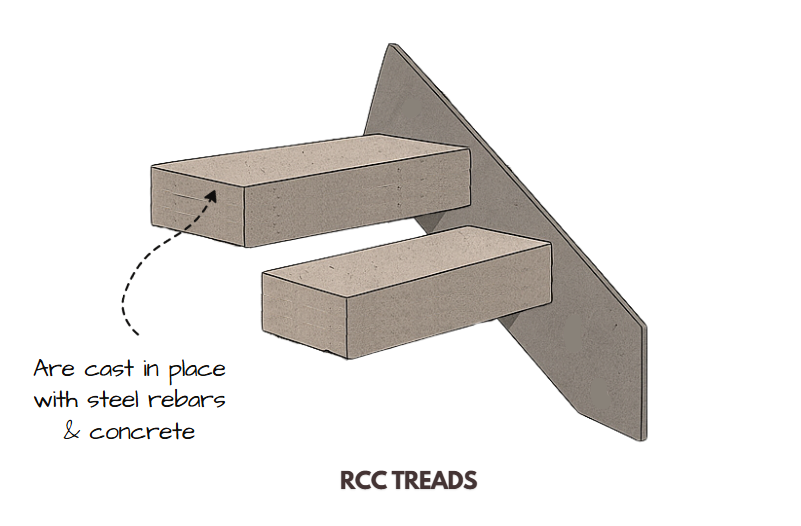
Image Credits: Shivani Chougula @Kaarwan
RCC is the most widely used tread material in large-scale construction for its structural strength and longevity. RCC staircases are usually cast in situ, with reinforcement bars placed within formwork and concrete poured to create monolithic steps. In modular construction, precast RCC treads are also fabricated and assembled on site. These treads are strong, durable, fire-resistant, and capable of bearing heavy loads, making them ideal for institutional buildings, commercial complexes, and public facilities. RCC treads can be left exposed for an industrial look, finished with tiles or stone for durability, or polished for a smooth modern appearance. Their rigidity and strength make them the default choice for permanent staircases in both residential and urban architecture.
3. Metal Staircase Treads
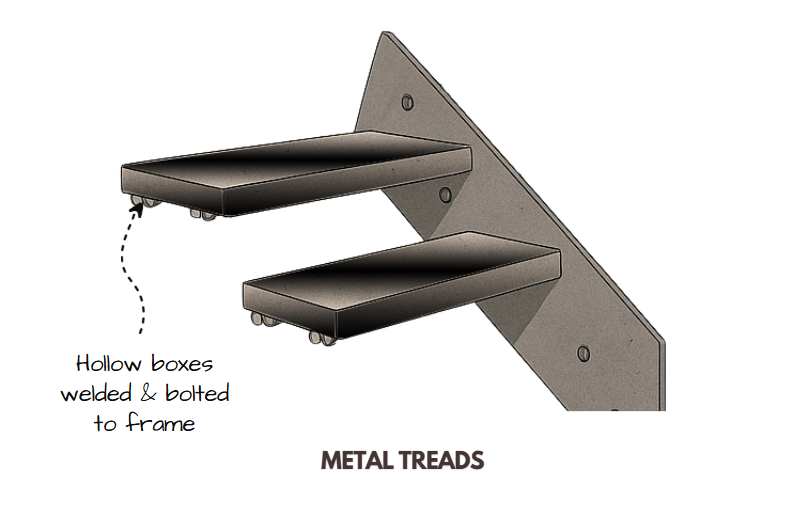
Image Credits: Shivani Chougula @Kaarwan
Metal treads offer strength, slim profiles, and design flexibility. They are typically made using hollow steel box sections welded together, or sometimes as solid sheet steel plates bolted to stringers. Metal treads can be perforated for slip resistance or left plain for sleek modern designs. They are highly durable, resistant to impact, and capable of spanning longer distances without bulky supports. Metal treads are commonly used in industrial settings, outdoor fire escapes, and modern minimal interiors where a lightweight appearance is desired. However, they may produce sound when walked upon and often require anti-rust treatment and powder coating for durability.
4. Glass Staircase Treads
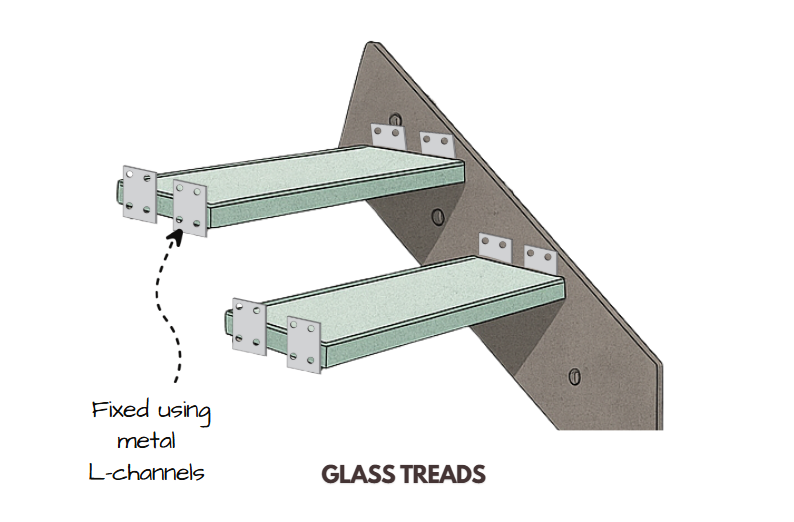
Image Credits: Shivani Chougula @Kaarwan
Glass treads represent the pinnacle of modern, transparent design. Typically made of laminated and toughened glass for safety, these treads can be constructed as solid glass blocks or layered panels fixed with stainless steel brackets and L-channels. Their translucency allows light to pass through, making staircases appear lighter and more open — a feature often used in retail showrooms, luxury residences, and galleries. Textured, frosted, or anti-slip coatings are applied to ensure safety and reduce slipperiness. While visually striking, glass treads require careful engineering, as they must meet strict load-bearing and safety standards. They also demand frequent cleaning to maintain clarity and avoid scratches.
5. Composite Staircase Treads
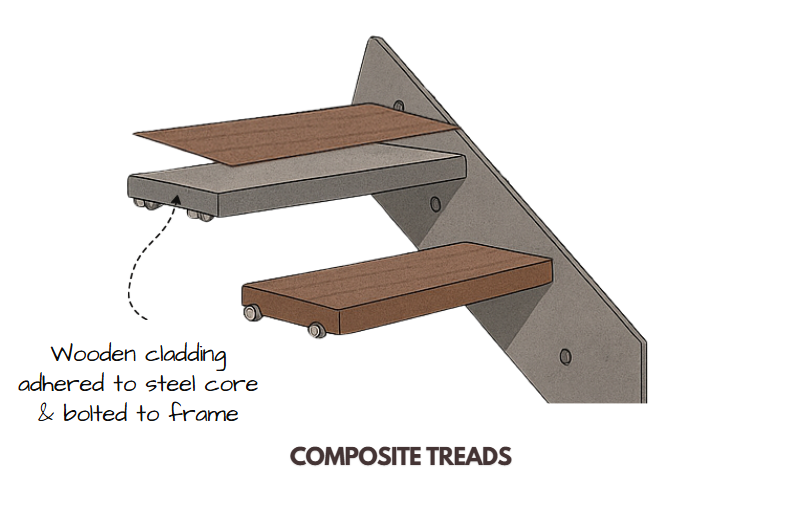
Image Credits: Shivani Chougula @Kaarwan
Composite treads combine structural efficiency with aesthetic finishes. A common method involves using a steel or metal core for strength and cladding it with wood veneer, stone, or engineered panels. This allows architects to achieve the warm look of wood or the elegance of stone without compromising on durability. Composite treads are particularly suitable for high-end interiors, offices, and spaces where both performance and visual appeal are equally important. Their layered construction allows for lightweight yet strong staircases, and they are often prefabricated for faster installation. The biggest advantage of composite treads lies in their hybrid performance — combining strength, cost efficiency, and flexibility of finishes.
6. Stone Staircase Treads
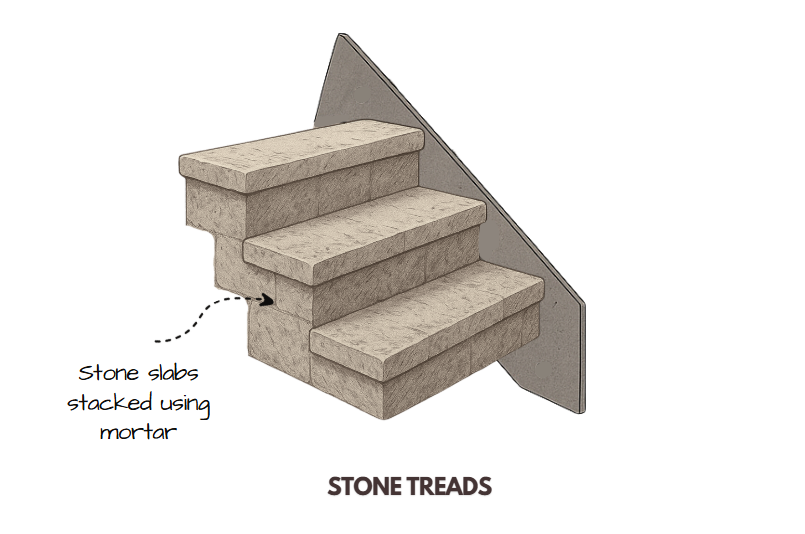
Image Credits: Shivani Chougula @Kaarwan
Stone treads bring timeless durability and a sense of grandeur to staircases. Materials like granite, marble, sandstone, and kota stone are widely used for their strength and ability to withstand heavy foot traffic. These treads are typically cut into slabs and laid over RCC bases with mortar, or dry-fixed with metal brackets in premium designs. Stone treads are extremely durable, easy to clean, and naturally resistant to fire and weather, making them ideal for public buildings, heritage structures, and luxury residences. However, polished stones can be slippery, so textured or flamed finishes are often preferred in outdoor or high-traffic applications. Stone treads also add thermal mass, making them ideal for warm climates where cool surfaces are desired.
Final Thoughts:
Choosing the right staircase tread material is a crucial design decision that impacts both functionality and aesthetics. Wooden treads add warmth and comfort, RCC ensures durability and strength, metal creates slim and industrial designs, glass introduces transparency and lightness, composites balance performance with finishes, and stone provides timeless elegance. Each material has its own construction techniques, advantages, and ideal use cases, allowing architects and designers to craft staircases that are not only functional but also integral to the spatial identity of a building. Ultimately, the best choice depends on the context — the function of the building, its design language, and the desired balance between performance and visual impact.