A Complete Guide to Pavers
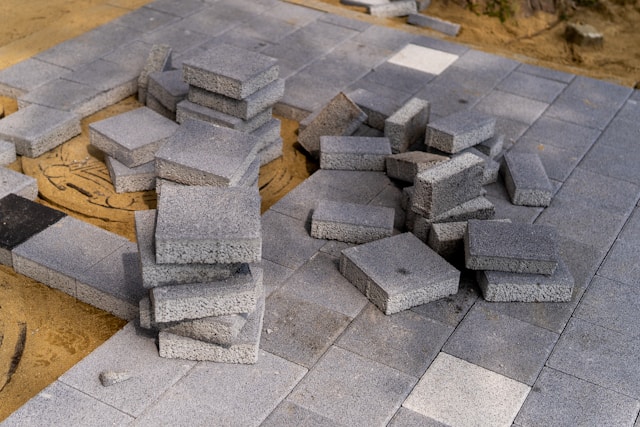
Pavers are one of the most versatile surface materials used in landscape design, pathways, driveways, courtyards, and public plazas. Their strength, permeability, visual variety, and ease of installation make them a popular alternative to cast-in-situ concrete or tiles. Whether you choose brick, concrete, natural stone, or even rubber pavers, the performance of the system depends heavily on how correctly the layers beneath are prepared. This blog explores the standard concrete paver installation method and provides a detailed guide to different paver materials used in architecture.
Concrete Paver Installation:
Unlike tiles fixed with mortar, concrete pavers are designed as a flexible pavement system. They remain permeable, allowing water to seep through joints and filter into the ground rather than causing surface runoff. This permeability is only possible because no mortar or rigid adhesive is used; instead, the pavers sit on carefully graded layers of coarse-to-fine aggregate, allowing movement, drainage, and long-term stability.
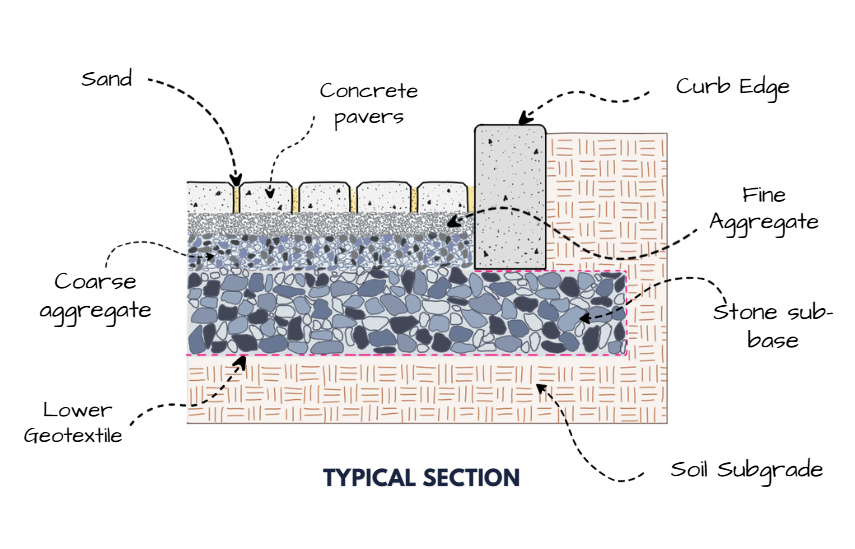
Image Credits: Shivani Chougula @Kaarwan
1. Compacted Subgrade
The natural soil is levelled and compacted to form a stable base. Proper grading ensures surface water flows away from structures.
2. Geotextile Fabric Layer
A geotextile sheet is placed above the subgrade to prevent soil from mixing with aggregates. It improves durability, drainage performance, and prevents uneven settlement.
3. Coarse Aggregate Base Layer
A thick layer of coarse crushed stone (typically 40mm–20mm grade) forms the structural base. This layer provides load-bearing capacity and allows water to percolate downward.
4. Fine Aggregate Bedding Layer
Above the coarse base lies a finer aggregate layer (typically 6mm–12mm stones) that begins to refine the levelling surface. It enhances stability while maintaining permeability.
5. Sand Bedding Course
A thin layer of sharp, coarse sand is screeded evenly. This sand layer holds pavers uniformly, allows micro-adjustments during installation, and supports load transfer through the interlocking system.
6. Paver Placement & Interlocking Patterns
Concrete pavers are laid on the sand bed in interlocking patterns such as herringbone, basket weave, or running bond. These patterns prevent pavers from shifting under loads, compensate for the absence of mortar, and provide lateral stability through geometric locking.
7. Joint Sand Filling & Compaction
Fine sand is swept into the joints and the surface is compacted using a plate compactor. Joint sand locks the pavers together and maintains permeability.
Types of Pavers by Material:
Below are the primary material categories used in architectural surfaces, each offering unique performance characteristics and visual qualities:
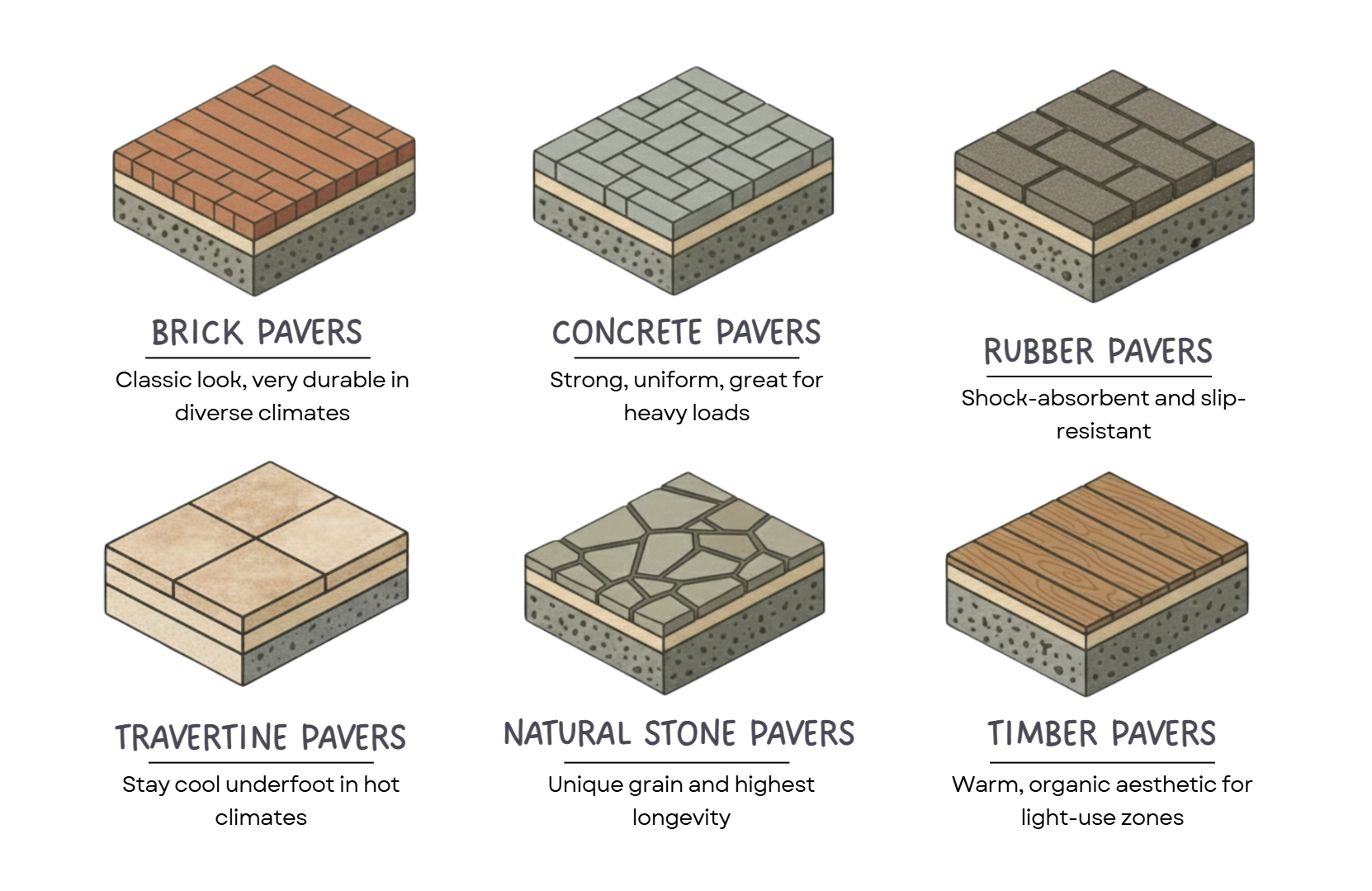
Image Credits: Shivani Chougula @Kaarwan
1. Brick Pavers
Brick pavers are made from natural clay fired at high temperatures. Their material composition makes them durable across diverse climates, resistant to fading, and naturally earthy in tone. Brick pavers offer a warm, traditional aesthetic suited for heritage precincts, residential pathways, and timeless garden designs. They age gracefully and retain colour even under heavy sun exposure. While not as strong as concrete in compressive load, they excel in walkways, patios, and light-traffic areas.
2. Concrete Pavers
Concrete pavers are manufactured using cement, sand, aggregates, and colour pigments. They are known for high strength, uniformity, affordability, and versatility. Available in countless shapes, thicknesses, and textures, they can mimic stone or tiles while offering far more durability. Concrete pavers are ideal for driveways, parking zones, walkways, and any area requiring load-bearing performance. Their installation is easy, maintenance is minimal, and modular patterns can be replaced individually if damaged.
3. Rubber Pavers
Rubber pavers are made from recycled rubber—often repurposed from tires. Their soft, impact-absorbent structure makes them ideal for playgrounds, gyms, pool decks, and senior-friendly pathways. They are slip-resistant, lightweight, and comfortable to walk on. While not suitable for heavy vehicular areas, rubber pavers excel in areas prioritising safety, shock absorption, and sustainability.
4. Travertine Pavers
Travertine is a natural limestone formed near mineral springs, giving it a porous, luxurious texture. Travertine pavers offer a cool, elegant, and high-end look, highly valued in premium landscapes, pool decks, and resort-style pathways. They remain cool underfoot, making them great for warm climates. Their natural pores provide grip, although sealing is recommended for longevity. Travertine balances beauty with reasonable durability, especially in pedestrian zones.
5. Natural Stone Pavers
Natural stone pavers include granite, sandstone, slate, bluestone, and more. Their inherent strength, unique grain, and long-term weather resistance make them suitable for both public plazas and residential landscapes. Stone ages beautifully, offering unmatched natural variation. With high durability and premium aesthetics, they are ideal for heavy footfall areas, urban plazas, or landscaped courtyards. Their thickness and irregular textures give them a timeless, organic appeal.
6. Timber Pavers
Timber pavers are crafted from dense hardwoods or engineered wood designed for outdoor conditions. They offer a warm, natural, rustic feel, perfect for garden walkways, outdoor decks, and low-impact pedestrian areas. Although not suitable for high-traffic or waterlogged zones without treatment, timber pavers provide unique biophilic character and blend seamlessly with soft landscapes.
Final Thoughts:
Whether you're designing a driveway, courtyard, or pedestrian pathway, choosing the right paver system—and installing it correctly—is essential. The no-mortar, aggregate-based method for concrete pavers ensures permeability, durability, and ease of maintenance. Meanwhile, material selection shapes the project’s aesthetics, climate response, comfort, and longevity. With the right combination, pavers can become a defining design element in any architectural or landscape project.