Green roofs are more than just aesthetic patches of greenery perched atop buildings—they’re high-performance systems that bring insulation, biodiversity, and sustainability into architectural design.
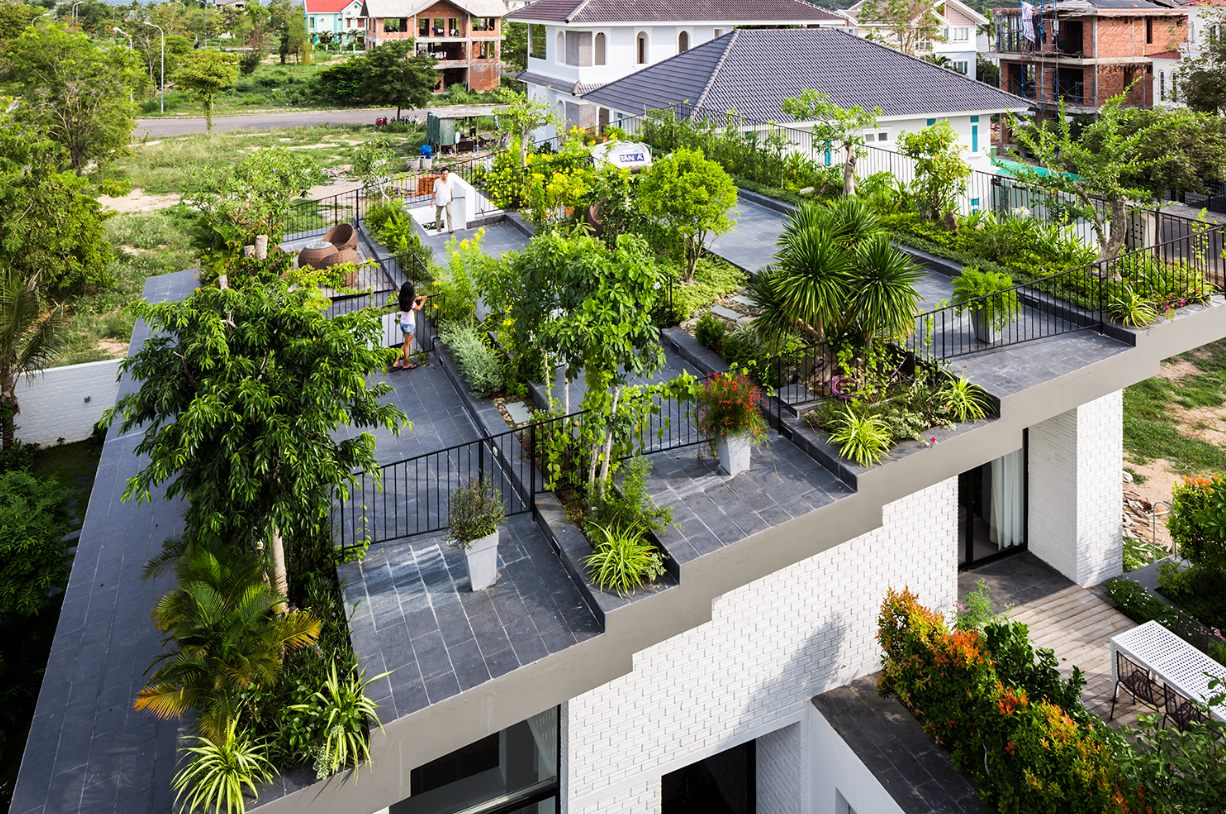
Image Credits: Hiroyuki Oki
Always wanted to incorporate a green roof in your design but weren’t sure how they’re built or how they work? This blog unpacks exactly that. From waterproofing layers to plant types, we’ll explore the two main systems—extensive and intensive—and help you understand their architectural relevance, construction methodology, and design impact.
What Is a Green Roof?
A green roof, also known as a living roof, is a roof partially or completely covered with vegetation, planted over a waterproofing membrane. These systems can include additional layers such as root barriers, drainage, and irrigation systems. Green roofs serve multiple functions—thermal insulation, stormwater management, urban heat reduction, soundproofing, and promoting biodiversity. In architectural design, they represent a powerful tool to blend nature with built form while improving building performance.
1. Extensive Green Roof:
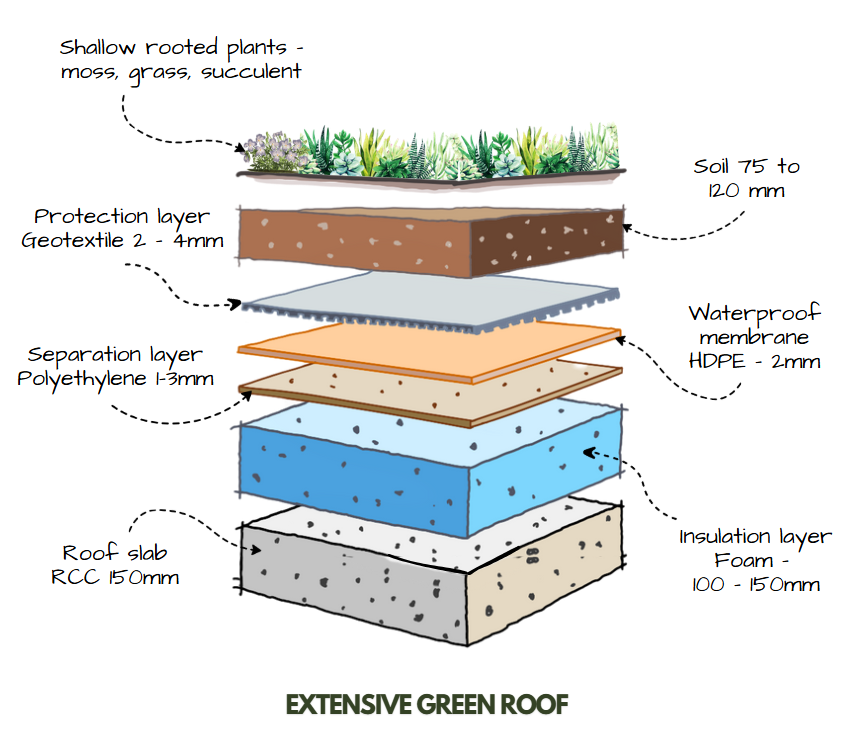
Image Credits: Shivani Chougula @Kaarwan
Extensive green roofs are designed to be shallow, lightweight, and relatively self-sustaining. These systems typically feature a soil depth of 2–6 inches and support low-growing, drought-resistant vegetation like sedums, grasses, mosses, or alpine plants.
Construction & Layers: An extensive green roof includes several key layers:
- Structural Support Slab
- Waterproofing Membrane: Ensures no moisture enters the building envelope.
- Root Barrier: Prevents aggressive roots from damaging the roof membrane.
- Drainage Layer: Allows excess water to escape while retaining some moisture.
- Filter Fabric: Keeps soil from clogging the drainage.
- Growing Medium: Lightweight engineered soil mix.
- Vegetation Layer: Hardy plants with minimal watering needs.
Vegetation & Maintenance: Extensive roofs require little upkeep after establishment. Irrigation is minimal or seasonal. They're ideal for inaccessible roofs or places with limited structural capacity.
Design Relevance: Perfect for retrofits, residential buildings, sloped roofs, or where load capacity is restricted. They contribute to stormwater control and insulation while maintaining minimal visual intrusion.
2. Intensive Green Roof:
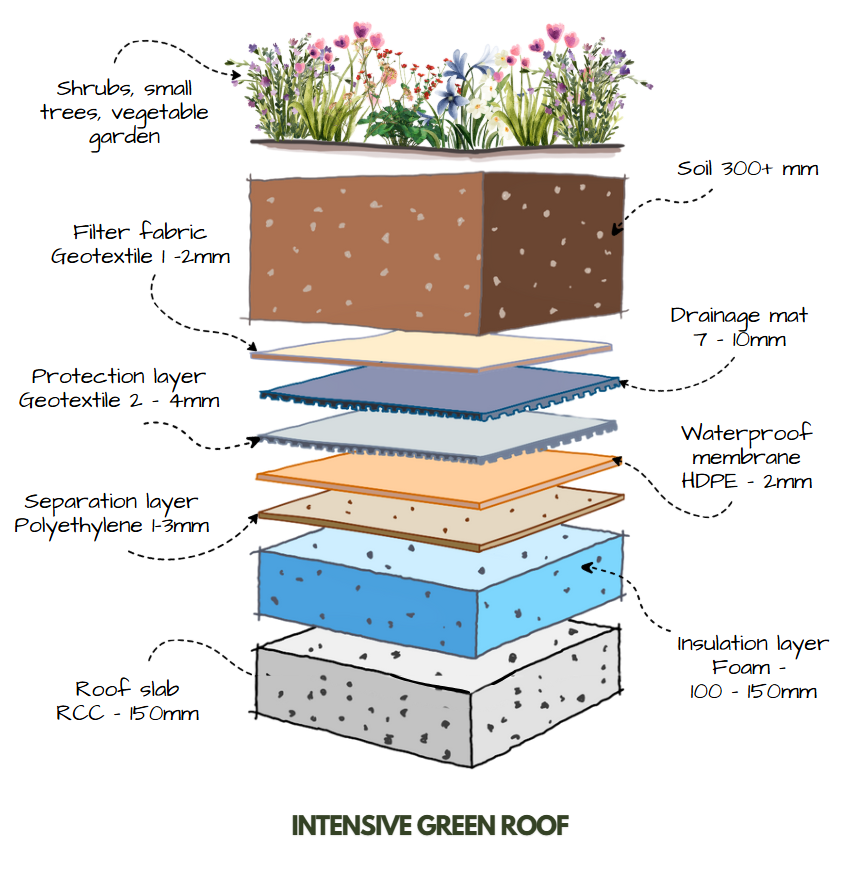
Image Credits: Shivani Chougula @Kaarwan
Intensive green roofs are more robust and capable of supporting a wide variety of plant life, including shrubs, lawns, trees, and even water features. With soil depths of 6–24 inches (or more), these roofs act like elevated landscapes.
Construction & Layers: The structure must be engineered to handle heavier loads. Layers include:
- Reinforced Structural Slab
- High-Performance Waterproofing Membrane
- Root Barrier
- Drainage and Water Retention Layer
- Geotextile Filter Layer
- Deep Growing Medium
- Planting Layer: Can include everything from herbs to trees.
Vegetation & Maintenance: Unlike extensive roofs, intensive systems require regular maintenance—watering, pruning, fertilising, and irrigation infrastructure. Plant choice can be diverse, curated, and seasonal.
Design Relevance: Suitable for public buildings, commercial rooftops, hotels, and cultural spaces where the roof serves as an active recreational space. It can also support rooftop cafes, gardens, and walking paths.
When to Use Which: Extensive vs Intensive
The choice between extensive and intensive green roofs depends on several architectural and functional parameters.
- Structural Load: Extensive systems weigh between 60–150 kg/m², while intensive systems may exceed 300 kg/m². Choose based on the structural capacity of your building.
- Purpose: Used extensively when aiming for low-maintenance, passive greening. Choose intensive for creating active rooftop landscapes or accessible green terraces.
- Budget: Extensive is more cost-effective and simpler to construct; intensive is an investment in both landscape and structure.
- Climate & Water Management: Both types offer excellent stormwater benefits, but intensive systems require active irrigation planning.
- Aesthetic & User Interaction: Extensive blends subtly into the roofscape; intensive invites interaction and social activity.
Explore budget-friendly previews and make informed choices while choosing your niche!
Conclusion:
Whether it’s a light blanket of wild sedums or a full-fledged rooftop garden, green roofs bring life, climate resilience, and beauty to architectural design. Understanding their construction—from the root barrier up to the vegetation—empowers architects and designers to make informed choices based on context, function, and vision. In an era demanding sustainable, biophilic solutions, green roofs stand tall as a compelling fusion of ecology and architecture.