What is a Geodesic Dome?
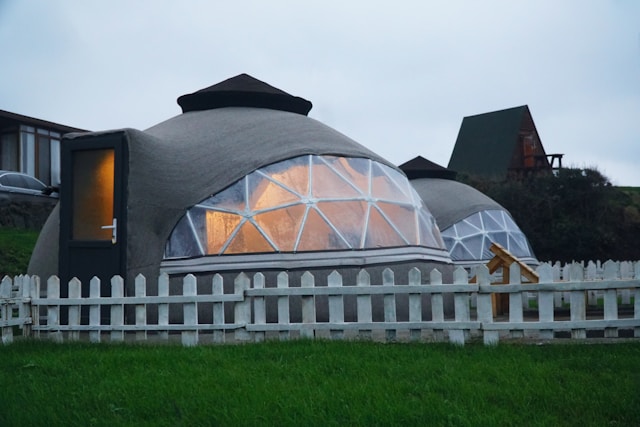
A geodesic dome is a spherical or partial-spherical shell structure made up of triangular elements arranged in a way that distributes both compressive and tensile forces evenly. The geometry allows the load to spread across all struts, giving the dome exceptional stability despite its lightweight composition. The triangulated framework eliminates weak points common in rectangular systems, and because of this efficiency, geodesic domes can enclose large spans without internal supports. The modular struts, usually connected at nodes or hubs, make the system scalable and adaptable to different sizes and applications.
Construction Techniques of Geodesic Domes
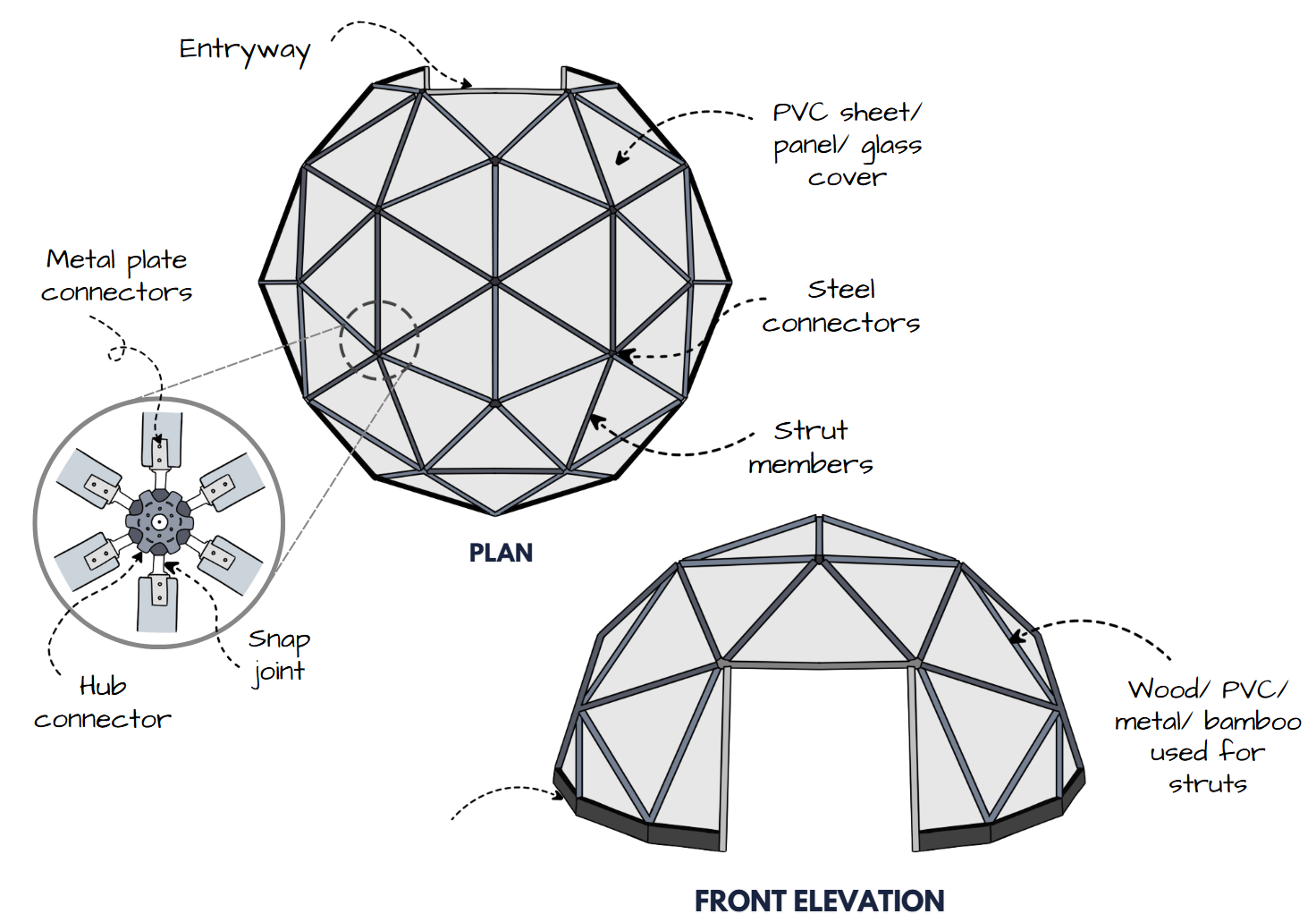
The assembly of a geodesic dome involves creating a framework of struts (linear members) joined at nodes using hub connectors or specialized joints. The struts can be fabricated in different materials such as timber, steel, aluminum, PVC, or bamboo, depending on the intended application. Hub connectors may be made of metal, plastic, or engineered composites, and they allow the precise angular connections required by geodesic geometry. Once the frame is assembled, it can be left exposed as a structural skeleton or covered with a range of materials — polycarbonate sheets, glass, fabric membranes, plywood panels, or even earthen plasters. The covering is chosen based on insulation, transparency, weather resistance, and aesthetic requirements. This adaptability of both structural material and external skin makes geodesic domes one of the most versatile architectural forms.
Types of Geodesic Domes:
1. Wooden Geodesic Domes
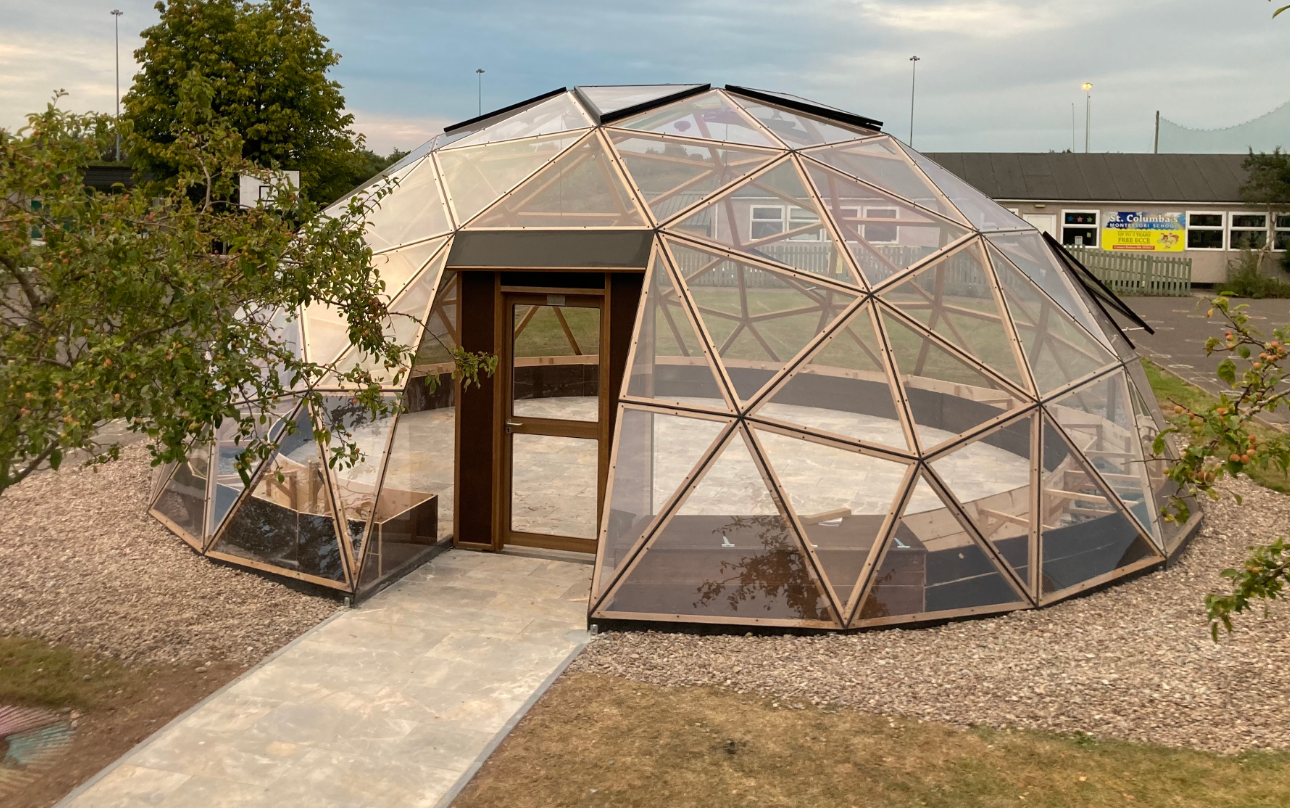
Image Credits: Geodesicdomes.ie
Wooden geodesic domes are among the most common and accessible variations, especially in eco-resorts, glamping sites, and experimental housing. The struts are usually made of solid timber or engineered wood such as laminated veneer lumber, cut precisely to required lengths and joined at hub connectors. Wood offers warmth, natural insulation, and ease of handling, making it ideal for semi-permanent structures. The assembly is relatively straightforward — wooden members can be prefabricated off-site, transported easily, and bolted together on site. Wooden domes, when combined with fabric or plywood panel covers, are suitable for temperate climates and can last many years with proper treatment against moisture and termites. Their main advantage is sustainability, as they use renewable materials while still providing structural stability and aesthetic appeal.
2. PVC Geodesic Domes
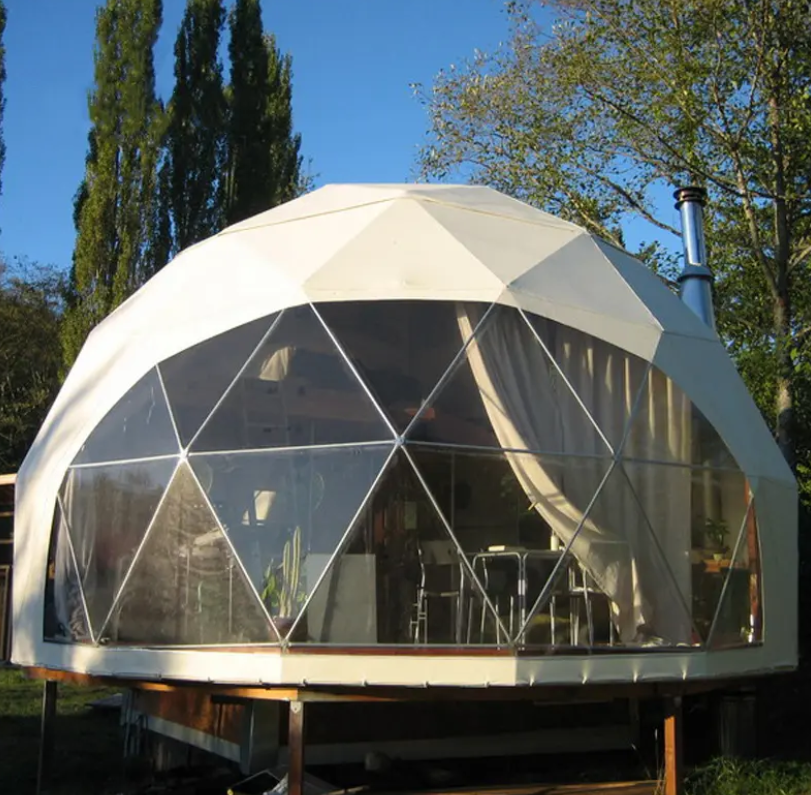
Image Credits: Luxotent.com
PVC geodesic domes are lightweight, portable, and cost-efficient, making them a popular choice for temporary pavilions, exhibitions, and event spaces. The struts are typically hollow PVC pipes cut to size and fitted into plastic or metal hub connectors. Because PVC is flexible and lightweight, the assembly requires minimal tools and can often be completed without skilled labor. The dome is usually covered with tensile fabric membranes, tarpaulins, or transparent plastic sheets, making it weather-resistant and suitable for outdoor use. However, PVC domes are less durable than wooden or metal ones and are best suited for short-term applications. Their affordability and ease of dismantling make them an attractive solution for community events, temporary shelters, and experimental DIY projects.
3. Bamboo Geodesic Domes
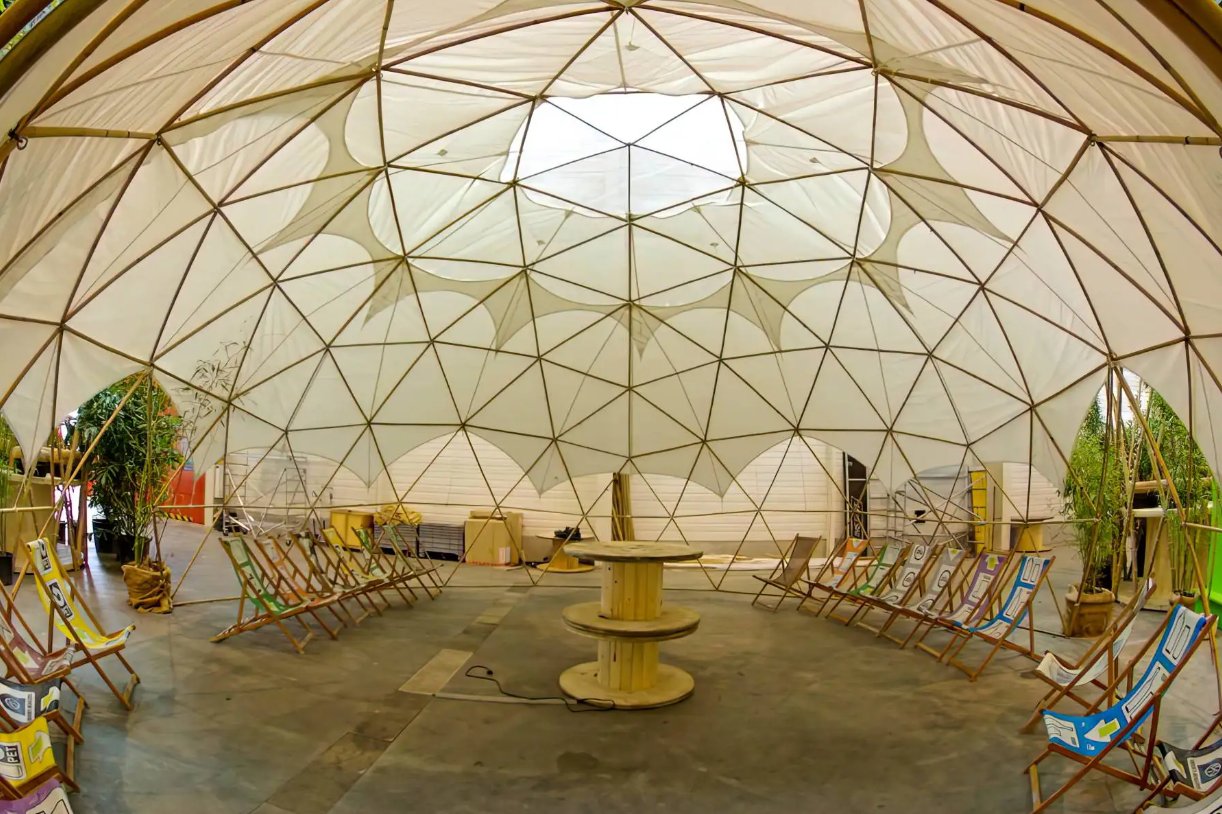
Image Credits: Sanftestrukturen.com
Bamboo domes combine the strength and elasticity of bamboo with the efficiency of geodesic geometry, creating structures that are both sustainable and visually striking. The struts are formed from treated bamboo poles, often split and shaped to uniform dimensions, then connected using rope lashings, bolts, or hybrid hub connectors. Bamboo’s natural flexibility allows it to absorb stresses effectively, making these domes resilient in seismic regions. Covered with thatch, fabric, or even mud plaster, bamboo domes are often used in rural eco-centers, cultural pavilions, or as experimental sustainable housing. While their lifespan depends heavily on proper treatment against insects and moisture, bamboo domes excel in low-cost, low-impact construction, providing a natural and contextually sensitive architectural solution.
4. Glass-Covered Metal Geodesic Domes
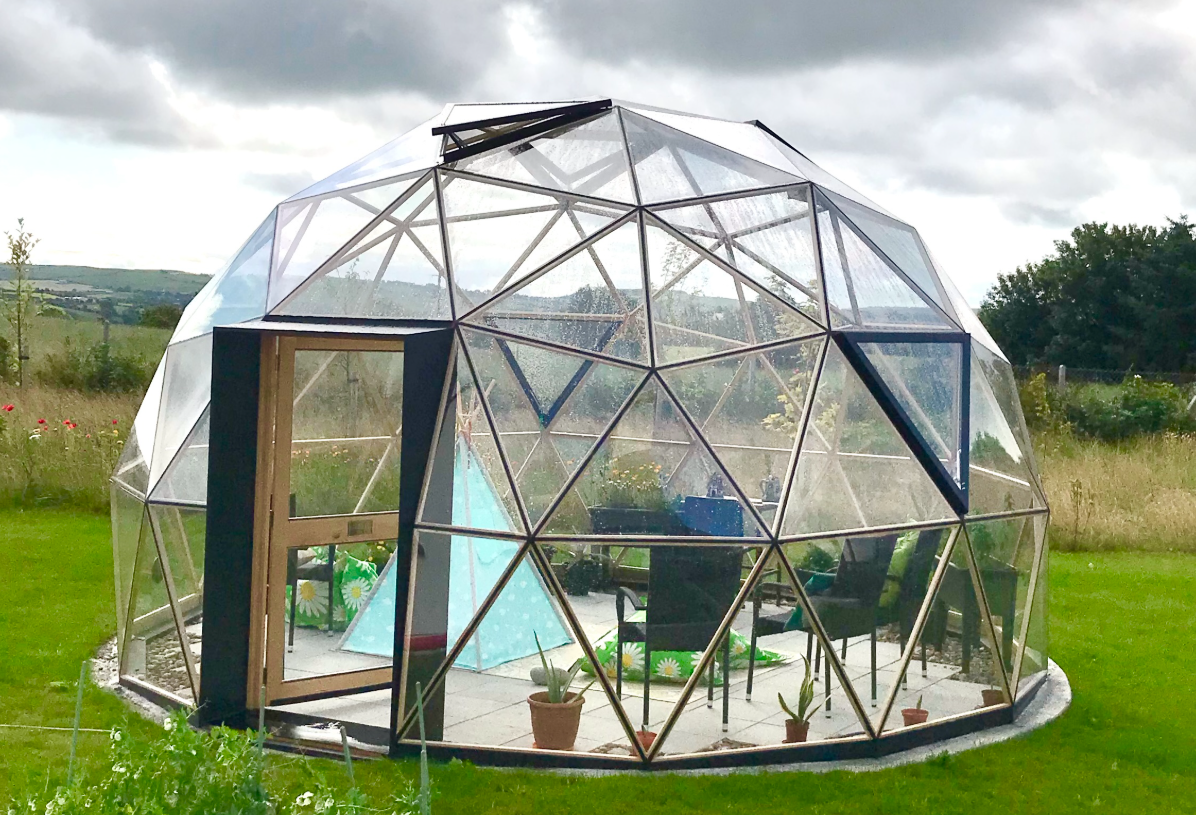
Image Credits: Geodesicdomes.ie
At the high-performance end of the spectrum are geodesic domes made of steel or aluminum struts with glass covers. These are engineered for durability, transparency, and architectural prestige, often seen in greenhouses, botanical gardens, and high-end pavilions. The metal struts are fabricated with precision, typically hollow tubular steel sections welded or bolted into hub connectors. Once the frame is assembled, glass panels — tempered or laminated for safety — are fitted into the triangular grid using aluminum channels, silicone seals, or gasket systems. This creates a watertight yet transparent enclosure that allows abundant natural light while providing weather resistance. Such domes are long-lasting, structurally robust, and visually iconic, though they require high upfront investment and skilled construction. Their main appeal lies in their ability to enclose large, light-filled spaces with minimal internal supports, making them ideal for public and institutional architecture.
Final Thoughts:
Geodesic domes represent an ingenious fusion of geometry and architecture, offering lightweight yet strong enclosures adaptable to a wide range of contexts. Their construction, based on interconnected triangular struts and hub connectors, ensures structural stability while minimizing material use. Depending on the choice of strut material and covering, geodesic domes can range from temporary PVC event pavilions to permanent glass-and-metal architectural landmarks. Wooden domes provide warmth and sustainability, bamboo domes embrace natural resilience, PVC domes are affordable and portable, and glass-covered metal domes offer durability and elegance. Together, these variations highlight the versatility and enduring relevance of geodesic domes as a modern architectural typology.