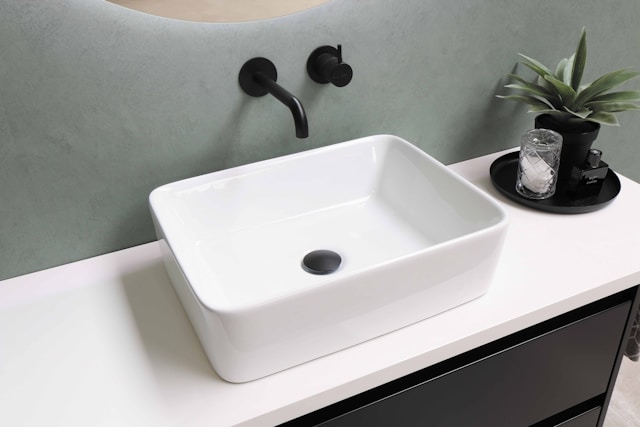
Bathroom sinks play a critical role in architectural and interior design, influencing plumbing coordination, storage planning, hygiene, and user comfort. Beyond aesthetics, sink selection and detailing impact how efficiently a bathroom functions, how easily it can be maintained, and how seamlessly services are concealed within the built fabric.
Bathroom Sink Detailing in Architecture:
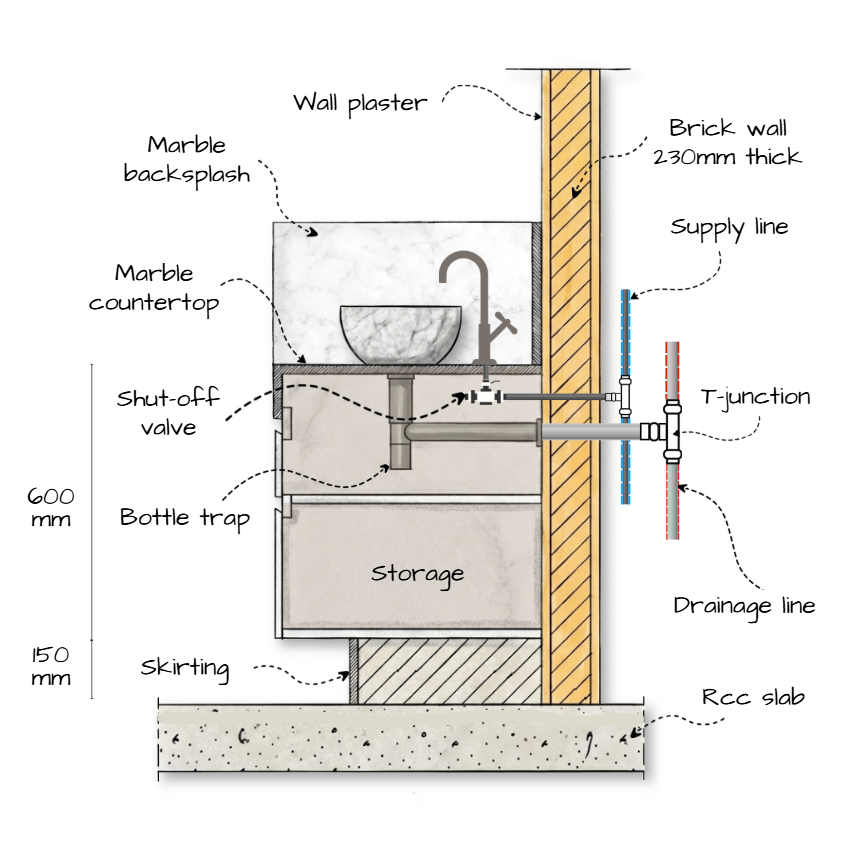
Image Credits: Shivani Chougula @Kaarwan
Bathroom sink detailing primarily revolves around the coordination of supply lines, drainage, countertops, and storage. Hot and cold water supply lines are typically concealed within walls or floor slabs and terminate at angle valves aligned with the sink fixture. Drainage connects through a P-trap or bottle trap to a floor trap or vertical stack, with proper slope and access for maintenance. In well-detailed bathrooms, plumbing lines are hidden within pedestals, cabinetry, or wall thickness to maintain a clean visual finish. Countertops are designed with moisture-resistant materials and sealed junctions to prevent water seepage, while under-sink zones are planned either for storage or kept visually light depending on the sink type.
In contemporary practice, sink detailing is closely coordinated with waterproofing, tile finishes, and furniture design to ensure durability, ease of cleaning, and a seamless architectural appearance.
Sink selection depends on layout, storage needs, and the overall bathroom design. Read further to explore different types -
Types of Sinks:
1. Pedestal Sink
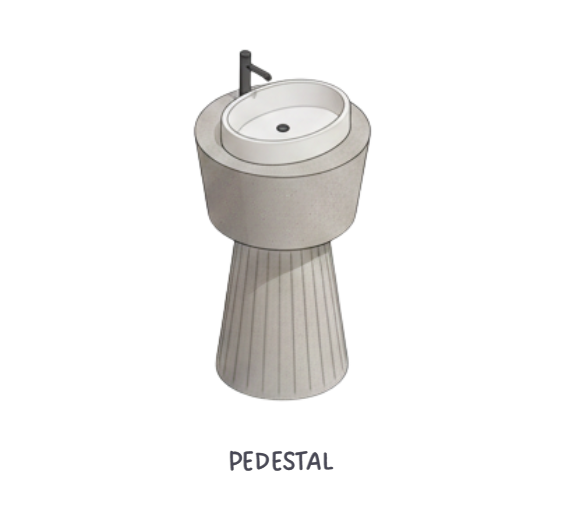
Image Credits: Shivani Chougula @Kaarwan
A pedestal sink consists of a basin supported by a vertical column that conceals plumbing lines, creating a compact and visually lightweight solution.
Architectural Use:
- Ideal for small bathrooms and powder rooms
- Works well in traditional or minimal interiors
- Limited storage but clean visual appeal
Durability & Maintenance: Easy to maintain, though storage and counter space are minimal.
2. Floating Sink
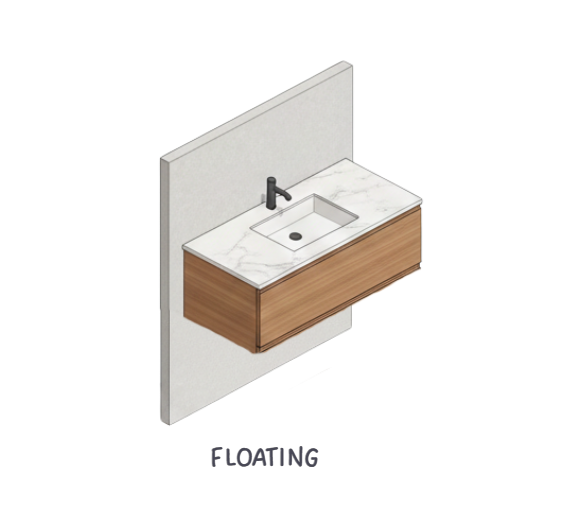
Image Credits: Shivani Chougula @Kaarwan
Floating sinks are wall-mounted units with no floor support, offering a contemporary and spatially efficient design.
Architectural Use:
- Enhances openness and floor continuity
- Allows flexible mounting heights
- Supports universal and accessible design
Durability & Maintenance: Requires strong wall fixing and precise service coordination; easy daily cleaning.
3. Freestanding Sink
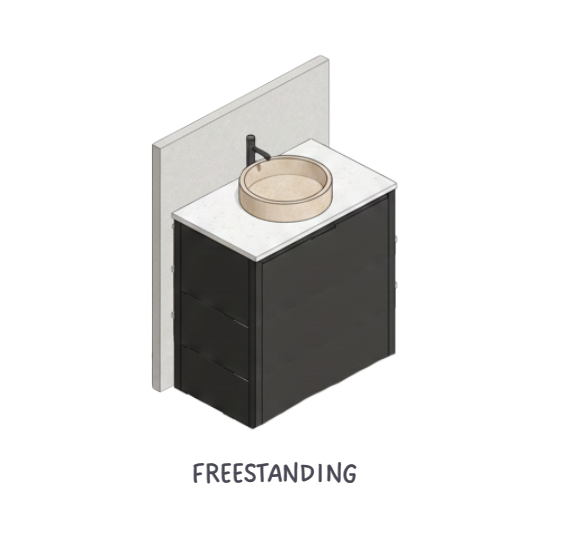
Image Credits: Shivani Chougula @Kaarwan
Freestanding sinks are sculptural fixtures placed directly on the floor, often used as a visual focal point in larger bathrooms.
Architectural Use:
- Suitable for spacious and luxury bathrooms
- Creates a strong design statement
- Minimal reliance on cabinetry
Durability & Maintenance: Highly durable but requires careful plumbing alignment and adequate floor space.
4. Corner Sink
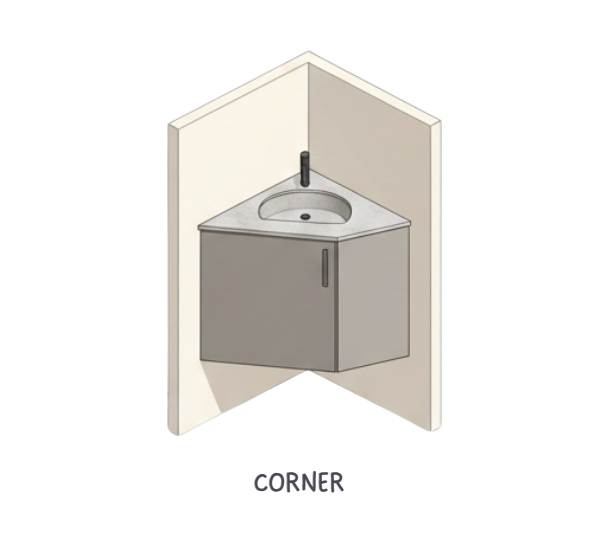
Image Credits: Shivani Chougula @Kaarwan
Corner sinks are designed to fit into unused corners, maximizing efficiency in compact layouts.
Architectural Use:
- Optimizes circulation in small bathrooms
- Useful in guest toilets and renovations
- Space-saving and functional
Durability & Maintenance: Compact and practical, though limited in storage and working area.
A well-selected sink balances function, space optimization, visual harmony and overall enhancing user comfort.
Final Thoughts:
Bathroom sink design in architecture is a balance between detailing, spatial efficiency, and visual clarity. While sink detailing ensures concealed services, waterproofing, and durability, the choice of sink type defines usability and character. Selecting the right sink type based on space, usage, and maintenance requirements leads to bathrooms that are both functional and architecturally refined.
FAQs:
1. What should be considered while detailing a bathroom sink?
Proper plumbing alignment, splash control, countertop integration, and storage clearance are essential.
2. How are supply and drainage lines typically concealed for sinks?
They are routed within walls or cabinets to maintain a clean and seamless finish.
3. Which sink type is best for small bathrooms?
Floating and corner sinks work best as they save floor space and improve circulation.
4. Are pedestal sinks suitable for heavy-use bathrooms?
They suit low to moderate use but offer limited storage and service access.
5. What factors influence the choice between freestanding and wall-mounted sinks?
Available space, plumbing flexibility, visual preference, and maintenance requirements.