

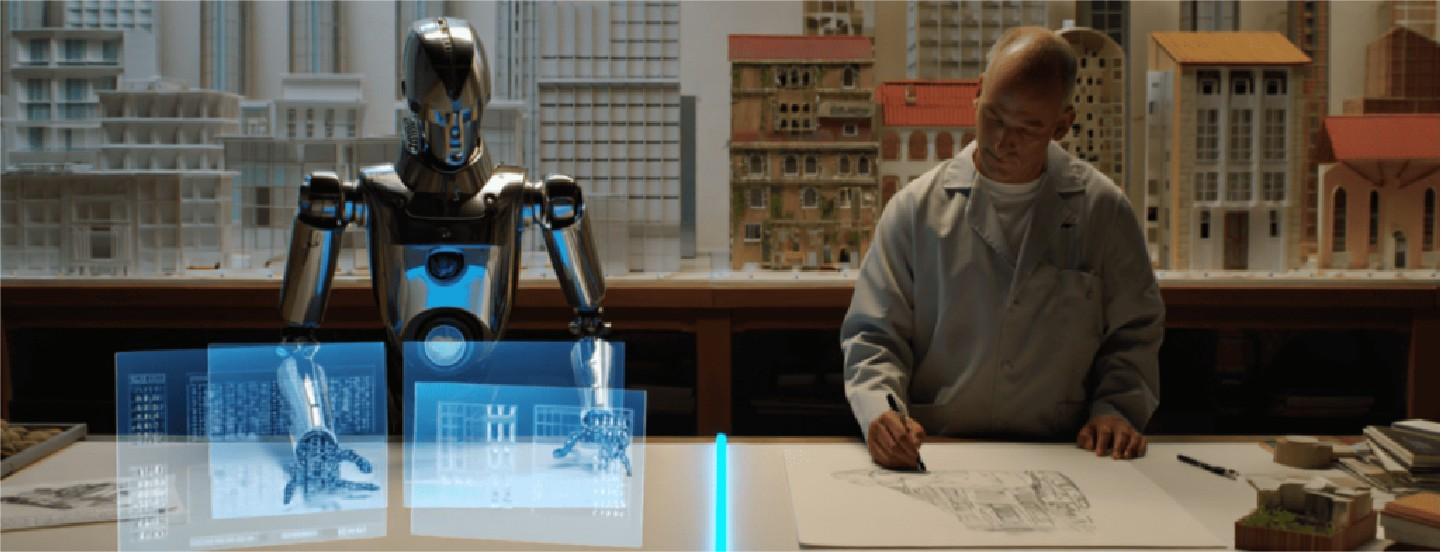
The rise of artificial intelligence (AI) is transforming industries across the world, and architecture is no exception. From generative design to automated drafting and smart building simulations, AI tools are increasingly capable of performing tasks that were once the exclusive domain of human designers. This rapid technological evolution raises a pressing question for architecture students, professionals, and educators alike: Will AI replace traditional designers?
The short answer is nuanced. While AI can handle repetitive, computational, and optimisation-heavy tasks, it cannot fully replicate the human creativity, intuition, and contextual understanding required in architecture. Instead, AI is best viewed as a powerful collaborator – a tool that enhances a designer’s capabilities rather than replacing them entirely.
Understanding AI in Architecture
AI in architecture encompasses a variety of technologies, including:
- Generative Design: Algorithms create multiple design options based on set parameters such as floor area, sunlight, and ventilation.
- Predictive Modelling: AI simulates environmental performance, energy efficiency, and structural behaviour to guide design decisions.
- Automated Drafting: Tasks like 2D drawings, plan extraction, and documentation can be partially automated.
- Material & Cost Optimisation: AI suggests efficient material choices and cost-saving strategies.
- Project Management Tools: AI can analyse schedules, detect clashes, and optimise construction workflows.
Each of these technologies increases productivity and informs smarter design decisions, but they do not inherently possess the empathy, cultural awareness, or conceptual creativity of a human architect.
Why AI Won’t Fully Replace Designers
While AI is powerful, there are critical areas where humans remain irreplaceable:
- Creative Vision: Architecture is not just solving spatial problems; it is about creating meaningful experiences, narrative spaces, and identity. AI can generate options, but it does not conceive why a space should feel a certain way.
- Contextual Understanding: Cities, communities, and cultural landscapes are complex. Humans can interpret intangible factors like local traditions, social behaviour, and heritage, which are difficult for AI to quantify.
- Ethical & Social Decision-Making: Architects make choices about sustainability, accessibility, and equity. AI can provide data, but it cannot weigh ethical trade-offs independently.
- Client Communication: Design requires storytelling, persuasion, and emotional intelligence – qualities AI cannot replicate.
How AI Enhances Traditional Design
Rather than replacing designers, AI is becoming a collaborative partner in the workflow. Examples include:
- Early Concept Design: Tools like Spacemaker or Autodesk Generative Design allow architects to explore hundreds of site layouts or building massings quickly. Designers still make the final choice based on aesthetics, context, and programmatic needs.
- Environmental Optimisation: AI simulates daylight, airflow, and energy performance, enabling designers to make informed decisions without manual trial-and-error.
- Time Savings in Documentation: AI can automate repetitive tasks such as dimensioning, annotation, and quantity take-offs, freeing designers to focus on creativity.
- Urban Planning & Analysis: AI processes large datasets like traffic, population density, and topography to suggest patterns, which architects then interpret and apply.
By automating routine or computational tasks, AI allows architects to spend more time on high-level thinking, innovation, and user experience.
Case Studies of AI Integration
- Zaha Hadid Architects & AI Generative Design: The firm has experimented with AI to explore parametric geometries for complex structures, using algorithms to generate multiple iterations quickly. Human designers select, refine, and adapt the most promising designs.
- BIG (Bjarke Ingels Group) & AI in Urban Planning: BIG employs AI tools to simulate urban performance, helping designers balance density, traffic, and sustainability. While AI provides data-driven options, the conceptual vision remains human-led.
- Spacemaker in Residential Design: Residential architects use AI to evaluate site constraints and generate layouts optimised for daylight and noise reduction. Architects interpret the results and customise them to align with client needs and local regulations.
Implications for Architecture Students
For students, AI represents both opportunity and challenge:
- Upskilling Required: Knowledge of AI-powered tools is increasingly expected in both academic projects and professional internships.
- Critical Thinking Remains Key: While AI can generate options, students must critically evaluate solutions for aesthetics, usability, and social impact.
- Portfolio Differentiation: Projects demonstrating AI-assisted exploration, combined with human design intelligence, are highly valued by firms.
- Future Career Paths: Mastery of AI tools opens roles such as computational designer, design technologist, or digital workflow manager.
Integrating AI Without Losing Human Creativity
Students and professionals should approach AI as augmentation, not substitution. Strategies include:
- Use AI for Iteration, Not Decision-Making: Let AI generate options, but always apply human judgement.
- Combine AI with Sketching & Modelling Skills: Traditional 2D sketches, 3D modelling in Rhino or SketchUp, and physical models remain invaluable.
- Focus on Narrative & Context: AI can calculate efficiency, but architects craft meaning. Design decisions should always be story-driven.
- Learn Data Literacy: Understanding datasets, parameters, and limitations is crucial to interpreting AI output responsibly.
The Future of AI in Architecture
AI is unlikely to render architects obsolete. Instead, it is redefining the role of the designer:
- From Draftsman to Decision-Maker: Automation reduces routine tasks, elevating architects to strategic, conceptual roles.
- Enhanced Collaboration: AI tools facilitate interdisciplinary work, allowing architects, engineers, and planners to integrate seamlessly.
- Design Democracy: With AI, smaller firms and students can explore complex options previously accessible only to large offices.
- Sustainability and Efficiency: AI enables buildings that are more energy-efficient, cost-effective, and environmentally responsive.
The future is not “AI versus architect” but “AI plus architect” – a hybrid workflow where technology empowers human creativity.
Conclusion
AI in architecture is a tool, a partner, and a challenge. It can perform calculations, optimise layouts, and generate multiple solutions in seconds. However, human creativity, empathy, and contextual understanding remain irreplaceable.
For students and professionals, the rise of AI is an invitation to adapt and evolve. By mastering AI tools while retaining a strong foundation in traditional design thinking, one can leverage technology to enhance creativity, collaboration, and efficiency rather than fear replacement.
In short, AI will not replace architects – but architects who do not understand AI risk falling behind. The key is to embrace AI as a collaborator, think critically about its output, and ensure that human creativity remains at the heart of design.
At Kaarwan, we encourage students to explore AI in architecture as a tool to amplify their design intelligence, not replace it. Those who integrate AI thoughtfully into their workflow are poised to lead the next generation of architectural innovation.



.png)