

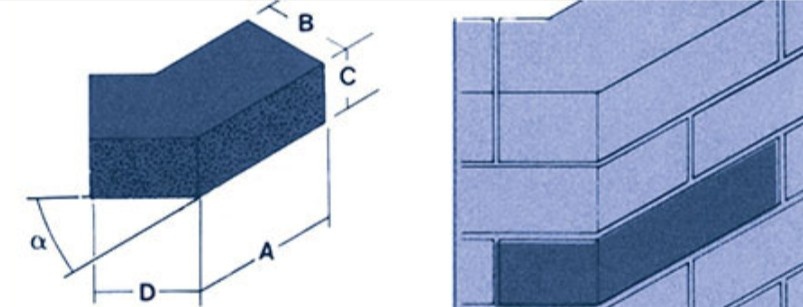
Brickwork forms the backbone of many architectural structures, from walls to façades. While laying bricks seems simple, students often struggle to visualise and draft angle junctions — places where two walls meet at a corner or T-junction. These junctions are critical for structural integrity and visual clarity, and understanding them helps in both construction knowledge and sheet presentation.
This blog explains types of angle junctions, brick bond techniques, and drafting methods, making it easier for students to illustrate brickwork accurately in plans, elevations, and sections.
Types of Angle Junctions
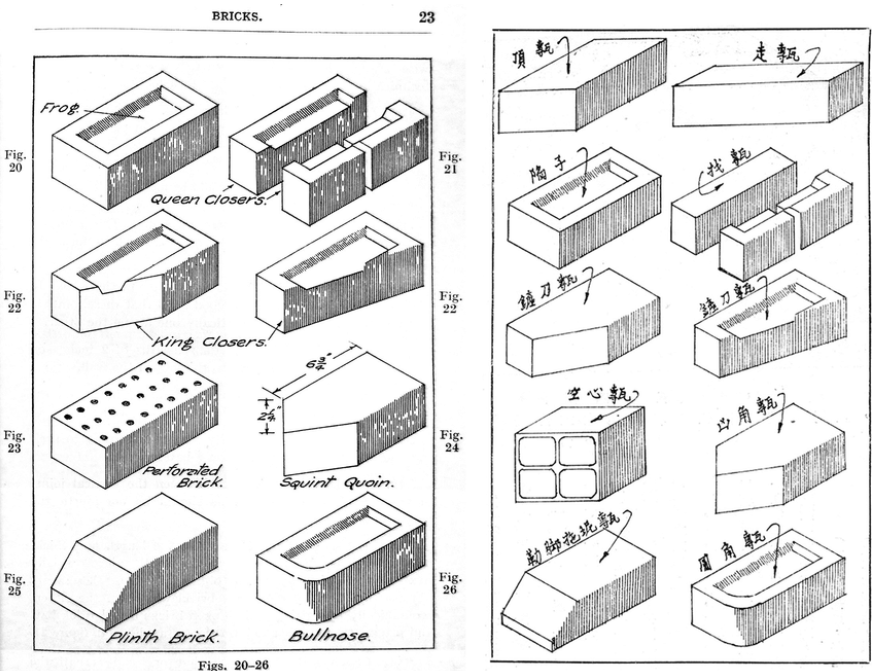
1. External Corners (90°)
External corners are where two walls meet on the outside. The corner can be tied using header bricks (bricks placed perpendicular to the wall face) to strengthen the junction.
Case Study Example:
- Traditional colonial buildings often use English bond at corners, alternating headers and stretchers to maintain strength and aesthetics.
Student Tip: In plans, indicate header bricks with small rectangles perpendicular to the wall line; in elevations, hatch the bricks consistently to show bond.
2. Internal Corners (Concave Junctions)
Internal corners occur where walls meet inside a building, forming an L-shaped alcove. Proper bonding is necessary to avoid weak joints and cracks.
Case Study Example:
- Mughal architecture often uses internal corners in courtyards and niches, carefully aligning bricks in Flemish bonds for precision.
Student Tip: Use sectional drawings to show how bricks interlock at internal corners; mark header and stretcher courses with annotations.
_1759117551759.png)
3. T-Junctions
T-junctions form where one wall meets another perpendicularly. They require careful staggering of bricks to ensure structural continuity and visual neatness.
Case Study Example:
- Residential brick partitions commonly use T-junctions to connect rooms while keeping the wall strong and aesthetically regular.
Student Tip: Show staggered courses in plan and elevation; add a small 3D or isometric sketch if space allows.
4. Cross Junctions
Cross junctions occur when walls intersect at right angles in both directions, like a plus sign. The bond must maintain alignment in all directions.
Case Study Example:
- Industrial warehouses often have cross junctions for structural walls, with header bricks tying perpendicular walls together.
Student Tip: Highlight crossing bricks in plan with contrasting hatch or line weight to make it visually clear.
Common Brick Bonds for Angle Junctions
- English Bond: Alternates stretcher and header courses; excellent for strong corners.
- Flemish Bond: Alternates stretcher and header in each course; visually elegant, common in heritage buildings.
- Stack Bond: Bricks stacked directly above one another; mostly aesthetic, weaker structurally.
Student Tip: Label bonds clearly on sheets and show how corner bricks tie walls together.
Tips:
- 1:50 for plan/elevation of walls with junctions.
- 1:20 for detailed sections showing mortar thickness (~10 mm). (Always follow the scale ordered for the entire class, or confirm any exceptions or doubts with your studio professors.)
- Label course numbers & use consistent hatching and line weights to differentiate header and stretcher courses.
Common Mistakes
- Ignoring header bricks at corners (weak structure).
- Misaligned courses in T or cross junctions.
- Omitting mortar thickness.
- Using the wrong bond type for the junction.
FAQs
Q1. What is an angle junction in brickwork?
It’s where two walls meet at an angle, like corners, T-junctions, or cross junctions.
Q2. Which brick bonds are best for corners?
English and Flemish bonds are preferred for strength and visual clarity.
Q3. How do I show junctions on A1 sheets?
Use plan, elevation, and sectional views; mark header bricks and annotate courses.
Q4. Can I draw 3D sketches of junctions?
Yes, small isometric or perspective sketches help juries understand the interlocking.
Q5. Why are junctions important?
They ensure structural integrity, proper load transfer, and neat visual alignment in brick walls.




.png)