
Sliding Windows in Architecture
Sliding windows are among the most efficient and widely used window systems in contemporary architecture, valued for their space-saving operation, clean lines, and ease of use. Unlike hinged windows, sliding systems operate horizontally along tracks, making their performance heavily dependent on the precision and coordination of individual components. Understanding the anatomy of a sliding window is essential not only for detailing and specification but also for ensuring durability, weather performance, and user comfort. This guide breaks down key sliding window terms, offering clear architectural insight into each component and its role within the system.
Terminology in Sliding Windows
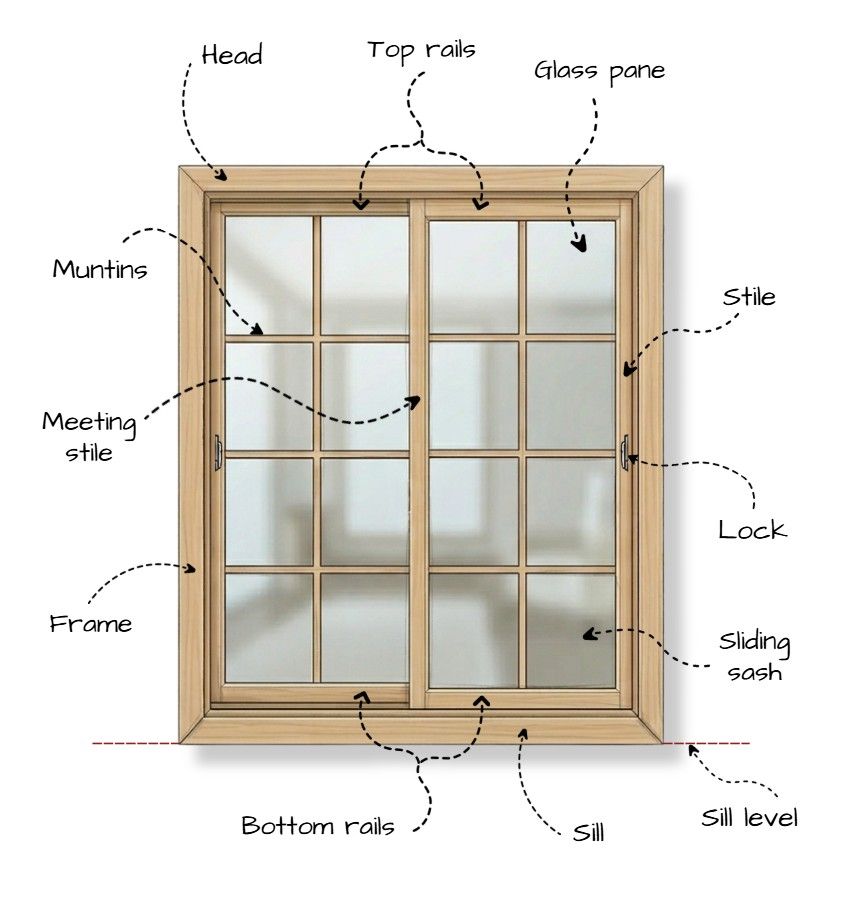
Bottom Rails
The bottom rail is the horizontal member at the base of the sliding sash, forming the lower structural edge that holds the glass pane in place. It plays a critical role in load distribution, transferring the weight of the glass to the rollers or track system while also resisting impact and wear from continuous movement.
Frame
The frame is the fixed outer structure of the window that anchors the entire assembly to the wall opening. It houses the tracks along which the sliding sash moves and provides structural stability, weather resistance, and alignment for all operable components.
Glass Pane
The glass pane is the primary infill material within the sash, responsible for transparency, daylight admission, and visual connectivity. Its thickness, type (single, double, laminated), and treatment directly influence thermal performance, acoustic insulation, and safety.
Head
The head is the top horizontal portion of the window frame, forming the upper boundary of the opening. It supports the structure above the window and often integrates the upper track that guides the sliding movement of the sash.
Lock
The lock is the hardware mechanism used to secure the sliding sash in a closed or partially open position. It ensures safety, prevents unintended movement, and enhances airtightness by holding the sash firmly against the frame.
Meeting Stile
The meeting stile is the vertical edge where two sliding sashes overlap or come into contact when closed. It is crucial for sealing the joint between sashes, preventing air and water infiltration while maintaining alignment during operation.
Muntins
Muntins are slender dividing members within the sash that subdivide the glass pane into smaller sections. While often decorative in modern systems, they can also contribute to structural rigidity and influence the visual rhythm of the façade.
Sill
The sill is the bottom horizontal member of the window frame, forming the base of the opening. It is typically sloped outward to facilitate water drainage and prevent moisture ingress into the interior space.
Sill Level
The sill level refers to the vertical height at which the window sill is positioned from the finished floor level. It is a critical design parameter that affects ergonomics, privacy, ventilation, and the amount of daylight entering the space.
Sliding Sash
The sliding sash is the operable panel of the window that moves horizontally along the track. It consists of a framework of rails and stiles holding the glass pane, and its smooth movement depends on well-designed rollers and track alignment.
Stile
A stile is a vertical member of the sash frame that provides structural support and defines the sides of the panel. It contributes to the rigidity of the sash and often integrates handles or locking mechanisms.
Top Rails
The top rail is the horizontal member at the upper edge of the sliding sash. It helps maintain the shape of the sash, secures the glass pane, and ensures proper engagement with the upper track for stable movement.
Sliding windows may appear simple in operation, but their performance relies on a carefully coordinated system of components working together.
Conclusion
From structural members like rails and stiles to functional elements like locks and tracks, each part plays a specific role in ensuring durability, weather resistance, and user comfort. For architects and designers, a clear understanding of sliding window anatomy allows for better detailing, more informed material choices, and ultimately, more efficient and refined built outcomes.
These were some insights on Components of a Sliding Window. Stay tuned for more information on other significant topics in the AEC industry and follow Kaarwan for such detailed guides!
FAQs
1. What is the most important component in a sliding window?
The frame and sliding sash are the most critical, as they define the structure and movement of the system.
2. Why is the sill sloped in sliding windows?
The slope helps drain rainwater outward, preventing leakage into the interior.
3. What is the function of a meeting stile?
It seals the junction between two sliding panels and ensures proper alignment when closed.
4. How does sill level affect design?
It influences ventilation, daylight entry, and user comfort, especially in residential spaces.
5. Are muntins structural or decorative?
In modern sliding windows, they are primarily decorative but can add minor rigidity depending on design.