Bamboo Architecture: A Sustainable Building Material for India's Future
The Green Revolution of Building Materials
Architectural innovation often emerges from unexpected sources. In the vast landscape of construction materials, bamboo stands as a quiet revolutionary, challenging decades of concrete-dominated building practices. This remarkable grass is more than a simple plant – it represents a sustainable blueprint for India's architectural future, promising to reshape how we conceptualize construction and environmental responsibility.
The story of bamboo in architecture is deeply rooted in traditional wisdom, yet simultaneously points toward a cutting-edge technological future. Unlike conventional building materials that drain natural resources, bamboo offers a regenerative solution that grows rapidly, absorbs carbon, and provides extraordinary structural capabilities. Its potential extends far beyond mere ecological credentials, representing a holistic approach to sustainable development that touches economic, social, and environmental dimensions.
Structural Brilliance: Nature's Architectural Marvel
Bamboo defies traditional expectations of a building material. Scientifically, it possesses mechanical properties that challenge industrial standards, with a tensile strength comparable to mild steel and a flexibility that makes it exceptional in earthquake-prone regions. A single bamboo culm can grow up to 91 centimeters in just 24 hours, making it one of the fastest-growing plants on the planet – a characteristic that immediately sets it apart from slow-regenerating construction materials.
The economic mathematics of bamboo architecture tell an equally compelling story. As India's construction industry approaches the $1 trillion milestone, bamboo emerges as a cost-effective alternative that can dramatically reduce building expenses. Northeastern states like Assam and Manipur have long understood this potential, maintaining rich traditions of bamboo construction that are now attracting attention from modern architectural innovators.
Technological Transformation: From Traditional to Contemporary
Scientific interventions have dramatically expanded bamboo's architectural possibilities. Advanced treatment processes have addressed historical limitations, enhancing the material's durability, fire resistance, and structural integrity. Techniques like borax and boric acid treatment protect against biological degradation, while thermal modification and polymer impregnation improve dimensional stability and moisture resistance.
The carbonization process represents another breakthrough, simultaneously enhancing both aesthetic appeal and functional qualities. These technological innovations transform bamboo from a traditional building material into a sophisticated, modern construction solution that meets rigorous engineering standards.
Global Perspectives: Bamboo Beyond Borders
International architectural projects provide inspiring evidence of bamboo's transformative potential. In Costa Rica, the EARTH University Bamboo Pavilion demonstrates architectural elegance, while Colombia's Guadua Bamboo Bridge showcases unprecedented structural integrity. Vietnam's Bamboo Eco-Resort proves the material's commercial viability, and the Netherlands' Sustainable Housing Project illustrates how tropical building techniques can be adapted to diverse geographical contexts.
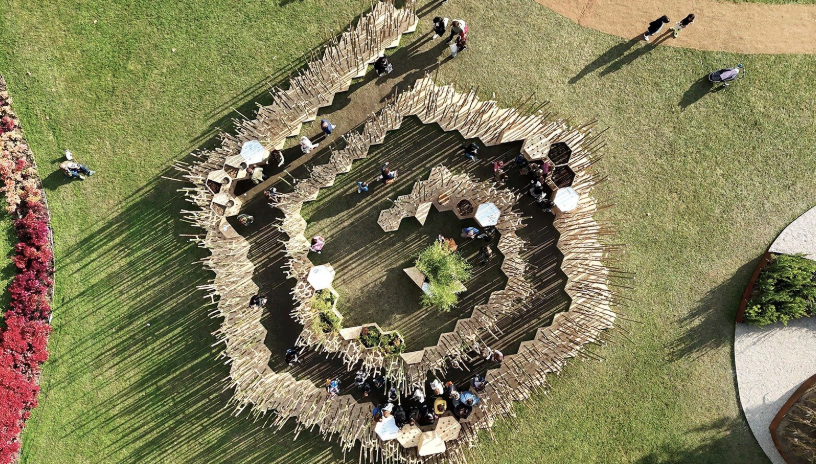
The EARTH University Bamboo Pavilion
These global examples underscore bamboo's universal appeal, revealing a material that transcends cultural and geographical boundaries. They challenge preconceived notions about construction materials and highlight bamboo's potential as a truly global architectural solution.
Sustainable Design: A Holistic Approach
Bamboo architecture represents more than an ecological statement – it embodies a comprehensive approach to responsible construction. When compared against traditional materials, its environmental credentials are remarkable. While concrete produces 0.4-0.5 tons of CO2 per cubic meter and steel generates 0.6-0.7 tons, bamboo achieves a negative carbon footprint, actively absorbing more carbon than its production process generates.
The social and economic implications are equally significant. Bamboo construction creates local employment, supports rural economies, and provides affordable infrastructure solutions. It represents a pathway to sustainable development that simultaneously addresses environmental challenges and socio-economic needs.
Bamboo for the good
Bamboo isn't just a traditional craft material; it's a superhero of sustainable building. Growing in just 3-5 years, this grass is stronger than steel and more flexible than traditional materials. It naturally keeps buildings cool in summer and warm in winter, making it perfect for India's diverse climate.
Environmental benefits? Bamboo absorbs more carbon dioxide than trees and requires minimal water to grow. For a country struggling with deforestation and housing shortages, bamboo offers a lifeline. It's affordable, earthquake-resistant, and can be used everywhere from rural homes to urban skyscrapers.
Challenges remain. Many still see bamboo as a "poor man's material" and building codes haven't caught up with its potential. But innovative architects are changing perceptions, creating stunning structures that prove bamboo isn't just practical – it's beautiful.
Challenges and Future Perspectives
Despite its immense potential, bamboo architecture confronts substantial challenges. Standardization remains limited, and widespread technical education is necessary to overcome traditional construction mindsets. Government initiatives like the National Bamboo Mission are gradually addressing these barriers, while progressive architectural institutions lead experimental designs that showcase the material's remarkable versatility.

National Bamboo Mission
Ongoing research continues to expand bamboo's architectural boundaries. Advanced computational modeling, nanotechnology-enhanced composites, and innovative treatment methodologies promise to unlock even more extraordinary potential in the coming years.
Conclusion: An Architectural Renaissance
Bamboo architecture transcends being merely a trend – it represents a profound paradigm shift in construction philosophy. As India navigates complex urban development challenges, bamboo emerges as a beacon of hope, innovation, and sustainable progress.
Each bamboo structure tells a nuanced story of human creativity, technological brilliance, and ecological responsibility. The future of architecture is not simply about sheltering humanity, but about nurturing our planet and reimagining our relationship with the built environment.
The future of architecture is bright, but are your skills keeping pace? Kaarwan's architecture-specific courses provide you with the knowledge and tools to confidently navigate the AEC industry. Gain valuable insights, master in-demand software, and stand out with designs that impress!
FAQs
1. Why is bamboo considered a sustainable building material?
Answer: Bamboo grows rapidly, absorbs carbon dioxide, and requires minimal resources, making it an eco-friendly alternative to traditional materials like concrete and steel.
2. What are the structural benefits of bamboo?
Answer: Bamboo has high tensile strength, flexibility, and earthquake resistance, making it a durable and versatile material for construction.
3. How is bamboo used in modern architecture?
Answer: Modern architects use treated bamboo for durability and fire resistance, creating structures like pavilions, bridges, and eco-resorts that blend tradition with innovation.
4. What challenges does bamboo architecture face?
Answer: Challenges include limited standardization, outdated building codes, and the perception of bamboo as a "poor man's material," despite its potential.
5. How does bamboo benefit the environment and economy?
Answer: Bamboo absorbs more CO2 than trees, supports rural economies, creates jobs, and provides affordable housing solutions, making it a sustainable and socially impactful material.