

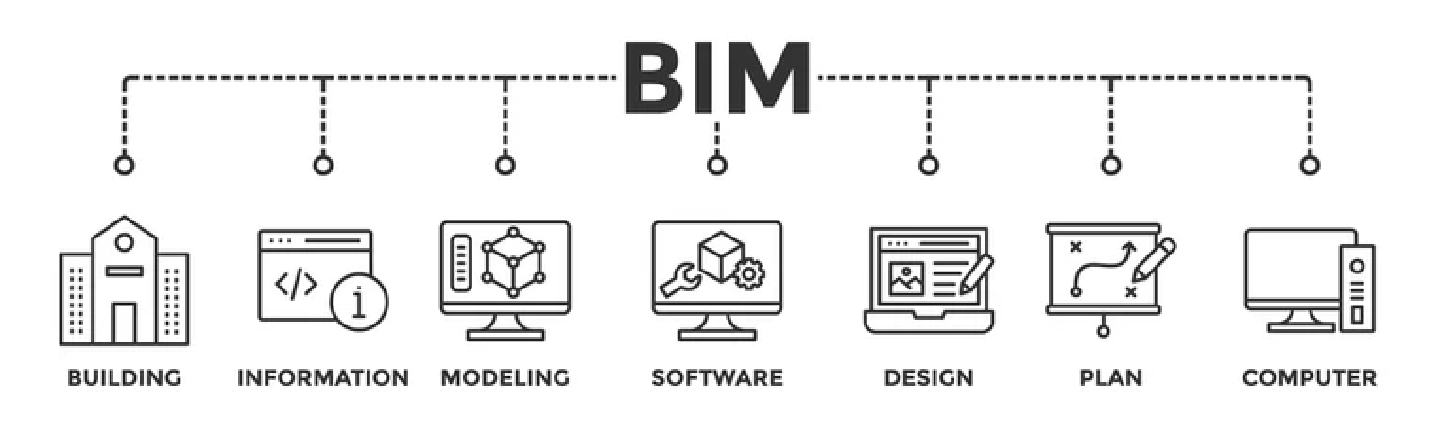
Architecture and construction are no longer just about designing beautiful spaces – they are about orchestrating complex systems. From structural grids and MEP services to sustainability targets and lifecycle management, today’s projects involve layers of interconnected information. This is where a particular mindset becomes critical: systems thinking.
For students and young professionals wondering about career paths in the AEC industry, the question is worth asking: “Am I a systems thinker?” If the answer leans towards yes, then a career in Building Information Modelling (BIM) may be your perfect fit.
What Is Systems Thinking in Architecture?
Systems thinking is the ability to see the bigger picture – to understand how different elements within a project relate to each other rather than viewing them in isolation.
In the built environment, this means:
- Recognising how structure, services, materials, and design decisions interact.
- Understanding that changing one element affects many others.
- Anticipating consequences across the project lifecycle, from concept to demolition.
For example, moving a single column may alter structural stability, MEP layouts, costs, and even the aesthetics of a space. A systems thinker anticipates this chain reaction instead of treating it as a surprise later in the project.
How BIM Relates to Systems Thinking
Building Information Modelling (BIM) is essentially systems thinking in digital form. It replaces isolated drawings with a parametric, data-rich model that integrates architecture, structure, and services in one place.
Key parallels include:
- Interconnection: Every wall, slab, or duct is connected to others. Editing one updates the system automatically.
- Multidisciplinary Coordination: Architects, engineers, and contractors all use the same model.
- Feedback Loops: Clash detection, simulations, and schedules ensure real-time problem solving.
- Lifecycle View: BIM tracks information not just for design but also construction, operation, and maintenance.
In short, BIM is the toolset that enables systems thinkers to thrive in architecture and construction.
Signs You Might Be a Systems Thinker
Wondering if BIM is your career path? Here are a few indicators that you naturally think in systems:
- You Ask “What Happens If…?” Instead of stopping at the design decision, you are curious about its implications.
- You Enjoy Problem-Solving Across Disciplines You like connecting the dots between architecture, engineering, and technology.
- You Think in Processes, Not Just Products You are fascinated by how things come together – the workflows, the sequences, the logistics.
- You Value Collaboration You thrive when working in teams, understanding that no discipline works in isolation.
- You See Buildings as Living Systems You view projects not as static objects but as evolving ecosystems that respond to time, climate, and people.
If these sound familiar, then BIM may be more than just a skill for you – it could be the career direction that matches your natural mindset.
Careers in BIM: More Than Just Modelling
For students, BIM might sound like just another software requirement, often associated with Revit or ArchiCAD. But in practice, BIM opens doors to specialised career roles far beyond modelling:
- BIM Coordinator: Oversees project models, ensuring consistency and integration across teams.
- BIM Manager: Develops workflows, sets standards, and manages multi-disciplinary coordination.
- BIM Consultant: Advises firms on adopting BIM strategies and aligning with industry standards.
- Digital Twin Specialist: Works on advanced simulations and data-driven building management.
- Integrated Project Delivery Specialist: Focuses on collaborative workflows and technology-driven construction methods.
In other words, BIM is not just a tool – it is an entire career ecosystem. For systems thinkers, this is a natural fit.
Why BIM Careers Are Growing
There is a global push towards digital transformation in the construction industry. Governments, especially in Europe, the UK, and Asia, have made BIM mandatory for public projects. This means demand for BIM professionals is growing rapidly.
- Industry Demand: Firms need skilled BIM experts to manage large-scale projects.
- Global Opportunities: BIM standards are international, making your skills transferable worldwide.
- Future-Proofing: With the rise of digital twins, smart cities, and AI-integrated design, BIM careers are positioned at the cutting edge of innovation.
For students unsure about their career path in architecture, BIM offers both stability and innovation – a rare combination.
The Student’s Advantage: Learning BIM Early
Why is now the best time to explore BIM as a career?
- Head Start: Students who learn BIM early graduate with an edge in employability.
- Holistic Understanding: BIM exposes you to structure, services, materials, and construction, giving you a broader education.
- Adaptability: Early training makes it easier to move into related fields like project management, sustainability, or parametric design.
- Portfolio Value: Employers look for candidates who can add value from day one – BIM proficiency signals exactly that.
Learning BIM in design school is not just about mastering software; it’s about training your brain to think systematically.
Challenges in the BIM Career Path
Like any career, BIM comes with challenges:
- Technical Depth: Mastering parametric modelling, data management, and interoperability takes time.
- Collaboration Pressure: Coordinating multiple disciplines requires communication skills as much as software knowledge.
- Continuous Learning: BIM evolves constantly, with new tools and standards emerging regularly.
But for a systems thinker, these challenges are opportunities to grow and thrive.
Conclusion: Systems Thinking Meets Career Opportunity
So, are you a systems thinker? Do you find yourself naturally curious about how decisions ripple across an entire project? Do you enjoy connecting architecture, engineering, and technology into one integrated vision?
If yes, then BIM is not just another tool for you to learn – it may be your true career fit.
BIM embodies systems thinking. It offers a career path where problem-solving, collaboration, and digital innovation come together. For students, mastering BIM is a chance to align personal strengths with industry demand – creating opportunities not just to catch up with technology, but to lead its future.
👉 At Kaarwan, we believe BIM careers are for those who see architecture not as isolated parts but as interconnected systems. If that resonates with you, perhaps the answer is already clear: BIM is where you belong.


.png)