
Choose the right Wood in your next Architectural Project:
In contemporary architecture and interior design, wood-based materials are prized for their warmth, versatility, and structural adaptability. But with so many engineered wood options available, choosing the right one for a specific application can be confusing. Each material—be it plywood, MDF, or blockboard—has its own construction logic, performance strength, and best-fit context. This guide breaks down five commonly used engineered wood types by their composition, strength, and architectural applications, helping you make informed design decisions whether you're specifying for furniture, partitions, paneling, or structural support.
1. Plywood:
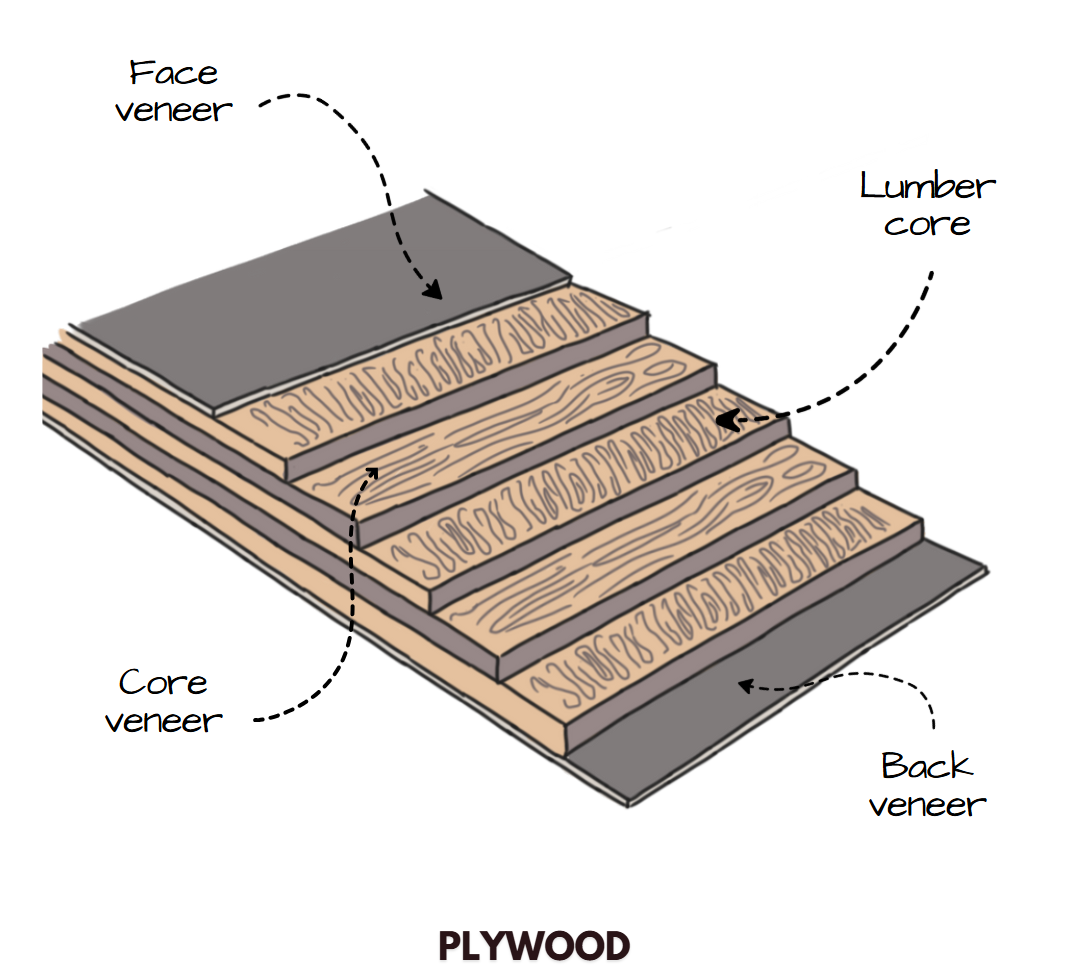
Image Credits: Shivani Chougula @Kaarwan
Plywood is a multi-layered engineered wood made by bonding thin sheets of wood—called veneers—together with adhesive under heat and pressure. Its typical composition includes a face veneer (the top visible layer), core veneers (cross-grain middle layers), a lumber or blockboard core in premium grades, and a back veneer for balance. The key to plywood’s strength lies in its cross-laminated structure, which distributes loads evenly and minimizes warping. It is known for its high dimensional stability and is often used for cabinetry, wall paneling, doors, and flooring substructures.
Plywood comes in several grades—BWR (Boiling Water Resistant), BWP (Boiling Waterproof), MR (Moisture Resistant)—each suited to a different environment. For example, BWP plywood is ideal for kitchen shutters or bathroom furniture, while MR plywood works well for dry areas like bedrooms or living spaces. It can be veneered, laminated, or even painted, making it both aesthetic and functional.
2. Particle Board:
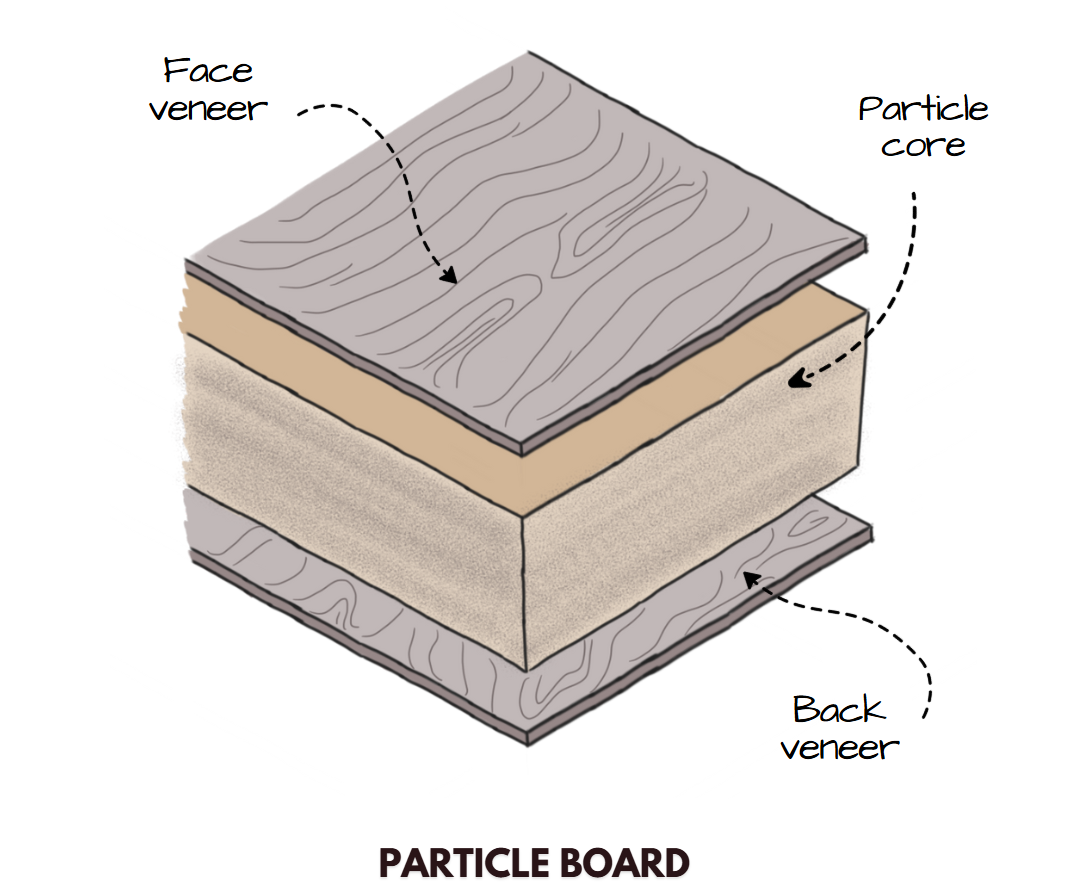
Image Credits: Shivani Chougula @Kaarwan
Particle board is a budget-friendly engineered wood made by compressing wood chips, sawdust, and resin into a dense sheet. A typical panel has a core of compacted particles, with face and back veneers that enhance surface finish and durability. While less strong than plywood, particle board is ideal for non-load-bearing furniture, especially in dry indoor environments. It is widely used in flat-pack furniture, wardrobes, and wall-mounted units. Because it is lightweight and smooth, it takes on laminates and veneers well.
However, it is prone to swelling if exposed to moisture, and should be avoided in kitchens, bathrooms, or near water-prone zones. Best used in budget interiors, short-term installations, or dry climate zones, particle board offers affordability with decent surface finish—provided its edges are sealed and water exposure is minimized.
3. Medium Density Fiberboard (MDF):
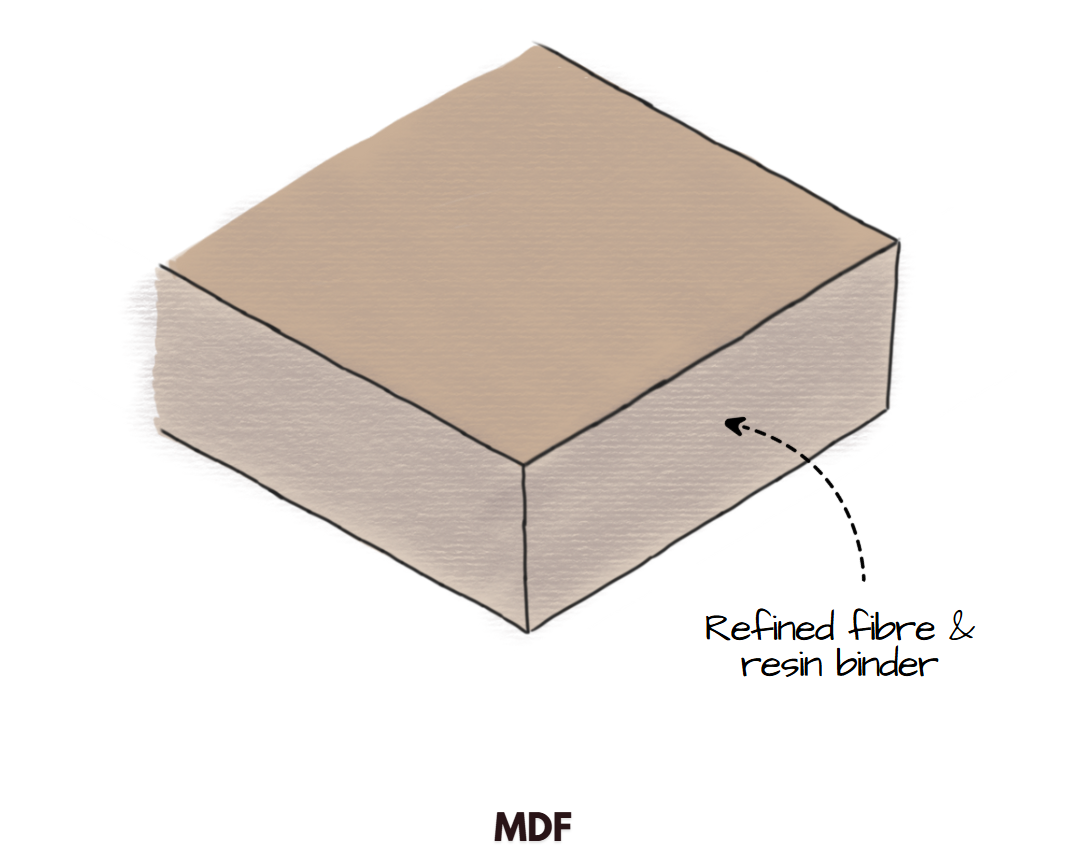
Image Credits: Shivani Chougula @Kaarwan
MDF is made by breaking down softwood fibers into fine particles and then bonding them under high pressure with synthetic resin. It is completely homogeneous in composition, which means there are no visible grains, knots, or layers—resulting in an ultra-smooth finish ideal for painting and intricate CNC-cut detailing. Compared to particle board, MDF is denser, heavier, and slightly stronger, though still less durable than plywood or blockboard under load. MDF is commonly used for wall paneling, decorative moldings, cabinetry shutters, and backing panels. It’s perfect for laser-cut jaalis, curved designs, and smooth paint finishes.
However, its moisture resistance is poor, unless you use Moisture-Resistant MDF (green MDF). It also needs edge banding for clean finish and to prevent chipping. MDF is best suited for aesthetic interior features, especially where structural strength isn’t the priority but finish quality is.
4. Wood Wool:
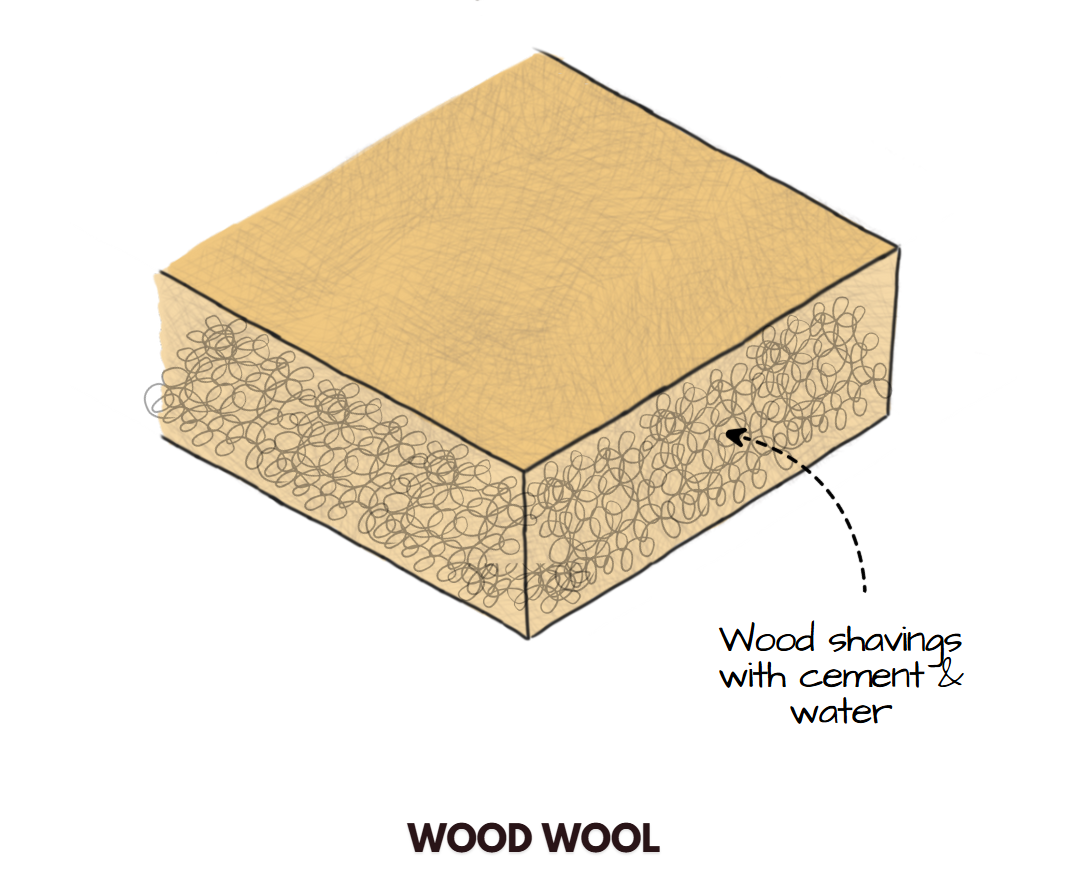
Image Credits: Shivani Chougula @Kaarwan
Wood wool board, also known as wood wool cement board, is an eco-friendly, sound-absorbing panel made by combining long wood fibers (wool-like strands) with cement or magnesite as a binding agent. The result is a rigid, textured board that offers excellent acoustic performance, moderate insulation, and natural fire resistance. It is widely used in ceilings, wall linings, auditoriums, classrooms, and eco-build projects. Its surface may appear rough and raw, but this is part of its appeal—aesthetic minimalism meets sustainability.
While not as structurally strong as plywood or MDF, it performs exceptionally well in acoustic treatment, thermal regulation, and breathable interiors. These boards can be left exposed, painted, or covered with acoustic fabric depending on the design intent. If you're looking for material honesty, texture, and performance, wood wool is an underrated gem.
5. Blockboard:
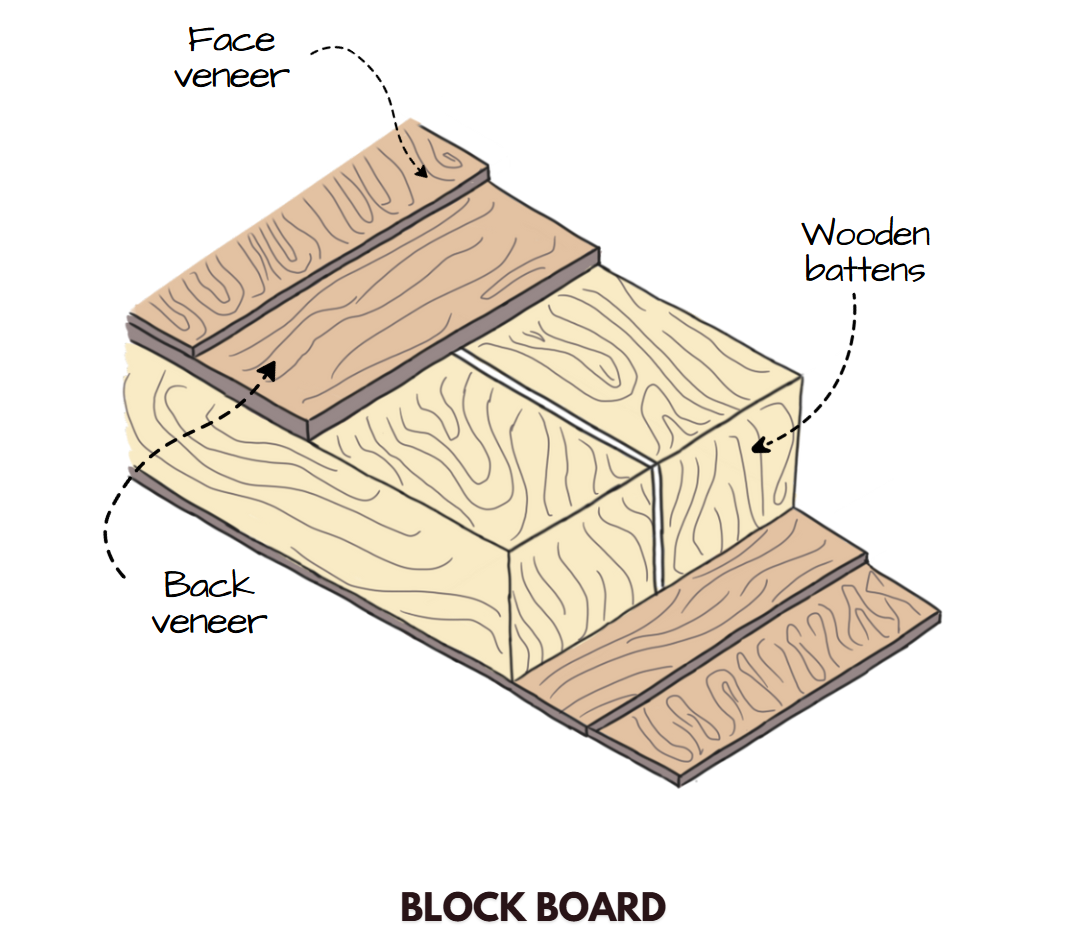
Image Credits: Shivani Chougula @Kaarwan
Blockboard is made by placing a core of solid wooden battens (usually softwood) between two layers of face and back veneers, and bonding them under pressure. This layered construction gives blockboard exceptional stiffness, screw-holding capacity, and resistance to warping, especially over large spans. It’s the preferred choice for doors, long wall panels, partition frames, and table tops—anywhere that needs lengthwise stability without sagging.
Compared to plywood, blockboard is lighter in weight due to its softwood core, but stronger than MDF and particle board in load-bearing performance. It can be finished with laminates or veneers and is easy to machine, screw, and install, making it very site-friendly. When durability, straightness, and strength are priorities—especially for horizontal spans or tall panels—blockboard is a reliable go-to.
Final Thoughts:
Each engineered wood type comes with its own strengths, limitations, and ideal use cases. While plywood offers all-round performance, MDF gives a smooth paintable finish, particle board is economical, wood wool brings acoustic and eco benefits, and blockboard excels in spanning long distances. By understanding their construction and behavior, architects and designers can make smarter material decisions that match the project's function, climate, budget, and aesthetics. Whether you're designing furniture, paneling, partitions, or ceiling treatments, the right wood type is the one that balances performance with purpose.