


Across the world, the construction industry is undergoing a transformation — moving from a linear “take, make, waste” model towards a circular economy in construction, where materials are reused, repurposed, and reimagined. In India, this shift is not just a trend but a national mission, strengthened by policies and frameworks that promote sustainable building materials and responsible design practices.
Understanding the Circular Economy in Construction
In a circular model, buildings are no longer seen as end products but as material banks — repositories of resources that can be reused across future projects. This idea challenges traditional construction, where demolition often leads to waste and carbon emissions.
Instead, circular design focuses on:
- Extending material life cycles
- Designing for disassembly
- Using renewable and recyclable materials
- Digitally tracking materials through BIM and data-driven tools
By adopting such approaches, architects, engineers, and builders can significantly reduce the environmental impact of construction while achieving long-term economic savings.
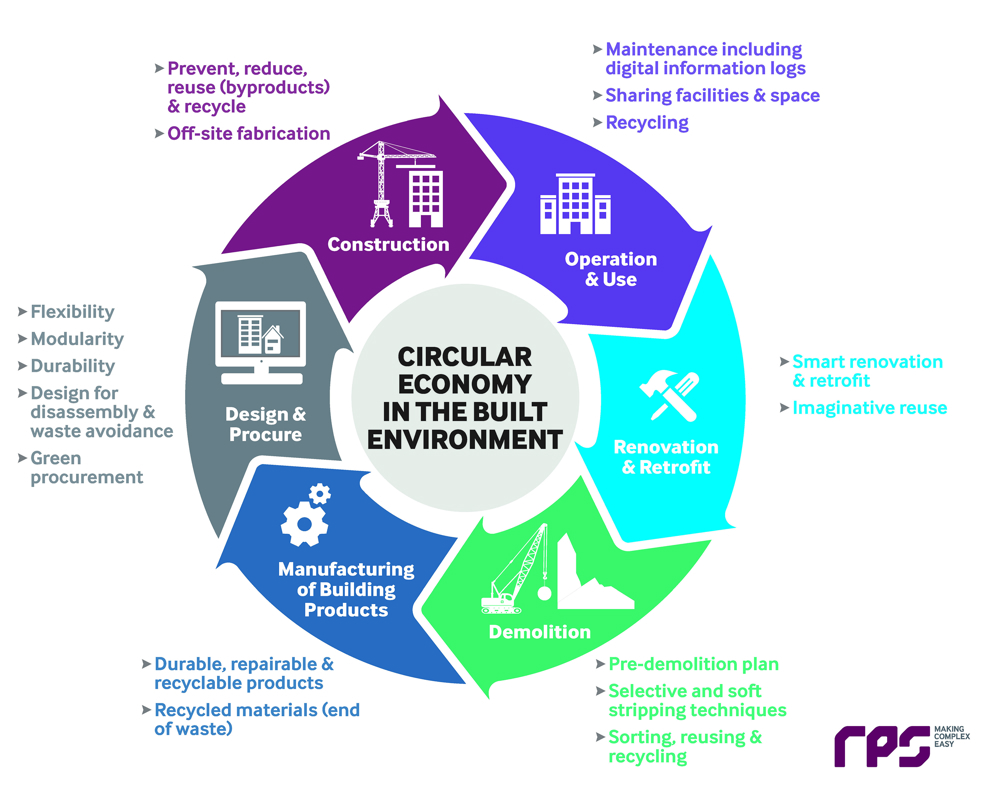
Image Source: RPS Group
Circular Economy Policies in India: Setting the Framework
India’s policies now reflect a strong commitment to this global transition. Key initiatives include:
- Construction and Demolition Waste Management Rules (2016): Encourages recycling of debris, mandates proper segregation, and promotes the use of recycled aggregates in non-structural works.
- GIZ India’s Circular Economy Initiative (2022): Focuses on mainstreaming circular economy principles in urban infrastructure, material reuse, and public procurement frameworks.
- NITI Aayog’s “Strategy for Circular Economy in Construction Sector” (2023): Recommends data-driven material passports, BIM-based tracking systems, and incentives for eco-labelled materials.
- Smart Cities Mission & AMRUT 2.0: Emphasise sustainable urban development, prioritising low-impact materials and decentralised waste management.
Through these measures, circular economy policies in India are gradually aligning with global standards, making sustainability a core business strategy rather than a voluntary choice.
How Circular Policies Shape Material Choices
The influence of these policies is visible across the AECO industry. Architects and engineers are increasingly experimenting with:
- Fly ash bricks and geopolymer concrete
- Bamboo and rammed earth for structural applications
- Recycled plastic composites and upcycled timber
- Low-carbon cement alternatives
Digital workflows such as BIM (Building Information Modelling) and parametric design tools further accelerate this transition. They allow professionals to simulate performance, track embodied carbon, and optimise resource use long before construction begins.
Kaarwan’s BIM for Civil Engineers and BIM for Architects courses, for instance, train professionals to model sustainable materials, track waste, and analyse life-cycle data — helping teams comply with circular construction goals.
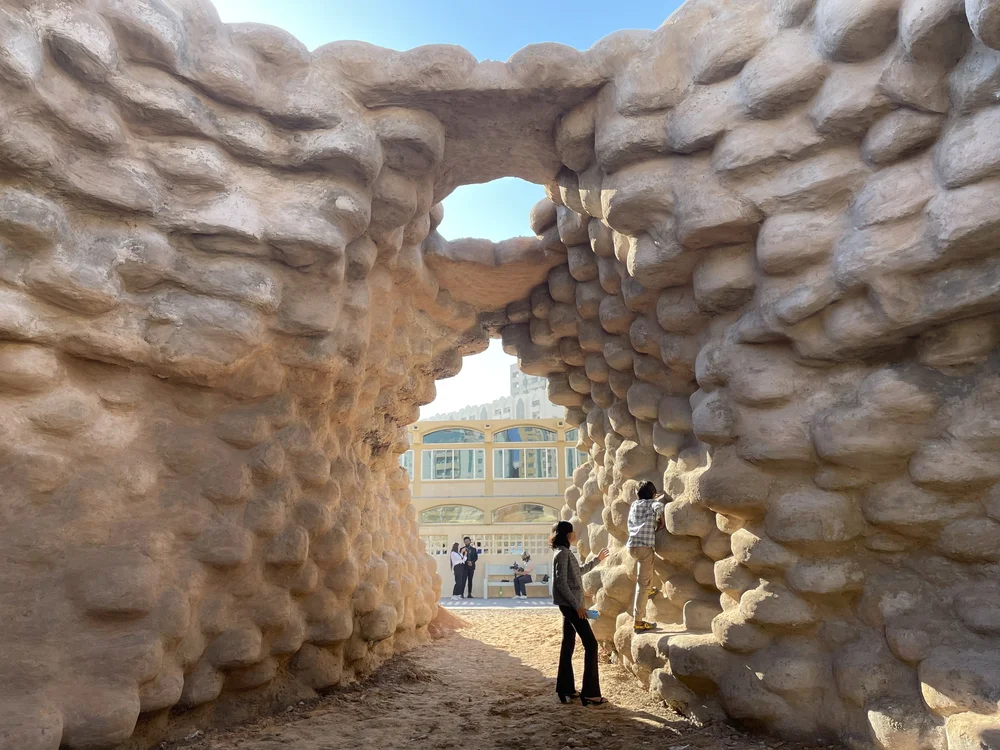
Image Source: Wallmakers
Adaptive Reuse and Material Tracking
Several Indian firms are already implementing these ideas:
- Ant Studio (New Delhi) reuses terracotta modules for natural cooling and adaptive facades.
- Made in Earth (Bengaluru) integrates reclaimed wood and compressed earth blocks to design low-impact housing.
- Wallmakers (Kerala) use mud, debris, and metal waste to craft resilient, aesthetic forms. Each of these examples proves that sustainability and beauty can coexist — and that circular design is both an ecological and creative opportunity.
Challenges and Opportunities Ahead
Despite progress, mainstream adoption remains slow. Challenges include:
- Lack of clear material reuse standards
- Limited recycling infrastructure
- Data management and traceability gaps
However, with the increasing integration of digital twins, material passports, and policy incentives, India’s AECO sector stands at the edge of a circular revolution — where sustainability is measured, not just imagined.
From Awareness to Action
The circular economy in construction is not merely about reducing waste; it’s about rethinking how we design, build, and maintain our built environment. Architects, civil engineers, and planners today have the tools — from BIM to computational design — to make every decision traceable, efficient, and responsible.
Till now, Kaarwan has empowered over 44,600 AEC professionals to master emerging workflows like BIM and Computational Design, helping them understand sustainability not just as a value, but as a measurable skill. Through short, hands-on masterclasses and affordable certification courses, learners gain clarity on how to integrate sustainable materials, optimise resources, and align with India’s evolving circular economy goals.
FAQs:
What is a circular economy in construction?
It’s a model where materials are reused, recycled, and designed for disassembly to minimise waste and carbon emissions.
Why are circular economy policies in India important?
They create frameworks that encourage material reuse, eco-friendly design, and digital traceability — promoting sustainable growth.
What are sustainable building materials?
Materials that reduce environmental impact, such as fly ash bricks, bamboo, and recycled concrete.
How does BIM help in circular construction?
BIM enables life-cycle tracking, material optimisation, and data sharing — key elements of circular workflows.
How can professionals learn to apply these principles?
Through Kaarwan’s BIM and sustainability-focused courses, professionals can upskill in tools that align with circular design and policy standards.




.png)