

What Are Communal Cultural Spaces?
In architecture, communal cultural spaces are public areas designed for collective participation in art, performance, learning, or cultural expression. Unlike purely recreational communal spaces, these are rooted in heritage, creativity, and identity.
Examples include:
- Cultural centres
- Folk art institutions
- Performing arts theatres
- Museums and galleries with public access
- Open-air theatres and community plazas
Their design reflects both practical needs (like performance halls) and symbolic meanings (like representing a region’s heritage).
Why Are Cultural Communal Spaces Important?
- Preservation of Heritage: They safeguard folk traditions, languages, and crafts.
- Community Engagement: Locals participate in festivals, performances, and exhibitions.
- Tourism & Economy: Attracts visitors, boosting cultural tourism.
- Education: Serves as living classrooms for students of art, architecture, and culture.
- Identity Building: Creates shared pride and belonging within a community.
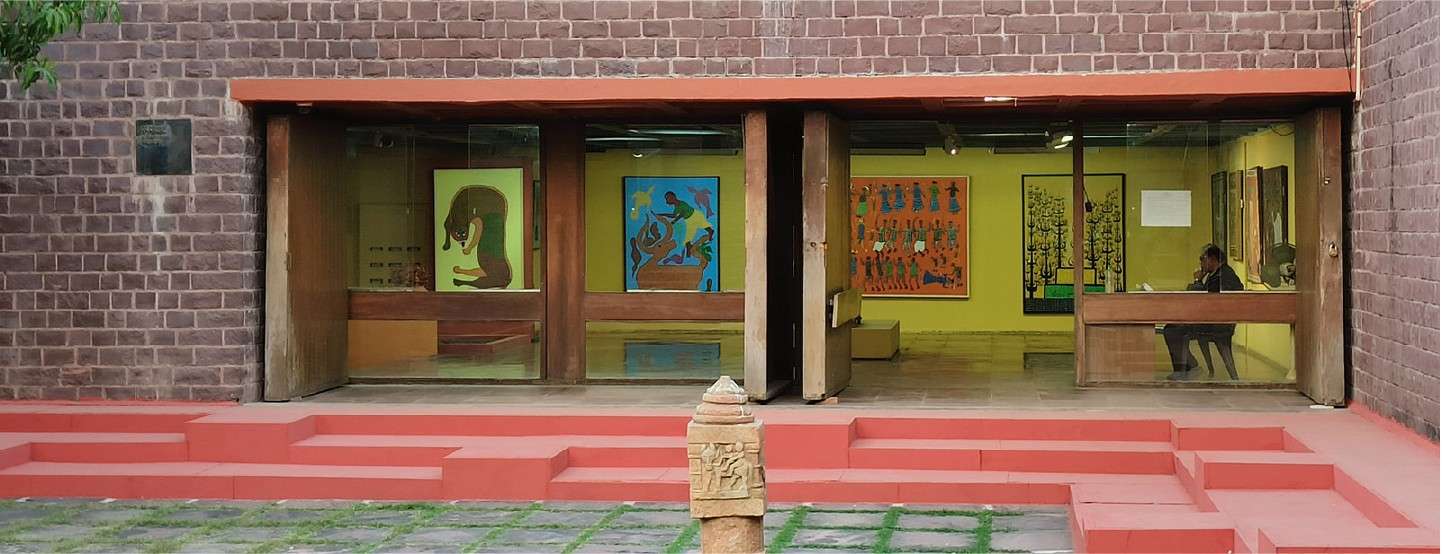
1. Jawahar Kala Kendra, Jaipur
Architect: Charles Correa Year: 1992
Design Concept
Jawahar Kala Kendra (JKK) is a celebrated cultural hub in Jaipur, Rajasthan. Correa’s design is deeply inspired by the ancient Vastu Purusha Mandala, a geometric grid symbolising cosmic order. The building is organised around nine squares, with each square dedicated to different cultural functions.
Key Features
- Performance Spaces: Open-air theatre, auditoriums, and amphitheatres for folk and classical arts.
- Museums & Galleries: Spaces to showcase Rajasthani crafts, textiles, and paintings.
- Courtyards: Semi-open communal courtyards that encourage gathering and informal exchange.
- Cultural Symbolism: The architecture reflects Jaipur’s history while accommodating modern cultural needs.
Lessons from JKK
- A communal cultural space must be both functional and symbolic.
- Flexible design (indoor + outdoor venues) makes it adaptable for diverse events.
- Architecture can itself become a storytelling tool that binds community identity.
2. Kala Academy, Goa
Architect: Charles Correa Year: 1973
Design Concept
Located along the Mandovi River in Panaji, the Kala Academy was envisioned as a space for performing arts and community life. Unlike JKK, its design leaned more towards openness, responding to Goa’s coastal climate and social vibrancy.
Key Features
- Amphitheatre Facing the River: A dramatic communal space that merges performance with nature.
- Indoor Auditoriums: Equipped for theatre, music, and dance performances.
- Public Promenades: Open corridors and shaded walkways invite casual visitors as much as performers.
- Integration with Landscape: The academy blurs the line between built form and riverside environment.
Lessons from Kala Academy
- Communal cultural spaces thrive when they are open, inviting, and part of daily life.
- Designing for climate responsiveness ensures comfort and longevity.
- Public art spaces must balance professional performance needs with community access.
3. National Centre for the Performing Arts (NCPA), Mumbai
Architects: Philip Johnson and Paul Rudolph (initial concept), later developed by local architects Year: Established in 1969
Design Concept
The NCPA in Mumbai is regarded as India’s first multi-venue performing arts complex. Located at Nariman Point, it occupies a prime location on the city’s waterfront, symbolising Mumbai’s ambition as a cultural capital. The centre was envisioned as a national stage for Indian and international performances, while still remaining accessible to the public.
Key Features
- Multiple Performance Venues: Jamshed Bhabha Theatre – a 1,000-seat proscenium theatre for operas, ballets, and large productions. Tata Theatre – designed with excellent acoustics, ideal for Indian classical music and Western chamber music. Experimental Theatre – a flexible black-box space for experimental and contemporary performances. Open-air Theatre – an intimate outdoor space linking art with the Mumbai skyline.
- Jamshed Bhabha Theatre – a 1,000-seat proscenium theatre for operas, ballets, and large productions.
- Tata Theatre – designed with excellent acoustics, ideal for Indian classical music and Western chamber music.
- Experimental Theatre – a flexible black-box space for experimental and contemporary performances.
- Open-air Theatre – an intimate outdoor space linking art with the Mumbai skyline.
- Rehearsal & Educational Spaces: Studios, libraries, and research facilities encourage not just performances but training.
- Public Access: Wide foyers, cafes, and exhibition spaces allow citizens to engage beyond ticketed shows.
Lessons from NCPA
- A cultural communal space can serve both elite performances and community participation.
- Acoustic design and spatial flexibility are central to performance architecture.
- Strategic urban placement (on Mumbai’s seafront) reinforces its identity as a national cultural landmark.
4. Bharat Bhavan, Bhopal
Architect: Charles Correa Year: 1982
Design Concept
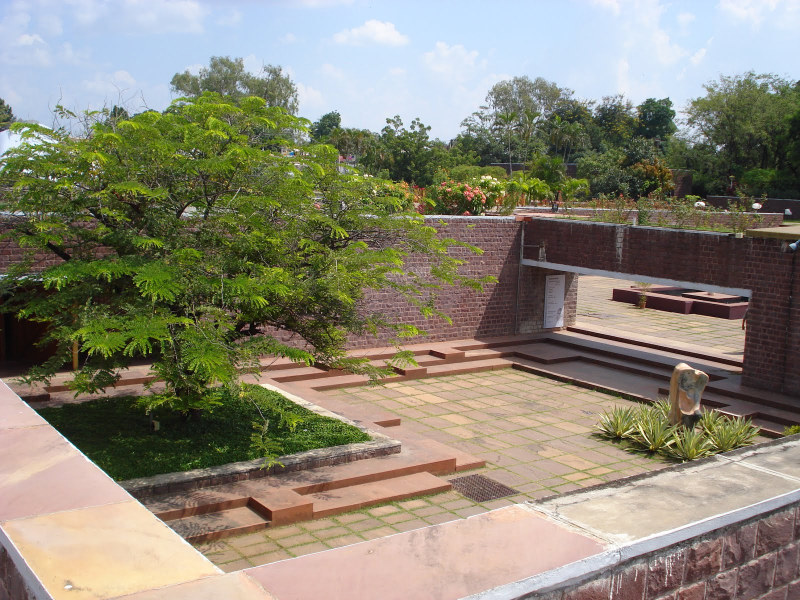
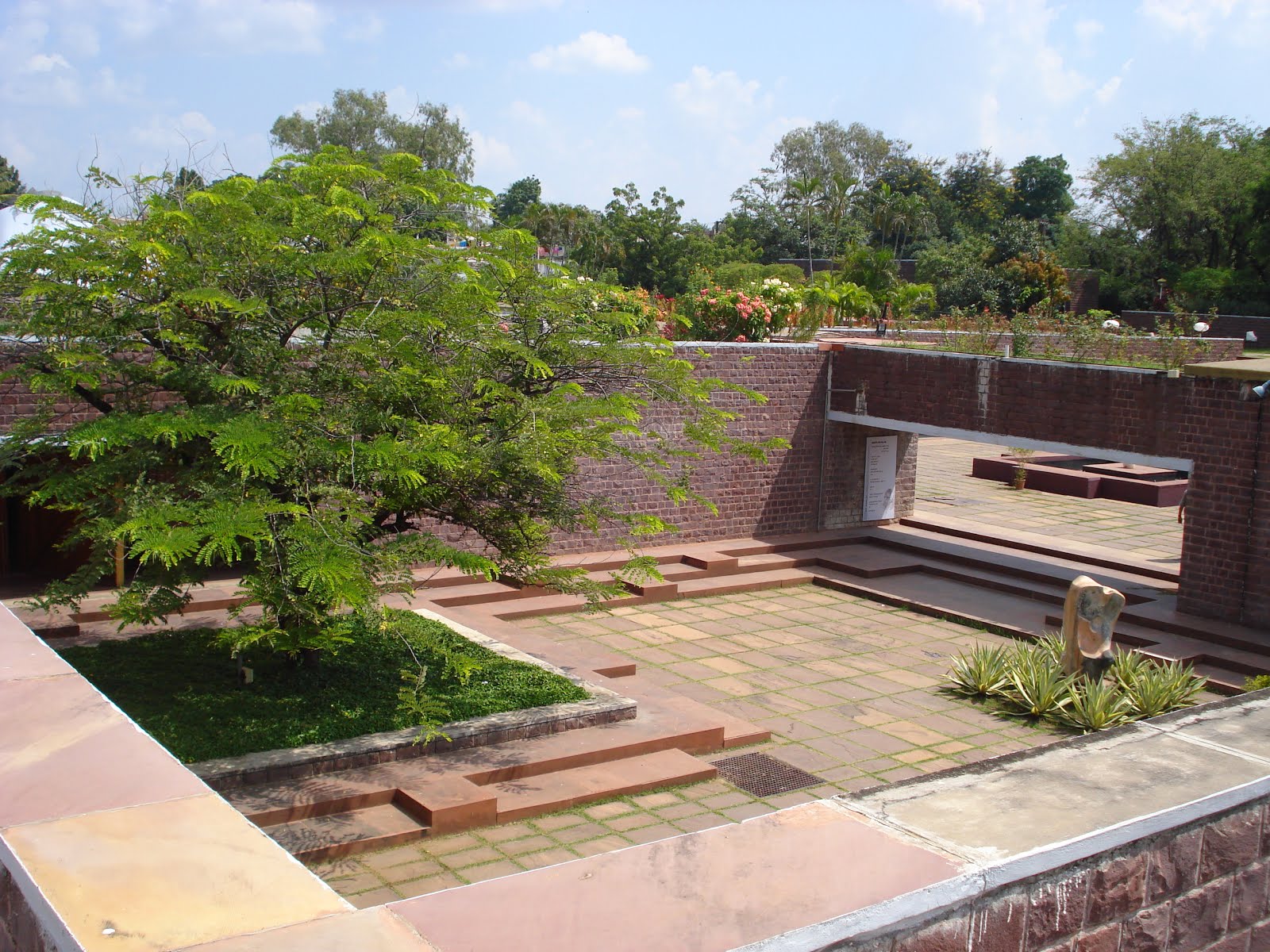
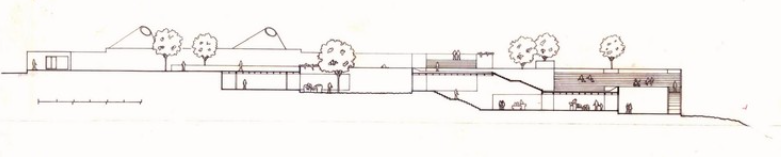
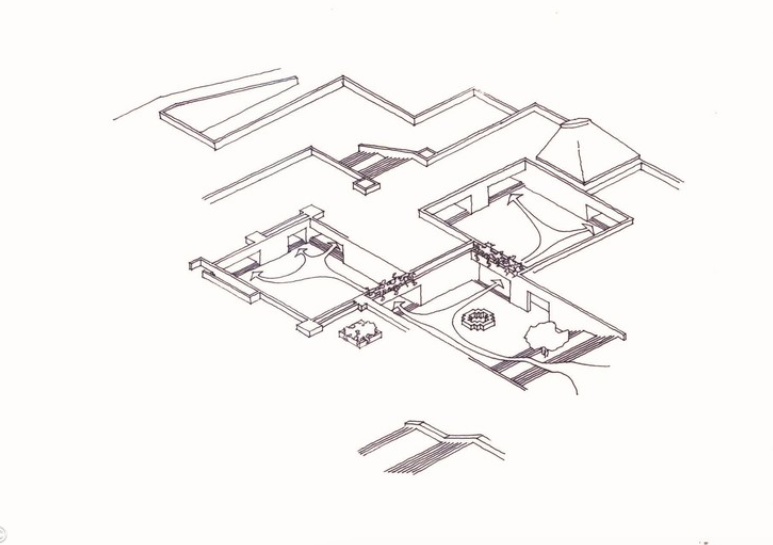
Bharat Bhavan is a multi-arts complex in Bhopal that integrates fine arts, performing arts, and folk traditions under one roof. Correa’s design responds to the site’s natural slope leading to the Upper Lake, using terraced gardens and sunken courtyards to create a seamless connection between built form and landscape.
Key Features
- Layered Terraces: The building steps down towards the lake, with each level accommodating different functions – museums, workshops, theatres.
- Courtyards: Semi-open courtyards act as gathering areas for informal discussions, performances, and community interaction.
- Diverse Cultural Facilities: Museum of tribal and folk art Art galleries and studios Amphitheatre and indoor auditorium Library and workshops
- Museum of tribal and folk art
- Art galleries and studios
- Amphitheatre and indoor auditorium
- Library and workshops
- Blending Tradition with Modernity: Use of exposed brick, concrete, and courtyards recalls vernacular Indian design while serving contemporary functions.
Lessons from Bharat Bhavan
- Topography can guide design – the terraced structure responds organically to its lakeside slope.
- Cultural communal spaces thrive when they integrate multiple art forms under one roof.
- The openness of design ensures that the space belongs not only to artists but also to the local public.
5. Dilli Haat, New Delhi
Architects: Pradeep Sachdeva and team (for Delhi Tourism & NDMC) Year: Opened in 1994
Design Concept
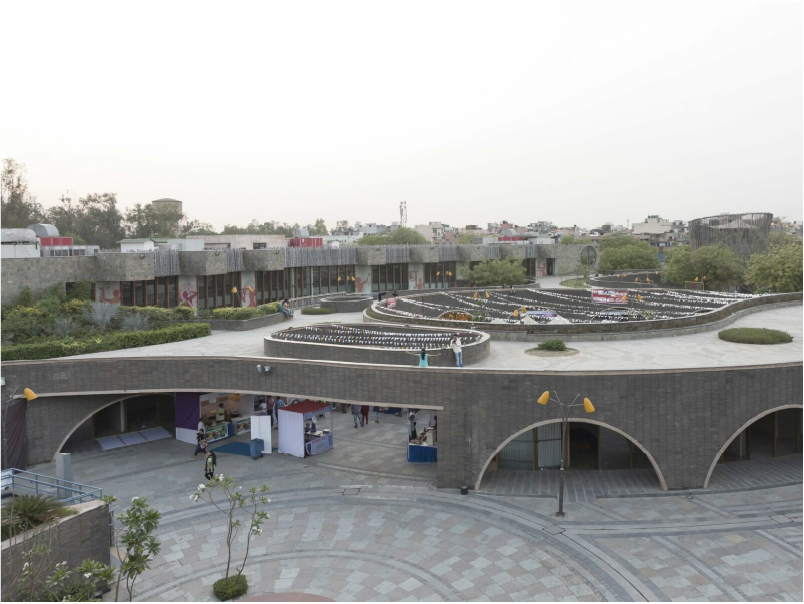
Dilli Haat was conceptualised as an urban marketplace for crafts and folk culture, offering a permanent, dignified space for artisans from across India. Unlike conventional exhibition halls, it recreates the atmosphere of a traditional Indian village haat (market), while being embedded in the heart of the city.
Key Features
- Marketplace Layout: Dozens of small stalls, each designed in regional styles, showcase handicrafts and textiles.
- Performance Areas: Open-air stages for folk dance, music, and theatre.
- Food Plazas: Stalls representing cuisines from different states, turning the space into a culinary communal hub.
- Pedestrian-Friendly Design: Pathways, shaded courtyards, and seating encourage slow exploration and gathering.
- Affordability & Accessibility: Entry fees are kept low, ensuring accessibility to both locals and tourists.
Lessons from Dilli Haat
- Architecture can support cultural livelihoods by providing dignified platforms for artisans.
- Blending marketplace, performance, and leisure makes the space truly multi-use and community-driven.
- A successful cultural communal space is not static – Dilli Haat’s exhibitions change frequently, keeping it dynamic.
Common Threads in Designing Cultural Communal Spaces
From these case studies, a few consistent design principles emerge:
- Integration with Context: Whether it’s the Jaipur grid, Goa’s riverside, or Delhi’s craft traditions, each centre reflects its location’s identity.
- Indoor + Outdoor Flexibility: Successful communal spaces provide both structured auditoriums and open courtyards.
- Accessibility to All: They are designed to welcome artists, tourists, and locals equally.
- Symbolism in Architecture: Geometry, form, and materiality often carry cultural meaning.
- Community Ownership: These spaces succeed because they feel like they belong to the people, not just institutions.
Challenges in Cultural Communal Spaces
- Maintenance: Large cultural centres require ongoing investment to remain active.
- Relevance: Designs must evolve with contemporary needs while preserving heritage.
- Accessibility: Ensuring spaces are inclusive to marginalised artists and communities.
Conclusion
Communal cultural spaces like Jawahar Kala Kendra and Kala Academy are more than architectural landmarks – they are living institutions. They nurture art, bring communities together, and ensure traditions evolve rather than fade.
For students and professionals, these case studies highlight how architecture can shape culture and identity through thoughtful design. Whether inspired by ancient geometry, riverside landscapes, or local crafts, communal cultural spaces remain at the heart of India’s urban and social life.




.png)