

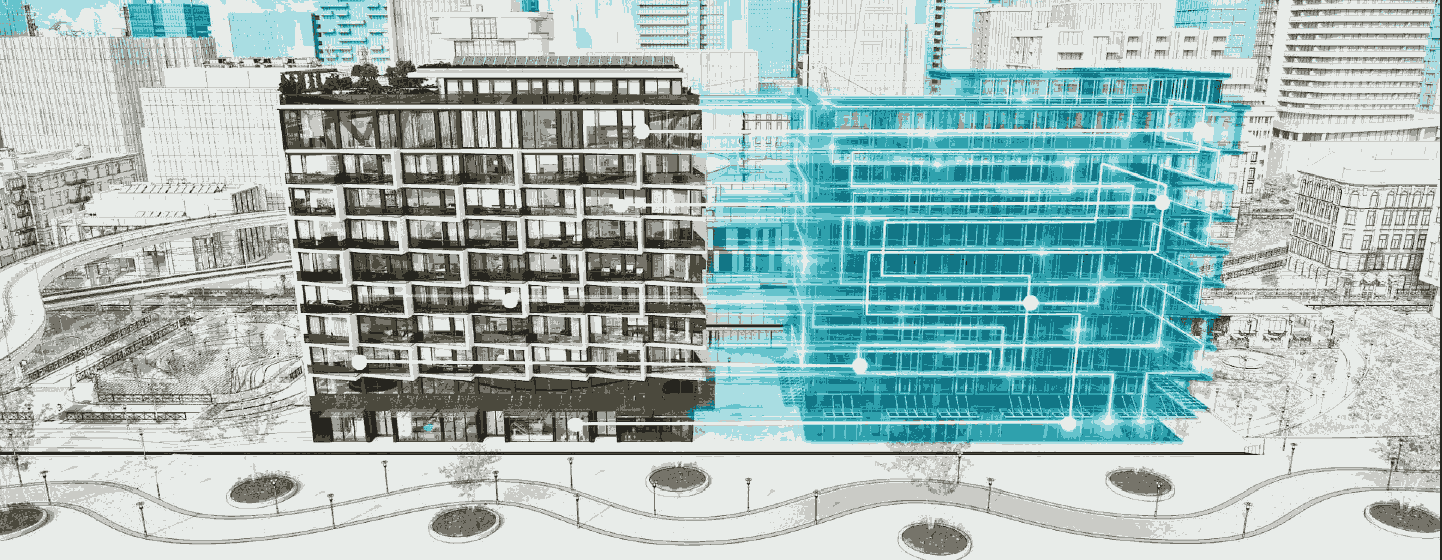
The Architecture, Engineering, Construction and Operation (AECO) industry is not just walking towards a digital future; it is living in it. In the year 2026, digital twins have moved beyond foundational innovation and entered mainstream practice. The global AECO market is valued at USD 220.69 billion and is growing at a CAGR of 5.08%, reaching USD 344.75 billion by 2035. Usage of digital twins and AI tools for design-phase simulation has increased by 45% since 2022.
These dynamic, data-connected 3D models don’t just represent a structure visually, they mirror real-time conditions, performance metrics and future behaviour through IoT sensors, BIM integration, AI analytics and now Agentic AI. The coming of BIM 6.0 has frozen this shift, and has professed the starting point of architecture’s digital future. Buildings are no longer going to be designed and handed over. They are continuously managed as living data assets throughout their complete lifecycle.
Keywords & Concepts That Matter
Here are a couple of top searches with a broader landscape:
- BIM 6.0 - The incoming evolution of BIM, integrating real-time IoT and automating data into a living ecosystem
- Digital Twin basics - The dynamic linkage between virtual models and physical assets
- Lifecycle applications - Design, build, operate and decommission with data-linked twins
- Agentic AI - Autonomous decision-making workflows embedded with digital twins
- Spatial Computing & LiDAR - Immersive visualisation and democratised reality capture for practitioners
- ESG Compliance - Utilising digital twins to meet sustainability and governance reporting standards
- Integration challenges - Data management, security interoperability, BIM/ISO compliance
- PropTech convergence - The lessening gap between construction tech and property technology
- Industry case studies - From Singapore’s national twin to heritage sites in China and Cairo
1. What Is a Digital Twin (and How Is It Different from BIM)?
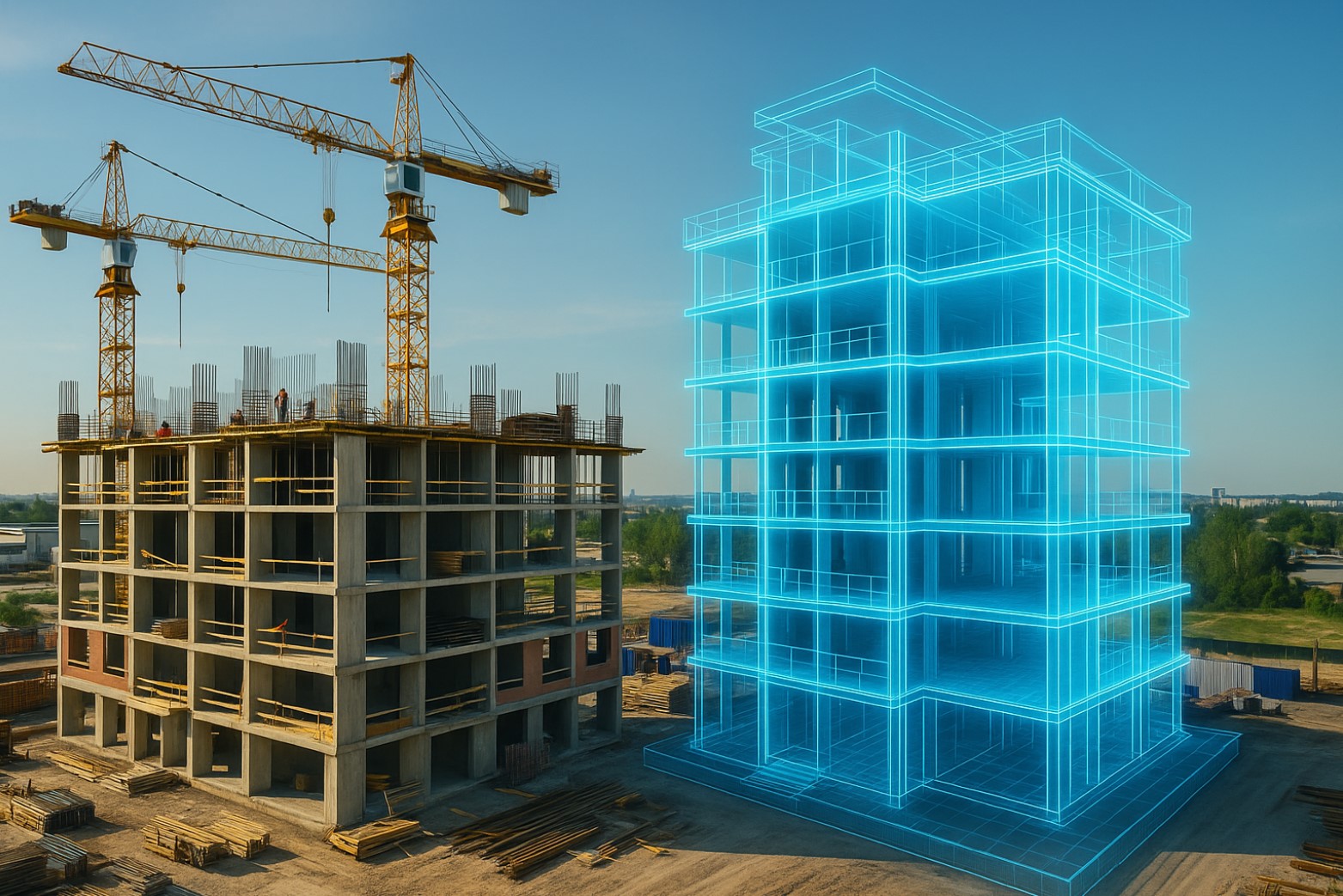
A Digital Twin is a little more than a simple static 3D model; it’s a live, data-oriented replica. Here’s what sets it apart from BIM, and where BIM 6.0 fits in the evolution:
| Concept | What It Is | Key Capability |
| BIM (1.0–5.0) | Digital representation of design & construction data | Clash detection, documentation, handover |
| BIM 6.0 | Living data model updated via IoT, AI, and cloud in real time | Continuous lifecycle intelligence; never becomes outdated |
| Digital Twin | BIM + live sensor data + AI analytics + simulation layer | Predicts, optimises, and autonomously manages asset performan |
- Cross-platform federation: They utilise federated data, from BIM, GIS, sensor networks and AI to simulate behaviour and not just develop form.
- Lifecycle utility: Digital twins support everything from design development to optimisation and construction monitoring, facility operation, maintenance and demolition planning.
- Dynamic data linkage: Digital twins continually ingest real-time sensor and IoT data, updating the virtual model to reflect the state of its physical asset.
- Agentic Intelligence (2026): The newest layer - AI agents embedded in twins that take free actions based on performance thresholds without any human intervention.
Think of it this way:
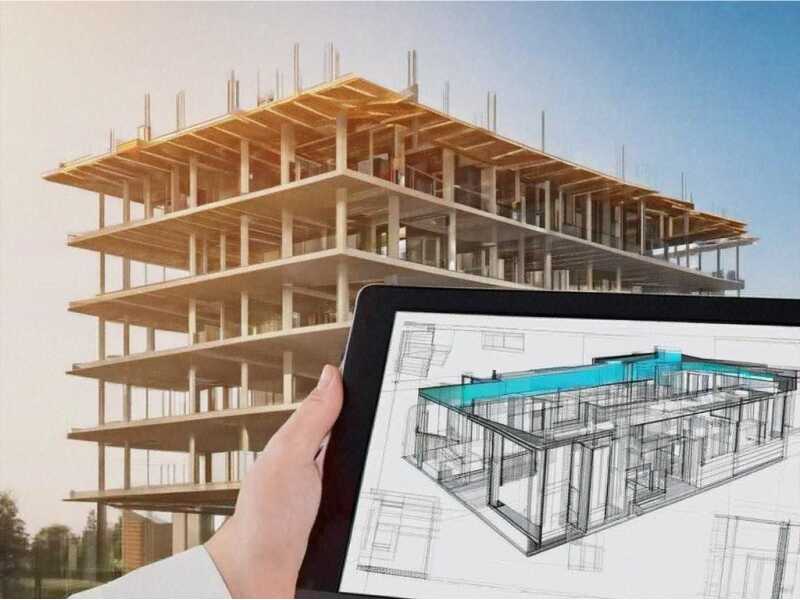
BIM is the blueprint. BIM 6.0 is the living blueprint, and think of a Digital Twin as the living organism with a brain.
_1752825785767.jpg)
2. Lifecycle Applications: From Conception to Demolition
Design & Simulation
- Immersive Design Reviews: A lot of firms are now relying on Unity-powered 3D twins of the Brooklyn Tower to collaborate with stakeholders in VR/AR, reducing decision time and carbon footprint.
- Spatial Computing Design Walthroughs: In 2026, immersive AR headsets allow clients and planning professionals to experience proposed buildings in actual scale. This will lead to testing the shadow, wind and spatial arrangement before a single element is built.
- Site Analysis and Iterative Testing: By simulating sunlight, wind, spatial planning and material behaviour, architects can confirm design performance before the construction commences.
Construction & Monitoring
- Steel-Structure Twins: In China’s Xiongan University Library and Nanchong Airport, sensor-fed digital twins traced fabrication and assembly of complex steel structures, enhancing real-time coordination and quality control.
- LiDAR & Reality Capture: User-friendly LiDAR scanners (including iPad-based tools) are now utilised by on-site teams regularly to update the digital twin with as-built conditions, restoring error-centric manual surveys.
- Progress Tracking: Multiple projects make use of on-site drones and IoT to compare actual build progress with more organised schedules, which visualise discrepancies in an instant.
Operation & Maintenance
- Space & Asset Optimisation: Post-construction, facility teams deploy twins for observing energy, occupancy, equipment maintenance and overall health diagnostics.
- ESG Performance Reporting: In 2026, asset owners utilise digital twins to create auditable, real-time ESG metrics, starting from carbon emissions to water use, for any regulatory compliance and investor reporting.
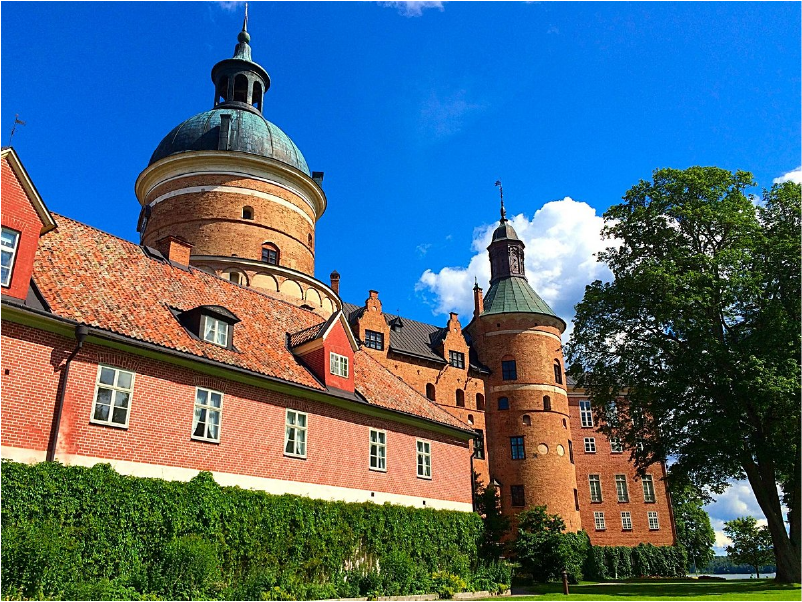
- Heritage Conservation: At Löfstad Castle (Sweden) and Cairo's Sabil of Khusru Pasha, digital twins with sensors keep taking notes related to humidity, temperature, and structural changes, updating preservation strategies.
- Agentic Maintenance: Self-learning digital twins now autonomously deploy maintenance, reroute energy loads, and notify facility managers, significantly reducing human intervention and operating costs.
Kaarwan Course Suggestion: Before exploring Digital Twins, strengthen your foundation with our BIM Masterclass and Professional Revit & BIM Certification Programme with job support, tailored for architects and civil engineers to master data-driven modelling, seamless collaboration, and efficient execution workflows.
Demolition & Restoration
Emerging studies showcase the value of digital twins even in decommissioning and using lifecycle simulations to predict material reuse, hazardous waste flows and safe dismantling paths. This also backs circular design, enabling architects to plan for eventual material recovery from the outset.
3. Case Studies Worth Studying
These recent case studies will help you get a better understanding of how digital twins can be utilised:
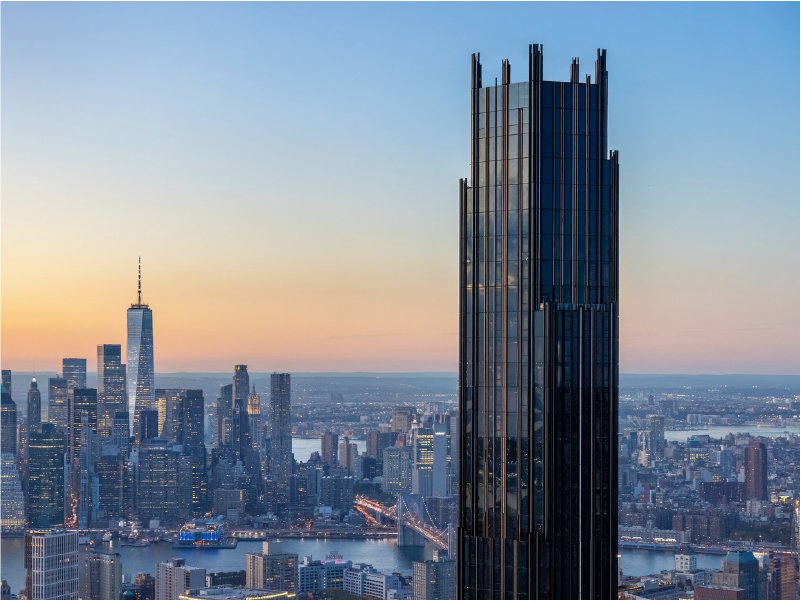
A. SHoP Architects + Unity + Brooklyn Tower
- Created a real-time 3D twin of a 1,073-ft tower.
- Integrated stakeholder feedback, structural changes, and VR walkthroughs—saving time and carbon emissions..
Key takeaway: Digital twins enable immersive stakeholder collaboration, reducing misunderstandings and design churn.
B. China: Steel-Frame Construction at Scale
- In Xiongan Library and Nanchong Airport (steel grid projects), twin models guided fabrication and installation
- Sensor data allowed for tight tolerances and rapid issue detection.
Key takeaway: Tangible quality and safety gains in complex structural builds.
C. Virtual Singapore: The Gold Standard Urban Twin
- Singapore’s national Virtual Singapore program started with simple 3D maps in 2014. They soon advanced to real-time simulations in 2018 and achieved full AI integration by 2022.
- All public agencies are mandated to share datasets on a collaborative platform, eliminating any data silos across transport, energy, housing, and environment.
- The program focuses on flooding, housing shortages, and traffic as the main pain points, demonstrating outcome-oriented and not technology-first design thinking.
Key Takeaway: Urban-scale twins work amazingly when issues with real problem statements and not visualisation for its own sake.
D. Helsinki Kalasatama District: Carbon-Neutral City Planning
- Helsinki revealed its digital twin of the Kalasatama district, a high-fidelity city model bringing together GIS, BIM, IoT, mobility data and earth observation.
- Citizens can communicate directly with the virtual model through online platforms, contributing to urban planning decisions, which is a participatory design achievement.
- The twin supports Helsinki’s target of carbon neutrality by 2035, enabling planners to observe progress and test policy scenarios in real-time.
Key Takeaway: Digital twins are participatory governance tools and not just technical infrastructure.
E. Heritage Preservation: Löfstad Castle, Sweden
- Parametric twin with 84 sensors monitors moisture and temperature across rooms.
- Insights led to installing vapour barriers and optimising climate control systems.
Key takeaway: Digital twins provide adaptive, data-driven heritage conservation.
F. Xi'an Old Steel Plant, China: Industrial Heritage Renewal
- A peer-reviewed 2025 case study established a digital twin system for environmental renewal of the Xi’an Old Steel Plant Industrial Park.
- Integrates BIM, GIS (V10.7), and IoT sensing to model building energy, microclimate and human activity systems simultaneously.
- Conducts dynamic simulations to quantify the effect of different regeneration strategies on energy consumption, microclimate performance, and spatial planning.
Key takeaway: Digital twins connect industrial heritage conservation with environmental performance, enabling continuous cultural and ecological goals.
G. Cairo's Ottoman Heritage: Laser Scanning + Photogrammetry
- Updated from the original general reference to Al-Mu’izz Street. A 2025 study particularly documents the Sabil and Kutub of Khusru Pasha, which is the oldest surviving Ottoman sabil in Cairo.
- Uses 3D laser scanning, photogrammetry and BIM to transition from static data collection to an interactive, semantically organised digital heritage twin.
Key Takeaway: Heritage digital twins unlock both conservation precision and immersive public engagement.
4. Enabling Technologies & Architecture
A robust digital twin in the year 2026 relies on integrating multiple disciplines. The table below is the newly updated one, including LiDAR/Reality Capture, 5G/6G connectivity and Spatial understanding.
| Component | Role | Key Technologies (2026) |
| Data Layer | Sensor streams & BIM input | IoT, Photogrammetry, 3D Scanning, LiDAR |
| Connectivity Layer | Real-time data transmission | 5G Networks, 6G-ready Infrastructure |
| Virtual Model | 3D/parametric representation | BIM 6.0, CAD, Unity/Unreal Engines |
| Analytics Layer | AI-driven predictions | Machine Learning, Deep Learning, Agentic AI |
| Visualization Layer | Interactive experiences | Spatial Computing, AR/VR, WebGL, XR |
| Integration Standards | Data interoperability | ISO 19650, Linked Open Data, FIWARE, CityGML |
| Security & Privacy | Data integrity and access | Encryption, AI Governance, Cyber-Physical Safeguards |
5. 2026: From Pilot Projects to Enterprise Platforms
2026 is the year when self-monitoring buildings are not the basis of innovative designs; they are the mainstream expectations. Something that’s expected by default.
What does this mean practically?
- Enterprise adoption: Digital twins are moving from one-off pilots to enterprise-wide platforms, deployed across the entire property portfolio by major asset owners.
- AI becomes the operation central: In 2026, approximately 27% of AEC firms internationally are actively using AI technologies for automation and decision-making in their project workflows.
- Cloud CDE as standard: Cloud-based Common Data Environments (CDEs) are now the basic collaboration standard that enables real-time model access across all teams.
- PropTech convergence: Commercial real-estate firms are adopting digital twins as a competitive variable that’s narrowing the line between construction tech and property tech.
- Open standards acceleration: Interoperability has become a procurement need with ISO 19650. CityGML and OGC systems required major infrastructure contracts.
6. Challenges Still Ahead
Despite rapid basic adoption, several obstacles still remain, and on top of that, new challenges have also resurfaced in 2026.
Data Integration & Quality
Sensor inconsistencies and missing BIM data continue to hamper twin fidelity. As twins scale from building to district to city, data governance becomes exponentially more complex.
Standards & Interoperability
ISO 19650, Linked Open Data, CityGML, and FIWARE show promise — but a unified, globally adopted framework for federated twins remains elusive.
Skilled Workforce
Demand for hybrid professionals who understand construction, IT, data science, and AI is soaring. New roles like AI Coordinator, AEC Data Analyst, and BIM Ecosystem Manager are now actively recruited.
Security & Privacy
Live building data — from occupancy patterns to structural health — poses growing cybersecurity risks. As twins become autonomous and agentic, the attack surface expands significantly.
Cultural & Process Adoption
Digital transformation requires trained teams, cultural openness, and new workflows. Resistance to change remains the most underestimated obstacle in AEC organisations.
ESG Compliance & Auditability
In 2026, regulatory bodies and institutional investors are asking for verifiable ESG metrics from built assets. Digital twins are increasingly needed to produce auditable, standardised sustainability data that creates pressure on firms that have not yet integrated performance tracking in their twin architecture.
AI Governance & Accountability
As agentic AI systems take autonomous decisions within digital twins, including adjusting HVAC systems, scheduling maintenance, flagging structural risks and questioning the accountability, the bias and the possibility of critical governance challenges that the AEC industry is only starting to address.
Future-ready projects need future-ready skills. Get started with our BIM Masterclass today.
7. How Architects Can Get Started
For established firms and upcoming architects, here are a couple of proactive steps that professionals can take in 2026.
- Pilot with Low-Risk facilities: Begin with small projects (heritage sensor integration, digital site surveys with iPad LiDAR) to develop skills with accessible, low-cost tools.
- Invest in Training & Hybrid Expertise: Enrol in courses like Kaarwan’s Professional BIM Course for Architects/Engineers or even our one-day masterclass to take a quick look at your learning path before investing completely.
- Adopt Open Standards: Align with ISO 19650 for BIM, CityGML for urban twins, and look for FIWARE or Linked Open Data to future-proof twin projects.
- Leverage Cloud CDE Platforms: Move collaboration to cloud-based Common Data Environments where design, construction and operations data are put together in one place in an accessible ecosystem.
- Collaborate with Tech Specialists: Partner with sensor integrators, data scientists, LiDAR operators and Spatial Computing Developers for an integrated expertise.
- Embed Security & ESG Frameworks Early: Incorporate encryption, access controls and sustainability data pipelines from the outset and not as afterthoughts or repercussions.
- Explore Agentic AI Pilots: Begin experimenting with AI agents for predictive maintenance scheduling or energy optimisation within existing building management systems.
8. The Future — Smarter, Greener, and More Autonomous
Digital twins aren’t just simple tools; they are, in fact, the next steps in developing the cognitive infrastructure of the built environment:
- Agentic AI Management: Self-learning twins will autonomously manage energy, occupancy and maintenance—intervening only when human intervention is required.
- Net-zero & ESG Mandates: AI-oriented twins will become the standard system for regulatory carbon reporting and climate compliance, and not just a nice-to-have.
- Spatial Computing at Scale: AR headsets will facilitate digital twin interaction as candid as looking at a screen. This will also enable city planners, construction teams and facility managers to inhabit their virtual models.
- Adaptive Reuse and Circular Design: Facility data will inform renovation potential, lifespan management, and material reuse, all embedding circular economy principles into every building from concept through construction.
- National & Urban Ecosystem Twins: Following Singapore and Helsinki, more cities will make urban-scale digital twins mandatory for planning, climate resilience, energy, transport, and public safety coordination.
- Participatory Design at Community Scale: AR-enhanced twins will bring clients, residents, and communities into the design cycle—democratising architectural decision-making.
Conclusion
Digital twins offer architecture professionals a powerful means to:
- Validate design early with immersive tools
- Monitor and manage construction in real time
- Optimize facilities and preserve heritage with data-driven strategies
- Anticipate demolition and reuse flows
- Drive sustainability from building to city scales
Yet success depends on robust data integration, interoperability, standardisation, and a talented workforce. Fortunately, resources like Kaarwan’s specialised BIM courses equip AECO professionals to master these capabilities:
- Digital Twin Fundamentals for AEC
- IoT for Architecture & Construction
- AI & Deep Learning for Smart Buildings
By combining cutting-edge learning with real-world pilot projects, your firm can unlock the full power of digital twins, transforming buildings, workflows, and cities for a smarter, more sustainable future.
FAQs
1. What is a digital twin in architecture?
A digital twin in architecture is a real-time, data-driven virtual model of a physical building or structure. Unlike static 3D models or BIM, a digital twin integrates live data from sensors, IoT devices, and other sources to mirror the actual state, behaviour, and performance of the asset.
2. How are digital twins different from BIM?
While BIM (Building Information Modelling) is a digital representation of a building’s design and construction information, it is often static. A digital twin, on the other hand, connects BIM models with live, real-time data throughout the building's lifecycle — enabling monitoring, prediction, and optimisation. (Explore Kaarwan's Alumni Portfolios here).
3. What are the benefits of digital twins in construction and architecture?
- Improved design validation and stakeholder collaboration
- Real-time progress tracking and quality control during construction
- Predictive maintenance and energy optimisation during operation
- Better decision-making for renovations or demolition
- Enhanced sustainability and reduced carbon footprint
4. Can digital twins be used in heritage conservation?
Yes! Digital twins are increasingly used in heritage preservation projects to monitor humidity, temperature, structural shifts, and environmental factors, ensuring timely interventions without damaging the asset.
5. How can I learn to create and use digital twins as an architect?
Start by learning BIM fundamentals, IoT integration, and AI for predictive analytics. You can explore courses like:
- Digital Twin Fundamentals for AEC at Kaarwan
- IoT for Architecture & Construction
- AI & Deep Learning for Smart Buildings
These programs will equip you with the technical and strategic skills to work with digital twins effectively.
6. Are digital twins expensive to implement?
Costs depend on the scale, complexity, and technology stack. For small projects or pilot runs, costs can be kept reasonable by leveraging open standards and cloud-based platforms.
7. What tools and software are commonly used for digital twins?
Some popular tools include:
- BIM platforms: Revit, ArchiCAD
- Visualisation engines: Unity, Unreal Engine
- IoT integration: Azure Digital Twins, Siemens NX
- Analytics: AI/ML platforms, CFD tools
8. Are digital twins only for new buildings?
No. Existing buildings can also benefit by retrofitting sensors and creating a virtual twin. This is particularly useful for optimizing operations, improving energy efficiency, and managing maintenance.


.png)