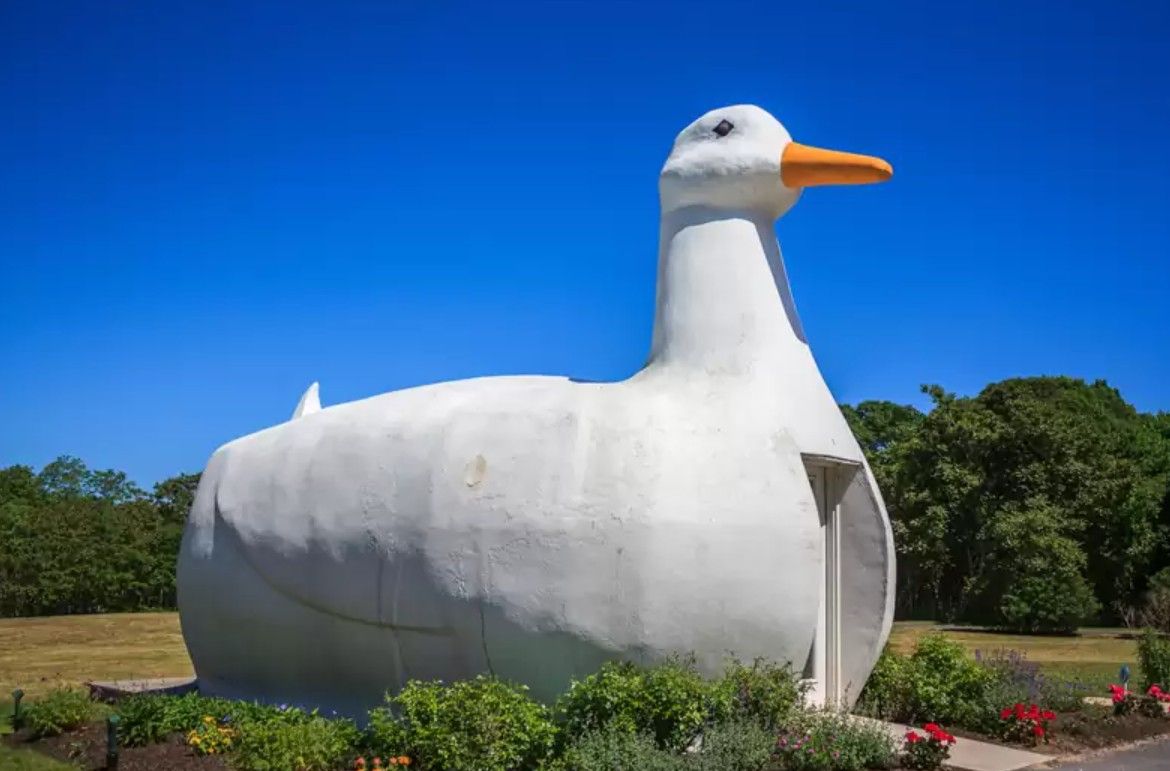
The Big Duck Building in Flanders, New York. Image via Wikimedia Commons.
Duck Architecture Explained
Architecture does more than provide shelter. It communicates identity, expresses purpose and shapes how people recognise a place. While some buildings use their structure and form to convey meaning, others rely on signage, ornamentation or visual elements to communicate their function. One architectural concept that explores this relationship between form and meaning is Duck Architecture. Known for its unconventional, exaggerated building forms, it challenges traditional ideas of architectural expression and questions whether a building should simply serve its function or become a symbol of it.
What Is Duck Architecture?
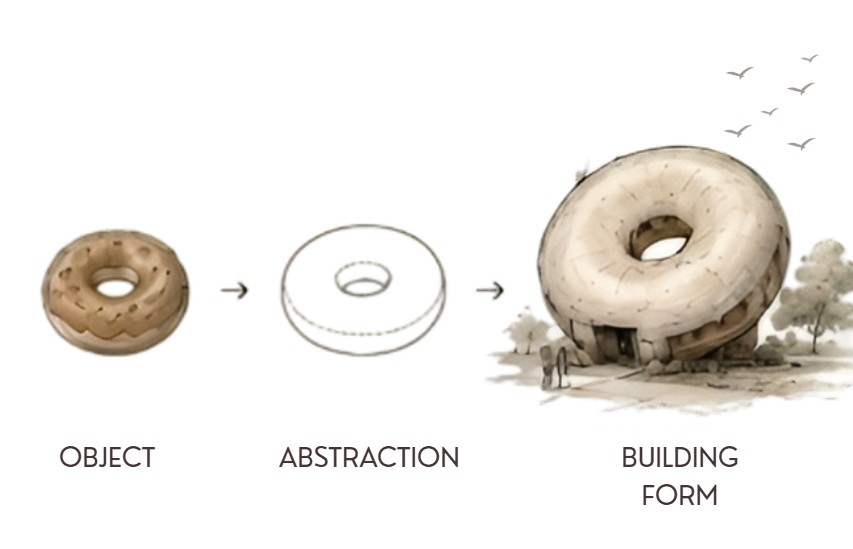
Duck Architecture refers to buildings whose overall shape directly represents the product, activity or purpose associated with them. Instead of using conventional architectural forms with signs or decorative elements to identify their function, these buildings make the structure itself the symbol.
For example, a shop selling baskets might be designed in the shape of a giant basket, while a restaurant serving seafood could take the form of a fish or a shell. The building becomes a three-dimensional sign, making its purpose immediately recognisable to passers-by. This approach is also associated with mimetic architecture, where buildings imitate familiar objects, products or forms to communicate an idea.
Who Coined the Term?
The term “Duck” was popularised by architects Robert Venturi and Denise Scott Brown, along with their co-author Steven Izenour, in their influential 1972 book Learning from Las Vegas. The concept was inspired by the Big Duck, a duck-shaped roadside shop built in 1931 in Flanders, Long Island, New York. Originally constructed to sell ducks and duck eggs, the building took the shape of a giant duck, turning its physical form into an advertisement for the business.
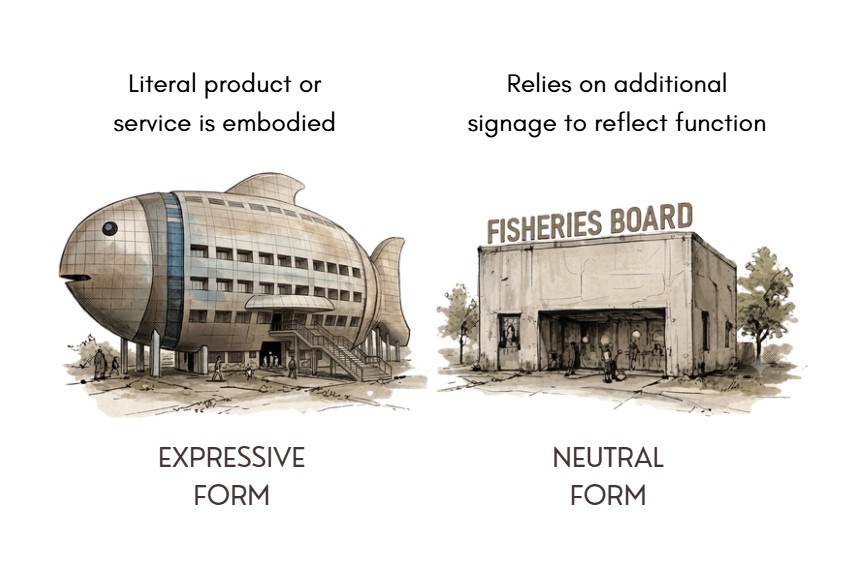
Venturi, Scott Brown and Izenour used this example to distinguish between two ways buildings communicate: the “Duck”, where the building itself becomes the symbol, and the “Decorated Shed”, where a conventional structure communicates through applied signs and ornamentation. Their discussion challenged modernist preferences for simplicity and encouraged architects to examine how popular culture, commercial landscapes and everyday buildings communicate with people.
Why Does Duck Architecture Exist?
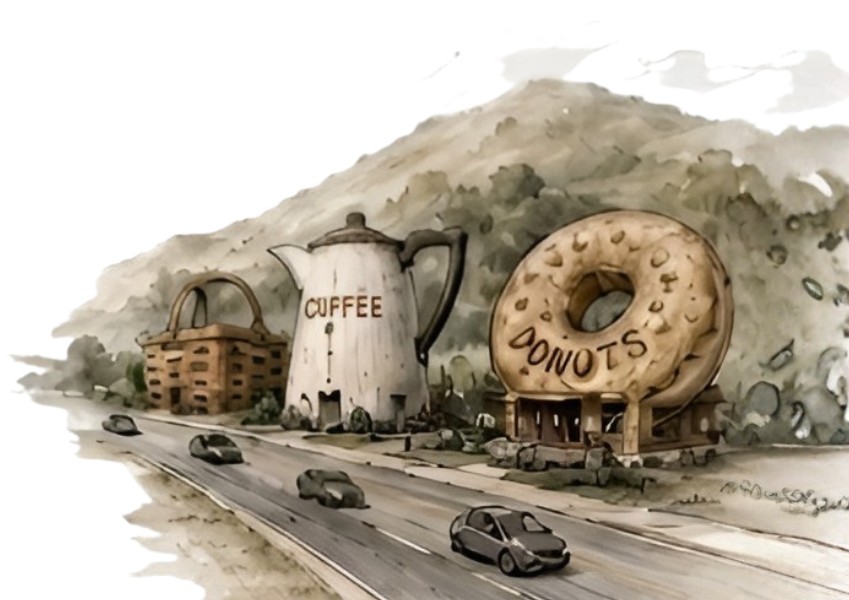
Duck Architecture emerged from the need for buildings to communicate quickly and attract attention, particularly in commercial environments. Its most familiar setting is the roadside landscape, where buildings compete for visibility among advertisements, shops and other businesses. In automobile-oriented areas, where people often view buildings from moving vehicles, a recognisable shape can communicate a business’s identity more immediately than conventional signage.
This approach is commonly seen in themed restaurants, roadside attractions, souvenir shops, entertainment venues and tourist destinations. It also appears in commercial buildings designed around a particular product or brand. By transforming a building into a recognisable visual landmark, businesses can create memorable identities and draw visitors without relying solely on traditional advertising.
Why Is Duck Architecture Good?
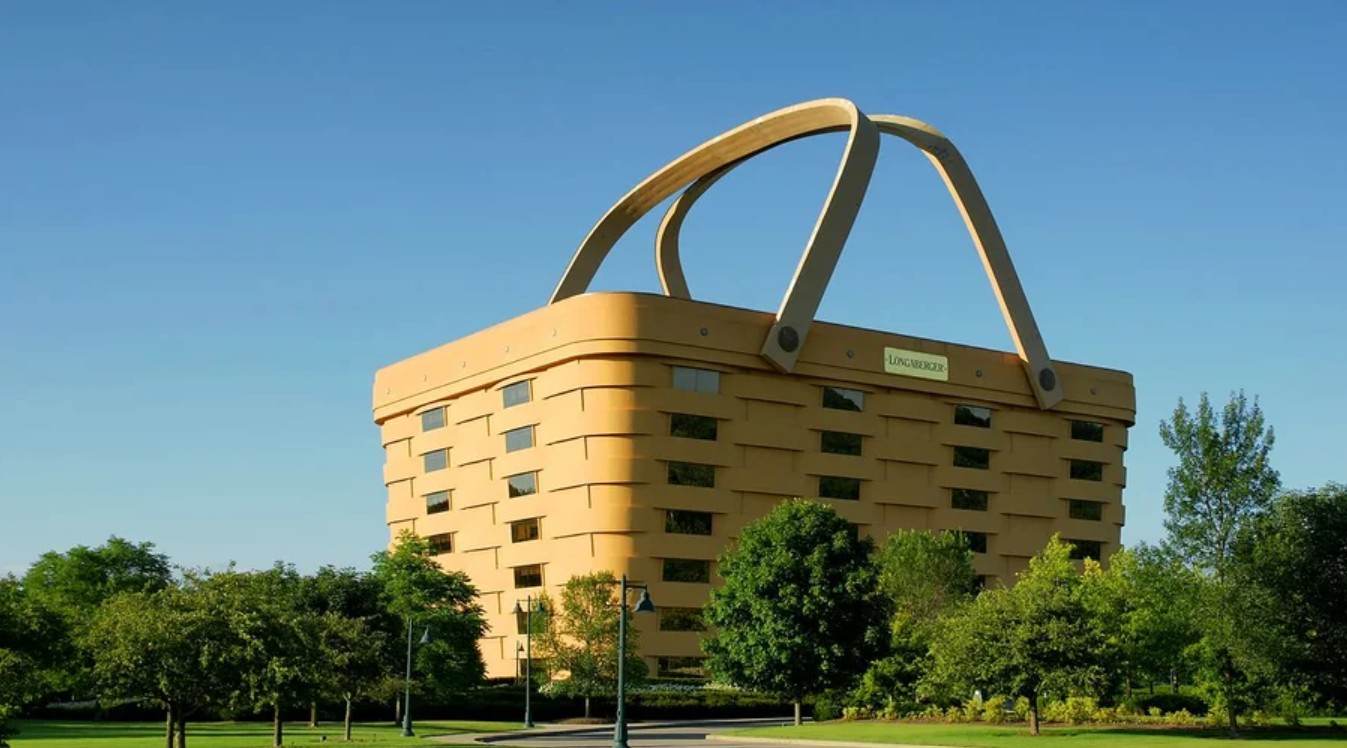
Longaberger Headquarters. Image via Wikimedia Commons.
One of the biggest advantages of Duck Architecture is its ability to create a strong visual identity. An unusual building form can make a place instantly recognisable, helping businesses stand out in visually crowded environments. It can also improve wayfinding, as people can identify a building through its shape rather than depending entirely on written signs.
Beyond commercial value, Duck Architecture encourages creativity and experimentation with architectural form. It can create memorable public attractions, generate curiosity and contribute to a location’s cultural identity. When thoughtfully designed, these buildings can become landmarks that people associate with a particular place or experience.
Why Is Duck Architecture Criticised?
Despite its visual appeal, Duck Architecture has several limitations. When the symbolic shape becomes the primary design priority, it can compromise functional planning, structural efficiency and the practical use of interior spaces. Unconventional forms may also require specialised construction methods and materials, potentially increasing building costs and maintenance requirements.
Another criticism is that its emphasis on visual impact can sometimes reduce architecture to a marketing tool. Buildings may prioritise novelty and spectacle over context, sustainability, human comfort or long-term usability.
When the visual concept is not supported by thoughtful planning, the result can become more of an oversized advertisement than a well-resolved architectural space.
Conclusion
Duck Architecture demonstrates how buildings can communicate through their physical form, turning architecture into a recognisable symbol. Although it challenges conventional ideas of design and creates memorable landmarks, it also raises important questions about the balance between visual expression and functionality. Ultimately, its value lies not simply in how unusual a building looks, but in how effectively its form, purpose and user experience come together.
These were some insights on Duck Architecture. Stay tuned for more information on other significant topics in the AEC industry and follow Kaarwan for such detailed guides!
Frequently Asked Questions
1. What is Duck Architecture in simple terms?
Duck Architecture is a design approach in which a building’s overall shape represents the product, activity or purpose associated with it, making the structure itself a visual symbol.
2. Who introduced the concept of Duck Architecture?
The concept was popularised by Robert Venturi, Denise Scott Brown and Steven Izenour in their 1972 book Learning from Las Vegas.
3. What is the Big Duck and why is it important?
The Big Duck is a duck-shaped shop built in 1931 in Flanders, Long Island. It inspired the architectural term “Duck” because the building’s shape directly represented the products sold inside.
4. What is the difference between Duck Architecture and a Decorated Shed?
In Duck Architecture, the building itself is shaped like a symbol representing its purpose. A Decorated Shed, on the other hand, is a conventional building that communicates its function through applied signs, graphics or ornamentation.
5. Is Duck Architecture a type of architectural style?
Duck Architecture is better understood as an architectural concept or category of expression rather than a formal style. It describes how a building communicates meaning through its overall form.