Modern architecture demands not just aesthetic appeal but a commitment to sustainability. Environmental analysis plays a critical role in achieving designs that are energy-efficient, climate-responsive, and environmentally conscious. Tools like Grasshopper software—an advanced parametric design platform within Rhino—empower architects to integrate sustainability seamlessly into their projects.
By learning these tools through a Rhino course, architects can master parametric design architecture, bridging the gap between design creativity and environmental responsibility. This article will help you learn about the fundamentals of environmental analysis, how Grasshopper aids sustainable design, and why this software is a must-have for architects today.
What Is Environmental Analysis in Architecture?
Environmental analysis in architecture examines how designs interact with their surrounding environment. It involves studying factors such as sunlight, wind flow, temperature, and energy usage to create buildings that are functional and eco-friendly.
Key components of environmental analysis include:
- Solar analysis: Optimizing natural lighting to reduce energy consumption.
- Thermal analysis: Ensuring insulation and temperature regulation.
- Wind flow: Designing ventilation systems for improved air circulation.
- Energy modeling: Calculating energy efficiency and reducing waste.
By incorporating these analyses into your design process, you not only comply with green building regulations but also contribute to global sustainability goals.
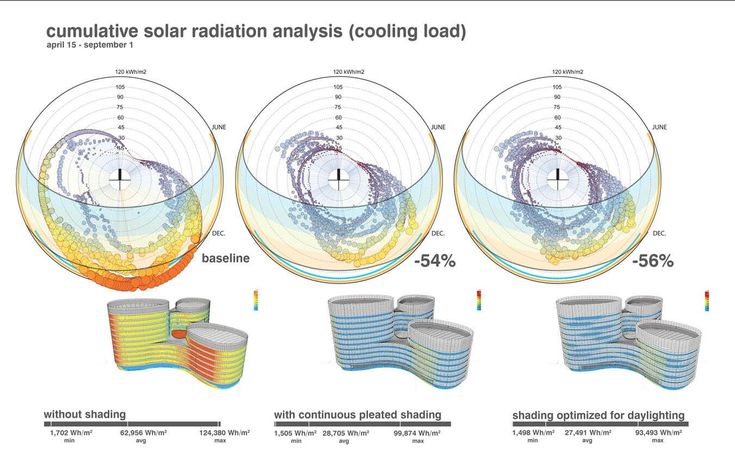
Solar radiation analysis_©grasshopper3d.com
Why Use Grasshopper for Environmental Analysis?
Grasshopper software, an extension of Rhino, revolutionizes how architects approach environmental analysis. With its visual programming interface, it simplifies the creation of complex algorithms needed for parametric design architecture.
Benefits of Grasshopper for Sustainable Design
- Integration of Real-Time Data: Grasshopper allows you to incorporate real-time environmental data like solar exposure and wind patterns directly into your design. Tools like Ladybug and Honeybee—plug-ins for Grasshopper—further enhance its capabilities.
- Customizable and Scalable Solutions: With Grasshopper, you can create custom workflows for projects of any scale, from small houses to massive urban developments.
- Improved Decision-Making: Visual simulations in Grasshopper let you compare different design options quickly, helping you choose the most sustainable solutions.
For example, in the 2021 redesign of the Melbourne Connect building, Grasshopper was used to optimize facade shading systems, reducing energy costs by 25% (source: ArchDaily).
How Does Grasshopper Software Support Parametric Design?
Parametric design is a modern architectural approach where design elements are defined by parameters. Grasshopper software excels in this domain, offering architects the tools to experiment and iterate.
Applications of Parametric Design in Architecture
- Facade Optimization: Grasshopper can generate dynamic facades that adapt to environmental changes, such as rotating panels that block sunlight during peak hours.
- Energy-Efficient Forms: By analyzing environmental data, Grasshopper helps create building forms that reduce energy usage, such as domes designed to minimize wind resistance.
- Climate-Responsive Interiors: Parametric tools enable precise control over interior layouts, ensuring spaces remain naturally ventilated and well-lit.
Example: The Al Bahr Towers in Abu Dhabi feature a facade inspired by traditional mashrabiya screens. Grasshopper was instrumental in designing these shading devices, reducing solar gain by 50% (source: Dezeen).
How to Learn Grasshopper and Environmental Analysis?
Taking a Rhino course focused on environmental analysis and parametric design architecture can accelerate your learning.
What to look for in a Course?
- Comprehensive Modules: A good course will cover everything from basic environmental analysis techniques to advanced parametric design strategies.
- Hands-On Projects: Look for courses offering real-world projects, such as optimizing building layouts for energy efficiency or designing climate-responsive facades.
- Expert Guidance: Learning from experienced instructors ensures you gain practical insights and avoid common mistakes.
Applications of Sustainable Design
Case Study 1: Bosco Verticale, Milan
Bosco Verticale, a vertical forest in Milan, uses sustainable design principles to reduce urban heat and improve air quality. Parametric tools were used to calculate optimal plant placement, ensuring maximum environmental benefits.
Case Study 2: ITC Green Centre, India
This LEED Platinum-rated building in Gurgaon exemplifies sustainable design with rainwater harvesting, energy-efficient systems, and ample daylighting. Environmental analysis tools like Grasshopper can replicate such success in other projects.
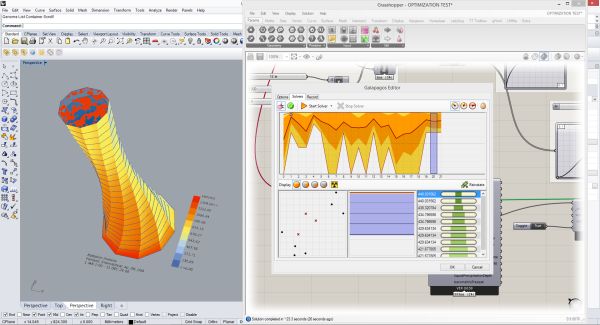
Solar radiation analysis_©gonzalesarch.wordpress.com
Tips for Architects Exploring Grasshopper
- Start with Small Projects: Begin by analyzing sunlight patterns for a simple residence before tackling larger projects.
- Leverage Grasshopper Plug-Ins: Explore tools like Ladybug for climate analysis and Honeybee for energy modeling.
- Collaborate with Experts: Work with engineers and sustainability consultants to maximize the benefits of parametric design.
- Stay Updated: Join forums and attend webinars to learn the latest trends and features in Grasshopper and sustainable design.
Conclusion
Mastering Grasshopper software for environmental analysis is essential for architects aiming to excel in sustainable design. This tool empowers professionals to create structures that are not only visually striking but also environmentally responsible. By enrolling in a Rhino course, you can develop the skills needed to lead the future of parametric design architecture.
Architects worldwide are leveraging these technologies to shape eco-friendly cities and communities. Will you be among the pioneers?
Want to shape the future of architecture? Learn environmental analysis and Grasshopper software with our Advance Rhino & Grasshopper Certification Course. Start building sustainable designs now!
Visit the Kaarwan website for more insights!
FAQs
Q1: What is environmental analysis in architecture?
A1: Environmental analysis examines how architectural designs interact with the environment, focusing on factors like sunlight, wind, temperature, and energy use. It helps create eco-friendly, climate-responsive buildings.
Q2: Why is Grasshopper software useful for environmental analysis?
A2: Grasshopper, a Rhino extension, simplifies complex algorithms for parametric design. It integrates real-time environmental data, enables scalable solutions, and enhances decision-making for sustainable architecture.
Q3: How does Grasshopper support parametric design in architecture?
A3: Grasshopper helps define design elements with parameters, enabling facade optimization, energy-efficient forms, and climate-responsive interiors. It supports experimentation and precise control for sustainable design.
Q4: What should architects look for in a Rhino course?
A4: Architects should choose courses with comprehensive modules, real-world projects, and expert guidance, focusing on environmental analysis and parametric design strategies to enhance practical skills.
Q5: Can you provide examples of sustainable design using Grasshopper?
A5: Examples include Melbourne Connect's optimized facade shading, which cut energy costs by 25%, and Abu Dhabi's Al Bahr Towers, where Grasshopper reduced solar gain by 50% with innovative shading systems.