
Stepping into the world of interior design is exciting, but at some point, almost every student or emerging professional faces the same fork in the road: Do I go freelance, or do I join a design studio? It's not a decision to take lightly, and honestly, there's no universally correct answer. The right path depends entirely on who you are, what you want, and where you see yourself in five years.
Both options offer genuine opportunities to build a meaningful interior design career. Studios offer structure, mentorship, and a steady income. Freelancing offers independence, creative ownership, and unlimited earning potential, but also unpredictability. This blog breaks down both paths clearly so you can make a more confident, informed choice.
Understanding the Two Paths: Freelance vs. Studio
Before diving into comparisons, it helps to understand what each path actually looks like on a day-to-day basis.
What Does Freelance Interior Design Look Like?
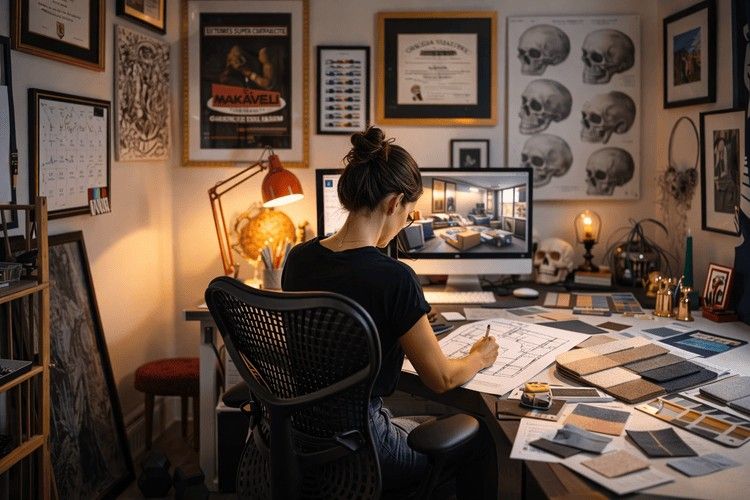
A freelance interior designer is essentially self-employed. For students or recent graduates, this path can feel both exciting and overwhelming. You source your own clients, manage projects independently, set your rates, and build your personal brand from scratch. You might work from home or a co-working space, balancing client calls, material sourcing, budgeting, and design presentations on your own, especially in the early stages.
What Does a Studio Job Look Like?

Working at an interior design studio, often referred to as one of the many professional interior design firms in the industry, means you're part of a team. You may be assigned to projects under a senior designer, collaborating with architects, vendors, and other creatives. The work is more structured; you show up, contribute to ongoing projects, and grow within a defined role.
Designers at small residential studios often visit job sites, meet clients, and get involved in many aspects of projects, including drafting, furniture specifications, and custom cabinetry design. It's hands-on and educational, especially in the early years.
Freedom, Flexibility & Creative Control
One of the biggest differentiators between the two career paths is creative freedom in design.
Freelance: Full Autonomy, Your Rules
When you're self-employed as a freelance interior designer, you have the autonomy to run your interior design business the way you see fit, setting your own working hours, choosing your clientele, and deciding your branding and marketing strategies. If you have a distinct design vision or aesthetic, freelancing lets you build an entire brand around it.
Studio: Structured Creativity With Guided Direction
In an interior design studio, however, your creative output is often shaped by the firm's style and the senior designer's direction. That's not necessarily a bad thing, especially when you're starting out. You learn industry-standard processes, get exposure to a variety of project types, and sharpen your technical skills in a lower-risk environment.
"Design is not just what it looks like and feels like. Design is how it works'' - Steve Jobs
Income, Stability & Growth Potential
Let's talk money, because an interior designer's salary is a real consideration, and it often plays a decisive role in which path you choose.
Studio Employment: Structured Compensation and Career Progression
At a small residential interior design studio, an entry-level designer's average base salary is around $50,000, though this doesn't include bonuses or benefits. In commercial studios, entry-level salaries tend to be lower, around $34,000, with additional benefits included. In the Indian context, interior design jobs at firms in cities like Bangalore offer stable salaries ranging from ₹1.8 LPA to ₹10 LPA, depending on experience and the company.
Freelance Practice: Variable Income with Unlimited Earning Potential
Freelancing, on the other hand, offers no fixed salary, but no ceiling either. As a freelance interior designer, you can increase your income by taking on more clients rather than waiting for an employer to allocate projects. The risk is real, though; many designers report irregular client flow, which makes maintaining a stable income challenging, especially in competitive markets.
H3The Financial Trade-Off at a Glance
| Freelance | Studio | |
| Income | Variable, unlimited ceiling | Fixed, predictable |
| Benefits | None (self-arranged) | Health, leave, bonuses |
| Tax/Admin | Self-managed | Handled by the employer |
| Growth | Scales with reputation | Tied to firm hierarchy |
Building Your Interior Design Portfolio & Network
Your interior design portfolio is one of the most important assets in your career. Both freelance and studio paths help you build it, but in very different ways. Understanding this difference can help you decide which direction suits your long-term goals.
Studio: Strong Projects, Shared Credit
In an interior design studio, you start working on real projects immediately. Many of these spaces are professionally photographed, published, or widely recognised, which helps you build credibility quickly. The studio’s reputation adds value to your experience, and you gain exposure to large-scale residential interior design projects.
However, the work is usually credited to the firm. While you gain strong experience, your individual name may not be highlighted in the early stages.
Freelance: A Portfolio That Reflects You
As a freelance interior designer, every project belongs to you. The design decisions, client interactions, and final outcomes all go into your personal interior design portfolio. Over time, this helps you build a strong personal brand and showcase your creative freedom in design.
Your work directly represents your style, not a company’s identity. This makes your portfolio more personal, but it also depends entirely on your ability to attract and manage clients.
Networking Works Differently
In a studio, you benefit from existing vendor connections, repeat clients, and established industry relationships. This makes networking easier in the beginning.
As a freelancer, networking is self-driven. You may connect with real estate agents, contractors, and developers, and use platforms like Instagram or Houzz to gain visibility. It takes more effort, but the network you build supports your own interior design business long-term.
Which Path Is Right for You? A Real-World Perspective
Case Study: Priya vs. Arjun
Priya graduated from a design school in Pune and joined a mid-sized interior design studio in Mumbai. Over three years, she worked on 15+ residential interior design projects, improved her AutoCAD and SketchUp skills, and gained hands-on vendor experience. By her fourth year, she confidently launched her own interior design business.
Arjun chose a different route. He became a freelance interior designer immediately after graduation. The first year was challenging, with irregular clients and self-learned business skills. By year two, his Instagram portfolio brought consistent residential projects, and he was earning more than many studio peers.
Both built successful interior design careers. Priya gained structure and stability first, while Arjun gained speed and independence. Today, many young designers in India follow a hybrid model, starting in a firm and later transitioning into freelancing.
Ask yourself:
- Do you thrive with structure or with independence?
- Are you ready to handle business operations alongside design work?
- Do you have a strong enough interior design portfolio to attract clients on your own?
- Is financial stability more important right now, or is creative freedom your priority?
Want to Take the Next Step in Your Interior Design Career? If you're ready to build industry-ready skills, explore the Advanced Interior Design Certification Course. Designed for aspiring designers, it helps you strengthen technical knowledge, gain practical experience, and build a professional portfolio for real-world success.
Conclusion
Both freelance interior design and working at a design studio are rewarding paths, each suited to different goals and personalities. A studio offers structure, mentorship, and stability, while freelancing provides independence, creative control, and the chance to build your own interior design business.
Many designers move between both over time. If you're still exploring your direction, the Advanced Interior Design Certification Course or the one-day mini workshop for Interior Design can help you strengthen your interior design portfolio and gain clarity. Ultimately, continuous learning and practical experience shape a successful interior design career.
FAQ’S
1. What is the main difference?
Freelancers run their own interior design business; studio designers work in teams with fixed interior designer salary.
2. Is freelance interior design stable in India?
It can be stable long-term, but early income is irregular despite growing residential interior design demand.
3. Which pays more?
Freelancing offers higher earning potential; interior design studio jobs provide stable salary and benefits.
4. Do I need experience before freelancing?
Not mandatory, but a strong interior design portfolio and site knowledge greatly improve success chances.
5. Can I work at a studio and freelance?
Yes, many designers follow a hybrid model to build experience and grow gradually.
6. How do freelancers get clients?
Through Instagram, Houzz, referrals, networking, and showcasing their interior design portfolio online.
7. What skills are essential for freelancing?
Design expertise, communication, budgeting, marketing, and business management skills are crucial.
8. Is a studio job better for beginners?
Yes, studios provide mentorship, structured learning, and exposure to diverse interior design jobs.
9. How important is work-life balance?
Work-life balance in interior design is vital; both paths require strong time management.
10. How do I build a portfolio from scratch?
Start with small projects, pro-bono work, and practical assignments to strengthen your interior design portfolio.