._imageengraving_(1861).jpg)
From God to Man: A Journey Through Gothic and Renaissance Architecture
"Architecture is the learned game, correct and magnificent, of forms assembled in the light," mused the great modernist architect Le Corbusier. These words resonate profoundly when considering two of history's most influential architectural styles: Gothic and Renaissance. Emerging from distinct cultural moments and embodying vastly different philosophies, these styles left an indelible mark on the built environment. Gothic architecture, born in medieval Europe, soared towards the heavens. Renaissance architecture, blossoming in Italy centuries later, embraced classical ideals of symmetry and human-centric design.
This blog post will explore these pivotal styles. We will examine their unique features, historical contexts, and enduring legacies. Ultimately, we will reveal how the evolution from Gothic to Renaissance reflects a fundamental shift in Western thought and cultural values.
Gothic Architecture: Reaching for the Divine
The Origins of Gothic Architecture
Gothic architecture dominated Europe from the mid-12th to the 16th century. It was deeply intertwined with the religious fervor of the Middle Ages. Born in the Île-de-France region, this style was revolutionary. In fact, it was driven by a desire to create awe-inspiring structures. These structures reflected the glory of God and inspired devotion.
Key Features of Gothic Architecture
At its core, Gothic architecture was an architecture of light and verticality. Imagine the soaring heights of cathedrals. They were designed to draw the eye and the spirit upwards towards the heavens.
- Pointed Arches: Unlike rounded Romanesque arches, pointed arches distributed weight better. Thus, they allowed for taller, more slender structures.
- Ribbed Vaults: These were intricate networks of stone ribs. As a result, they reinforced the ceilings, creating a sense of lightness and spaciousness.
- Flying Buttresses: Furthermore, external arches transferred the weight of the roof outwards to massive piers. This enabled thinner walls and vast expanses of stained glass windows.
Symbolism and Impact
"Light was the most important element in Gothic architecture, reflecting the divine presence in every beam." Stained glass windows transformed sunlight into a kaleidoscope of divine radiance. Therefore, this created a mystical atmosphere within the cathedral. Every detail served to reinforce the building's religious purpose. Consider the towering spires and the intricate carvings of saints.
Iconic Examples of Gothic Masterpieces
Examples like Notre-Dame de Paris stand as magnificent testaments to this era. Think of its iconic rose window and flying buttresses. Similarly, Chartres Cathedral is renowned for its preserved stained glass. Finally, Cologne Cathedral is a testament to the enduring power of the Gothic style. These buildings were not just places of worship. Instead, they were centers of community life. They were built through the collective effort of skilled craftsmen, organized in guilds, and financed largely by the Church.
Renaissance Architecture: Celebrating Humanism and Proportion
The Dawn of the Renaissance
The Renaissance began in 14th-century Italy. It marked a profound shift in European thought and culture. It was a period of rebirth and renewal. Humanism emphasized human potential and achievement. Consequently, it replaced the theocentric worldview of the Middle Ages. This cultural revolution found its expression in Renaissance architecture. Specifically, the style drew inspiration from ancient Greece and Rome.
Defining Features of Renaissance Architecture
Renaissance architecture is characterized by its harmonious and orderly forms. Buildings were designed according to mathematical ratios. They followed geometric principles. In effect, this reflected a belief in the inherent order of the universe.
- Domes: Domes were a hallmark of Roman architecture. Therefore, they made a triumphant return. For example, look at Brunelleschi's Dome atop Florence Cathedral. It is a masterpiece of engineering and design.
- Columns and Pilasters: These were based on classical orders (Doric, Ionic, Corinthian). They were used for structural support. Additionally, they were decorative elements, adding rhythm and elegance to facades.
The Renaissance Spirit in Architecture
"The Renaissance brought architecture back to its essence: the perfect harmony of form and function." This marked a return to Classical clarity after the complexity of Gothic design. Gothic architecture focused predominantly on religious buildings. In contrast, the Renaissance encompassed a wider range of building types. These included palaces, villas, and civic structures.
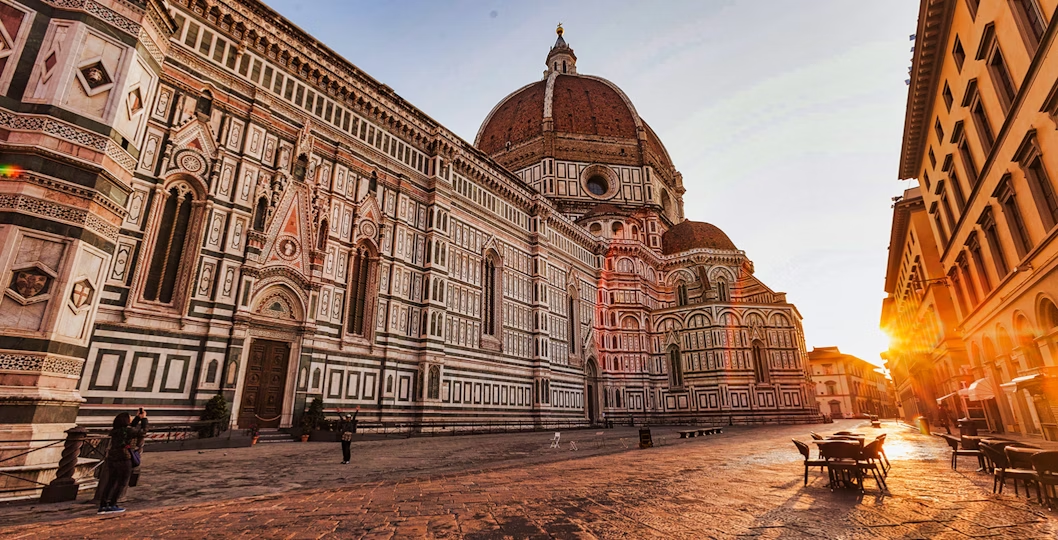
Florence Cathedral
Iconic Renaissance Structures
- Florence Cathedral: Brunelleschi's Dome was a revolutionary feat of engineering.
- St. Peter's Basilica: This was a collaborative effort by Renaissance masters, including Michelangelo.
- Villa Rotonda: Designed by Palladio, it epitomized perfect symmetry and classical influence.
Comparative Analysis: Contrasts and Connections
Form and Function
Gothic architecture’s verticality, driven to reach towards God, contrasts sharply with Renaissance style. Renaissance architecture valued symmetry, horizontality, and human scale.
Materials and Techniques
- Gothic: Flying buttresses and intricate tracery enabled light-filled, tall structures.
- Renaissance: Domes, linear perspective, and geometrical precision defined its structures.
Cultural Influences
- Gothic: This style was rooted in religious fervor. It reflected medieval spirituality.
- Renaissance: This style celebrated humanism, reason, and classical beauty.
Transition and Evolution
Although the two styles are distinct, the evolution from Gothic to Renaissance was not a complete break. Renaissance architects built upon Gothic engineering knowledge. Moreover, both styles enriched architectural innovation and shaped cultural identity.
Comparative Examples
- Notre-Dame de Paris: This reflects Gothic’s divine aspirations.
- St. Peter's Basilica: This embodies Renaissance ideals of humanism and classical harmony.
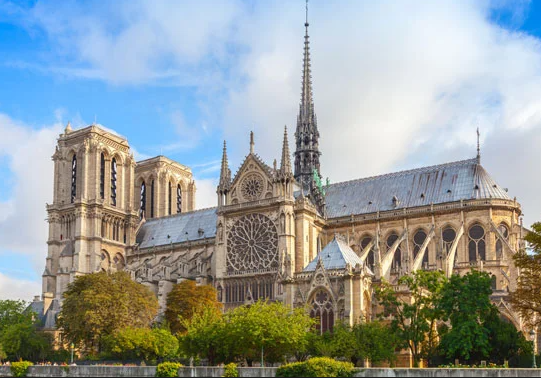
Notre-Dame de Paris
Conclusion
Studying Gothic and Renaissance architecture provides a fascinating window into the evolution of Western civilization. These styles are not just different ways of building. Rather, they are reflections of the values, beliefs, and aspirations of their respective eras. The soaring heights of Gothic cathedrals speak to a society focused on the divine. Conversely, the harmonious proportions of Renaissance buildings celebrate human reason and the beauty of the classical world.
The future of architecture is bright, but are your skills keeping pace? Kaarwan's architecture-specific courses provide you with the knowledge and tools to confidently navigate the AEC industry. Gain valuable insights, master in-demand software, and stand out with designs that impress!
FAQs
- What is the key difference between Gothic and Renaissance architecture?
Gothic architecture emphasizes verticality and divine inspiration, while Renaissance architecture focuses on symmetry, humanism, and classical forms inspired by ancient Greece and Rome. - What are flying buttresses in Gothic architecture?
Flying buttresses are external supports that transfer roof weight to piers, allowing for thinner walls and expansive stained glass windows, creating light-filled and awe-inspiring spaces. - How did Renaissance architects draw inspiration from classical antiquity?
Renaissance architects incorporated elements like domes, columns, and geometric proportions inspired by ancient Roman and Greek architectural principles, reflecting harmony and balance. - What are some famous examples of Gothic architecture?
Iconic Gothic structures include Notre-Dame de Paris with its rose windows, Chartres Cathedral's stained glass, and Cologne Cathedral's towering spires and intricate carvings. - How did the Renaissance differ from the Middle Ages culturally?
The Renaissance marked a shift from medieval theocentrism to humanism, emphasizing individual potential, scientific inquiry, and revival of classical ideals, profoundly influencing art, architecture, and philosophy.