Introduction:
The Golden Temple, also known as Sri Harmandir Sahib, stands as a beacon of spirituality, architectural brilliance, and community service in Amritsar, Punjab. Constructed under the guidance of the fifth Sikh Guru, Guru Arjan Dev, in 1604, this revered Sikh shrine symbolizes universal brotherhood and humility.
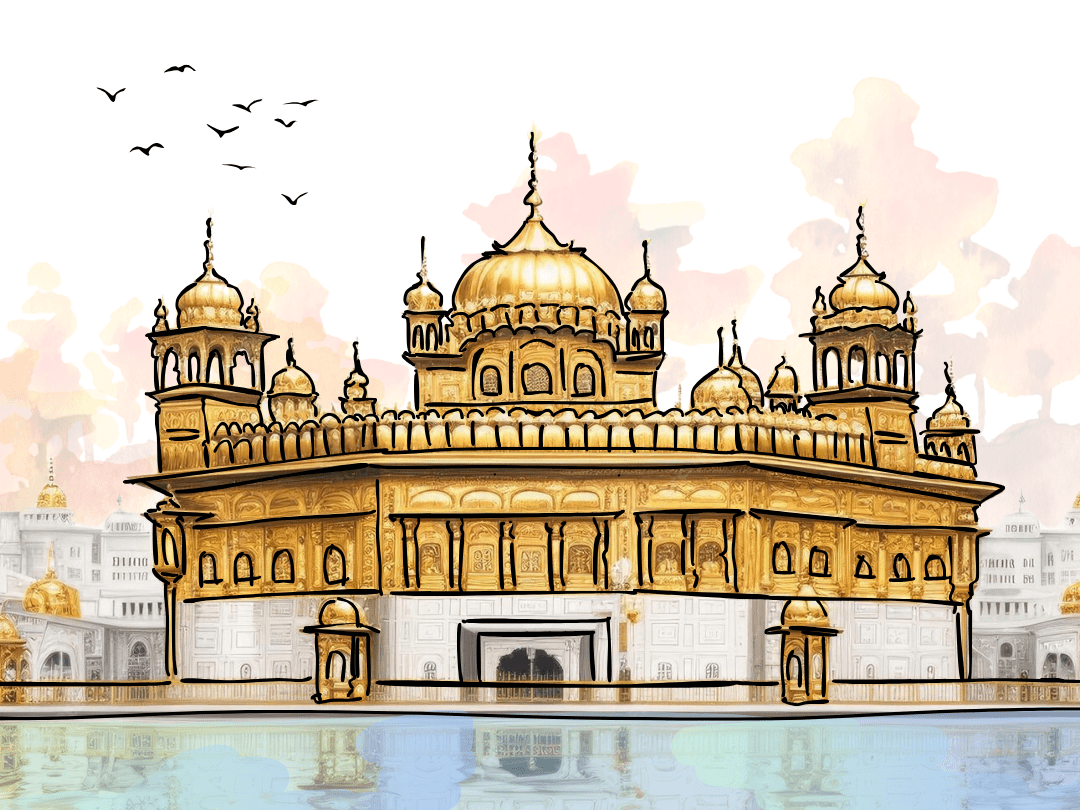
Golden Temple Illustration_ ©Shivani Chougula for Kaarwan
Set amidst the holy Amrit Sarovar—a sacred water body believed to possess healing powers—the Golden Temple forms the heart of Amritsar, a city that derives its name from this divine reservoir. Beyond its spiritual significance, the temple is a masterpiece of architectural fusion, blending Islamic, Hindu, and Mughal influences into a harmonious design that continues to inspire awe.
Planning Principles:
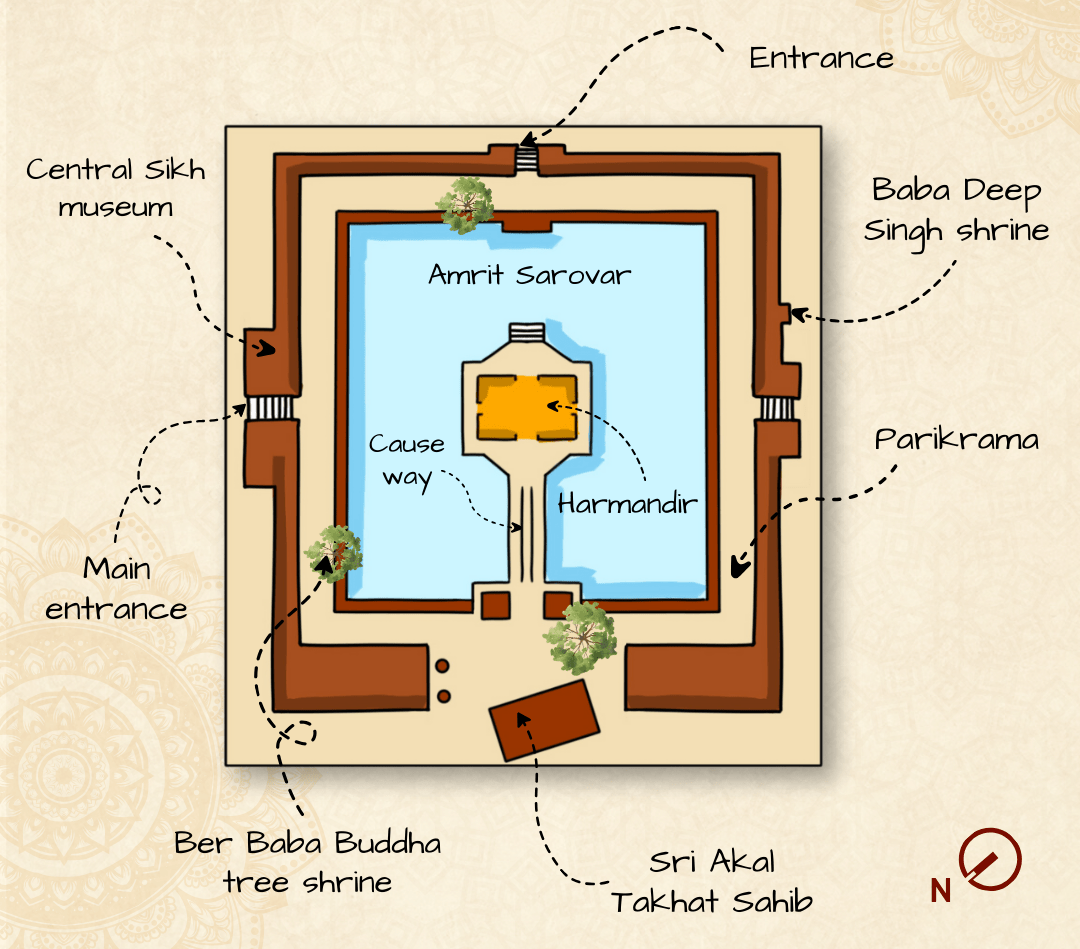
Plan of Golden Temple_ ©Shivani Chougula for Kaarwan
The Golden Temple's planning reflects a thoughtful blend of spiritual and architectural principles. Its central sanctum, encased in gold, appears to float on the Amrit Sarovar, accessible by a single causeway known as the Guru's Bridge. This unique planning embodies equality, as devotees approach the sanctum through the same path, symbolizing humility and unity. The temple complex includes several significant structures: the Akal Takht, which serves as the temporal seat of Sikh authority; langar halls that offer free meals to thousands daily; and the serene sarovar that encircles the sanctum. The layout, emphasizing openness and symmetry, creates an inviting atmosphere that fosters reflection and community.
Jharokhas:
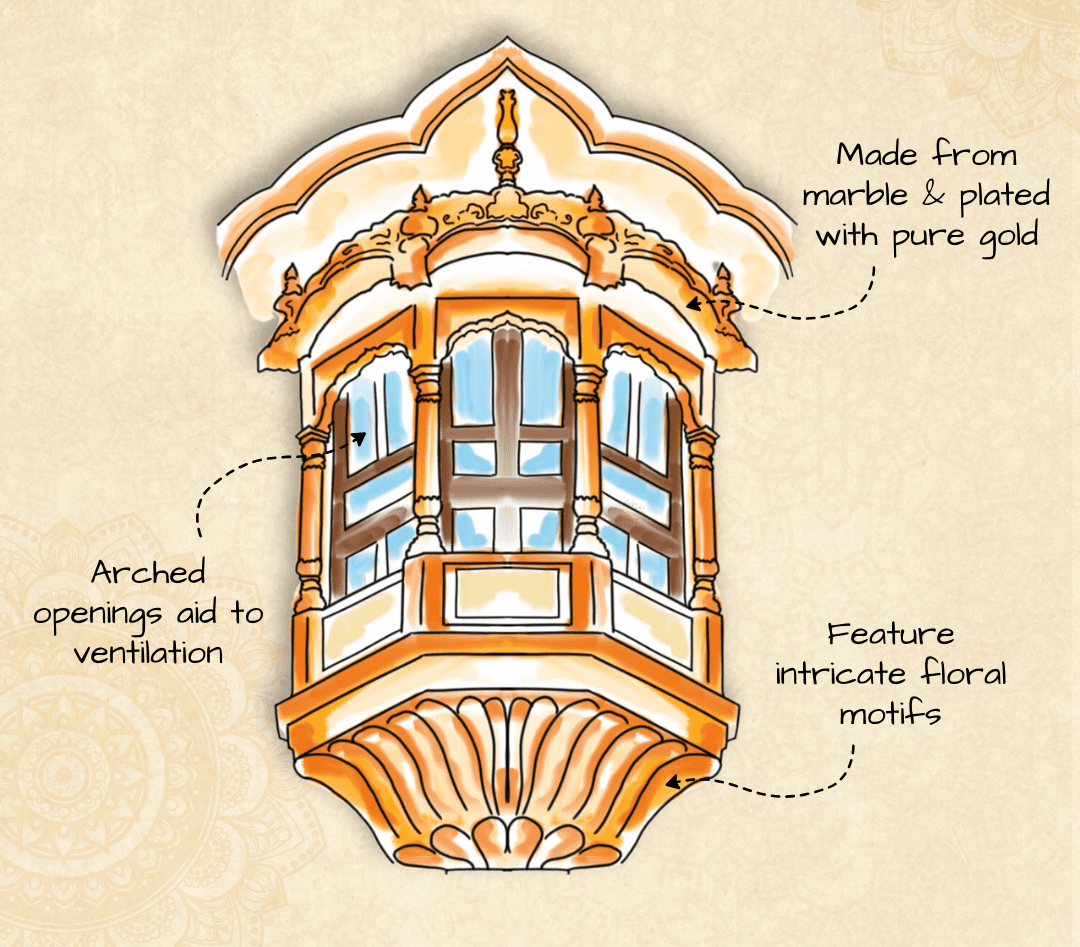
Jharokha in Golden Temple_ ©Shivani Chougula for Kaarwan
The jharokhas, or intricately carved overhanging balconies, are a notable architectural feature of the Golden Temple. Inspired by traditional Rajasthani and Mughal designs, these jharokhas add elegance to the temple's façade. Adorned with gold plating, they reflect a unique blend of opulence and humility. From the interiors, the jharokhas allow natural light to flood the prayer halls, creating an ethereal glow that enhances the spiritual ambiance. Architecturally, these structures soften the transition between exterior and interior spaces, offering both aesthetic appeal and functional ventilation.
Arches:
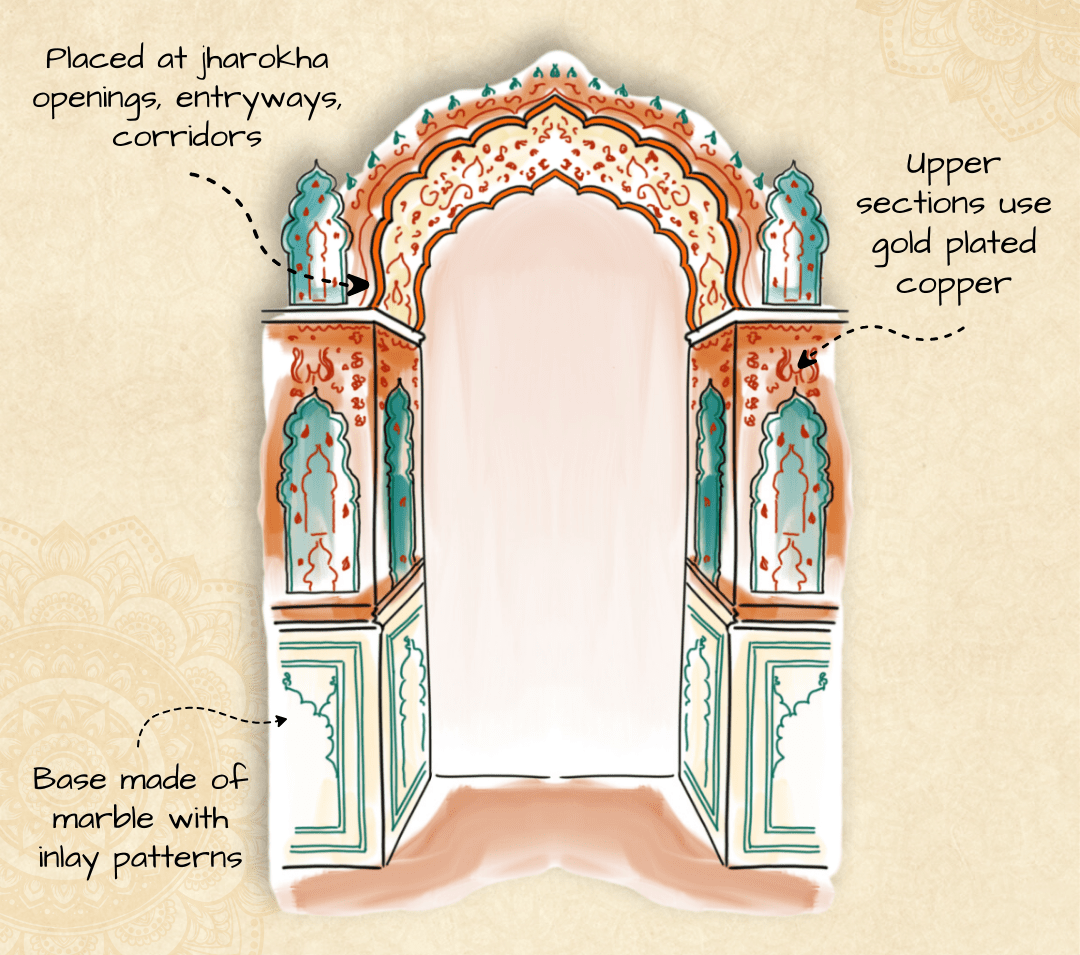
Arches in Golden Temple_ ©Shivani Chougula for Kaarwan
Arches play a prominent role in the structural and ornamental design of the Golden Temple. The temple showcases robust, arches throughout its entrances, corridors, and inner sanctum, a characteristic influence of Mughal architecture. Richly ornamented with inlay work using semi-precious stones and marble, these arches serve as canvases for intricate floral and geometric patterns. The combination of white marble and gold accents emphasizes the temple’s grandeur while reflecting its spiritual essence. The arches not only provide structural integrity but also frame views, guiding devotees’ gaze towards the sanctum and enhancing the journey of devotion.
Chhatris:
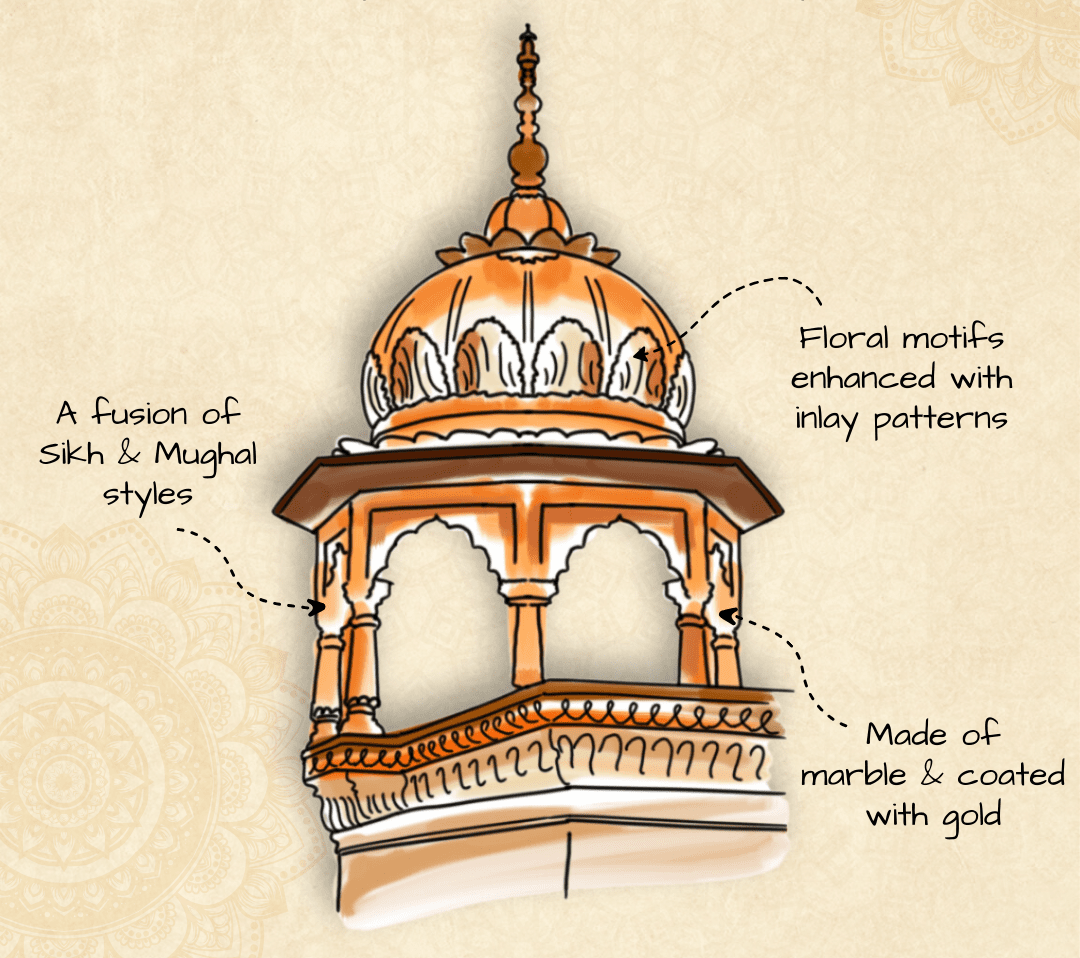
Chhatri in Golden Temple_ ©Shivani Chougula for Kaarwan
The chhatris, or decorative domed pavilions, are another signature element of the Golden Temple's architectural splendor. These structures, often gilded with gold, punctuate the roofline, adding rhythm and balance to the temple’s silhouette. Symbolically, the chhatris represent a spiritual ascent, drawing the gaze upwards toward divinity. Constructed from marble and adorned with intricate motifs, they embody both strength and delicacy. The gold-plated central dome, reflects the sunlight, creating a divine shimmer that enhances the temple’s sanctity and visual appeal.
Conclusion:
The Golden Temple is much more than an architectural marvel; it is a spiritual haven that unites people from all walks of life. Its intricate planning, detailed ornamentation, and harmonious blend of diverse architectural styles stand as a testament to Sikh values of equality, humility, and devotion. The serene ambiance of the Amrit Sarovar, coupled with the temple’s timeless beauty, continues to inspire awe and reverence among millions worldwide.
FAQs:
1. Where is the Golden Temple located?
The Golden Temple is located in Amritsar, Punjab, India.
2. Who built the Golden Temple, and when?
Guru Arjan Dev, the fifth Sikh Guru, initiated its construction in 1604.
3. What is the architectural significance of the Golden Temple?
The Golden Temple blends Mughal, Islamic, and Hindu styles with features like jharokhas, arches, and chhatris, symbolizing unity and spirituality.
4. What is the causeway in the Golden Temple?
The Guru's Bridge is a causeway that connects the sanctum to the outer temple complex, symbolizing unity and equality.
5. What is the significance of the Amrit Sarovar?
The sacred water body around the temple is believed to have healing properties and enhances the spiritual experience.
These were some interesting facts about the architecture of Golden Temple, Amritsar. Stay tuned for more information on other significant topics in the AEC industry and follow Kaarwan for such detailed guides!