

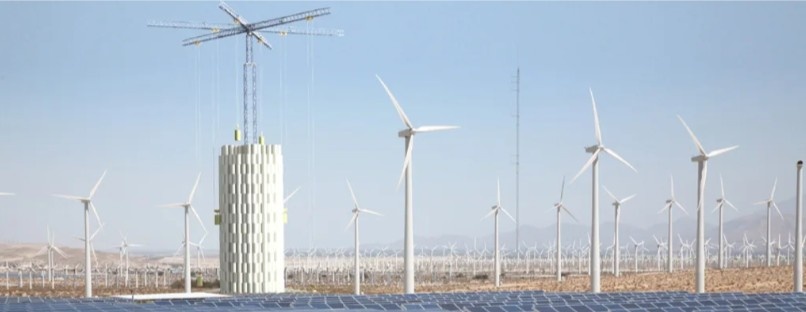
When we think of sustainable architecture, we often focus on solar panels, efficient HVAC systems, green façades or water recycling. But a lesser-known yet rapidly emerging technology is reshaping how we think about energy storage in built form: gravity energy storage (GES). For architects, engineers and AECO professionals, understanding GES opens a new dimension where buildings themselves—or parts of them—become active energy assets, not just passive structures.
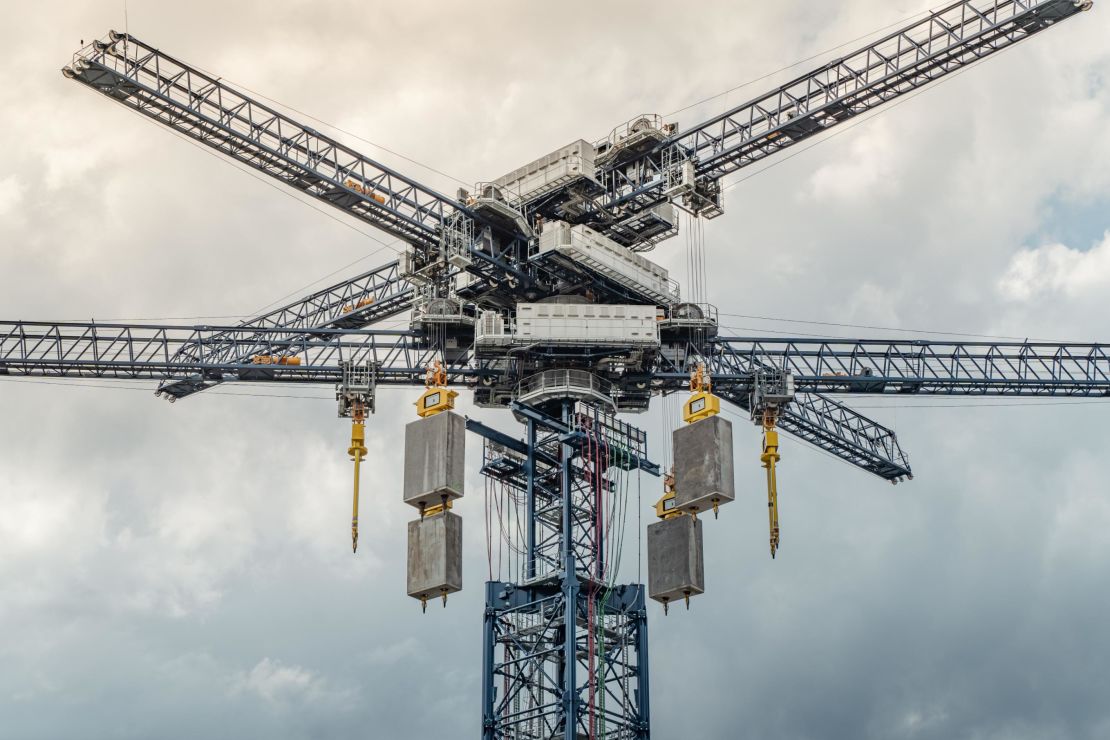
Image Source: CNN
What is Gravity Energy Storage?
Gravity energy storage works on a simple principle: during periods of excess energy generation (for example, from solar or wind), the surplus electricity is used to lift a heavy mass to a height, storing energy in the form of gravitational potential energy. When energy is needed, the mass descends and drives a generator to produce electricity.
Key features of Gravity Energy Storage:
- No chemical batteries involved (hence minimal degradation over time).
- Can reuse existing structures (e.g., mine shafts) and use dense materials.
- Potential integration into buildings and urban form, not just standalone plants.
Hence, the phrase “Buildings as batteries” is no longer metaphorical—it is becoming a technical reality.
Why Architects Should Care?
For students, young professionals and senior officers alike, here are the reasons working knowledge of gravity energy storage matters:
1. New Form & Function Relationship: When a building integrates GES, its structural design, architectural form, and function must respond to the storage system: mass, movement, dynamics, safety, and spatial program. The architecture is not just an enclosure but an energy infrastructure. Designers must rethink massing, structural load paths, vibration, dynamic loads, and building services integration.
2. Whole-Life Sustainability: Most sustainability dialogue stops at operational energy, but energy storage changes the equation—how much renewable energy can a building store rather than just generate? When buildings can store energy, they become part of a resilient grid, reduce peak demand, and contribute to circular economy thinking. GES systems that avoid hazardous materials (as with battery systems) fit elegantly into sustainable architecture frameworks.
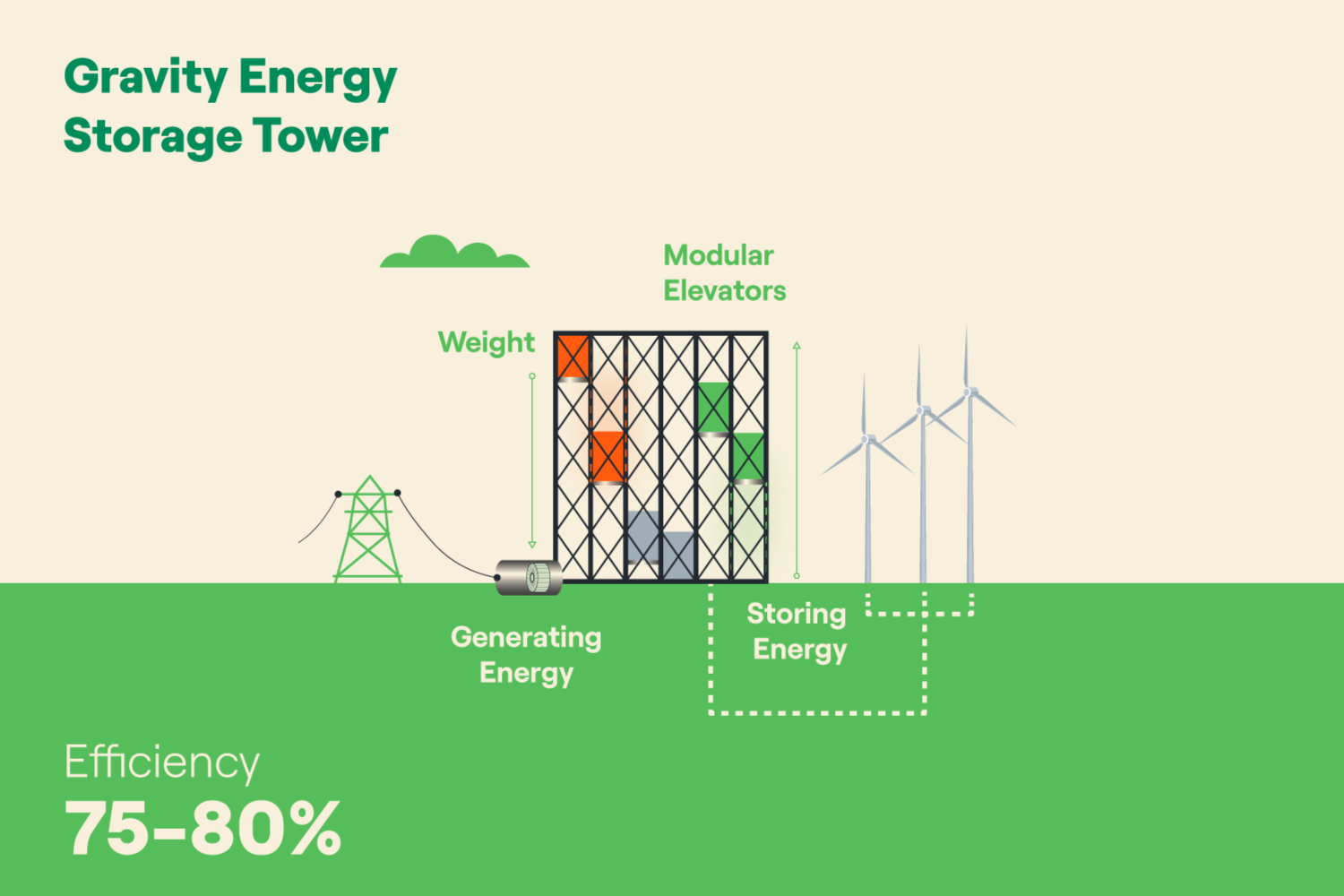
Image Source: De Standaard
3. Integration with Building Services & Structure: For MEP, structural and façade professionals, GES introduces new coordination layers: moving masses, heavy components, potential vibration, headroom for storage systems, and access for maintenance. As architects or design managers, understanding these implications early can help avoid costly clashes later. This is especially relevant if you are teaching or up-skilling your design teams in services coordination.
4. Emerging Career Pathways: As architecture graduates and professionals look to differentiate, skills in building-integrated energy storage, digital modelling of storage systems, coordination with structural and service engineers, and sustainable asset thinking will put them ahead. If your office is exploring next-gen sustainable buildings, knowledge of GES is increasingly relevant.
_1761829583444.jpg)
Image Source: De Standaard
Gravity Energy Storage in Buildings with Energy Vault and Skidmore, Owings & Merrill (SOM)
One of the clearest exemplars of this shift is the partnership between Energy Vault and SOM. They are developing gravity energy storage systems intended to be integrated within tall buildings, not just adjacent to them.
Some noteworthy points:
- Their design platforms (EVu™, EVc™, EVy™, EV0™) include a super-structure tower design for buildings over 300 m tall that store multi-GWh of energy.
- The partnership emphasises carbon pay-back acceleration: “buildings that act as their own batteries.”
- The implication: future skyscrapers might contain gravity-storage racks, heavy masses, and lifting mechanisms, and thus structural and architectural design must anticipate them.
For architecture students who are fascinated with form and height, think of this: the next iconic tower might not just be tallest—it may also be largest battery.
You might want to read this blog if you’re considering how MEP, structure and architectural design overlap in future-facing buildings, or if you’re planning to upskill in sustainable building technologies.
Practical Considerations & What to Avoid
Designers should beware of:
- Ignoring structural implications: heavy moving masses introduce dynamic loads, requiring specialist structural‐engineering input.
- Treating GES as an add-on: unless fully integrated early in the project (layout, service zones, access, control systems), the system may become inefficient or impossible to integrate.
- Overlooking maintenance and safety: gravity systems may require overhead lifting, moving parts, accessibility, and must therefore meet safety codes and lifecycle maintenance regimes.
- Thinking it replaces all energy storage: current GES solutions often complement rather than fully replace battery storage; site and scale matter.
_1761830426750.jpg)
Image Source: ESS News. Researchers at the University of Waterloo in Canada have designed a solid gravity energy storage system that could be used to store renewable energy in high-rise urban buildings. With an aspiration for it to be common in the near future.
Upskilling and Course Links
If you’re in the AECO industry and want to build capability:
- In your role as architect or design manager, learning about building-integrated services becomes vital—especially as gravity energy storage adds to the services conversation (alongside MEP, HVAC, plumbing).
- Consider courses that teach digital modelling of systems, services coordination, and sustainability asset design. E.g., Kaarwan’s “BIM for Architects” course would help you integrate models from structural, services and architectural disciplines.
- As Gravity Energy Storage becomes more prominent, being able to engage with structural engineers and energy-storage specialists will make you a valuable link in the design chain.
Buildings of the future will not only generate energy, they will store it, manage it, and become active parts of the energy grid. Gravity energy storage is one of the promising technologies enabling this shift.
FAQs
Q1: What exactly is gravity energy storage (GES)?
It is a system that uses surplus energy to raise a heavy mass (or block), storing energy as gravitational potential; when the mass descends, the energy is released via a generator.
Q2: How does GES apply to architecture and buildings?
Some companies are designing towers or integrated structures where the building includes the gravity-storage racks and systems—thus the building becomes the energy storage device, not just the container.
Q3: Why is this important for architects and AECO professionals?
Because design is shifting from “how does the building produce energy?” to “how does the building store and manage energy?” This requires architects to coordinate with services, structure, system modelling and sustainability goals more closely than before.




.png)