

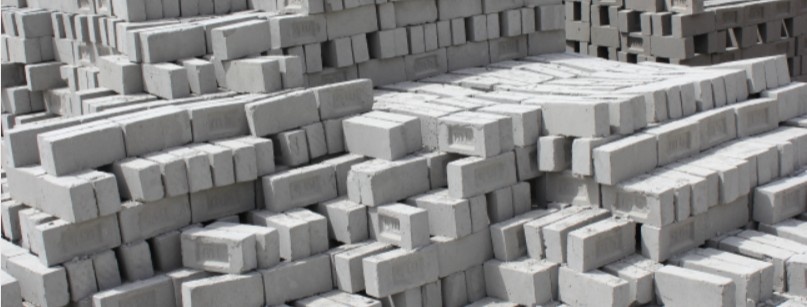
Bricks are one of the most fundamental building materials in architecture. For B.Arch students, understanding how grey bricks are made is not only essential for building materials theory but also helps in drafting accurate and realistic wall sections, details, and elevations on sheets. Grey bricks, often made from a mix of fly ash, cement, and sand, are increasingly used in modern construction due to their uniformity, strength, and eco-friendly properties.
This blog walks students through the industrial process of grey brick manufacturing, the materials involved, and practical tips for representing bricks clearly in architectural sheets.
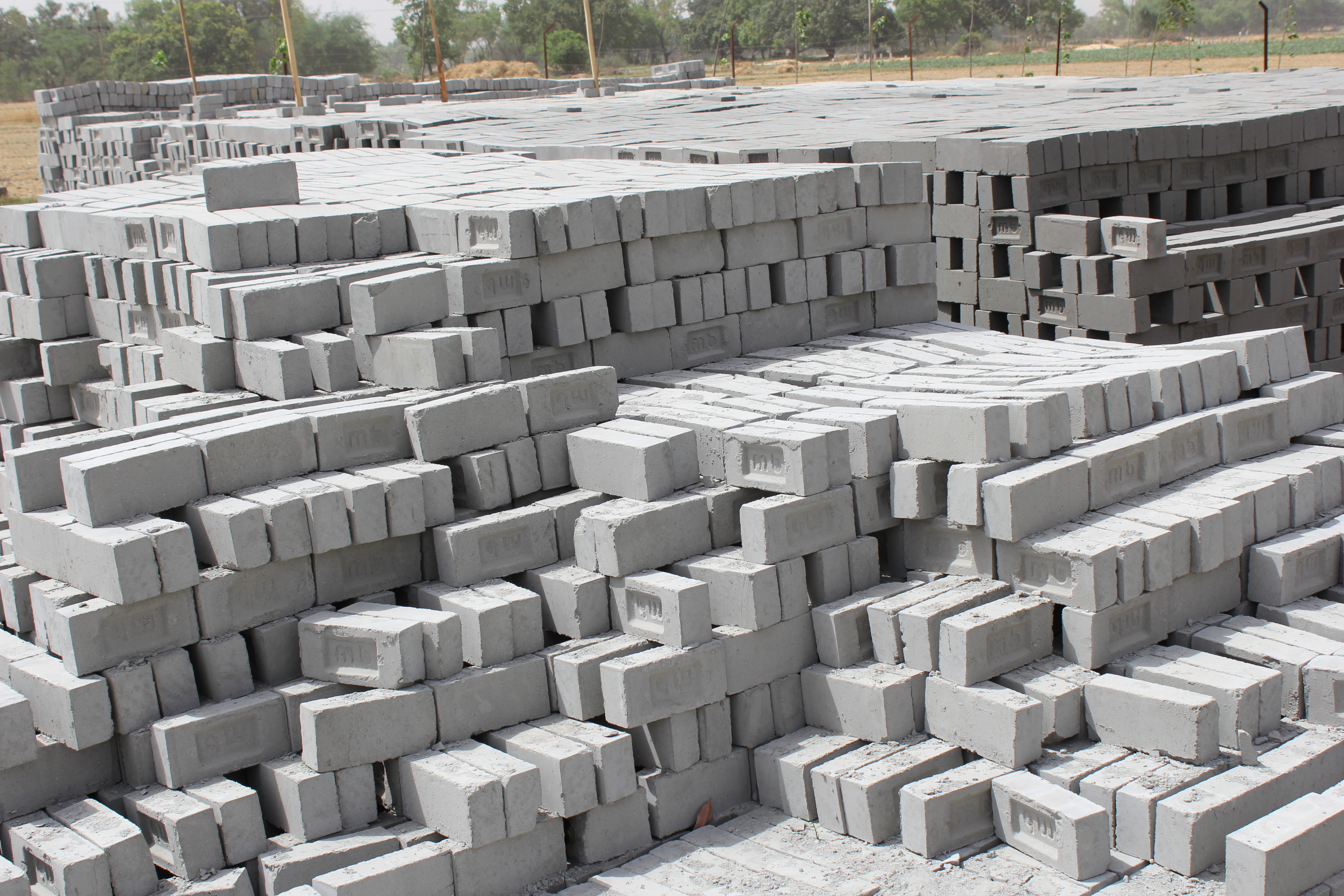
Image Source: Wikimedia
Materials Used in Fly Ash Brick Manufacturing
Grey bricks are primarily made from:
- Fly Ash – a by-product of coal combustion, giving grey bricks their characteristic colour.
- Cement – binds the particles together, increasing compressive strength.
- Sand – provides bulk and texture.
- Lime/Gypsum (optional) – improves workability and helps in setting.
- Water – activates the cement and binds components into a paste.
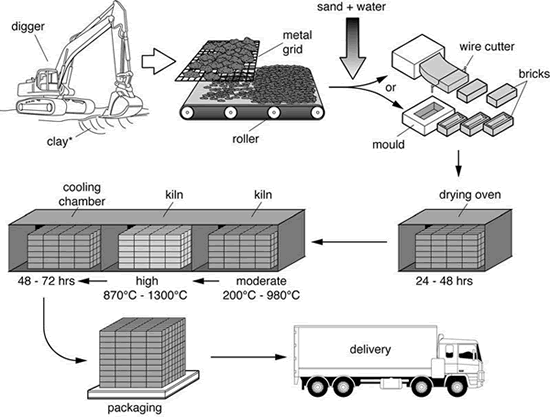
Image Source:
Step-by-Step Manufacturing Process
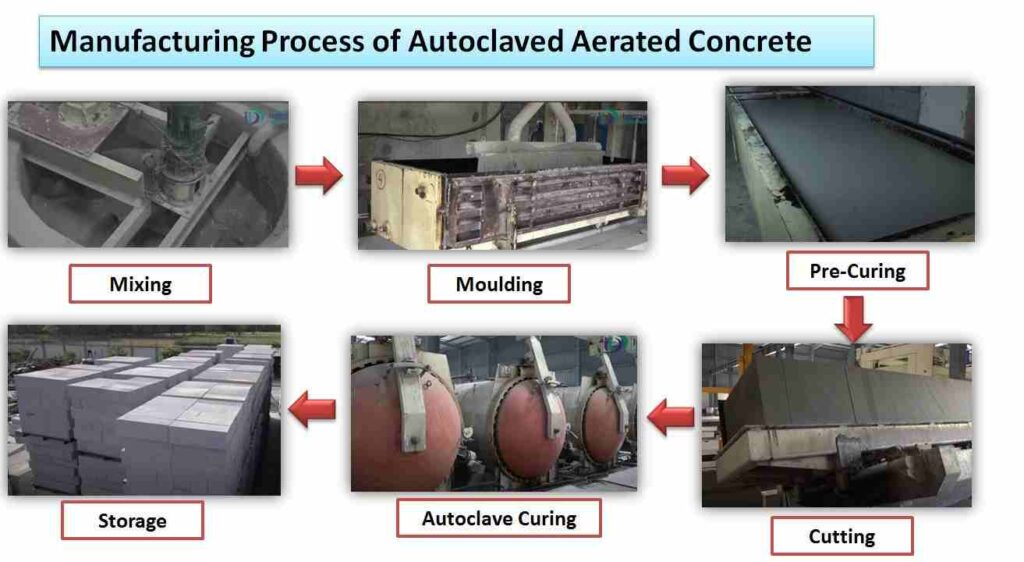
1. Mixing Materials
All raw materials are weighed in precise ratios and mixed in industrial mixers to form a uniform, workable paste. Consistency is critical; poor mixing leads to weak bricks.
2. Moulding or Pressing
The mixture is then shaped into bricks using moulds or hydraulic presses. Unlike traditional red clay bricks, grey bricks are often pressed, ensuring uniform dimensions and smooth surfaces.
_1759117551759.png)
3. Curing
Fly Ash bricks are not fired like clay bricks. Instead, they cure chemically using moisture and heat (steam curing). This allows cement hydration to strengthen the brick over several days.
Everyday Analogy: Think of setting concrete — it hardens over time, not instantly.
_1759120697181.jpg)
4. Stacking and Quality Check
Cured bricks are stacked, visually inspected, and tested for compressive strength, uniformity, and surface defects.
Student Tip: In plans or material schedules, indicate quality-approved bricks for clarity.
5. Transport and Storage
Finished fly ash bricks are packaged and stored for construction. Their uniformity allows precise bond patterns on walls, simplifying architectural detailing.
Advantages of Grey Bricks
- Eco-friendly: Utilises fly ash, reducing waste.
- Uniformity: Ideal for modern modular construction.
- Strength: Higher compressive strength compared to traditional red clay bricks.
- Reduced water absorption: Minimises cracks and efflorescence.
Tip: Include a small table comparing red clay bricks vs grey bricks while representing your work.
Representing Fly Ash Bricks on Sheet
- Elevation: Use diagonal hatching or cross-hatching to differentiate from concrete or stone.
- Section: Show thickness and bonding patterns (stretcher bond, header bond).
- Details: Include dimensions, material notes, and mortar thickness (~10 mm).
Common Mistakes
- Drawing bricks too small or unevenly spaced on sheets.
- Forgetting mortar thickness in detail drawings.
- Not labelling material composition.
- Overcomplicating hatching — clarity is more important than decoration.
FAQs
Q1. What are grey bricks made of?
Grey bricks are usually made from fly ash, cement, sand, and sometimes lime or gypsum.
Q2. How are grey bricks different from red clay bricks?
Grey bricks are chemically cured, more uniform, eco-friendly, and stronger than traditional red bricks which are fired in kilns.
Q3. Can B.Arch students show grey bricks in sheets?
Yes. Use diagonal hatching for elevations, indicate mortar thickness, and label material in details.
Q4. Why are grey bricks popular in modern construction?
Because they are modular, eco-friendly, strong, and visually uniform, making them ideal for contemporary architecture.
Q5. Do grey bricks need firing?
No. They gain strength through chemical curing using moisture and heat (steam curing).




.png)